
There is a major confusion in the crypto world right now. When you search for "Safe" or "SAFE" in cryptocurrency, you are likely hitting two completely different things. One is a highly respected security protocol used by billions of dollars in assets. The other is a specific utility token associated with that ecosystem. If you mix them up, you might end up buying the wrong asset or misunderstanding how your funds are actually secured.
This guide clears up the fog. We will explain what the Safe ecosystem is, what the SAFE token does, and why it matters for your digital wealth in 2026.
The Confusion: Protocol vs. Token
First, let’s get the terminology straight. Most people asking about "Safe crypto" are looking for information on Gnosis Safe, which is now widely known simply as Safe. This is not a coin you buy to speculate on price swings like Bitcoin or Solana. It is a multi-signature wallet protocol. It is the industry standard for securing crypto assets for individuals, teams, and organizations.
Then there is the SAFE token. This is a governance and utility token within the Safe ecosystem. It allows holders to vote on proposals that shape the future of the Safe protocol. Understanding the difference between the tool (the wallet) and the asset (the token) is crucial before you spend any money.
What Is the Safe Protocol?
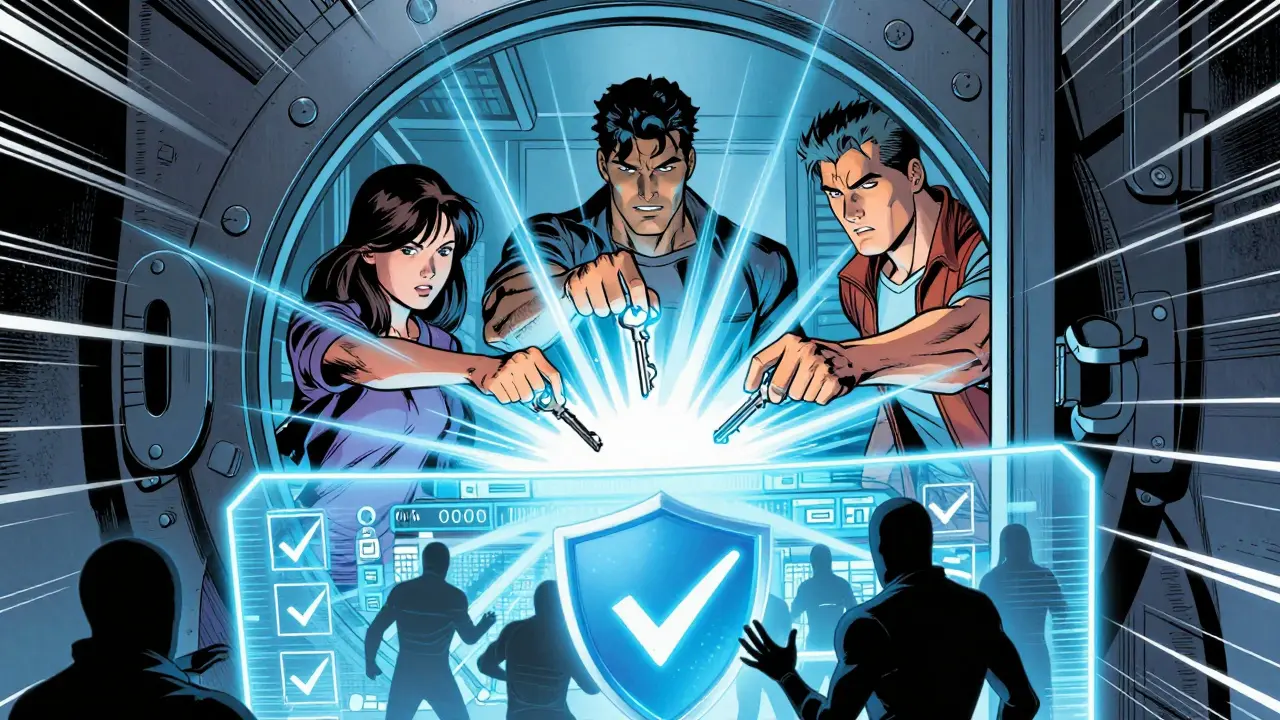
Safe is a smart contract-based multi-signature wallet. In simple terms, it’s a digital vault that requires more than one key to open. Unlike a standard wallet where you hold a single private key (if you lose it, you lose everything; if someone steals it, they take everything), Safe distributes control among multiple signers.
For example, a family might set up a Safe wallet requiring 2 out of 3 signatures to move funds. If one person loses their device, the other two can still access the money. If a hacker compromises one device, they cannot steal the funds without the second signature. This makes Safe the go-to solution for:
- DeFi Users: Managing complex positions across multiple chains.
- Teams and DAOs: Requiring consensus from members before spending treasury funds.
- Exchanges: Securing hot wallets with multiple layers of approval.
As of 2026, Safe secures over $100 billion in total value locked (TVL) across various blockchains including Ethereum, Polygon, and Arbitrum. It is built on the principle of modularity, meaning you can add features like social recovery or automated transaction scheduling without changing the core security model.
What Is the SAFE Token?
Now, let’s talk about the actual coin. The SAFE token is an ERC-20 token that serves as the governance mechanism for the Safe ecosystem. It was introduced to decentralize the decision-making process of the protocol.
Here is what holding SAFE tokens actually lets you do:
- Governance Voting: Proposals are submitted by the community regarding upgrades, fee structures, or new integrations. Token holders vote on these changes.
- Staking: In some implementations, staking SAFE tokens can provide additional security guarantees or yield benefits, depending on the current protocol rules.
- Ecosystem Access: Certain premium features or services within the Safe app may require holding or staking a minimum amount of SAFE tokens.
It is important to note that the value of the SAFE token is driven by its utility in governance and demand from users who want influence over the protocol. It is not backed by fiat currency, nor does it have a fixed supply cap in the traditional sense, as issuance mechanisms can be adjusted via governance votes.
Why Does Governance Matter in Crypto?
You might wonder, "Why do I need a token just to use a wallet?" You don’t. You can use the Safe wallet interface for free. However, the protocol itself needs to evolve. Who decides if a new blockchain should be supported? Who approves a critical security patch? Who sets the fees for enterprise customers?
In centralized systems, a company CEO makes these calls. In decentralized protocols like Safe, the token holders decide. This aligns the interests of the developers, the users, and the investors. If the protocol becomes safer and more useful, the demand for governance rights (and thus the SAFE token) tends to increase. Conversely, poor governance decisions can lead to a loss of trust and a drop in token value.
How to Buy and Store SAFE Tokens
If you’ve decided you want exposure to the Safe ecosystem through its token, here is the practical path forward.
Step 1: Choose a Liquidity Source. The SAFE token is traded on several decentralized exchanges (DEXs) like Uniswap and centralized exchanges (CEXs) that list governance tokens. Always check the official Safe website for the current list of authorized trading pairs to avoid fake tokens. Scammers often create tokens with similar names to trick buyers.
Step 2: Use a Compatible Wallet. While you can hold SAFE tokens in any ERC-20 compatible wallet (like MetaMask), using the Safe app itself provides a seamless experience. You can import your existing wallet address into the Safe interface to manage both your assets and your governance power.
Step 3: Verify the Contract Address. Before swapping, copy the official contract address from the Safe documentation. Paste it into your swap interface. Never rely solely on the ticker symbol "SAFE," as many unrelated projects use the same abbreviation.
Safety First: Common Pitfalls
Crypto is rife with scams targeting popular names. Here is how to stay safe when dealing with Safe and SAFE tokens:
- Beware of Impersonators: Fake support accounts on Twitter or Discord will DM you claiming to help with "token claims." Legitimate Safe staff will never ask for your seed phrase or private keys.
- Check URLs Carefully: The official domain is safe.global. Variations like safe-wallet.com or safe-token.io are likely phishing sites designed to drain your wallet.
- Understand Gas Fees: Interacting with the Safe protocol on Ethereum mainnet can incur high gas fees during peak times. Consider using Layer 2 solutions like Arbitrum or Optimism for cheaper transactions if the protocol supports them.
Comparison: Safe vs. Traditional Custody
| Feature | Safe (Self-Custody) | Centralized Exchange (e.g., Coinbase, Binance) |
|---|---|---|
| Control | You hold the keys. No one can freeze your funds. | The exchange holds the keys. They can freeze accounts. |
| Security Model | Multi-signature smart contracts. Requires collusion to hack. | Centralized servers. Single point of failure risk. |
| Recovery | Social recovery modules available. No password reset button. | Customer support can reset passwords and recover accounts. |
| Cost | Paid in network gas fees. Variable based on chain congestion. | Trading fees and withdrawal fees. Often higher long-term. |
| Best For | Long-term holding, teams, high-value assets. | Frequent trading, beginners, small amounts. |
The Future of Safe in 2026
The crypto landscape has matured significantly since Safe’s inception. Today, the focus is on cross-chain interoperability and user experience. Safe is integrating deeper with account abstraction standards (ERC-4337), which means users can have wallets that look like traditional apps-no seed phrases to memorize, just email or biometric login, while maintaining the underlying security of multi-sig technology.
Additionally, the role of the SAFE token is expanding. As the protocol generates revenue from enterprise modules and advanced features, a portion of these revenues may be distributed back to token stakers or used to buy back and burn tokens, creating deflationary pressure. Keep an eye on governance forums for updates on these economic models.
Is Safe the same as MetaMask?
No. MetaMask is a browser extension wallet that typically uses a single private key. Safe is a multi-signature protocol that can be accessed through interfaces like MetaMask, but it adds a layer of security by requiring multiple approvals for transactions. You can think of MetaMask as the key, and Safe as the vault that requires multiple keys to open.
Can I lose my SAFE tokens if I lose my phone?
If you store your SAFE tokens in a custodial exchange, you can recover them via customer support. If you store them in a self-custody wallet connected to Safe, you must have your backup phrase or access to your other signer devices. Without these, access to your tokens is permanently lost. This is why Safe offers social recovery options to mitigate this risk.
Does the SAFE token generate passive income?
Not directly. Holding the token does not automatically pay you dividends. However, staking SAFE tokens in certain DeFi protocols integrated with Safe can earn you rewards. Additionally, if the protocol implements a revenue-sharing model for stakers, you could benefit indirectly. Always read the latest governance proposals for current staking mechanics.
Which blockchains does Safe support?
Safe is multi-chain. It natively supports Ethereum, Polygon, Arbitrum, Optimism, Base, and many others. The availability of the SAFE token for voting and staking may vary by chain, so check the Safe dashboard for the most up-to-date list of supported networks and their respective token bridges.
Is it safe to use Safe for large amounts of crypto?
Yes, Safe is considered one of the most secure ways to store crypto because it eliminates single points of failure. By requiring multiple signatures, it protects against both theft (hackers can't act alone) and loss (you don't rely on one device). Many institutional investors and DAOs with millions of dollars in treasuries use Safe for this reason.
 Cryptocurrency Guides