
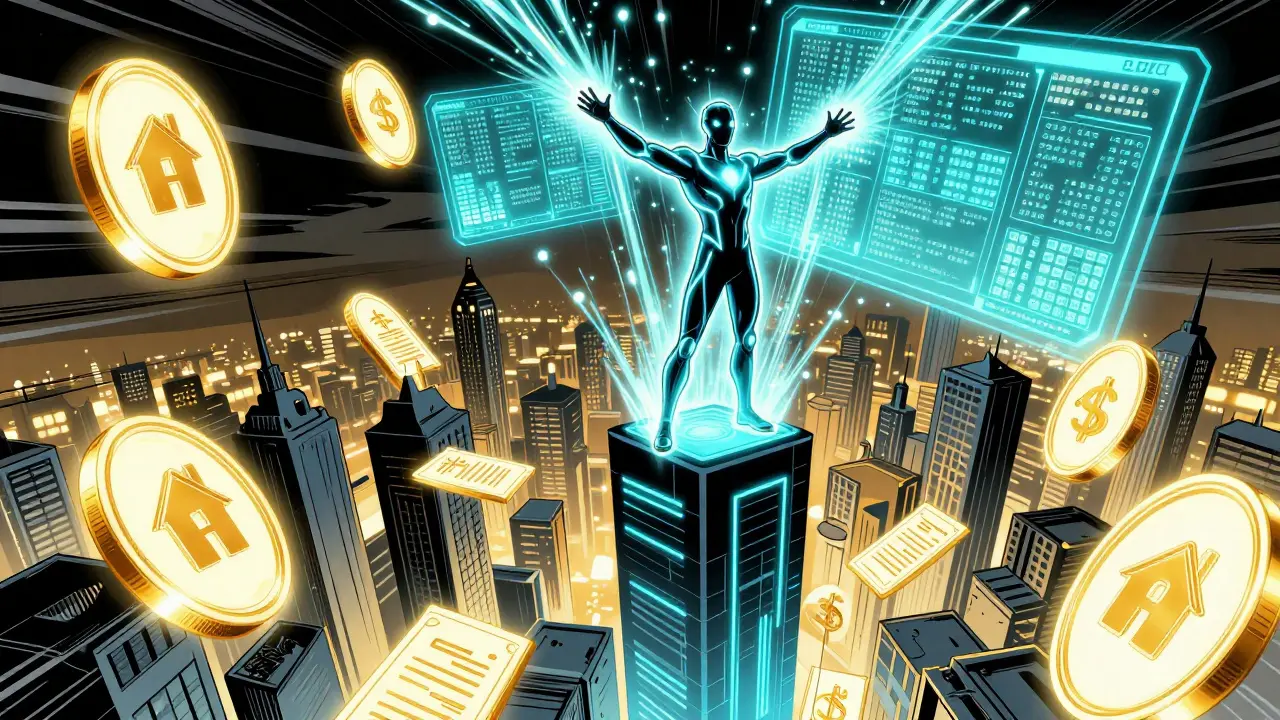
BytomDAO (BTM) isn’t just another cryptocurrency. It’s a blockchain project built to turn real-world assets-like bonds, dividends, real estate titles, and even government debt-into digital tokens you can trade on a public ledger. Think of it as a bridge between your house deed and a blockchain. Instead of lawyers, notaries, and banks handling transfers, BytomDAO uses code and artificial intelligence to make it faster, cheaper, and more transparent.
How BytomDAO Works: Three Layers, One Goal
BytomDAO’s system isn’t built like Bitcoin or Ethereum. It has three clear layers that work together:
- The Application Layer: This is what you see-mobile apps and websites where you manage your assets. You can register, trade, or stake tokens here.
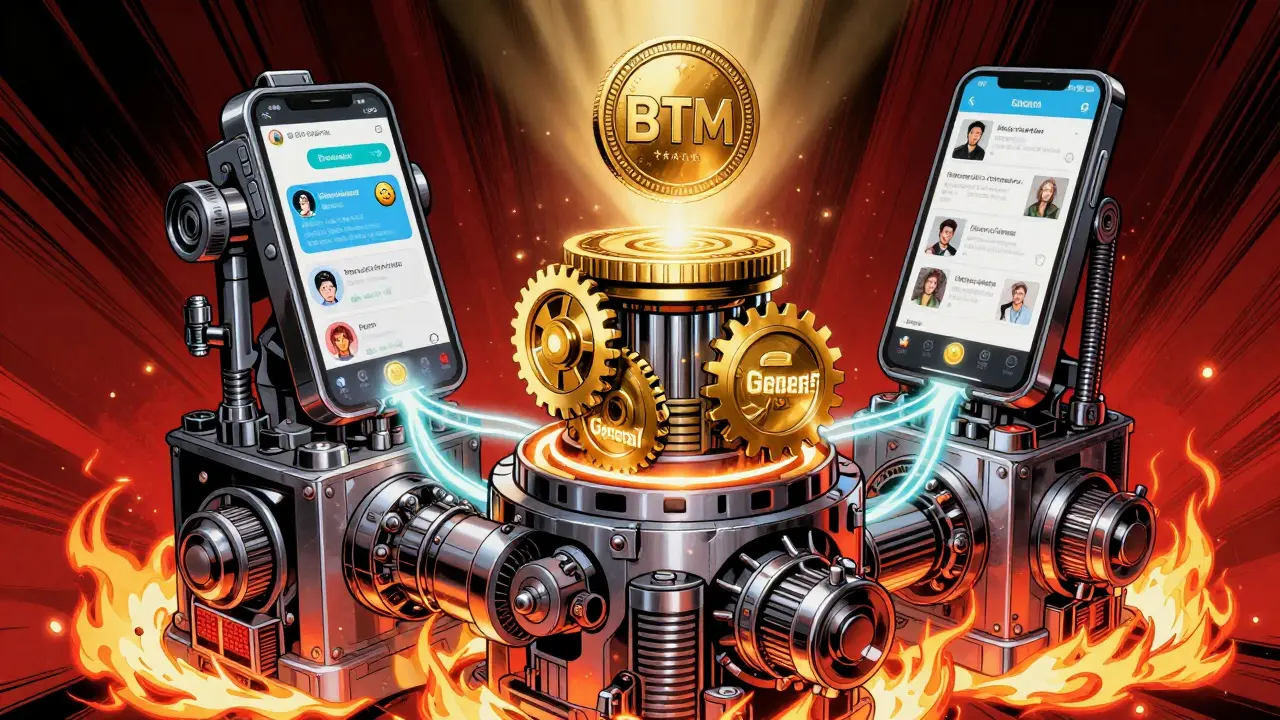
- The Contract Layer: This is the brain. It has two smart contracts: the Genesis Contract that checks if new assets meet standards before going live, and the General Contract that handles trading and payouts like dividends.
- The Ledger Layer: This is the public blockchain where all transactions are recorded. It’s permissionless, meaning anyone can verify them, and it runs on a Proof-of-Work system, similar to Bitcoin’s original design.
This structure lets BytomDAO handle everything from a small crowdfunding campaign to a corporate bond-without middlemen. No more waiting weeks for a property transfer. No more paperwork. Just a digital record that can’t be altered.
The BTM Token: Fuel for the Ecosystem
The BTM token is the lifeblood of BytomDAO. It’s used to pay for transactions, vote on upgrades, and stake for rewards. Here’s what you need to know about it:
- Total Supply: 2.1 billion BTM tokens ever.
- Circulating Supply (as of Jan 2025): Around 1.8 billion BTM.
- Bytom 2.0 Update: This major upgrade changed how new tokens are released. Instead of flooding the market, only 30 million new BTM are issued each year-and only if people stake their tokens. This makes BTM deflationary over time.
- Team Incentives: The founders don’t hold old tokens anymore. They only earn new ones from staking rewards, meaning their success is tied to the network’s health.
Unlike many crypto projects that pump and dump, BytomDAO’s tokenomics are designed for long-term value. Less supply growth + staking rewards = fewer tokens floating around, which can increase scarcity.
What Kinds of Assets Can You Tokenize?
BytomDAO doesn’t just trade crypto. It handles real-world assets classified into three types:
- Income Assets: Things that generate cash flow-like municipal bonds, crowdfunding projects, or rental income rights.
- Equity Assets: Shares in private companies or startups. These require identity checks before transfer, so only verified investors can buy in.
- Securitized Assets: Debt instruments like car loans or mortgages. These have fixed payments, making them predictable for investors.
Imagine owning a slice of a solar farm in Germany or a piece of a commercial building in Tokyo-all as a digital token you can trade on your phone. That’s the vision.
AI Governance: The Secret Sauce
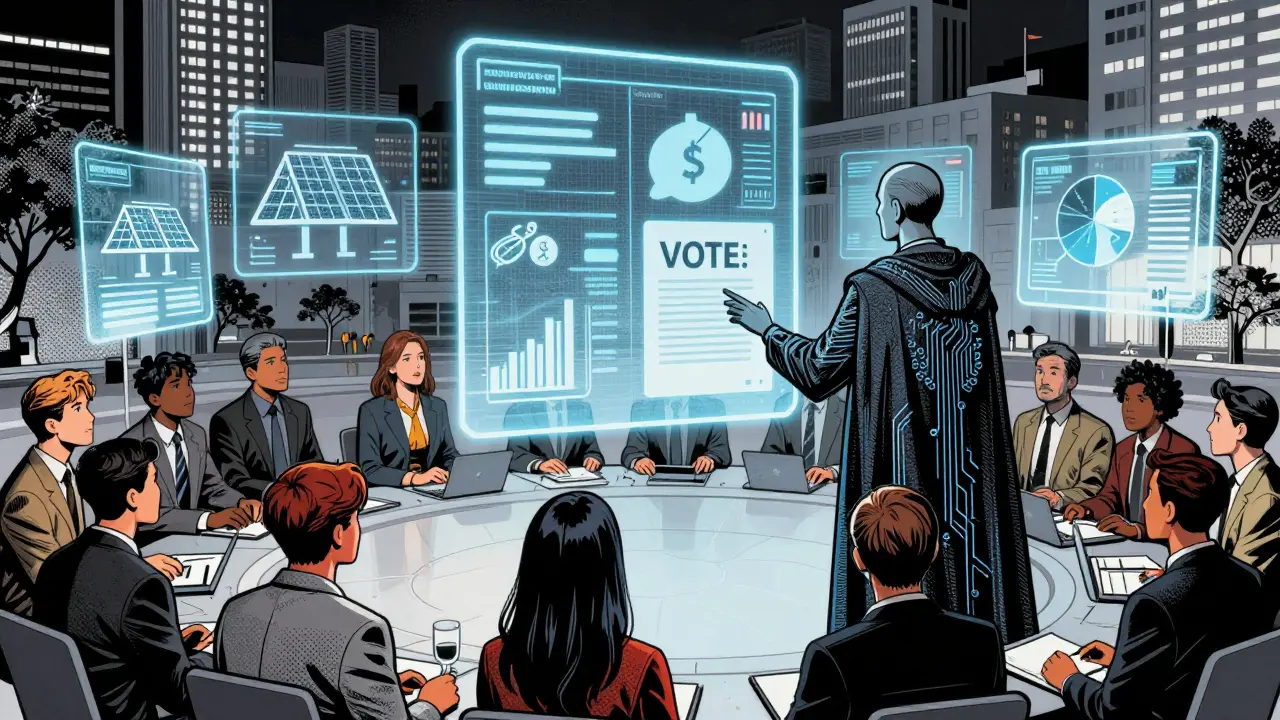
Here’s where BytomDAO gets really different. Most blockchains rely on humans to vote on changes. BytomDAO uses AI agents to do the heavy lifting first.
Here’s how it works:
- An AI system scans market data, network usage, and economic trends.
- It generates proposals-like adjusting staking rewards or adding a new asset type.
- The community reviews and votes on those AI-generated ideas.
- If approved, the change is automatically implemented.
This isn’t science fiction. It’s happening now. The AI doesn’t make decisions alone-it just makes better, faster suggestions than humans typically can. This cuts down on drama, delays, and biased voting. It’s like having a super-smart assistant prep the agenda before a board meeting.
BytomDAO Agents: More Than Just Tokenization
BytomDAO has expanded into something called BytomDAO Agents. This is an AI platform designed to help newcomers and experts alike:
- For beginners: It explains crypto basics, guides you through wallet setup, and helps you avoid scams.
- For investors: It analyzes trends, flags risky assets, and suggests portfolio moves based on data-not hype.
- For developers: It provides tools to build DeFi apps on top of Bytom’s blockchain.
This turns BytomDAO from a passive asset platform into an active ecosystem that teaches, supports, and grows alongside its users.
Where Can You Trade BTM?
You can buy BTM on several exchanges:
- Centralized: Binance (largest liquidity)
- Decentralized: Uniswap v2 on the Base network (trading pair: BTM/WETH)
As of early 2025, BTM trades at a very low volume-around $3,900 per day. That’s tiny compared to Bitcoin or Ethereum. Its market cap is less than 0.1% of the entire crypto market. That means it’s still niche. But for some, that’s an opportunity.
Pros and Cons: Is BytomDAO Right for You?
Here’s a realistic look at what works-and what doesn’t:
Pros
- Real asset focus: It’s not just trading meme coins-it’s tokenizing actual value.
- AI governance: More data-driven, less emotional than human voting.
- Deflationary tokenomics: Limited new supply + staking rewards = potential long-term scarcity.
- DeFi integration: MOV protocol lets you lend, borrow, and trade tokenized assets.
- Strong founding team: Co-founder Duan Xinxing was ex-VP at OKCoin, a major crypto exchange.
Cons
- Low liquidity: Hard to buy or sell large amounts without moving the price.
- Limited public info: Not as much documentation or transparency as Ethereum or Solana.
- High complexity: If you don’t understand smart contracts or blockchain layers, this isn’t beginner-friendly.
- Regulatory gray zone: Tokenizing real assets like real estate or bonds could run into legal trouble in some countries.
- Competition: Projects like Polymarket, Securitize, and Harbor are also trying to tokenize assets.
Who Should Care About BytomDAO?
If you’re someone who:
- Believes real-world assets belong on blockchains,
- Is excited about AI making governance more efficient,
- Wants to invest in something beyond speculative crypto,
- And is comfortable with low liquidity and technical complexity,
…then BytomDAO might be worth exploring.
If you’re looking for a quick flip, a household name, or a safe investment-this isn’t it. But if you’re thinking long-term, and you believe the future of finance is AI + tokenized assets, then BytomDAO is one of the few projects building that future today.
Is BTM a good investment?
There’s no simple yes or no. BTM has strong fundamentals-AI governance, deflationary tokenomics, and real asset use cases-but it’s still a small project with low trading volume. It’s not for beginners or risk-averse investors. If you believe in tokenizing physical assets and AI-driven blockchain systems, BTM could be a high-risk, high-reward play. Don’t invest more than you can afford to lose.
How is BytomDAO different from Ethereum?
Ethereum is a general-purpose blockchain that lets anyone build apps. BytomDAO is specialized: it’s built from the ground up to tokenize real-world assets like bonds, dividends, and property. It also uses AI for governance, while Ethereum relies on human voting. Bytom’s three-layer architecture is more focused on asset management than general smart contracts.
Can I stake BTM tokens?
Yes. Since the Bytom 2.0 upgrade, staking is central to the network. When you stake BTM, you help secure the network and earn newly issued tokens as rewards. Only 30 million new BTM are created each year, and they’re distributed based on how much you stake. This makes staking essential-not optional-for long-term holders.
Is BytomDAO regulated?
No-not officially. While BytomDAO operates on a public blockchain, the assets it tokenizes (like real estate or bonds) may fall under financial regulations in different countries. The platform doesn’t guarantee compliance. Users are responsible for understanding local laws before tokenizing or trading assets. This is a major risk for institutional investors.
What’s the future of BytomDAO?
Its future depends on two things: adoption and regulation. If more institutions start tokenizing assets on its platform, and if regulators create clear rules for blockchain-based securities, BytomDAO could become a key player. But if it fails to attract users or gets blocked by regulators, it could fade. Its AI governance gives it an edge, but only if people trust it enough to use it.
 Cryptocurrency Guides
blake blackner
February 13, 2026 AT 05:29Andrea Atzori
February 14, 2026 AT 06:47Joe Osowski
February 15, 2026 AT 22:05Benjamin Andrew
February 17, 2026 AT 13:43monique mannino
February 19, 2026 AT 10:14Peggi shabaaz
February 21, 2026 AT 05:26Desiree Foo
February 22, 2026 AT 03:07Robbi Hess
February 22, 2026 AT 16:20Keturah Hudson
February 23, 2026 AT 15:19Ace Crystal
February 24, 2026 AT 16:05Brittany Meadows
February 25, 2026 AT 08:07krista muzer
February 26, 2026 AT 16:10Christopher Wardle
February 26, 2026 AT 22:18Gaurav Mathur
February 28, 2026 AT 08:54Jeremy Lim
February 28, 2026 AT 11:02John Doyle
March 1, 2026 AT 18:23kelvin joseph-kanyin
March 3, 2026 AT 16:54Elizabeth Choe
March 4, 2026 AT 12:15Grace Mugambi
March 4, 2026 AT 21:04Crystal McCoun
March 5, 2026 AT 07:36Elijah Young
March 5, 2026 AT 11:06Donna Patters
March 6, 2026 AT 16:00Michelle Cochran
March 8, 2026 AT 03:52Joe Osowski
March 9, 2026 AT 14:11