

Using cryptocurrency to bypass international sanctions isn’t just risky-it’s now a crime that can land you in prison for 30 years. This isn’t a warning from a sci-fi movie. It’s happening right now, in courts from New York to London, and the penalties are getting worse every year.
Why Crypto Is a Target for Sanctions Enforcement
Cryptocurrency was built to be decentralized, fast, and hard to track. That’s why criminals, rogue states, and sanctioned entities saw it as a perfect tool to move money without banks watching. But regulators didn’t sit back. They studied how crypto flows, traced wallet addresses, and built tools to follow the money-even when it jumps from one chain to another. By 2025, global fines for crypto-related sanctions violations hit $5.1 billion. The U.S. led the pack, handing out $2.4 billion in penalties alone. But it wasn’t just about money. Prosecutors started charging individuals-not just companies-with serious federal crimes that stack up fast.The OKX Case: A Wake-Up Call for Exchanges
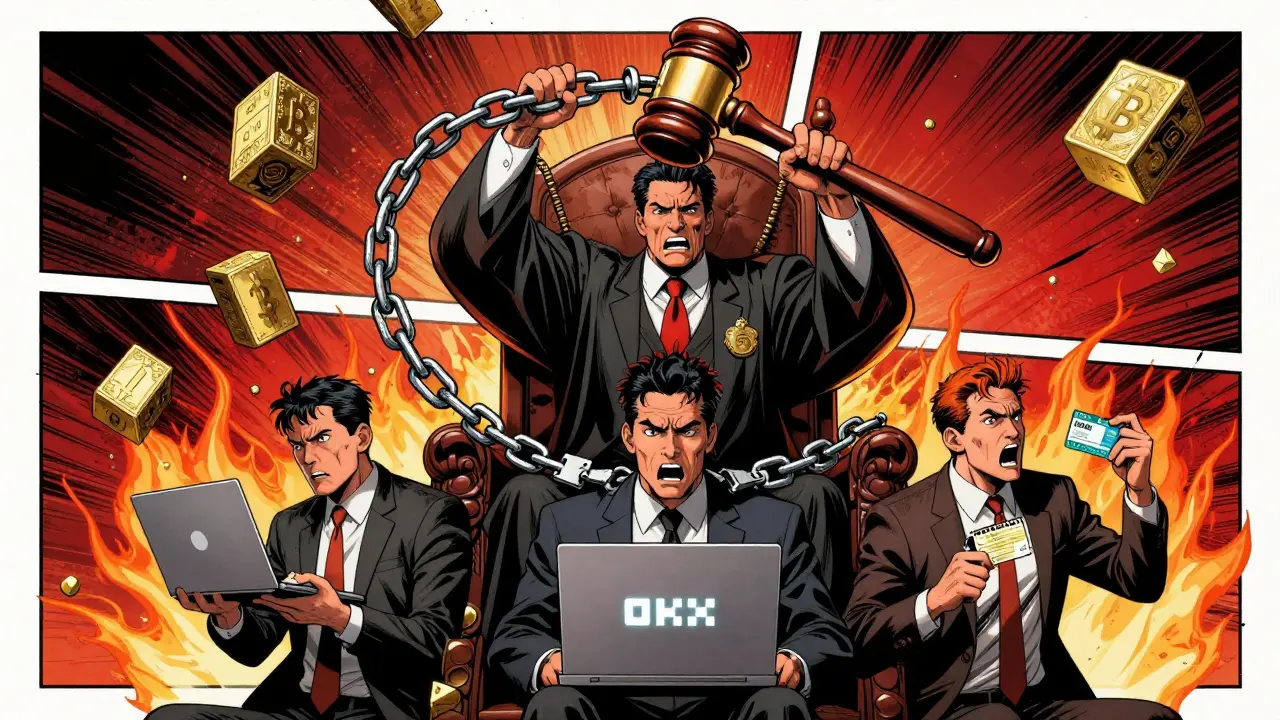
In February 2025, OKX, one of the world’s largest crypto exchanges, pleaded guilty to helping over $5 billion in illegal transactions. The U.S. Department of Justice found that OKX staff told American users how to fake their addresses and IDs to bypass bans. Even though OKX claimed to block U.S. users, internal emails showed employees coaching people on how to slip through the cracks. The result? A $500 million penalty-$84 million in civil fines and $420 million in forfeited assets. But more importantly, executives faced criminal charges. This wasn’t a slap on the wrist. It was a signal: if you run a crypto platform and ignore sanctions, you’re not just breaking rules-you’re breaking the law.How One Person Can Get 30 Years in Prison
The 30-year sentence isn’t from one charge. It’s from stacking multiple federal crimes together. Take the case of Iurii Gugnin, founder of the crypto payments firm Evita. In June 2025, he was indicted for wire fraud, bank fraud, operating an unlicensed money transmitter, and laundering over $500 million for Russian entities under U.S. sanctions. Each charge carries its own sentence:- Wire fraud: up to 20 years per count
- Bank fraud: up to 30 years per count
- Money laundering: up to 20 years
- Operating without a license: up to 5 years
Who Else Is Being Targeted?
It’s not just big exchanges. Regulators are going after individuals too. In 2024, OFAC sanctioned 86 cryptocurrency addresses linked to Russian hackers, North Korean cyber units, and ransomware gangs like Trickbot. Three exchanges-NetEx24, Bitpapa, and Cryptex-were hit hard. Within three months of being sanctioned, their transaction volumes dropped by 82%. That’s not coincidence. It’s enforcement. The UK’s National Crime Agency took down two individuals-Elena Chirkinyan and Khadzi-Murat Dalgatovich Magomedov-for running crypto money-laundering rings tied to sanctioned Russian actors. Their assets were frozen. Their businesses shut down. And now, they’re facing extradition and possible prison time. Even North Korea isn’t safe from this net. In June 2025, the DOJ moved to seize $7.74 million in crypto traced back to North Korean IT workers who used fake identities to earn crypto through remote jobs, then funneled it home. The U.S. didn’t just freeze the money-they published the wallet addresses publicly, making it impossible for anyone to touch them without risking their own legal exposure.Why Passive Compliance Is Dead
Back in 2020, some crypto firms thought: "We don’t have to check every wallet. We’re not a bank." That thinking is dead. The UK’s Office for Financial Sanctions Implementation (OFSI) made it clear in July 2025: "Passive compliance is no longer sufficient." If you run a crypto platform and don’t actively screen transactions, monitor for red flags, and report suspicious activity, you’re not just negligent-you’re criminally liable. Blockchain analytics tools like Chainalysis, Elliptic, and TRM Labs are now standard. Firms that refuse to use them are being labeled as high-risk. And regulators don’t just fine them-they refer them to criminal prosecutors. The UK also introduced the "Failure to Prevent Fraud" law. Now, if an employee or agent commits fraud using your platform, your company is guilty unless you can prove you had "reasonable procedures" in place. That means training, audits, transaction monitoring, and clear internal controls.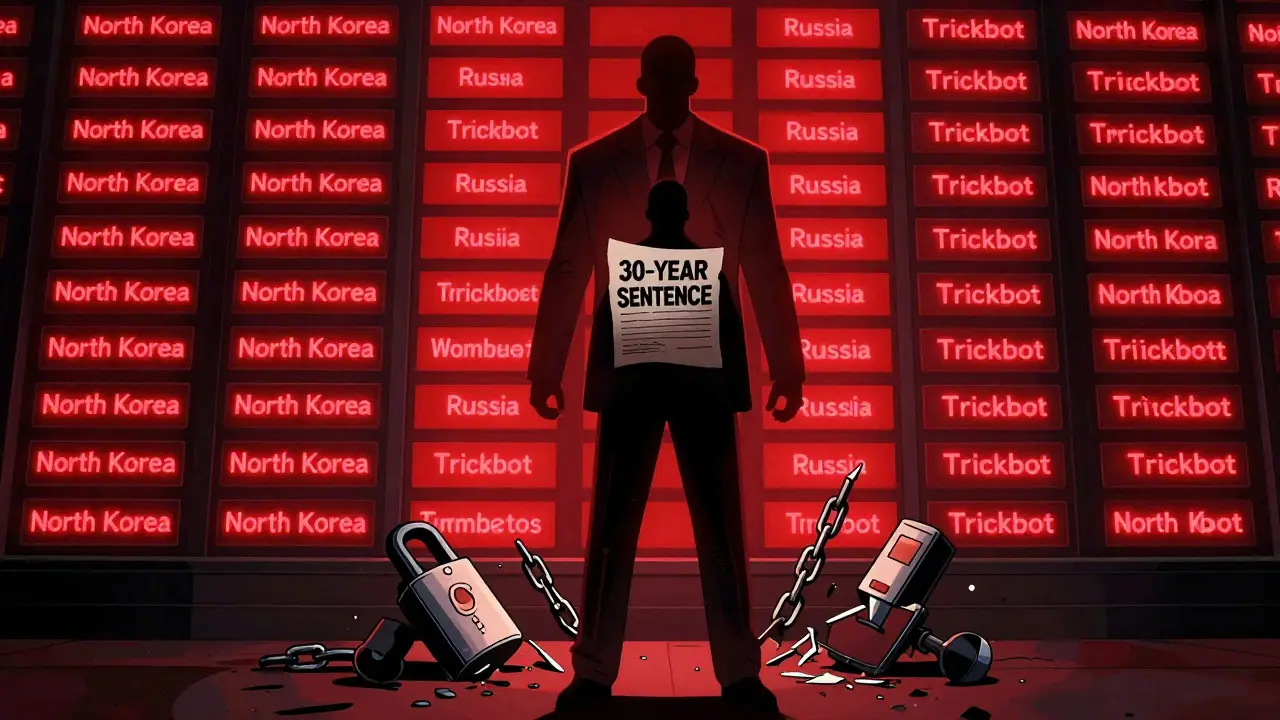
The Real Risk: Your Personal Freedom
Most people think sanctions violations are a corporate problem. They’re not. Senior executives, compliance officers, even customer support staff who ignore red flags can be charged personally. In 2025, the average penalty per crypto business jumped to $3.8 million-but more than 30% of firms also lost their licenses. Some were shut down completely. But the real fear? Criminal charges against individuals. In the U.S., prosecutors are increasingly using RICO laws-originally designed for organized crime-to go after crypto networks that help sanctioned actors. That means if you’re part of a group that moves money for Russia, Iran, or North Korea, you could be charged with racketeering. And RICO carries up to 20 years per count. Combine that with money laundering, wire fraud, and sanctions violations? Thirty years isn’t a stretch. It’s a realistic outcome.What You Need to Do If You’re in Crypto
If you’re running a business, trading crypto, or even just holding it, here’s what you need to know:- Never use a crypto exchange that doesn’t do KYC. If they let you sign up without ID, they’re already breaking the law.
- Don’t send crypto to wallets linked to sanctioned countries. Tools like Blockchair and Etherscan let you check wallet histories.
- If you’re a business, invest in blockchain monitoring software. It’s not optional anymore.
- Train your team. If someone on your staff ignores a suspicious transaction, you’re liable.
- Don’t assume "I didn’t know" is a defense. Regulators now expect you to know.
What’s Next?
Regulators are working together like never before. The U.S., UK, EU, Singapore, and Japan are sharing intelligence, freezing assets across borders, and coordinating indictments. There’s no safe jurisdiction anymore. In 2026, expect more criminal charges against individual traders who move crypto for sanctioned entities. More exchange founders going to prison. More families losing homes because their assets were seized. Crypto isn’t going away. But the days of using it to hide money from the law are over.Can I get in trouble for using crypto if I didn’t know it was linked to sanctions?
Ignorance isn’t a defense if you’re running a business or handling large volumes. Regulators expect you to use basic screening tools. For individuals, if you’re just buying Bitcoin for personal use and didn’t knowingly transact with a sanctioned address, you’re unlikely to be targeted. But if you’re moving money for others, especially across borders, you’re at risk-even if you "didn’t know." The law assumes you should have checked.
Are all crypto transactions being monitored?
No, not every single one. But every transaction on public blockchains can be traced. Regulators focus on high-volume addresses, exchanges, and wallets linked to known sanctions violations. If you’re using a major exchange, your activity is already being screened. If you’re using privacy tools like mixers or tumblers, you’re drawing attention-and that’s a red flag.
What happens if my wallet gets sanctioned?
Your funds become frozen. No exchange will touch them. No wallet provider will let you move them. Even if you didn’t do anything wrong, you’ll need to prove your wallet wasn’t involved in illicit activity-which can take months or years. Many people lose access permanently because they can’t provide the documentation.
Is it illegal to use crypto in countries under sanctions, like Russia or Iran?
It’s not illegal to hold crypto in those countries. But if you’re outside those countries and send crypto to someone inside, you could be violating sanctions. The U.S. and EU have blocked transfers to Iranian and Russian wallets, even if they’re personal. Using crypto to bypass financial isolation is the violation-not owning crypto itself.
Can I be charged even if I didn’t profit from the transaction?
Yes. Profit isn’t required for a sanctions violation. The crime is facilitating the transfer of value to a sanctioned person or entity-even if you didn’t take a cut. Helping someone send $10,000 to a blocked Russian address is enough to trigger charges, regardless of whether you got paid.
What’s the difference between a fine and a prison sentence in these cases?
Fines are for companies and institutions. Prison sentences are for individuals who knowingly broke the law. If you’re a CEO, developer, or compliance officer who ignored warnings, you’re likely to face personal criminal charges. Fines hurt your business. Prison takes your freedom.
Are there any legal ways to use crypto with sanctioned entities?
No. There are no legal exceptions for individuals or businesses to transact with sanctioned entities using crypto. Even humanitarian aid requires special licenses from OFAC or OFSI-and those are rarely granted for crypto transfers. The only safe path is to avoid any interaction with sanctioned addresses, wallets, or exchanges entirely.
 Cryptocurrency Guides
nayan keshari
January 3, 2026 AT 18:37Bianca Martins
January 5, 2026 AT 04:00And yeah, even if you’re just helping a friend, you’re liable. No profit needed. Just movement.
alvin mislang
January 6, 2026 AT 00:38Monty Burn
January 6, 2026 AT 01:55Kenneth Mclaren
January 6, 2026 AT 18:42Alexandra Wright
January 7, 2026 AT 07:23Jack and Christine Smith
January 7, 2026 AT 19:27Jackson Storm
January 8, 2026 AT 13:10Raja Oleholeh
January 8, 2026 AT 18:04Vernon Hughes
January 9, 2026 AT 14:21Alison Hall
January 10, 2026 AT 22:32Amy Garrett
January 11, 2026 AT 08:19Haritha Kusal
January 11, 2026 AT 17:16Mike Reynolds
January 12, 2026 AT 18:56dayna prest
January 13, 2026 AT 21:20Andy Reynolds
January 14, 2026 AT 03:40Antonio Snoddy
January 15, 2026 AT 22:44Steve Williams
January 16, 2026 AT 18:35Johnny Delirious
January 17, 2026 AT 08:10