
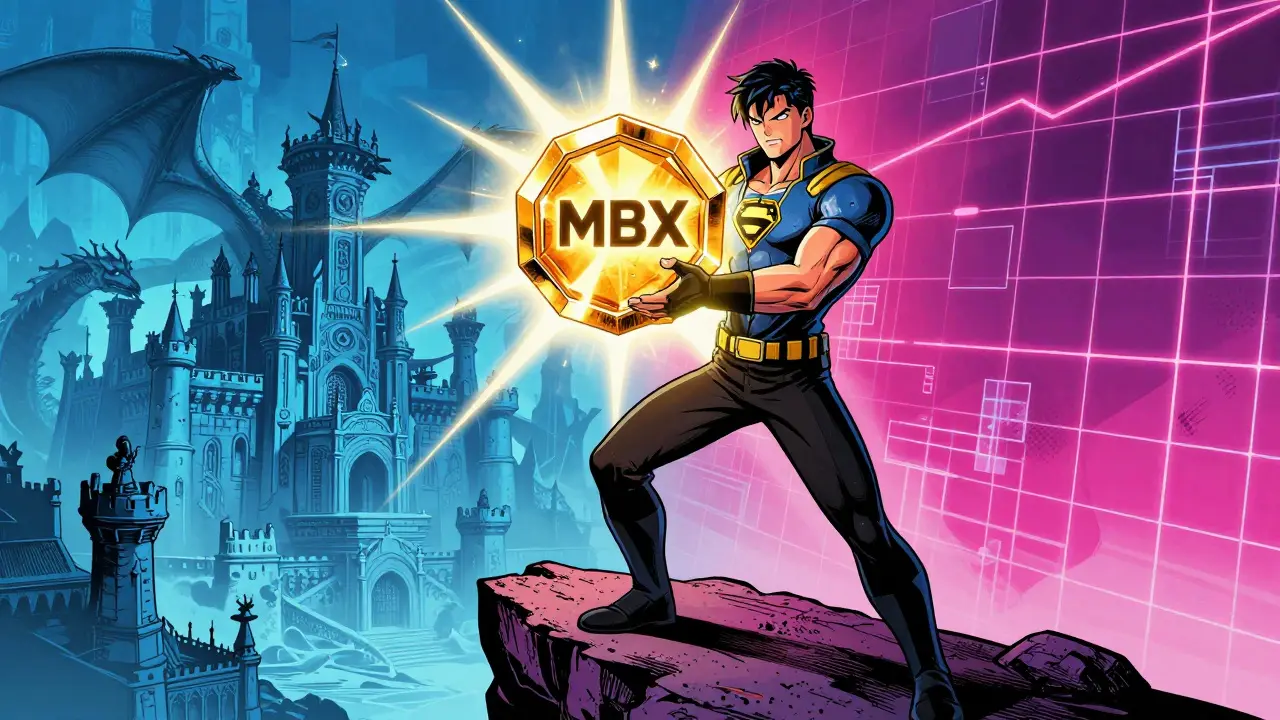
Imagine playing your favorite mobile game and earning assets you can actually sell for real money. That is exactly what MARBLEX (MBX) aims to do. Unlike standard cryptocurrencies that function mostly as digital cash or speculative assets, MBX was built specifically to bridge traditional gaming with blockchain technology. It serves as the central currency for a massive ecosystem created by Netmarble, one of South Korea's leading gaming publishers. If you have ever played games like Lineage II Revolution or Brave Brigade and wondered what happens if those in-game items could exist on a blockchain, MBX is the key to that future.
The cryptocurrency is not just another experiment; it represents a strategic pivot for a company already managing millions of players globally. While many crypto projects fade away, MARBLEX leans on the decades-long reputation of a top-tier gaming studio. This gives it a unique advantage over smaller, independent GameFi projects. Understanding MBX requires looking past the chart candles to see how the token connects to actual gameplay mechanics, wallet infrastructure, and the broader Web3 gaming economy.
Understanding the MARBLEX Ecosystem
To grasp the value of MBX, you first need to understand where it lives. The entire platform operates on the Klaytn blockchain. Klaytn was developed by Kakao, another South Korean tech giant, known for high transaction speeds and low fees. For gamers, this means instant trades without waiting hours for network confirmations. When you transfer an item in a standard game, it moves through the developer's private server. With MBX and Klaytn, ownership is recorded on a public ledger, meaning the asset belongs to you, not the company.
MARBLEX functions as the native utility currency for this space. Netmarble designed a dual-token system. Think of it like this: individual games might have their own specific currency, like gold or gems, but MBX acts as the stable bridge between all of them. You can earn a token in one Netmarble game and swap it for MBX, then use that MBX to buy assets in a completely different Netmarble title. This connectivity turns isolated game economies into a shared marketplace.
This system addresses a major pain point in the industry: liquidity. In most mobile games, the money you spend stays locked inside that app. MBX changes this dynamic by allowing the transfer of value across multiple products. Users interact with the MBX Wallet, which acts as the central hub. From there, they can connect to various publishers and developers participating in the network.
How MBX Tokenomics Work
Digging into the supply numbers helps clarify the potential scarcity of the token. The maximum supply of MBX is capped at 1 billion tokens. This fixed cap is important because it prevents inflation from devaluing the token over time. As of early 2026, approximately 210 million MBX tokens are in circulation. This means roughly 21% of the total supply is currently available to traders and users, leaving the remaining 79% locked or reserved for future ecosystem growth and partnerships.
- Total Supply: 1 Billion MBX
- Circulating Supply: ~210 Million MBX
- Blockchain: Klaytn (KIP-37 Standard)
- Consensus: Proof-of-Authority (PoA) via Klaytn nodes
You cannot mine MBX like Bitcoin. There is no proof-of-work mechanism here. New tokens were generated according to a predefined schedule at launch rather than through solving cryptographic puzzles. Instead of mining, users acquire MBX through staking rewards, participation in game events, or buying on exchanges. This design choice reduces energy consumption and aligns the token's utility more closely with usage rather than speculation.
The fully diluted valuation (FDV) estimates the project's worth if every single token were in play. Based on current metrics, the FDV reflects significant confidence from investors. However, market prices fluctuate widely depending on trading volume and exchange pairs. You might see price differences between major platforms because each has its own order book depth and user base liquidity.
| Metric | Value / Range | Context |
|---|---|---|
| 24-Hour Volume | $1.1M - $437K USD | Varies by exchange (HTX, Gate, Coinpedia) |
| Price Range | $0.038 - $0.185 | Different listings show variance due to liquidity |
| Market Cap Rank | #336 to #345 | Top tier mid-cap gaming token |
Note that the price ranges shown above represent snapshot data across different aggregators. Liquidity fragmentation is common in crypto, so checking live charts before trading is essential. The value of MBX is intrinsically tied to the success of the underlying games using it. If the games gain players, demand for MBX rises naturally.
Utility Beyond Speculation
Many people ask if MBX is just a pump-and-dump scheme. The answer lies in its designated uses within the platform. First, it powers the trade of digital collectibles. These aren't just JPEGs; they are functional items from popular Netmarble franchises. You can buy, sell, and transfer these items freely. Second, it grants access to exclusive events. Holding MBX often opens doors to special game passes, tournaments, or beta access that standard players cannot join.
There is also a strong focus on the metaverse expansion. Netmarble views MBX as a foundational element for building virtual worlds where physical gaming assets can be imported. Imagine taking a weapon skin from a battle royale game and displaying it in a social VR hangout. MBX facilitates the economic transactions needed to make that happen securely. This is part of the long-term roadmap toward connecting NFT applications with established gaming brands.
Reward mechanisms are another pillar. Through staking, holders can earn passive income. The yield varies based on participation periods. This encourages long-term holding rather than immediate selling, which stabilizes the circulating supply. Additionally, the ecosystem allows for cross-game swaps. If Game A releases a limited edition item, you can pay for it using tokens earned in Game B by converting them to MBX first.
Buying and Trading MBX
Getting your hands on the token involves choosing the right platform. Major centralized exchanges list MBX pairs against USDT (Tether) and BTC (Bitcoin). High-volume venues like HTX and Gate account for the majority of trading activity. These platforms offer deep liquidity, meaning you can move larger amounts of capital without slipping the price too much.
- Centralized Options: HTX, Gate.io, Bitget, MEXC
- Decentralized Options: PancakeSwap V3 (on Binance Smart Chain)
- Preferred Pairs: MBX/USDT, MBX/BTC, MBX/WBNB
If you prefer non-custodial trading, the decentralized route exists but usually offers lower liquidity. You will find better execution speed and tighter spreads on the centralized markets listed above. Once purchased, store your assets in a compatible wallet like MBX Wallet or any Klaytn-compatible holder. Security remains paramount; never share your seed phrase, regardless of the promise made by support staff.
Risks and Considerations
Despite the backing of a reputable company, risks remain inherent to the sector. Regulatory uncertainty affects all crypto assets, especially those labeled as securities or utility tokens used in gambling-like scenarios. Governments may classify in-game currencies differently depending on jurisdiction. Furthermore, the value of MBX depends on the popularity of Netmarble's games. If the parent company struggles with new releases or retention rates, the token's utility diminishes, potentially impacting price.
Volatile markets are another reality. Like all digital assets, MBX sees significant swings over short periods. A drop of 5-7% in a week is not uncommon during broader market corrections. Always assess your risk tolerance before entering positions. Do not invest money you cannot afford to lose. Finally, technical complexity shouldn't be underestimated. Using wallets and interacting with smart contracts requires learning curve adjustments compared to traditional retail purchases.
Frequently Asked Questions
Is MARBLEX (MBX) mined or minted?
No, MARBLEX does not support direct mining. It operates on a fixed supply model with 1 billion total tokens. New tokens enter circulation through pre-defined distribution schedules, staking rewards, and gameplay incentives rather than computational work.
Which blockchain does MBX use?
MBX is built on the Klaytn blockchain, a high-performance network developed by Kakao. This ensures fast transaction times and low gas fees suitable for gaming interactions.
Can I trade MBX on my phone?
Yes, you can use mobile apps from supported exchanges like Gate or MEXC. Alternatively, the official MBX Wallet allows for secure storage and management of your assets directly on a mobile device.
What is the main use case for MBX?
The primary use case is acting as the universal currency for Netmarble's game ecosystem. It allows players to buy, sell, and transfer in-game items across different titles, essentially creating a unified marketplace for digital assets.
Does MBX have a staking program?
Yes, users can stake their MBX tokens to earn rewards. Staking helps stabilize the circulating supply while providing passive income opportunities for holders within the ecosystem.
Ultimately, MARBLEX (MBX) stands out as a serious attempt to merge legacy gaming with modern decentralized finance. It isn't trying to reinvent gaming from scratch but rather empowers existing communities with financial tools. As the sector evolves toward more integrated digital experiences, the token positioned at the center of such a well-capitalized project carries significant weight. Whether you are an investor tracking the next bull run or a gamer looking to monetize your achievements, understanding the mechanics behind MBX is a crucial step forward.
 Cryptocurrency Guides
Diana Martín Prieto
April 2, 2026 AT 21:30This article really breaks down how MBX actually works in a way that's easy to understand. I've been following Netmarble for years with their classic games and it makes sense they'd want to expand into blockchain gaming. The Klaytn integration is smart since speed matters so much when you're trading items mid-game
Susan Payne
April 3, 2026 AT 15:57The whole premise sounds impressive on paper but let's be honest about how most GameFi projects end up. There's genuine skepticism warranted here given the track record of similar initiatives. Companies claim utility but often deliver speculation vehicles disguised as platforms. The tokenomics might look neat until market forces prove otherwise.
Siddharth Bhandari
April 5, 2026 AT 03:35From an Indian perspective the cross-border aspect of MBX wallet is interesting. Traditional mobile game economies are walled gardens by design. This could genuinely enable asset portability across regions though regulatory frameworks remain uncertain globally.
akash temgire
April 6, 2026 AT 02:32Klaytn blockchain choice warrants deeper examination than this overview provides. Kakao partnership gives infrastructure credibility but does not eliminate platform risk. Token distribution mechanics lack transparency regarding vesting schedules and team allocations.
Matthew Wright
April 6, 2026 AT 21:07I'm curious about the actual adoption metrics honestly! How many active players are using MBX wallet currently? Are we talking thousands or millions?
Evan Borisoff
April 8, 2026 AT 08:24The fact that American gamers won't likely see this soon due to regulatory constraints means this project targets primarily Asian markets which limits its global appeal significantly. Crypto regulations in the US are still catching up while Korean blockchain gaming pushes forward aggressively with government support
Erica Mahmood
April 8, 2026 AT 14:14Fixed supply of 1B tokens is decent tokenomics but staking yields matter more for long term holders. Need clear APY data before committing capital seriously.
Krystal Moore
April 9, 2026 AT 07:12Honestly the whole thing feels like another attempt to cash in on NFT hype wave. Remember when every game wanted blockchain integration suddenly? Most of those collapsed within months. Why is this any different despite established company backing 😒
Sharhonda Walker
April 10, 2026 AT 21:49the part about cross game economics is really cool i think. finally something that makes sense instead of just jpegs. netmable has proven track record unlike random start ups trying same thing
Adriana Gurau
April 11, 2026 AT 22:16If anyone believes MBX represents real value beyond speculation they clearly haven't studied GameFi failure patterns carefully enough 😤 Even successful traditional publishers face challenges adapting business models to Web3 requirements successfully
Robert Coskrey
April 11, 2026 AT 23:39Regulatory landscape presents major uncertainty regardless of technical merits. Securities classification remains unresolved in most jurisdictions which creates compliance burden for exchanges listing these tokens. Players should verify local laws before participating actively
Suvoranjan Mukherjee
April 12, 2026 AT 06:59Greetings from India community here! We're seeing growing interest in GameFi particularly among Gen Z gamers who already comfortable with digital ownership concepts. MBX could position itself well if localized marketing efforts improve. Klaytn network performance has been solid during peak transaction periods too 🎮
JERRY ORTEGA
April 14, 2026 AT 06:10wonder if people realize most existing netmarble games wouldnt benefit from this tech honestly. older titles probably havent been rebuilt with mbx in mind so adoption barrier pretty high right now unless major updates planned
shubhu patel
April 14, 2026 AT 23:50While understanding enthusiasm surrounding MBX token launch many reasonable concerns persist regarding sustainable utility generation mechanisms beyond initial speculative trading periods which unfortunately characterize most emerging blockchain gaming ventures today according to comprehensive industry analysis reports from multiple reputable sources
Arlen Medina
April 16, 2026 AT 04:21Lets stop pretending all GameFi will succeed because one Korean studio gets involved. Market dynamics dont care about your corporate reputation when bear cycles hit hard enough
Carol Prates
April 16, 2026 AT 07:35The psychological aspect of gamified earning keeps people engaged longer even when returns remain questionable fundamentally. Behavioral economics drives participation far more than pure financial incentives most observers fail to appreciate properly 💔
Hugo Lopez
April 17, 2026 AT 01:54Love seeing traditional gaming companies take Web3 seriously after early crypto bros tried and mostly failed alone! Community building around MBX seems genuine rather than forced pump campaigns 🎯💪
Carmelita Gonzales
April 17, 2026 AT 02:13Understanding regional preferences helps explain strategic focus areas better. Asian markets more open to blockchain gaming while western adoption lags considerably behind current trends
Nicholas Whooley
April 17, 2026 AT 15:13Regardless of current market conditions the fundamentals here appear stronger than typical memecoins or vague metaverse projects. Diversifying portfolio includes allocation toward quality gaming tokens with actual product integration history
Joshua Aldrich
April 19, 2026 AT 10:14Think about philosophical implications of truly owning your digital assets instead of rented licenses. Could shift power dynamics between players and corporations over decades ahead
alex rodea
April 19, 2026 AT 18:11Keep it simple guys - MBX lets you trade game items across different titles. That is the main thing that matters for regular players like me. Dont over complicate everything
Susan Wright
April 20, 2026 AT 11:27For newbies looking to enter GameFi space MBX offers relatively straightforward entry point compared to complex DeFi protocols requiring deep technical knowledge beforehand. Educational resources available through official channels help newcomers avoid common pitfalls easily
Earnest Mudzengi
April 22, 2026 AT 01:16Centralized exchanges controlling liquidity distribution means backdoor manipulation possible regardless of claimed decentralization promises. Always remember who ultimately controls access gates including KYC requirements that filter userbase selectively against certain demographics unfairly