
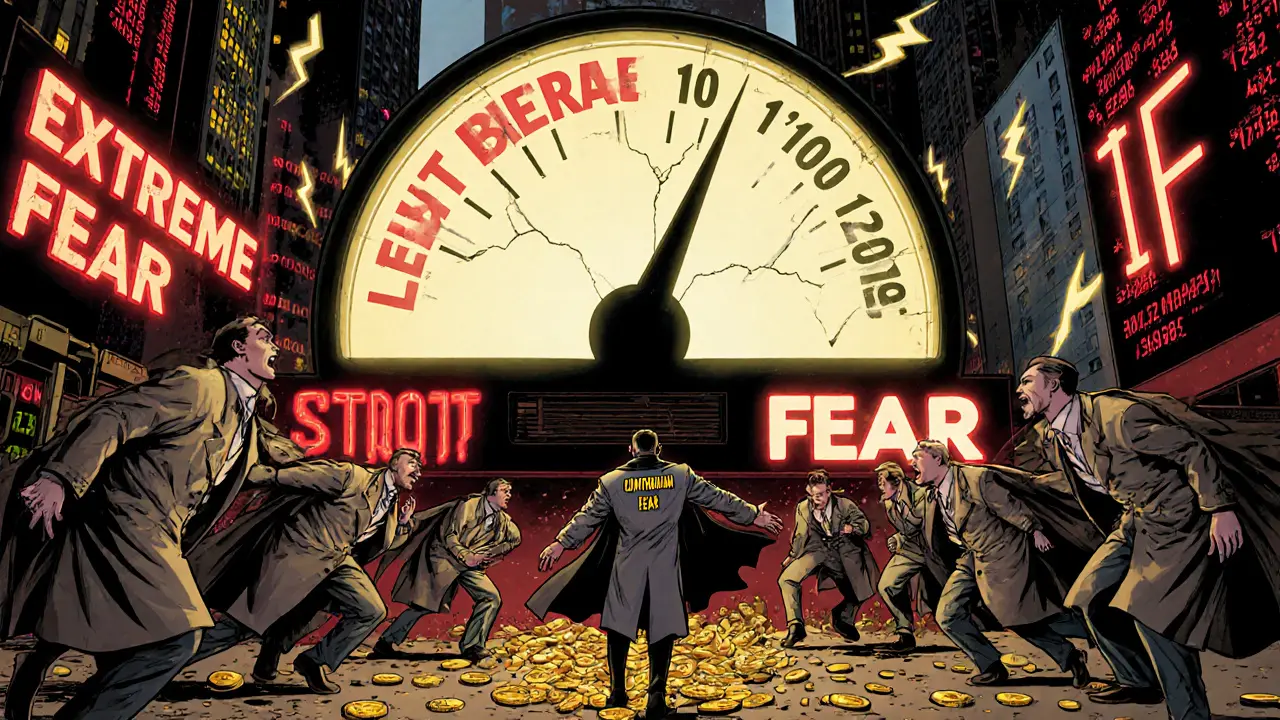
The fear and greed index isn’t a chart of price movements or a technical indicator like RSI or MACD. It’s a mirror. It shows what investors are feeling - not what they’re doing, but why they’re doing it. And in markets as wild as crypto and stocks, emotions often move prices more than fundamentals.
What the Fear and Greed Index Actually Measures
The fear and greed index takes seven different signals from the stock market and turns them into one number between 0 and 100. Zero means everyone’s terrified. A hundred means everyone’s greedy. Fifty is neutral - people aren’t panicking or betting big, they’re just watching. It’s not magic. It’s math. Each of the seven components gets equal weight: about 14.3% each. One part looks at how the S&P 500 is doing compared to its 125-day average. Another checks how many stocks are hitting new highs versus new lows. Then there’s the volume of rising vs falling stocks, the ratio of put options to call options, the spread between junk bonds and safe Treasuries, the VIX (the market’s fear gauge), and how much investors are fleeing to bonds instead of stocks. All of these are fed into a formula. The result? A single number that tells you if the crowd is panicking or partying.How It Works in Real Life
When the index hits below 20, it’s called “extreme fear.” That’s when people are selling everything because they think the sky is falling. Historically, that’s when smart investors start buying. On March 12, 2020, during the pandemic crash, the index dropped to 2. The S&P 500 recovered over 70% in the next six months. People who bought then made serious money. On the flip side, when the index hits above 80 - “extreme greed” - it’s a red flag. That’s when everyone’s jumping in, chasing gains, and ignoring risk. In December 2021, the index hit 90. Bitcoin was at $69,000. The next year, it lost over 60%. Those who bought at greed levels got burned. It’s not about timing the exact bottom or top. It’s about knowing when the crowd is wrong. And crowds are almost always wrong at extremes.The Crypto Version: Different Rules, Same Idea
There’s another version of this index made for crypto. It’s called the Crypto Fear and Greed Index, run by alternative.me. It doesn’t use the same seven factors. Instead, it looks at just four: Bitcoin’s volatility (25%), momentum (25%), social media buzz (15%), and Bitcoin’s market dominance (10%). Why? Because crypto moves differently than stocks. There’s no VIX for Bitcoin. No junk bond spreads. But there’s Twitter, Reddit, and a lot of hype. Social media sentiment matters way more here. When Elon Musk tweets about Dogecoin, the index spikes. When a major exchange gets hacked, it plummets. In 2021, the crypto index hit 95. People were FOMO-ing into everything. By late 2022, it dropped to 10. Many sold at the bottom. But those who bought when it was below 20 - and held - saw 3x, 5x, even 10x returns by 2024.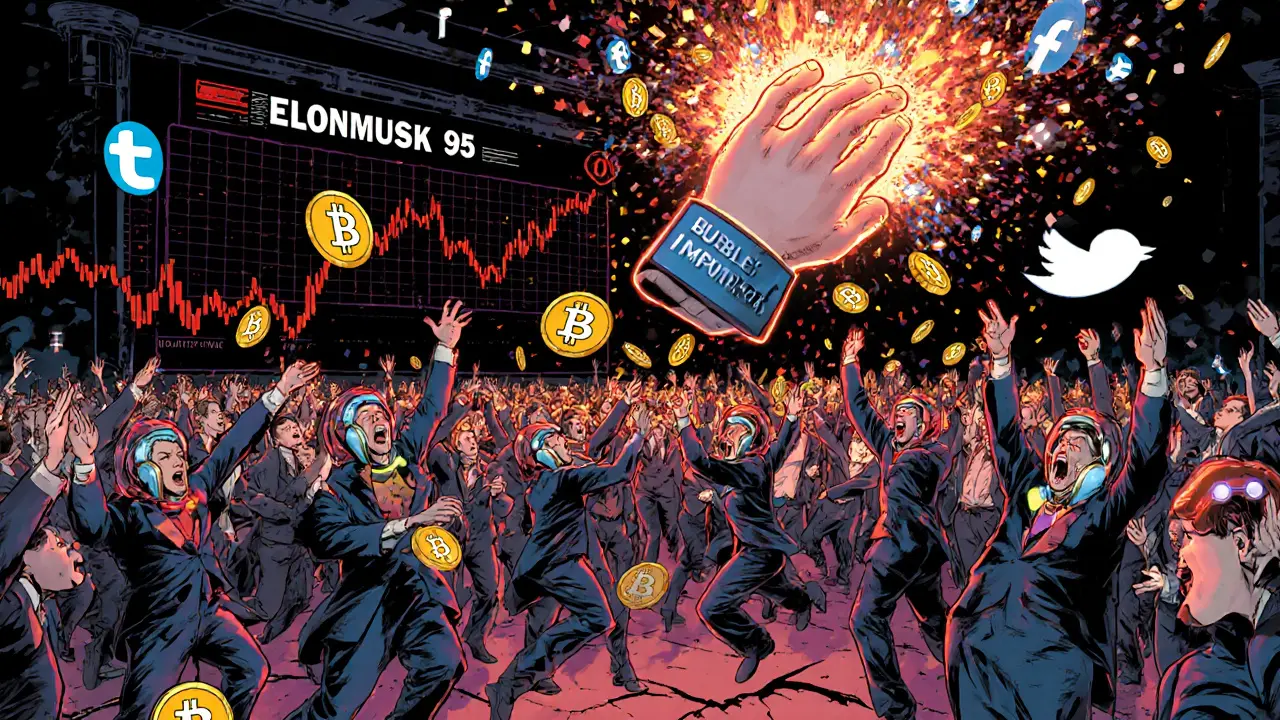
Why It’s Not a Trading Signal
Here’s the biggest mistake people make: they think the fear and greed index tells them when to buy or sell. It doesn’t. It tells you when the market is emotionally overextended. But it doesn’t say when the trend will reverse. You can see extreme fear and the market keeps falling for weeks. You can see extreme greed and prices keep rising for months. Think of it like a thermometer. If your body temperature hits 104°F, you know something’s wrong. But the thermometer won’t tell you if you need medicine, rest, or a hospital. You still need to diagnose the cause. The same goes here. If the index hits 15, don’t just buy Bitcoin. Ask: Is there a regulatory crackdown? Is a major protocol down? Is the macro environment collapsing? Use the index to confirm your research - not replace it.What the Experts Say
Dr. Richard Peterson, a behavioral finance expert and author of Trading on Sentiment, found that after extreme fear readings (below 25), the S&P 500 had a 68% chance of rising over the next six months. That’s not a guarantee. But it’s a strong statistical edge. Professor Hersh Shefrin, a pioneer in behavioral finance, warns that the index’s equal-weighting system is outdated. In 2020, volatility and safe-haven demand were the only things that mattered. The other five signals were noise. The index didn’t adapt. It just kept counting them the same way. Even CNN Business says it outright: “This is not a tool to predict the market, but rather a way to measure the current sentiment of the market.”How Retail Investors Use It (And How They Mess It Up)
On Reddit, users like u/ValueHunter87 say they doubled their S&P 500 ETF position when the index hit 15 during the March 2023 banking crisis. They made 18% in four months. Others, like u/CryptoMaxx, sold all their Bitcoin when the crypto index hit 90 in January 2021. They missed the next 300% rally. The difference? One used the index as a contrarian signal. The other treated it like a trading bot. A Bajaj AMC survey found 76% of retail investors check the index monthly. But only 42% use it as a secondary confirmation - meaning most treat it like gospel. That’s dangerous. Common mistakes:- Trading based on the number alone
- Thinking 40-60 is “neutral” and therefore not worth paying attention to
- Ignoring market context - a 20 during a recession isn’t the same as a 20 during a bull market
How to Use It Right
Here’s what actually works:- Check the index once a week - not every hour.
- If it’s below 25, dig deeper. Look at fundamentals, news, and on-chain data. Are people still building? Are devs active? Is demand dropping?
- If it’s above 75, pause. Don’t buy more. Ask: Am I buying because I believe, or because I’m scared of missing out?
- Use it with dollar-cost averaging. When the index is low, add more. When it’s high, hold off. This removes emotion from timing.
- Never use it alone. Always combine it with price action, volume, and macro trends.
Is It Still Relevant in 2025?
The index hasn’t changed since 2012. But markets have. Algorithmic trading now makes up 60-73% of stock volume. Crypto is no longer just Bitcoin. Ethereum, Solana, and memecoins move independently. Critics say the index is broken. But here’s the truth: human emotion hasn’t changed. Fear still makes people sell. Greed still makes them buy. And as long as that’s true, the index will matter. CNN is testing a new component: real-time social media sentiment. Alternative.me is adding Ethereum and Solana data in 2024. The tool is evolving - slowly. The Financial Analysts Federation surveyed 150 CFA charterholders in 2023. 78% believe the fear and greed index will still be useful in 2030.Final Thought: It’s Not About Prediction. It’s About Perspective.
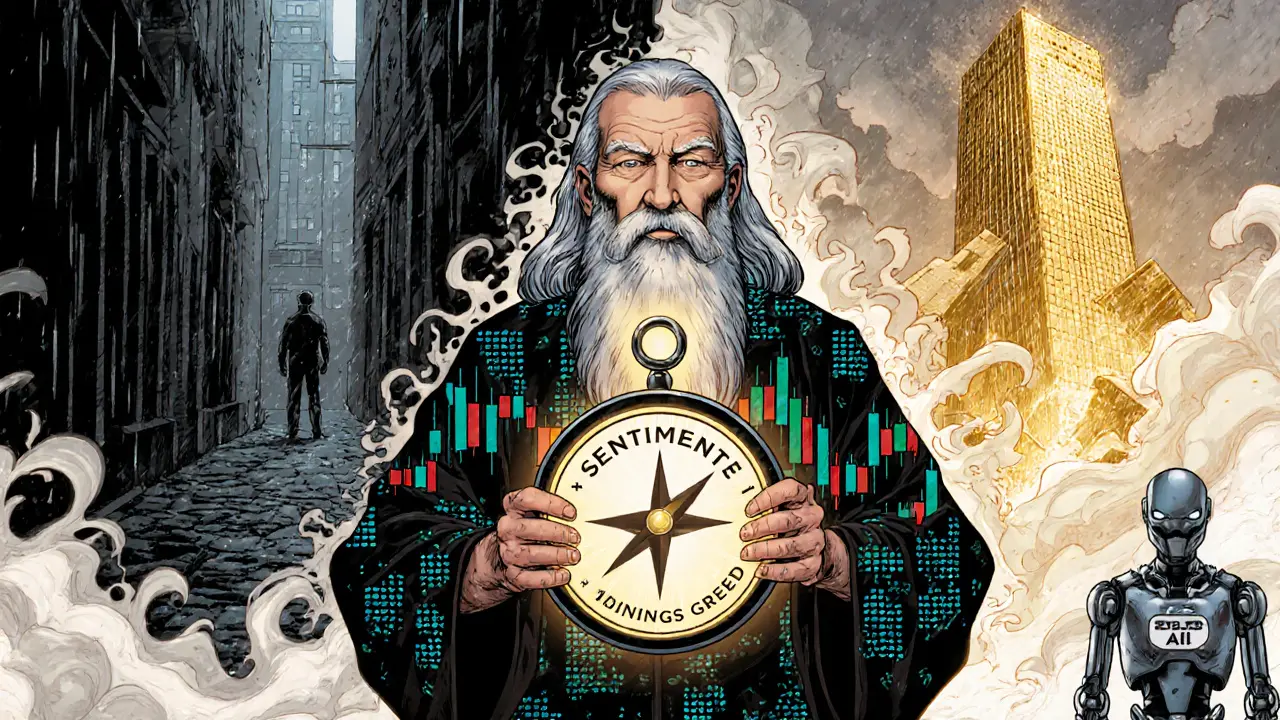
The fear and greed index doesn’t tell you where prices are going. It tells you where the crowd is standing. If everyone’s running for the exit, maybe it’s time to look around. If everyone’s shouting about the next 10x, maybe it’s time to step back. It’s not a crystal ball. But it’s a compass. And in a market where noise drowns out logic, that’s more valuable than you think.What does a fear and greed index reading of 10 mean?
A reading of 10 means extreme fear. Investors are panicking, selling off assets, and avoiding risk. Historically, this has been a strong signal for long-term buyers. Markets often rebound after extreme fear, but it doesn’t mean the bottom is here - just that sentiment is unusually negative. Use this as a trigger to research fundamentals, not to buy blindly.
Is the crypto fear and greed index the same as the stock market version?
No. The stock market version uses seven indicators like the VIX, bond spreads, and options ratios. The crypto version uses only four: Bitcoin volatility, momentum, social media sentiment, and market dominance. Crypto doesn’t have traditional financial data like Treasuries or junk bonds, so it relies more on on-chain activity and public chatter. The crypto index is simpler, faster-moving, and more reactive to news and memes.
Can I use the fear and greed index to time my crypto trades?
Not reliably. The index shows sentiment, not price direction. You can see extreme greed and prices keep rising for months. You can see extreme fear and prices keep falling. Use it to avoid buying at peaks or selling at troughs, not to predict exact entry or exit points. Combine it with technical analysis and on-chain metrics for better results.
Where can I check the fear and greed index daily?
The original stock market version is published daily by CNN Business at cnn.com/fear-and-greed. The crypto version is updated every 24 hours on alternative.me/fear-and-greed. Both are free and require no login. Most trading platforms like TradingView and CoinGecko also display the crypto index as a widget.
Why do some people say the fear and greed index is outdated?
Because its calculation hasn’t changed since 2012. Markets are different now - algorithmic trading dominates, crypto has exploded, and global events move markets faster. Some components, like junk bond spreads, matter less in today’s low-interest environment. Critics argue it’s too rigid. But its strength is simplicity. As long as human emotion drives markets, it will remain useful - even if imperfect.
 Cryptocurrency Guides
Jess Bothun-Berg
November 29, 2025 AT 09:20Wow. Just... wow. This article is basically a 2,000-word ad for CNN’s fear-and-greed index-complete with cherry-picked dates, vague stats, and zero mention of how algorithmic trading has rendered half these signals obsolete. I mean, really? You’re still using 2012-era formulas in 2025? The VIX? Bond spreads? In a world where 70% of volume is bots? Please. It’s not a compass-it’s a fossil.
Shari Heglin
November 29, 2025 AT 15:57The author correctly identifies that the Fear and Greed Index is a sentiment metric, not a predictive tool. However, the piece inconsistently conflates correlation with causation. Historical rebound rates following extreme fear readings do not imply predictive power; they reflect regression to the mean. Moreover, the claim that ‘crowds are almost always wrong at extremes’ is an anecdotal generalization unsupported by rigorous statistical testing across market regimes. A more rigorous treatment would acknowledge survivorship bias and time-varying volatility.
Akash Kumar Yadav
December 1, 2025 AT 15:45Bro, you’re talking about some American financial circus like it’s gospel. In India, we don’t need some CNN chart to tell us when to buy or sell-we feel it in our bones. When the market crashes, we don’t wait for a number to hit 10-we see our uncle selling his scooter to buy Dogecoin. That’s real sentiment. Your index is for people who need a spreadsheet to feel human. We got WhatsApp groups. We got memes. We got chaos. And guess what? We made money while you were calculating percentages.
samuel goodge
December 2, 2025 AT 15:28It’s fascinating how this index functions as a psychological Rorschach test-each investor projects their own biases onto a single number. The equal weighting of components, while mathematically elegant, ignores the non-linear interdependencies between sentiment drivers. For instance, during quantitative easing, bond spreads ceased to be meaningful indicators of risk, yet they retained equal weight. This is not a flaw in the data-it’s a flaw in the model’s epistemology. Sentiment is emergent, not additive. The index is a snapshot of collective anxiety, not a mechanism for prediction. It’s beautiful, in a way-like watching a crowd’s heartbeat on an EKG.
alex bolduin
December 3, 2025 AT 21:35So the index is basically a mood ring for Wall Street. I like it. I check it once a week before I add to my ETFs. If it’s below 25 I buy a little more. If it’s above 80 I just chill. Doesn’t matter if it’s perfect. It keeps me from going full FOMO or panic selling. That’s all I need. Simple works. The rest is noise.
Vidyut Arcot
December 4, 2025 AT 22:19Great breakdown! Many beginners think this index is a magic button-but it’s really a mirror. If you’re feeling scared and the index is at 10, ask yourself: Am I scared because the market is broken, or because I didn’t do my homework? The index doesn’t tell you what to do-but it tells you if you’re alone in your fear. And often, when you’re alone in fear, that’s when the smart money is buying. Keep learning, keep researching, and don’t let emotion hijack your strategy. You got this!
Jay Weldy
December 6, 2025 AT 18:29Love this. It’s not about winning every trade. It’s about not losing your mind in the process. I used to trade like a maniac until I started checking this index. Now I just pause. Breathe. Ask: Is this fear real or just loud? Is this greed real or just hype? It doesn’t make me rich-but it keeps me sane. And honestly? That’s worth more than any 10x coin.
Melinda Kiss
December 8, 2025 AT 14:02This was so helpful 😊 I’ve been using the crypto index for months but always felt guilty when I bought at 30 and it kept dropping. Now I realize-I wasn’t wrong, I just needed to wait and research. Thanks for reminding me it’s not about timing, it’s about staying grounded. Sending you virtual tea and hugs 🫖💖
Marsha Enright
December 10, 2025 AT 07:00Same. I used to ignore the index when it was between 40-60. Thought it was ‘boring.’ Then I realized that’s when the real money moves-quietly. The panic buyers and greedy sellers are at the edges. The smart ones? They’re stacking quietly in the gray zone. I started DCA’ing at 45 during the 2023 banking stress. Didn’t make headlines. But my portfolio did. 🤫
Sarah Roberge
December 12, 2025 AT 00:35Okay but what if the index is rigged? What if CNN and alternative.me are in cahoots with the big banks to make us buy low and sell high? I mean, why else would they make it so easy to read? It’s too perfect. Like, who even designed this? Some fed up Wall Street guy who hates us little people? I’m not buying anything until I see proof it’s not a psyop. #DeepStateCrypto #TheyControlTheIndex
Steve Savage
December 12, 2025 AT 22:36Man, I’ve been checking this index since 2018. I’ve seen it hit 95 and 5. I’ve bought at 10 and sold at 85. Sometimes I made money. Sometimes I lost. But here’s the thing-it always made me pause. That’s the real gift. It doesn’t tell you what to do. It just makes you stop and think. And in a world full of noise, that’s the rarest thing of all.
Joe B.
December 13, 2025 AT 01:31Let’s be brutally honest: this index is a glorified sentiment thermometer with a 12-year-old algorithm. The VIX? Irrelevant in a world where SPY options are dominated by institutional gamma hedging. The put/call ratio? Manipulated by hedge funds using synthetic positions. The junk bond spread? Practically flat since 2020 due to Fed intervention. The crypto version? Even worse-social media sentiment is a meme-driven echo chamber where a single Elon tweet can spike it to 99 for no reason. This isn’t data-it’s theater. And we’re all just spectators waiting for the next act. The only thing that matters now is liquidity, leverage, and who’s shorting what. The fear and greed index? It’s a child’s toy in a nuclear war.
Rod Filoteo
December 13, 2025 AT 20:50They’re lying. I know it. The index is fake. The numbers are fed by AI bots trained on Reddit threads. The whole thing is a psyop to get retail investors to buy when the whales are dumping. I’ve seen it. I’ve tracked the spikes. Right before every crash, the index goes from 10 to 25 in 2 hours-right after a bunch of ‘experts’ post on Twitter. Then the market crashes. Coincidence? Nah. It’s a trap. They want us to think we’re smart for buying at fear. But we’re just the meat. And this index? It’s the bait.