
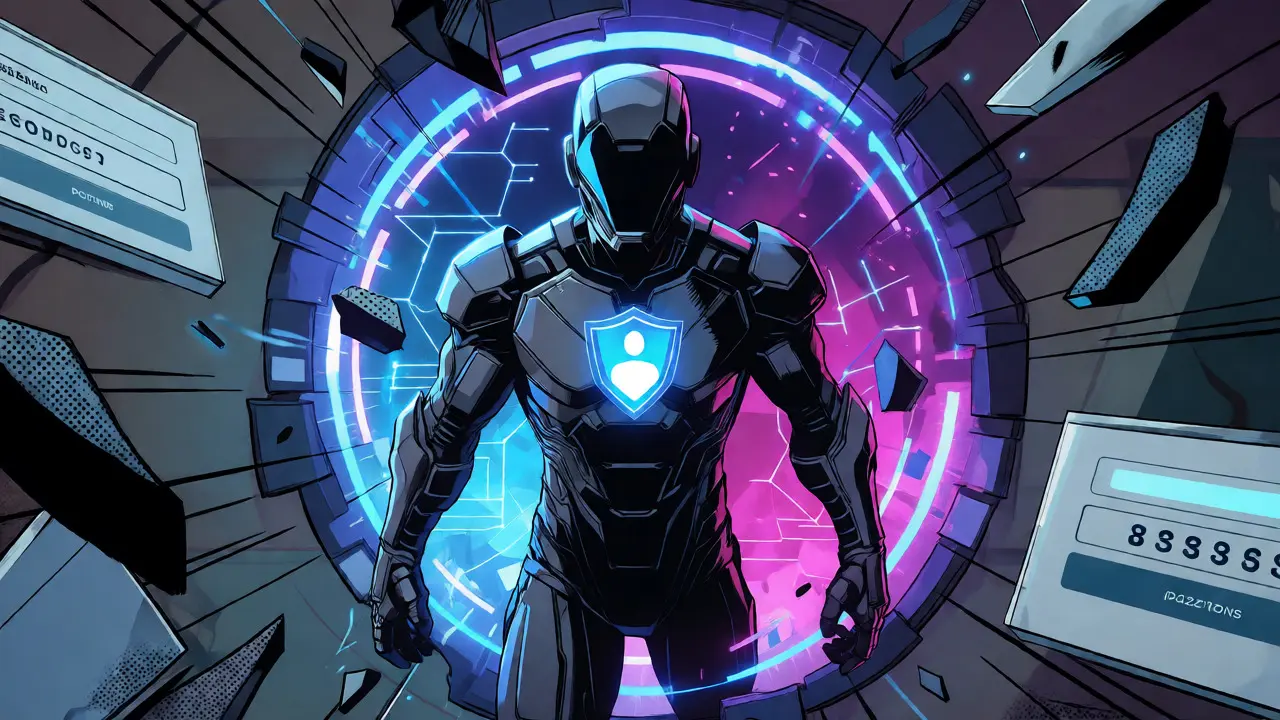
Imagine logging into a website or a game without ever creating a password. Instead, you use your Gamium digital avatar, which holds your identity and assets across different platforms. That’s the core promise of Gamium. It isn’t just another cryptocurrency; it’s an infrastructure project aiming to solve one of the biggest headaches in the digital world: fragmented online identities. If you’ve ever wished your character from one game could appear in another, or that your social profile wasn’t locked inside a single corporate server, this platform is trying to make that happen.
The Core Concept: Digital Identity as Infrastructure
Gamium is a blockchain-based platform designed to create a decentralized social metaverse where users own their digital avatars and data. Unlike traditional games where the company owns your items and character, Gamium shifts ownership to you. The project launched its smart contracts in April 2022 after raising over $2.2 million. This funding allowed them to build the technical backbone needed to support billions of potential users interacting with persistent digital identities.
At the heart of this system is the Avatar SDK. Think of this as a universal translator for digital identities. It allows developers to integrate Gamium avatars into both Web2 (traditional internet) and Web3 (blockchain-based) applications. This means your avatar isn’t trapped in a specific blockchain ecosystem. You can take your digital identity, along with its visual appearance and personality traits, and use it as a secure login method for various services. This interoperability is crucial because it breaks down the walls between isolated gaming ecosystems.
| Component | Function | Technology |
|---|---|---|
| GMM Token | Utility and governance token for transactions and voting. | ERC-20 and BEP-20 compatible |
| Avatar SDK | Enables cross-platform identity usage and data management. | Bridging technology for Web2/Web3 |
| Gamium LANDs | NFTs representing virtual real estate for content creation. | Non-Fungible Tokens (NFTs) |
| DAO | Decentralized Autonomous Organization for community governance. | Snapshot voting mechanism |
Understanding the GMM Token Economics
The native currency of this ecosystem is the GMM token. It serves two primary purposes: utility and governance. As a utility token, you use GMM to buy items, access exclusive features, and participate in staking. As a governance token, holding GMM gives you a voice in how the platform evolves through the Gamium DAO (Decentralized Autonomous Organization).
The total supply of GMM is fixed at 50 billion units. A significant portion is already in circulation, though vesting schedules ensure new tokens enter the market gradually. This controlled release helps prevent sudden price crashes caused by massive sell-offs. The economic model also includes deflationary mechanisms. For instance, the Master Support Token (MST) feature burns 1% of tokens during certain transactions, reducing supply over time. Additionally, a "Real Yield" mechanism redistributes fees to holders who own more than 0.25% of a given MST’s supply, rewarding committed long-term supporters.
Staking is another key incentive. By locking up your GMM tokens, you earn rewards, which encourages people to hold rather than trade frequently. This stability is vital for a platform that relies on consistent user engagement. The fully diluted valuation reflects the maximum market cap if all 50 billion tokens were circulating, providing a benchmark for investors assessing the project’s scale relative to other metaverse coins.
Gamium LANDs and the Creator Economy
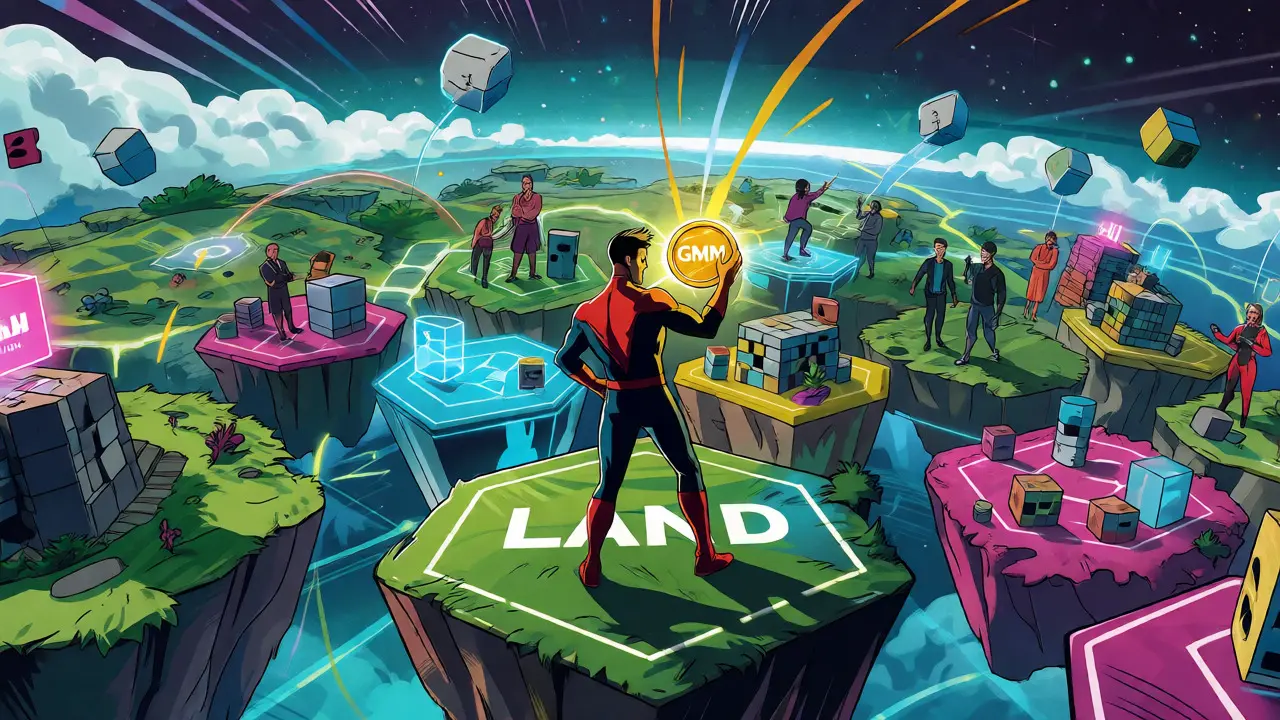
If GMM is the fuel, then Gamium LANDs are the engine. These are non-fungible tokens (NFTs) that represent ownership of digital plots within the Gamium World metaverse. There are exactly 65,000 LANDs distributed across 10 unique neighborhoods. Each neighborhood has distinct characteristics and gamification elements, creating diverse environments for users to explore.
Owning a LAND isn’t just about bragging rights. It grants access to the Creator Studio, a no-code toolkit that lets anyone design and publish 3D experiences. You don’t need to be a programmer to build a virtual concert hall or a mini-game. The integrated API capabilities allow creators to monetize their work directly. If you build a popular experience, visitors pay in GMM, and the revenue flows straight to your wallet. This creates a genuine creator economy where value is generated by users, not just extracted by a central developer.
This approach contrasts sharply with traditional gaming models. In most mobile games, you play to keep engaged, but the developer captures all the profit. In Gamium, the line between player and creator blurs. You can build, share, and earn simultaneously. The marketplace facilitates this by allowing true ownership of in-game assets. If you buy a sword in one game connected to Gamium, you can potentially use or sell it in another, thanks to robust interoperability standards.
Governance and Community Control
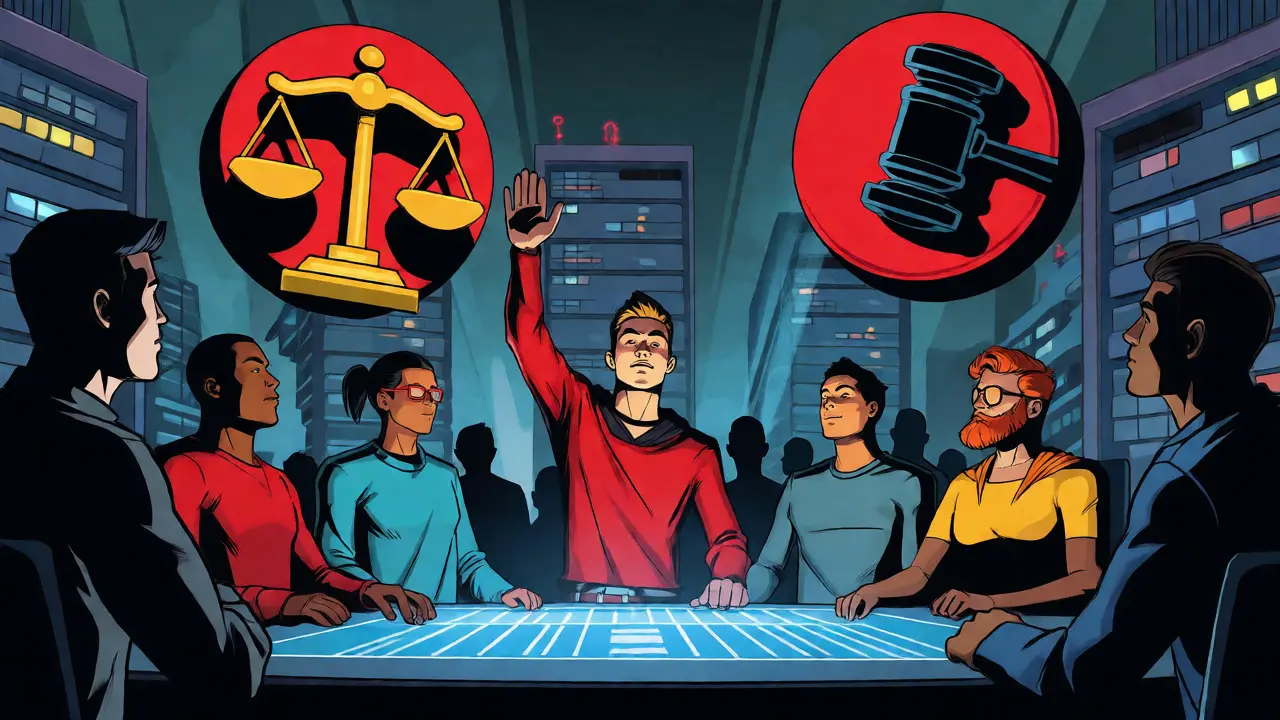
One of the selling points of any serious Web3 project is decentralization. Gamium implements this through its DAO structure. Holders of GMM can propose changes to the platform via Gamium Improvement Proposals (GIPs). These proposals are discussed and voted on using Snapshot, a gas-free voting platform. This ensures that the community, rather than a small board of directors, steers the ship.
Why does this matter? Because metaverses fail when they ignore user feedback. By giving stakeholders direct control, Gamium aims to remain aligned with what users actually want. Do players want more shopping districts? More competitive games? The community votes on these initiatives. This transparency builds trust, a rare commodity in the crypto space. It also reduces the risk of rug pulls or sudden pivots that leave investors stranded.
How Gamium Compares to Other Metaverse Projects
You might wonder how Gamium stacks up against giants like Decentraland or The Sandbox. While those projects focus heavily on land speculation and high-end graphics, Gamium prioritizes identity portability and accessibility. Its Avatar SDK is a unique differentiator. Most competitors lock your avatar to their specific chain or platform. Gamium aims to make your avatar usable everywhere, bridging the gap between legacy web services and blockchain apps.
Furthermore, Gamium’s Social-to-Earn model emphasizes interaction over pure speculation. While buying LAND is part of the strategy, the core loop involves socializing, creating, and engaging. This broadens the appeal beyond hardcore gamers to social media users who want to monetize their attention and creativity. The lower barrier to entry-thanks to the no-code Creator Studio-also attracts a wider demographic than platforms requiring Unity or Unreal Engine skills.
Risks and Considerations for Investors
No crypto investment is without risk. Gamium operates in a crowded market. Competitors have larger marketing budgets and established user bases. Adoption is the biggest hurdle. A metaverse is only valuable if people are actually there. Currently, trading volumes on exchanges like Gate show moderate activity, indicating a niche but active community. You need to watch user growth metrics closely, not just token price.
Technical execution is another factor. Building seamless bridges between Web2 and Web3 is notoriously difficult. Bugs or security flaws in the Avatar SDK could hinder adoption. However, the team’s background and the successful deployment of smart contracts since 2022 suggest steady progress. Always do your own research. Check the GitHub repositories for development activity and monitor community sentiment on Discord and Twitter. Don’t rely solely on press releases.
Getting Started with Gamium
If you’re interested in exploring the ecosystem, start by acquiring some GMM tokens. Major exchanges like Gate list the GMM/USDT pair. Once you have tokens, connect a compatible wallet (like MetaMask) to the Gamium dApp. From there, you can stake your tokens to earn yield or browse the marketplace for NFTs. If you’re creative, consider renting or buying a LAND to test out the Creator Studio. Even if you don’t buy land, you can often attend virtual events hosted by LAND owners to get a feel for the environment.
Remember, the value proposition here is long-term infrastructure. It’s not a quick flip asset. The goal is to see if Gamium becomes the standard for digital identity. If it succeeds, early adopters benefit significantly. If it fails to gain traction, the token may struggle against more dominant competitors. Keep an eye on partnerships with existing gaming studios or social platforms, as these would signal broader acceptance.
What is the main purpose of the GMM token?
The GMM token serves as both a utility and governance token. It is used for transactions within the Gamium ecosystem, such as buying assets or accessing premium features, and allows holders to vote on platform decisions through the Gamium DAO.
Is Gamium built on Ethereum?
Yes, the GMM token is primarily an ERC-20 token on the Ethereum blockchain. It is also compatible with BEP-20 standards, allowing it to operate on Binance Smart Chain, providing flexibility for users regarding transaction fees and speed.
What are Gamium LANDs?
Gamium LANDs are NFTs that represent ownership of digital plots in the Gamium World metaverse. There are 65,000 total LANDs across 10 neighborhoods. Owners can use the Creator Studio to build 3D experiences and monetize them.
How does the Avatar SDK work?
The Avatar SDK allows users to create and manage digital avatars that can be used across both Web2 and Web3 platforms. It acts as a bridge, enabling secure, decentralized login and identity verification without needing separate accounts for each service.
Can I earn money by playing Gamium?
Yes, Gamium uses a Social-to-Earn model. Users can earn GMM tokens by participating in activities, creating content in the Creator Studio, hosting events, or staking their tokens. Creators can also monetize their 3D experiences sold to other users.
 Cryptocurrency Guides