
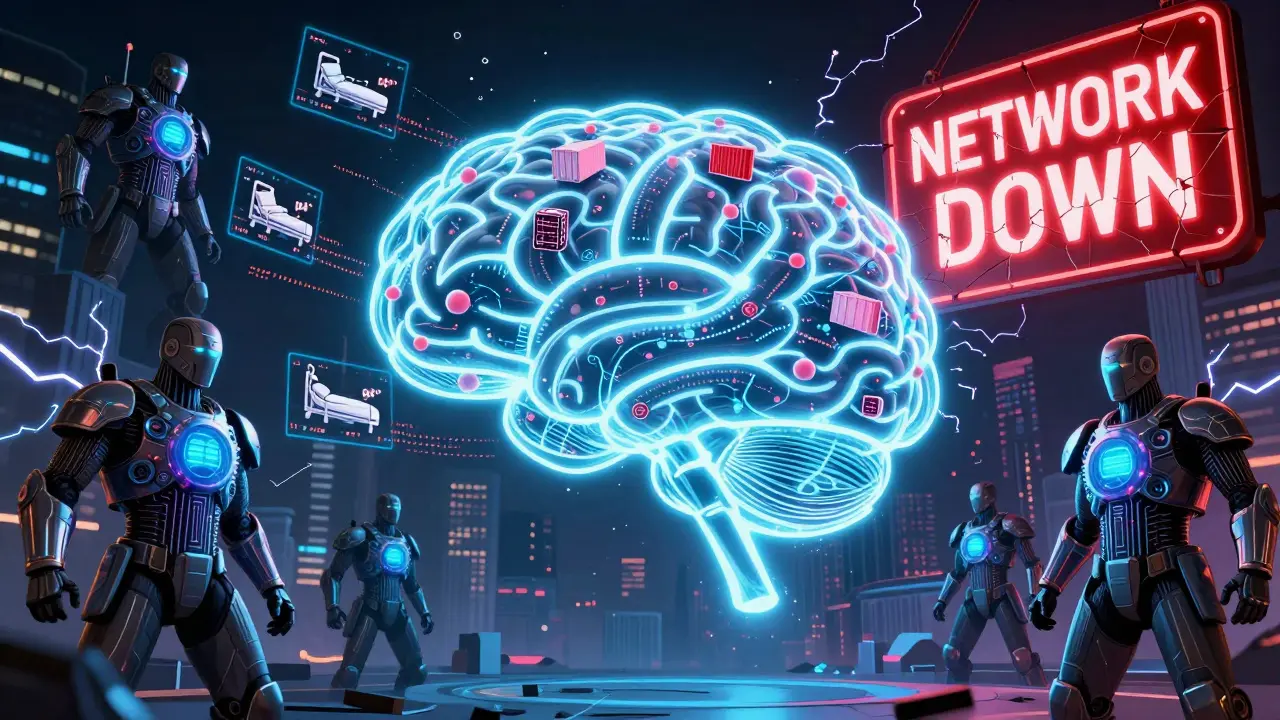
When you hear "Satori Network" or "SATORI coin," you might think it's just another crypto project trying to ride the AI hype wave. But this one is different - and far more dangerous. Satori isn’t just trying to be a cryptocurrency. It claims to be a blockchain that predicts the future. Sounds impossible? That’s exactly what makes it fascinating… and risky.
Launched in July 2024, Satori Network is built around a radical idea: use AI and blockchain together to make real-time predictions about everything from stock prices to supply chain delays. The network doesn’t just store data - it analyzes live streams from finance, healthcare, logistics, and more. Then it spits out forecasts. Sounds like sci-fi? It’s real. But here’s the catch: the network hasn’t been working as promised for over a month.
How Satori Network Actually Works
Satori’s core innovation is something called the Proof of Neuron consensus model. Forget Proof of Work or Proof of Stake. This is different. Network participants run special software nodes called "neurons." These aren’t just servers - they’re AI engines. Each neuron ingests real-time data - think stock tickers, hospital bed availability, shipping container locations - and runs predictive models. The better the prediction, the more SATORI tokens you earn.
It’s like a decentralized prediction market, but automated. No humans betting on outcomes. Instead, AI models compete to be the most accurate. The network rewards the winners. That’s the theory.
Developers can plug in their own AI models using Docker. There’s no gatekeeping. If your algorithm predicts next week’s oil prices better than the next guy, you get paid in SATORI. The platform says it’s open-source. That means anyone can inspect the code. But here’s the problem: the code isn’t the issue. The infrastructure is.
The Token: SATORI
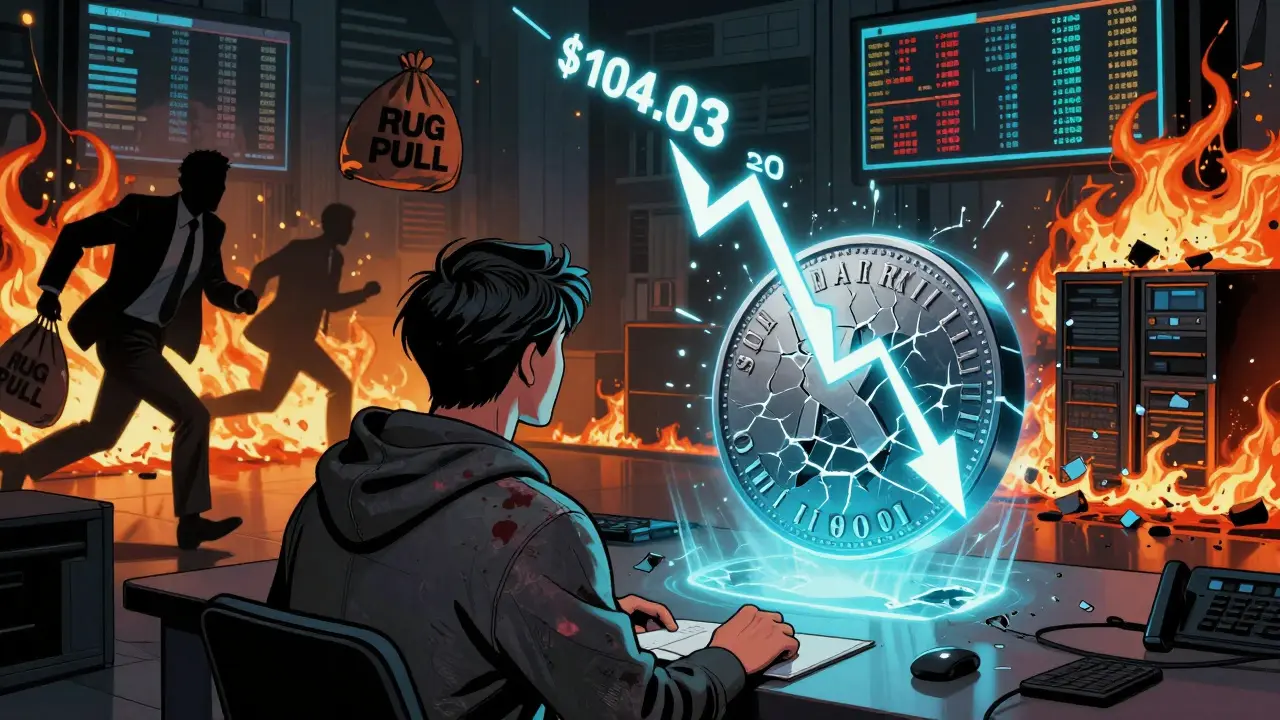
The SATORI token is the fuel for this whole system. It’s used to pay for prediction services, stake for governance rights, and reward neuron operators. As of March 2026, one SATORI token trades at around $0.2499. That’s down 99.76% from its all-time high of $104.03 in November 2024.
That drop isn’t just market noise. It’s a collapse. A coin that once hit over $100 and now trades under $0.25 suggests something went terribly wrong. The total supply is capped at 4.08 million tokens, but only 677,900 are circulating right now. There are only 296 known wallet holders. For a project that wants to be "the largest prediction network in the world," that’s a tiny user base.
Trading volume is equally shaky. CoinMarketCap reports $411 in 24-hour volume. CoinPaprika says $39. One source says it’s on the Evermore blockchain. Another says it’s on Ethereum. The contract address on Base (0xc1c3...414B2B) is real - you can check it on BaseScan - but activity there is minimal.
The Network Is Broken
This is where things get serious. On its official website, Satori Network posted a blunt update: "The Satori network is currently experiencing issues that have caused missed daily distributions over the past month. We want to be fully transparent - the network is not functioning as intended, and we recognize the impact." That’s not a minor bug. That’s a core failure. The entire incentive system - the whole reason people run neurons - relies on daily token rewards. If those aren’t being paid out, no one has a reason to keep running the nodes. And if the nodes go offline, the predictions stop.
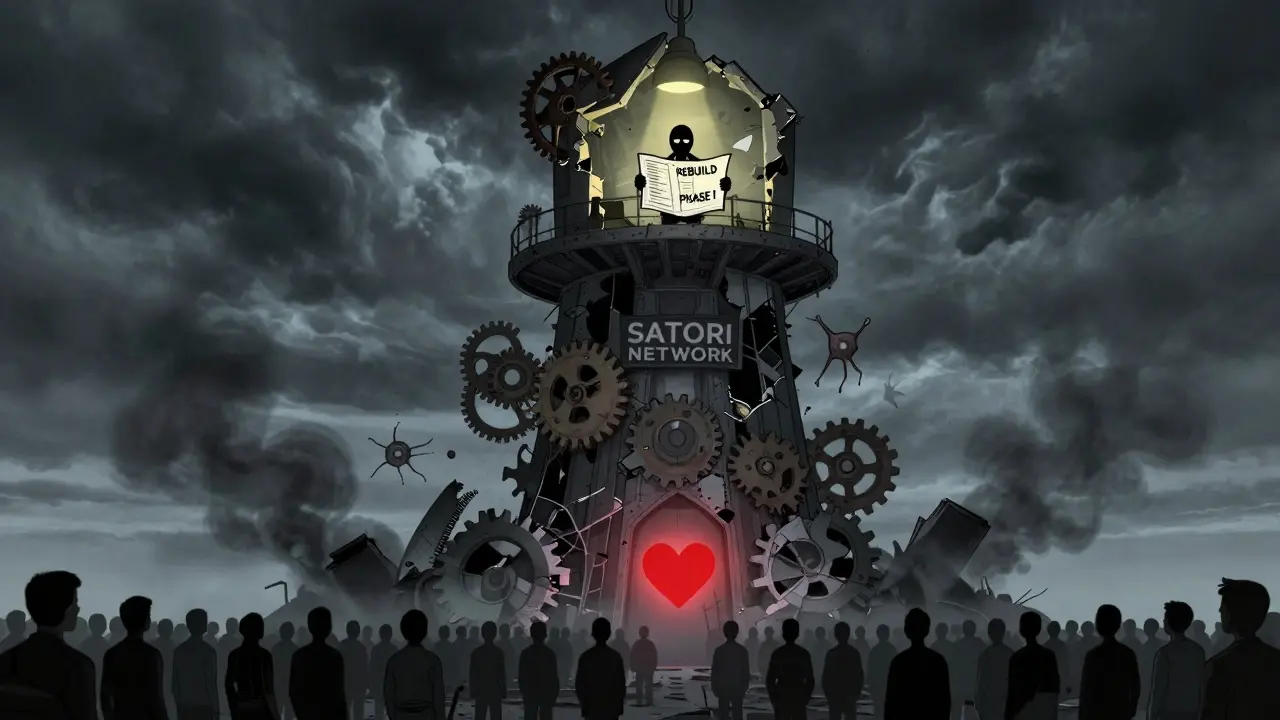
They’ve responded by releasing a "refocused roadmap." Translation: we messed up, and we’re scaling back. They’re calling this "the next phase of rebuilding and stabilizing Satori." Rebuilding. Not upgrading. Not improving. Rebuilding. That’s code for "everything we built before didn’t work."
Controversies and Red Flags
There’s more. CoinPaprika, a respected crypto analytics platform, explicitly warns that SATORI has "faced significant risks and controversies, including concerns over extreme volatility that can lead to substantial financial losses for investors. Additionally, the project has been scrutinized for potential security incidents and allegations of a rug pull." A rug pull? That’s when developers abandon a project, drain the treasury, and vanish. It’s the worst-case scenario in crypto. And while there’s no proof Satori’s team stole funds, the timing is suspicious. The price peaked in November 2024 - right after a big marketing push. Then, in November 2025, it crashed to $0.07987. A 99.76% drop. That’s not a market correction. That’s a collapse.
And it’s still falling. In the past seven days alone, SATORI dropped 38.58%. Meanwhile, the broader crypto market dropped 3.67%. Satori isn’t just underperforming - it’s collapsing faster than everything else.
Who Is It For?
Satori says it’s built for developers and businesses. They’ve launched a "Use Case Collaboration Program" - free access for organizations that want to test its prediction engine. But if the network can’t pay its own operators, how can it reliably serve external clients? No hospital, logistics firm, or hedge fund is going to trust a prediction system that’s been offline for weeks.
Their target industries - healthcare, finance, logistics - are high-stakes. You can’t afford wrong predictions on drug delivery schedules or stock market trends. But Satori’s own system is broken. That’s not a technical glitch. That’s a fundamental failure.
Where It Stands Today
As of March 2026, Satori Network is in damage control mode. The team is transparent - which is rare - but transparency doesn’t fix a broken system. They’ve admitted failure. They’re rebuilding. But they haven’t said when, how, or if they’ll succeed.
The token is still trading. Exchanges like SafeTrade still list it. The community is still talking. But the numbers tell a different story: 296 holders, $169K market cap, and a network that can’t deliver on its core promise.
Is it dead? Not yet. But it’s on life support. And the machines keeping it alive are powered by hope - not code.
Should You Invest?
If you’re looking for a safe, stable crypto investment - walk away. Satori isn’t a coin. It’s a gamble on a broken promise.
If you’re a high-risk trader who believes in a comeback story - fine. But understand this: you’re not betting on AI. You’re betting that a team that admitted their network is broken can fix it. And that they won’t disappear with the remaining funds.
The all-time low was $0.07987. The current price is $0.2499. That’s a 212% rally from the bottom. But that’s not recovery. That’s a dead cat bounce. A temporary flicker before the final fall.
There’s no evidence Satori will ever reach its goal of being "the largest prediction network in the world." There’s only evidence that it failed to even run its own network.
 Cryptocurrency Guides
Steph Andrews
March 15, 2026 AT 14:32but here we are. still down 99% and the devs just say 'rebuilding'. like bro you built a house out of sand and now you're gonna dig a new hole and start over? lol
Prakash Patel
March 15, 2026 AT 20:52Elizabeth Kurtz
March 17, 2026 AT 20:01john peter
March 19, 2026 AT 02:44Marc Morgan
March 20, 2026 AT 01:47Me: 'Bro you're not rebuilding. You're playing Jenga with your reputation and you just pulled the bottom block.'
Kira Dreamland
March 21, 2026 AT 19:45shreya gupta
March 22, 2026 AT 07:34Christopher Hoar
March 22, 2026 AT 22:48Robert Kunze
March 23, 2026 AT 19:08Sarah Zakareckis
March 25, 2026 AT 14:23Heather James
March 26, 2026 AT 11:57Jerry Panson
March 28, 2026 AT 00:09Gene Inoue
March 29, 2026 AT 23:37Ricky Fairlamb
March 31, 2026 AT 04:55Lauren J. Walter
April 1, 2026 AT 11:35and now i'm crying.
why do i care so much about a crypto coin??
Carol Lueneburg
April 1, 2026 AT 13:36Even if the network is down, the idea is alive 🌱
And sometimes... you gotta break things to build something better 🛠️❤️
Keep going Satori team! We believe in you! 🙌🚀