
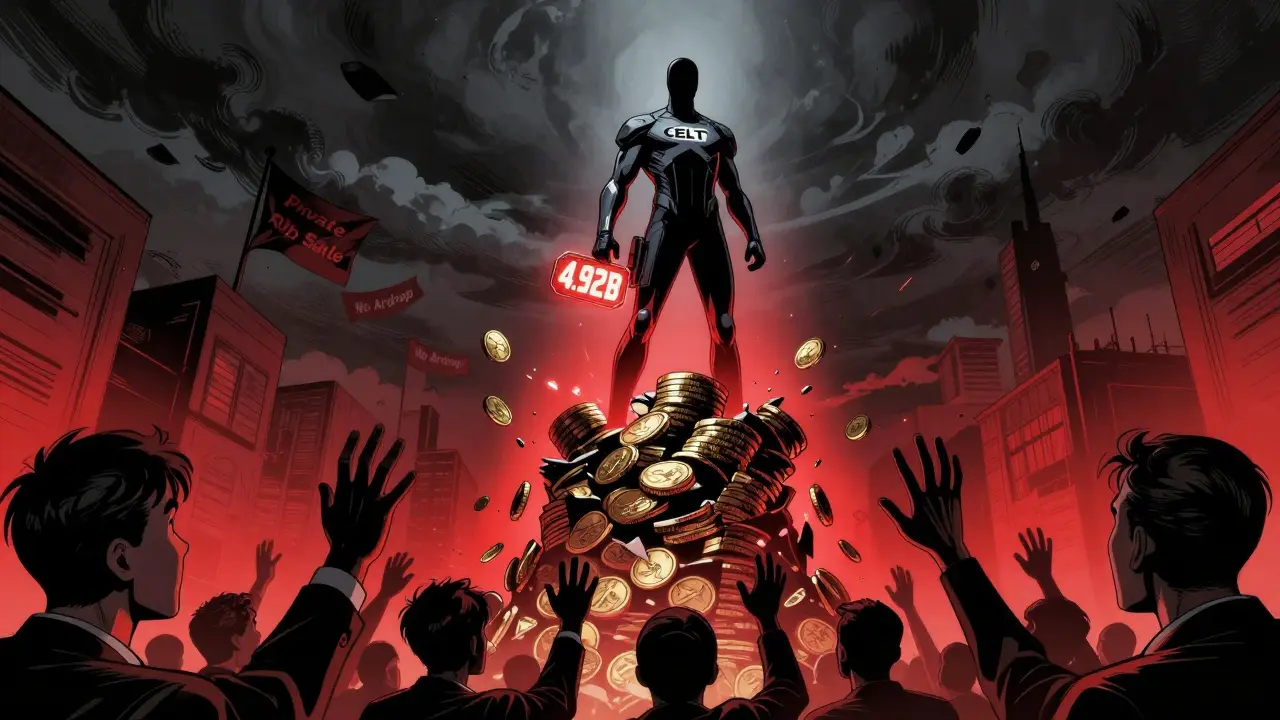
There’s no such thing as a CELT airdrop - at least not in the way most people expect. If you’re searching for free CELT tokens handed out to community members, you’re looking in the wrong place. Celestial (CELT) didn’t run a public airdrop. It didn’t reward early followers, social media participants, or wallet holders. Instead, it did something far more common in the crypto world: it gave away nearly all its tokens to private investors before the public even knew the project existed.
Back in September 2021, Celestial completed its Token Generation Event. The total supply? 4.92 billion CELT tokens. That’s a massive number - bigger than most major coins at launch. But here’s the catch: only a tiny fraction ever made it to the open market. Around 700 million tokens (14.21% of the total) went to private and pre-sale investors. That’s not an airdrop. That’s a private sale with a fancy label.
Early buyers paid $0.002 per CELT token. For many, that looked like a steal. At that price, $1,000 would’ve bought you 500,000 CELT. If the project had taken off, those tokens could’ve been worth millions. But it didn’t take off. Not even close.
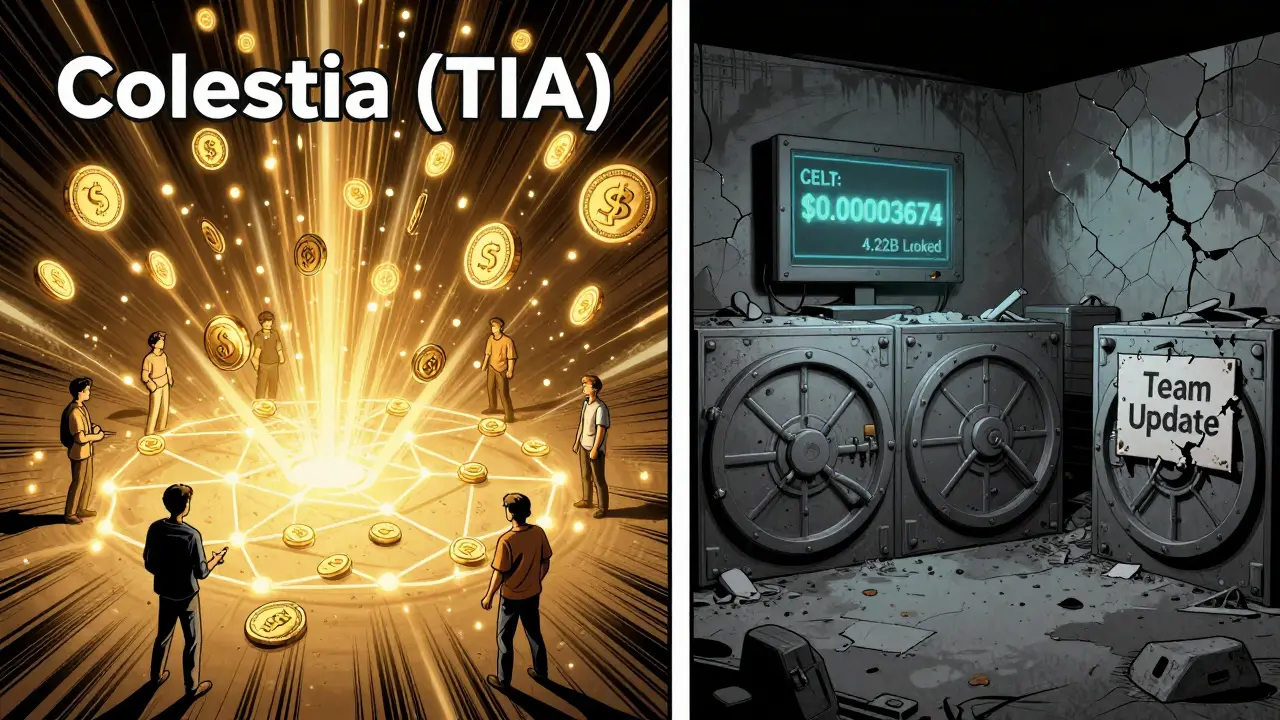
Today, CELT trades at around $0.00003674. That’s a 98% drop from the pre-sale price. The 72x return early investors hoped for? Gone. The project’s market cap? Just $109,290. For comparison, that’s less than what some individual NFTs sell for. The token that once promised to revolutionize something - nobody’s quite sure what - now sits on exchanges with almost no volume.
So what happened to the rest of the tokens? The remaining 4.22 billion CELT were locked up in various vesting schedules. Some started releasing monthly after the project went live, with 20% dropped upfront and then 10% each month for nine months. But here’s the problem: if nobody’s buying, nobody’s selling. And if nobody’s selling, the tokens stay locked - even if the schedule says they should be released.
Some blockchain explorers list the circulating supply as zero. Others show a few million tokens moving slowly. Either way, the market isn’t acting like there’s any real demand. The tokens are there. The supply is there. But the buyers? Not so much.
Why There Was No Public Airdrop
Airdrops are usually used to build a community. They’re a way to say: “Hey, we’re launching something new, and we want you to be part of it.” Projects like Celestia (TIA) used airdrops brilliantly - giving away 60 million tokens to users who interacted with their network. That created real engagement. That created a user base.
Celestial didn’t do that. It didn’t ask for Twitter follows, Discord joins, or wallet attestations. It didn’t even have a public roadmap. It raised $1.49 million across private sales, IDOs, and ICOs - $1.4 million of that came from pre-sales alone. That’s not community building. That’s venture capital funding dressed up as a crypto launch.
The backers? ZBS Capital, a Tier 3 venture firm with no major track record in blockchain. That’s not a red flag by itself - many good projects start with small investors. But when combined with zero transparency, no active development updates, and a token price that collapsed faster than a house of cards - it paints a clear picture.
There was no airdrop because there was no community to reward. The project was built for investors, not users.
How CELT Tokens Were Actually Distributed
Let’s break down the real distribution - not the marketing hype.
- Total Supply: 4.92 billion CELT
- Private/Pre-sale Allocation: 700 million CELT (14.21%)
- Public Sale / ICO: Not clearly documented - likely minimal
- Team & Development: Unspecified, but assumed to be part of the remaining supply
- Marketing & Ecosystem: No public record of any allocation
- Circulating Supply: Effectively near zero, with minor releases over time
The 700 million tokens given to private investors didn’t come with lockups. That means they could’ve sold immediately after launch. And many did. The token price tanked within weeks. What was supposed to be a “long-term vision” turned into a quick exit for insiders.
For the rest of the supply - the 4.22 billion tokens - the release schedule was linear: 20% at launch, then 10% per month for nine months. But if the market doesn’t trade the token, the release doesn’t matter. The tokens just sit in wallets, inactive. They’re not moving. They’re not being used. They’re just… there.
Where You Can Buy CELT Today
If you still want to buy CELT, you can find it on Bitget. That’s it. No major exchanges list it. No DeFi protocols support it. No wallets have integrated it as a standard asset.
On Bitget, you can:
- Trade CELT/USDT spot pairs
- Use Bitget Swap to convert other tokens into CELT
- Try Bitget Convert for quick, low-slippage trades
- Use margin or futures trading (high risk, no liquidity)
- Join copy trading or bot strategies (don’t expect returns)
But here’s the reality: trading CELT is like trying to sell a used car with no buyers. The price is set by two or three people making tiny trades. One person sells 100,000 CELT. The price drops 5%. That’s not a market. That’s a ghost town.
Celestial vs. Celestia: Don’t Get Confused
Many people mix up Celestial (CELT) with Celestia (TIA). They’re completely different projects.
Celestia is a real, working modular blockchain focused on data availability. It launched in 2023, raised $36 million, and conducted a massive airdrop of 60 million TIA tokens to early users. Today, TIA trades around $17. It’s used by real projects like AltLayer, Dymension, and Manta Network. Developers build on it. Users stake it. The ecosystem grows.
Celestial? It’s a token with no product, no team updates, and no community. The name is similar. The logo might look alike. But that’s where the similarity ends.
If you’re looking for a real airdrop in the “Celestial” space, you’re chasing the wrong project. Look at Celestia, not Celestial.
Why CELT Failed - And What It Teaches You
Celestial didn’t fail because the tech was bad. It failed because the model was broken.
It raised money from private investors, gave them all the tokens, and then disappeared. No whitepaper updates. No GitHub activity. No Twitter engagement. No roadmap. Just a token sitting on an exchange with a price that keeps falling.
Here’s what you should remember:
- Never trust a project that doesn’t have public development activity
- Airdrops are a sign of community focus - no airdrop? No community
- Large token supplies with concentrated distribution are red flags
- Pre-sale prices don’t mean anything if the team vanishes after launch
- Just because a token is listed doesn’t mean it’s alive
Celestial (CELT) is a textbook example of a project that prioritized fundraising over building. It’s not a cautionary tale - it’s a warning label.
What Should You Do Now?
If you already own CELT? You’re holding a dead asset. The chances of recovery are near zero. The token has no utility, no development, and no demand. Selling now might hurt - but holding will hurt more over time.
If you’re thinking of buying? Don’t. Even if the price drops to $0.000001, you’re not getting a bargain. You’re buying a ghost.
If you’re looking for real airdrops? Focus on projects with:
- Active GitHub repositories
- Regular team updates
- Public roadmaps
- Real community engagement
- Transparent tokenomics
Projects like Celestia, Arbitrum, or Polygon have proven airdrop models. They reward users who actually use their networks. That’s how crypto should work.
Celestial didn’t build a network. It built a balance sheet. And balance sheets don’t last.
 Cryptocurrency Guides
steven sun
January 27, 2026 AT 11:24Sara Delgado Rivero
January 29, 2026 AT 11:01Heather Crane
January 30, 2026 AT 12:29Catherine Hays
February 1, 2026 AT 08:24Chidimma Catherine
February 2, 2026 AT 21:20Nathan Drake
February 4, 2026 AT 07:31Melissa Contreras López
February 4, 2026 AT 14:35Mike Stay
February 5, 2026 AT 06:15Taylor Mills
February 6, 2026 AT 17:34Kevin Pivko
February 6, 2026 AT 23:11Jessica Boling
February 8, 2026 AT 18:04MICHELLE REICHARD
February 10, 2026 AT 04:24tim ang
February 11, 2026 AT 10:18Matthew Kelly
February 12, 2026 AT 14:45Adam Fularz
February 12, 2026 AT 22:45Adam Lewkovitz
February 13, 2026 AT 10:42Clark Dilworth
February 14, 2026 AT 05:24Brenda Platt
February 15, 2026 AT 02:19Mark Estareja
February 16, 2026 AT 15:10