
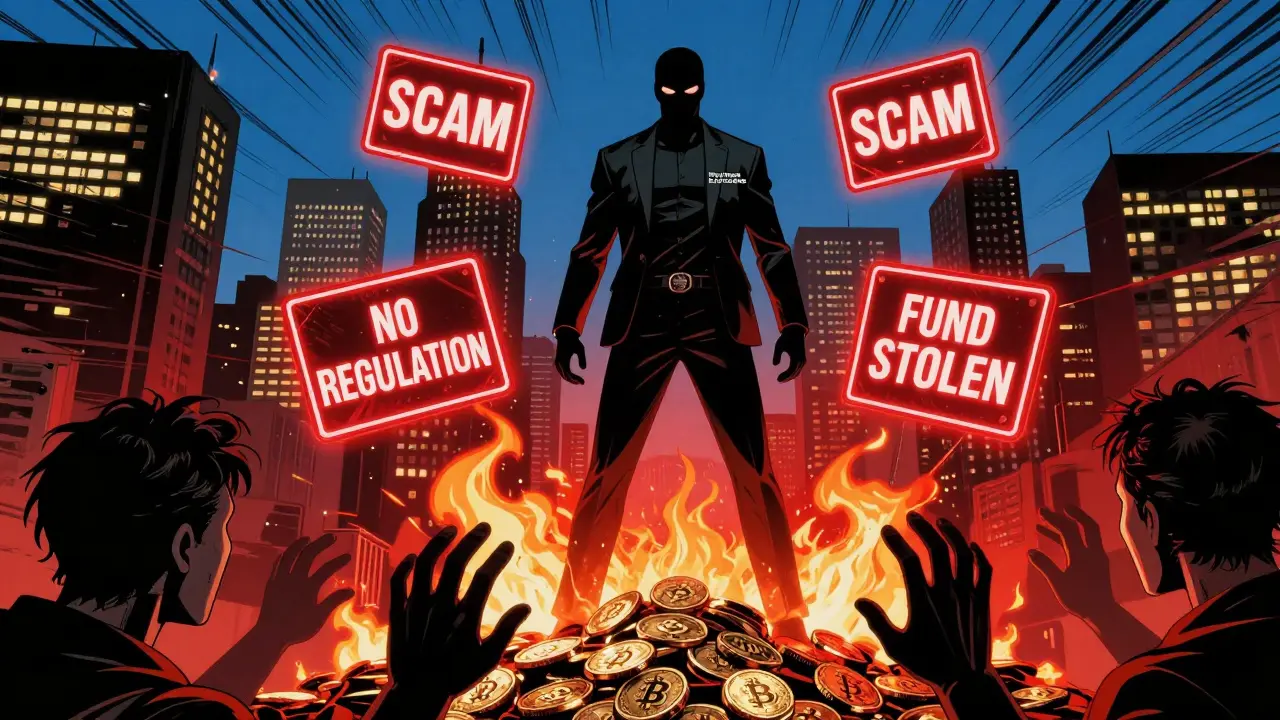
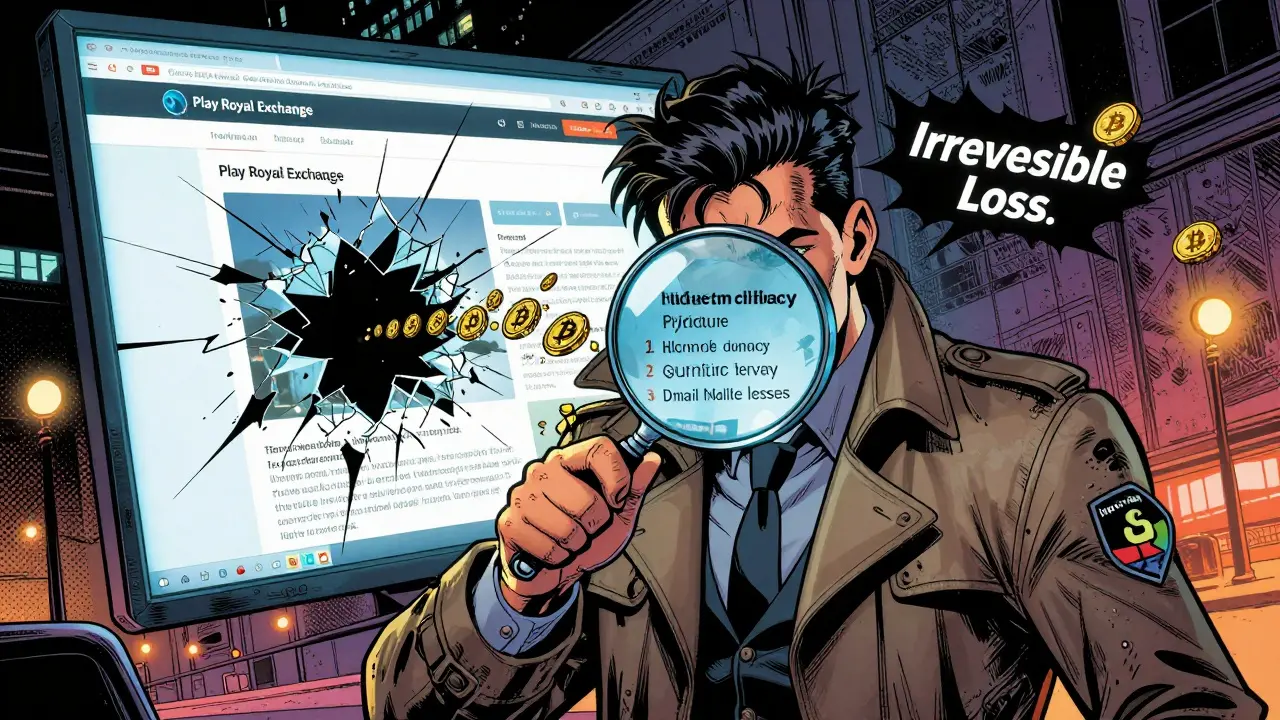
There is no such thing as Play Royal Exchange as a legitimate cryptocurrency exchange. If you’ve seen ads, social media posts, or YouTube videos promoting it as a place to trade Bitcoin, Ethereum, or other digital assets, you’re being targeted by a scam operation. This isn’t a glitch in the system or a new startup trying to gain traction-it’s a known fraudulent entity designed to steal your money.
What Exactly Is Play Royal Exchange?
The name "Play Royal Exchange" is a deliberate distortion of real but similarly named companies like Royal Exchange (a forex broker) and Crypto Royal (an online casino). These names are intentionally similar to confuse people searching for legitimate crypto services. There is no official website, no registered business license, and no public record of a company operating under this exact name in any jurisdiction with financial oversight. Instead, what you’ll find are cloned websites, fake testimonials, and aggressive pop-up ads pushing a trading platform that looks professional but has zero transparency. The platform doesn’t use MetaTrader, doesn’t offer API access, and doesn’t list its team, headquarters, or regulatory status. That’s not a startup quirk-it’s a red flag so bright it should be blinding.Why You Should Never Deposit Money Here
The Dutch financial regulator AFM has publicly warned about "Royal Exchange" as a potential fraud. Traders Union, a global network of financial watchdogs, has labeled similar entities as "scam companies" that lure investors with promises of high returns, then block withdrawals or vanish entirely. These aren’t rumors-they’re documented cases. Here’s what happens when people deposit funds:- You’re asked to deposit via wire transfer, cryptocurrency, or gift cards-methods that are irreversible.
- After depositing, your account shows fake profits to encourage you to invest more.
- When you try to withdraw, you’re hit with unexpected fees, "compliance checks," or demands for additional deposits.
- Eventually, the platform goes offline, customer support stops replying, and your funds are gone.
How It Compares to Real Crypto Exchanges
Let’s put this in perspective. Take Binance or OKX-two of the world’s largest crypto exchanges. They:- Are regulated in multiple countries (Japan, Singapore, Malta, etc.)
- Use multi-signature cold wallets to secure customer funds
- Have public KYC and AML procedures
- Charge transparent fees (0.08%-0.1% per trade)
- Offer 24/7 customer support with verified contact channels
- No regulatory license (score: 0/10 on compliance scales)
- No public security protocols
- No verifiable fee structure
- No customer support team you can reach
- No independent audit or proof of reserves
Red Flags You Can’t Ignore
If you’re still unsure whether to avoid this platform, here are the exact warning signs reported by victims and regulators:- The website uses stock photos of smiling traders and fake "user statistics" like "12,000+ active users"-numbers that can’t be verified.
- Domain registration is hidden behind privacy services, a common tactic for fraudsters.
- There are no official social media accounts with real engagement-only bots and paid influencers.
- Testimonials are copied from other scam sites or generated by AI.
- Support emails come from free services like Gmail or Yahoo, not company domains.
- The platform doesn’t list any legal terms, privacy policy, or terms of service with real jurisdiction.
What Happens If You’ve Already Deposited?
If you’ve already sent money to Play Royal Exchange, act fast-but don’t expect miracles. Recovery is rare, but here’s what you can do:- Stop depositing more money. No amount of "one last deposit" will unlock your funds.
- Gather every piece of evidence: screenshots, transaction IDs, emails, chat logs.
- Report it to your local financial crime unit. In New Zealand, that’s the Serious Fraud Office.
- File a report with the International Anti-Cybercrime Center (IACC) and the FTC if you’re in the U.S.
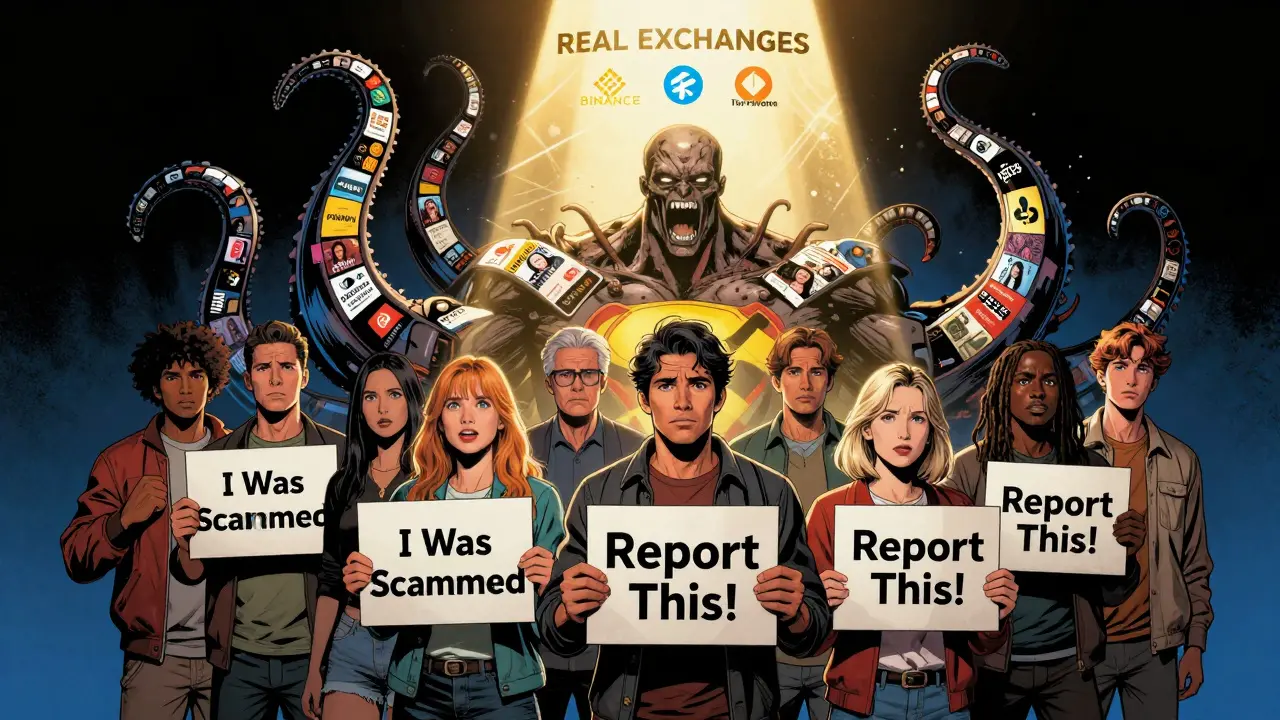
- Warn others. Post on Reddit (r/Scams), Trustpilot, and crypto forums-but avoid engaging with the scammers’ support lines.
How to Spot a Crypto Scam Before It’s Too Late
Scammers are getting smarter. They copy real exchange designs, use professional-looking logos, and even fake news articles. Here’s how to protect yourself:- Check regulatory status: Go to your country’s financial regulator website (like ASIC in Australia, FCA in the UK, or NZFMA in New Zealand) and search for the company name.
- Look for a physical address. If it’s a PO box or a virtual office, walk away.
- Search for the company + "scam" or "complaint" on Google. If you see multiple negative results, it’s not a coincidence.
- Verify the domain: Legit exchanges use .com, .io, or .co.uk domains registered for years. Scams use new domains with misspellings (e.g., "royal-exchange24.com").
- Never trust influencers who say "I made $50,000 in a week!"-real traders don’t post that.
Where to Trade Crypto Safely in 2026
If you want to trade crypto without risking your life savings, stick to exchanges that are:- Registered with a major financial authority (e.g., FinCEN, ASIC, FCA)
- Have been operating for more than 5 years
- Provide public proof of reserves (like Binance’s Proof of Reserves)
- Have active, responsive customer service via phone or live chat
- Offer two-factor authentication and withdrawal whitelisting
Final Warning
There is no "Play Royal Exchange"-only a trap disguised as an opportunity. The name is engineered to sound official. The website is designed to look real. The promises are too good to be true. And they are. Every year, thousands of people lose millions to these exact scams. They’re not stupid-they’re misled. Don’t be the next one.Walk away. Block the site. Report it. And if you’ve already lost money, don’t blame yourself-blame the scammer. Then use your experience to protect someone else.
Is Play Royal Exchange a real crypto exchange?
No, Play Royal Exchange is not a real crypto exchange. There is no legitimate company by that name registered with any financial authority. It’s a scam platform designed to mimic real exchanges and steal user funds. Regulatory bodies like the Dutch AFM have issued warnings against similar entities using the "Royal" name.
Why do people fall for Play Royal Exchange?
People fall for it because the platform looks professional-it uses fake testimonials, stock images of traders, and mimics the UI of real exchanges like Binance. Scammers also use social media influencers and YouTube ads to create false credibility. The promise of high returns with little effort is a classic psychological trap.
Can I get my money back if I deposited into Play Royal Exchange?
Recovering funds from Play Royal Exchange is extremely unlikely. Once money is sent to these scams, it’s usually moved through multiple wallets and laundered quickly. Your best action is to report the fraud to your local financial crime agency and provide all transaction details. While recovery is rare, reporting helps authorities track and shut down these operations.
What’s the difference between Play Royal Exchange and Royal Exchange (forex broker)?
Royal Exchange (operating as TRD Group Ltd.) is a forex and CFD broker with no official crypto exchange license. It’s unregulated and flagged by regulators, but it’s not the same as Play Royal Exchange. The latter is a completely fake entity created to confuse users searching for crypto trading platforms. Both are risky, but Play Royal Exchange has no real business structure at all.
Are there any legitimate crypto exchanges with "Royal" in their name?
No legitimate crypto exchange uses "Royal" in its official name. Crypto Royal is an online casino that accepts crypto for betting, not trading. Royal Trading Center and Royal Exchange are unregulated forex brokers with no crypto exchange services. Any platform claiming to be a "Royal" crypto exchange is a scam.
How can I verify if a crypto exchange is real?
Check the exchange’s regulatory status on your country’s financial authority website. Look for a physical address, verified customer support, public proof of reserves, and a domain registered for multiple years. Legit exchanges like Binance or Kraken are transparent about their licenses, team, and security practices. If any of this is missing, assume it’s a scam.
 Cryptocurrency Guides
Gurpreet Singh
January 28, 2026 AT 17:43Been there, done that. I lost my first crypto investment to something just like this back in 2021. Took me months to realize it wasn’t just bad luck-it was a setup. If you’re new to crypto, just stick to Coinbase or Kraken. No flashy ads, no ‘guaranteed returns.’ Just real platforms with real teams.
Don’t let greed blind you. I wish someone had told me this sooner.
Gavin Francis
January 28, 2026 AT 19:12THIS. SO THIS. 🙌
Every time I see one of these fake exchanges pop up on TikTok, I want to scream. People are losing life savings to cartoonish scams that look like they were made in Canva. Block them. Report them. Tell your friends. We gotta stop this cycle.
William Hanson
January 28, 2026 AT 23:36Wow. Someone actually wrote a 2000-word essay on a scam that doesn’t even exist? Congrats, you just gave this fake site free SEO. Thanks for the traffic, buddy.
Gareth Fitzjohn
January 29, 2026 AT 06:01Simple truth: if it sounds too good to be true, it is. No need for deep dives or regulatory charts. Just use your common sense.
And don’t trust anyone who says ‘I made 500% in a week.’ They’re either lying or scamming.
Parth Makwana
January 29, 2026 AT 16:15As a fintech analyst in Mumbai, I’ve seen dozens of these ‘Royal’ clones targeting South Asian diaspora. They use WhatsApp groups, regional influencers, and even fake Hindi/Urdu testimonials. The psychology is chilling-family pressure + FOMO = perfect storm.
These scams don’t target the educated. They target the hopeful.
Dahlia Nurcahya
January 30, 2026 AT 09:44Just wanted to say thank you for writing this. I’ve been trying to warn my uncle for months-he’s convinced he’s ‘found the next Bitcoin.’ I’ll send him this link. Sometimes, clarity is the only gift we can give someone who’s trapped.
You’re doing important work.
josh gander
January 31, 2026 AT 04:49Let me tell you about my cousin. He got sucked into one of these fake exchanges last year. Sent $12k. Thought he was ‘compounding’ his gains. Then one day, the site just… vanished. No emails. No replies. No trace.
He’s been depressed since. Not because of the money-though that hurts-but because he felt stupid. Like he should’ve known.
But here’s the thing: these scammers are professionals. They hire UI/UX designers. They run A/B tests on landing pages. They use AI-generated voices in YouTube ads.
You’re not dumb for falling for it. You’re human.
So don’t beat yourself up. Just learn. And help others see it before it’s too late. That’s how we fight back.
❤️
Brandon Vaidyanathan
February 1, 2026 AT 04:53Oh my god. I just watched a 10-minute YouTube video from some guy in Nigeria claiming he turned $500 into $18k on Play Royal Exchange. He’s wearing a Rolex and a Lamborghini in the background. The audio is clearly auto-generated. The ‘trading dashboard’ is just a Photoshop mockup.
And yet-over 300k views. 12k likes. 5k comments saying ‘bro you’re a genius.’
WE ARE LIVING IN A SIMULATION.
Dylan Morrison
February 2, 2026 AT 18:53My grandma just asked me if this ‘Play Royal’ thing was legit. She saw an ad on Facebook. She’s 74. She thinks ‘crypto’ is like digital lottery tickets.
I cried. Not because I’m emotional-because I realized how vulnerable people are when they’re not raised in this world.
We need to teach financial literacy like we teach math. Not just to kids-but to everyone. 🫂
Christopher Michael
February 2, 2026 AT 23:26Important note: The domain for Play Royal Exchange was registered via Namecheap Privacy Protection on June 3, 2023. WHOIS shows no physical address. SSL certificate issued by a free provider (Let’s Encrypt). No DNSSEC. No SPF/DKIM records.
It’s not just a scam-it’s a poorly executed one. If you know how to check these things, you can spot these in under 30 seconds.
Here’s a quick guide: https://bit.ly/crypto-scam-checklist
Elle M
February 3, 2026 AT 14:59Of course it’s a scam. America’s got the best crypto regulations. Anyone promoting ‘Play Royal’ is probably a foreign agent trying to destabilize our financial system. This is cyber warfare, people.
Rico Romano
February 4, 2026 AT 19:00Look, I’ve read your post. It’s… adequate. But you missed the bigger picture. The real issue is that retail investors lack the sophistication to navigate DeFi. You’re not protecting them-you’re infantilizing them.
Real traders don’t need hand-holding. They do their own research. If you can’t tell a scam from a platform, maybe crypto isn’t for you.
Just saying.
Crystal Underwood
February 4, 2026 AT 20:42People who fall for these scams are morally irresponsible. You think it’s ‘the scammer’s fault’? No. It’s YOUR fault for being lazy. You didn’t check the domain. You didn’t verify the team. You just clicked ‘Deposit’ because someone said ‘easy money.’
Don’t act like a victim. You chose this.
And now you’re wasting my time with your tears.
Gary Gately
February 6, 2026 AT 20:01wait so play royal is fake?? i just put 500 in last week 😭
is there any way to get it back?? i thought it was legit cause the app looked so nice
Mark Ganim
February 7, 2026 AT 15:03What is truth? Is truth the absence of a registered business license? Or is truth the human desire to believe in something greater than oneself? The scammer doesn’t sell crypto-he sells hope.
And hope, my friends, is the most dangerous currency of all.
Every time someone deposits into Play Royal Exchange, they’re not investing in Bitcoin-they’re investing in the illusion that justice, order, and fairness still exist in this chaotic digital world.
And isn’t that… beautiful?
Even if it’s a lie?
Even if it kills them?
mary irons
February 8, 2026 AT 05:15Let me guess-the government knows about this. They’re letting it happen. Why? To track crypto users. To build a surveillance database. To justify CBDCs. This isn’t a scam. It’s a psyop.
And you’re all just sheep falling for the narrative.
They want you to think it’s about ‘trust’ and ‘regulation.’ But it’s about control.
Wake up.
Tom Sheppard
February 9, 2026 AT 20:03Hey Gary (the one who just said ‘i just put 500 in’)-I’m so sorry you got hit. I’ve been there too. It’s not your fault. These platforms are designed to feel safe-smooth animations, fake live chats, ‘customer service’ bots that reply in 3 seconds.
But here’s what you do now:
1. Don’t send more money. Ever.
2. Take screenshots of everything-screens, emails, transaction hashes.
3. Go to https://www.ic3.gov and file a report. Even if you’re outside the US, they’ll forward it.
4. Tell your story on Reddit. People like you help others avoid this.
You’re not alone. And you’re not stupid. You just trusted the wrong thing.
Now go take a walk. Breathe. You’ll be okay.
Will Pimblett
February 11, 2026 AT 17:26So… the author wrote a 3000-word treatise on a non-existent exchange… and now we’re all just… talking about it?
Isn’t that exactly what the scammer wanted?
Well played, ghost. Well played.
Wayne mutunga
February 11, 2026 AT 18:03Maybe we’re all just too focused on the scam… and not enough on why people keep falling for it.
What if the real problem isn’t the fake exchange… but the fact that so many people feel like they have no other path to security?
Maybe we need to fix the system… not just warn people about the traps.