

Pomerium Liquidity Slippage Calculator
Calculate Your Trading Risk
Estimate slippage based on Pomerium's current liquidity data (24h volume: $79,500)
Estimated Slippage: 0.00%
Current Value: $0.00
Pomerium (PMG) isn’t another meme coin or speculative gamble. It’s a blockchain platform built for one specific job: helping regular Web2 mobile and casual games jump into Web3 without breaking a sweat. If you’ve ever wondered how a simple puzzle game or idle clicker could let players own their in-game items, earn rewards, or vote on future updates - that’s what PMG is trying to do. But it’s not magic. It’s code, characters, and a lot of unanswered questions.
What Pomerium Actually Does
Pomerium launched in 2024 as a tool for game developers. Its main goal? Make it easy for studios used to building games on Apple’s App Store or Google Play to add blockchain features - like NFTs, token rewards, and player-owned assets - without rewriting their entire game from scratch.
Think of it like a plug-in. A developer working on a mobile game about cats or dogs can drop in Pomerium’s tools, connect their game to the blockchain, and suddenly players can buy, trade, or stake digital items using PMG tokens. The platform supports Ethereum, Polygon, and BNB Chain, so developers aren’t locked into one network. Transaction fees? Around 2 to 5 cents per swap. Confirmation times? 15 to 30 seconds. That’s fast enough for casual players who don’t want to wait 10 minutes just to claim a reward.
But here’s what makes Pomerium stand out: it’s built around dogs. Specifically, 40+ different canine characters, all based on real dog breeds. Each one is an NFT. You might find a Shiba Inu as a power-up, a Pomeranian as a daily login reward, or a Bulldog as a rare boss. This isn’t just branding - it’s the core of the experience. Players collect, level up, and trade these dog NFTs. The whole ecosystem feels like a digital pet game crossed with a blockchain economy.
How PMG Tokens Work
PMG is the fuel of the Pomerium ecosystem. It’s not just a currency - it’s a key to three things:
- Buying stuff: You use PMG to purchase in-game NFTs, skins, power-ups, and special dog characters.
- Staking: Lock up your PMG tokens and earn more over time. Rewards are distributed weekly.
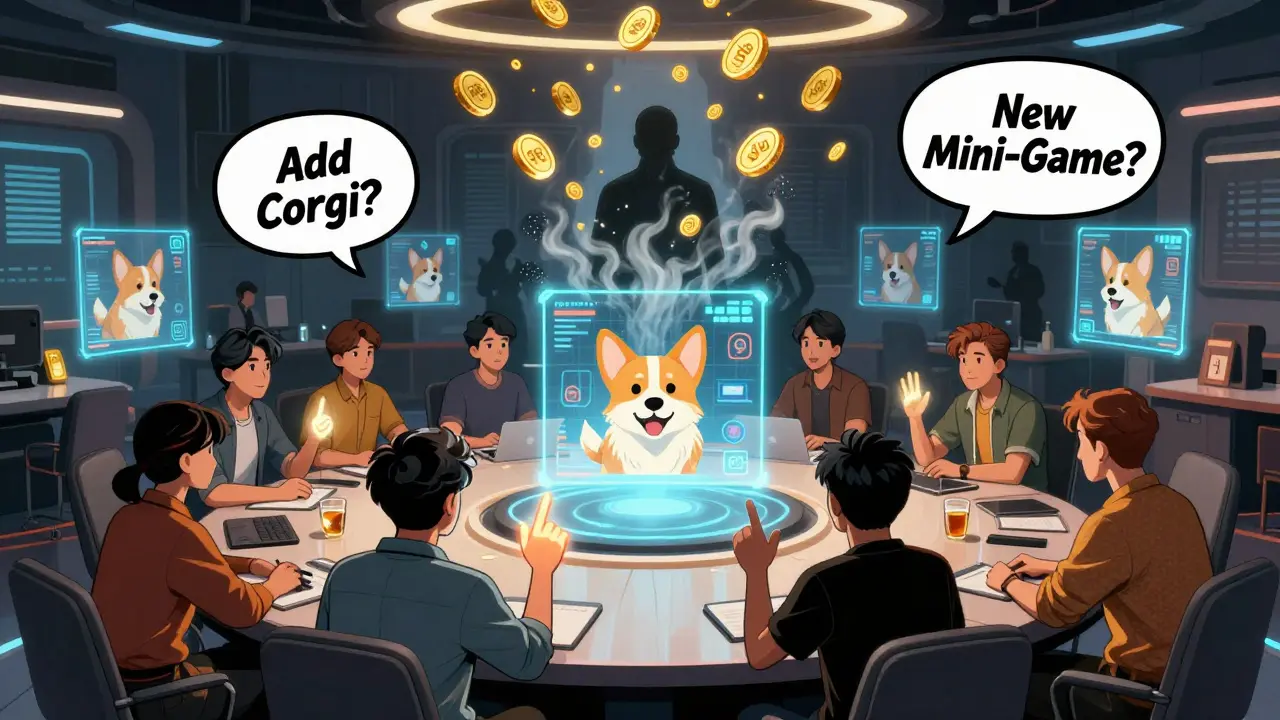
- Voting: Holders can vote on future updates - like which new dog breed to add next, or whether to launch a new mini-game.
There are 1 billion PMG tokens total. As of December 2025, about 166 million are in circulation. That leaves a lot still unissued - 45% of the total supply is reserved for ecosystem growth, developer incentives, and future rewards. But here’s the problem: no clear timeline exists for when those tokens will be released. That uncertainty scares off some investors.
Who’s Using It - And Who Isn’t
Pomerium isn’t for hardcore gamers. It’s for the 2.8 billion people who play mobile puzzle games, idle clickers, or simple arcade titles. According to DappRadar, 68% of Pomerium users are on mobile. That’s its sweet spot.
One success story is PixelPaws Studio, a small indie team that added Pomerium to their game Puppy Paradise. They saw a 37% jump in revenue and 22% higher player retention. Players loved earning NFT dogs just for playing.
But not every game worked out. Cat Kingdom tried integrating Pomerium in 2025 - and quit after 68% of their players refused to set up a crypto wallet. Too much friction. Too confusing. That’s the biggest hurdle: onboarding non-crypto users.
Even developers face challenges. Onboarding takes 3 to 5 days for someone who knows blockchain. For a traditional game dev? 10 to 14 days. Documentation is decent for web tools, but the mobile SDK is still messy. And wallet connection errors? Still common.

The Numbers Don’t Lie - But They Don’t Tell the Whole Story
As of December 10, 2025:
- Price: $0.001456
- Market cap: ~$242,000
- 24-hour trading volume: ~$79,500
- CoinGecko rank: #47 among gaming tokens
Compare that to Gala ($1.2 billion) or Immutable X ($850 million). Pomerium is tiny. Its trading volume is less than 1% of Gala’s. That means low liquidity. If you try to sell 50,000 PMG tokens, you might lose 14% of your value just to slippage. That’s not a place for active traders.
Worse, 38.7% of all PMG tokens are held by just 12 wallet addresses. That’s a red flag. If those wallets decide to dump, the price could crash. No decentralized governance yet - just a centralized team controlling most of the supply.
What Experts Are Saying
Analysts are split. Dr. Elena Rodriguez from Delphi Digital says Pomerium solves a real problem: “It’s the easiest bridge I’ve seen for Web2 studios to enter Web3.” She likes the dog IP - it’s memorable and fun.
But Sarah Chen from CryptoSlate warns: “Centralized control and weak liquidity make this a high-risk bet.” Her analysis shows the tokenomics are unbalanced. Too many tokens locked up, no vesting schedule, no clear release plan.
CoinDesk gave it 3.5 out of 5 - decent, but not great. They praised the onboarding speed (45-60 days vs. 70-90 for competitors) but called the token utility “limited.”
Messari listed Pomerium on its “Emerging Web3 Gaming Watchlist” - meaning it’s being watched, not endorsed. Their projection? If they launch a mobile app in Q1 2026 and land two big studio deals by Q2, user growth could hit 200-300%. If not? It fades into obscurity.
What’s Next for Pomerium?
The roadmap is clear - and critical:
- Q1 2026: Launch mobile SDK in beta. This is huge. If it works, developers can integrate Pomerium into Android and iOS apps without a web browser.
- Q2 2026: Sign two major game studios. No partnerships = no scale. Right now, only 3 studios use it fully. 22 are testing.
- Q3 2026: Switch to a DAO. This means token holders get real control. No more decisions made by an anonymous team.
Version 2.3.1, released in November 2025, already added cross-chain bridging - cutting fees by 27%. That’s a good sign they’re listening.
Should You Buy PMG?
Here’s the truth: PMG isn’t an investment. It’s a bet on a team’s ability to execute.
If you’re a game developer - especially indie - and you want to add blockchain to your mobile game without spending a year learning Solidity? Pomerium is worth testing. It’s the fastest path out there.
If you’re a crypto trader? Avoid it. Low volume, high centralization, and weak liquidity make it a trap for short-term plays.
If you’re a casual player who likes cute dog NFTs and doesn’t mind holding for years? Maybe. But only if you believe the team will deliver on their 2026 roadmap. Otherwise, you’re just holding a digital pet with no real value.
Pomerium isn’t trying to be Bitcoin. It’s trying to be the easiest on-ramp for millions of casual gamers to touch Web3 - one Pomeranian at a time. Whether that’s enough to survive in a market dominated by giants? We’ll know by the end of 2026.
 Cryptocurrency Guides
Ike McMahon
December 16, 2025 AT 13:32Sarah Luttrell
December 18, 2025 AT 05:08Kathleen Sudborough
December 20, 2025 AT 04:39Vidhi Kotak
December 20, 2025 AT 13:12Kim Throne
December 22, 2025 AT 03:25Sue Gallaher
December 23, 2025 AT 23:02John Sebastian
December 24, 2025 AT 00:35Abhishek Bansal
December 24, 2025 AT 19:06Bridget Suhr
December 25, 2025 AT 20:59Anselmo Buffet
December 27, 2025 AT 14:20JoAnne Geigner
December 28, 2025 AT 00:33Joey Cacace
December 29, 2025 AT 12:11Taylor Fallon
December 30, 2025 AT 11:28amar zeid
December 31, 2025 AT 15:54Jeremy Eugene
January 2, 2026 AT 08:33