
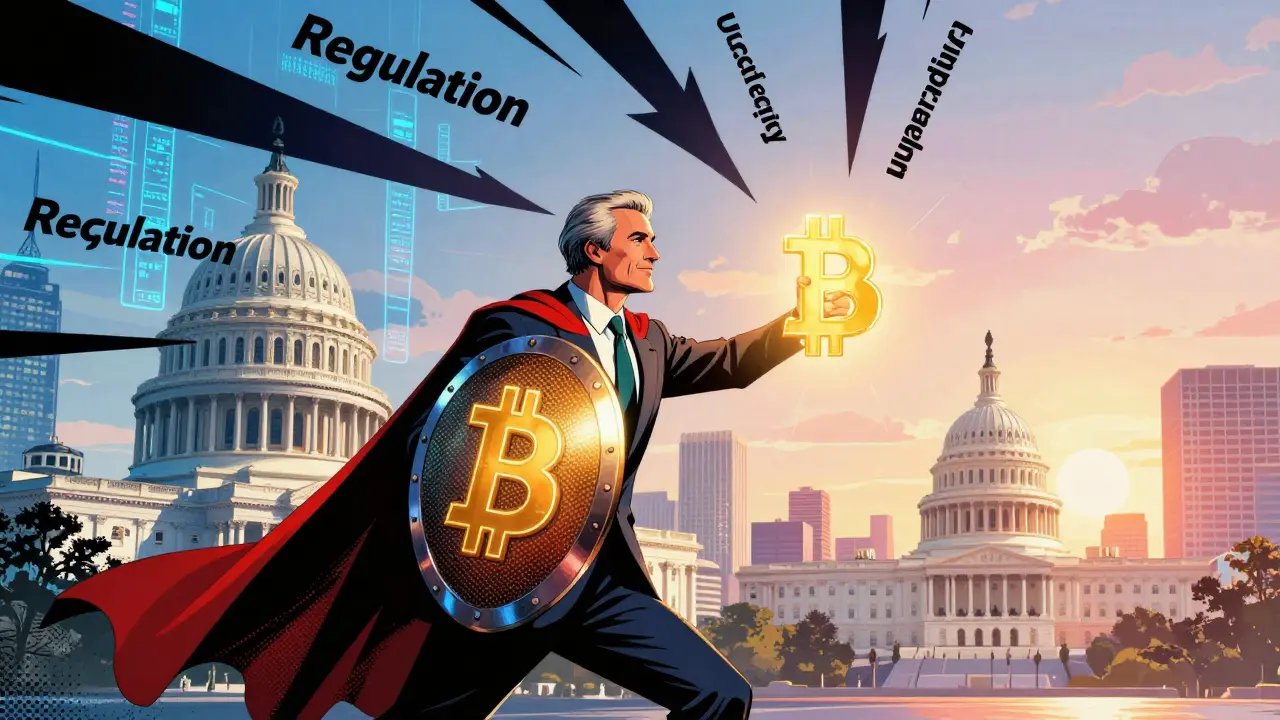
The crypto 'tail' is finally wagging the traditional finance 'dog.' For years, skeptics dismissed digital assets as a niche experiment. Today, that narrative has flipped. The crypto derivatives market, a sector involving financial contracts whose value is derived from underlying cryptocurrency assets like Bitcoin or Ethereum, has grown into a titan of global finance. By the end of 2024, this market reached an estimated notional value between USD 20 trillion and USD 28 trillion. In 2025 alone, monthly trading volume hit $8.94 trillion.
This isn't just about speculative bets anymore. It’s about hedging, institutional adoption, and a fundamental shift in how global capital moves. As we move through 2026, the landscape is defined by three forces: aggressive regulatory support in the United States, the rise of decentralized protocols, and sophisticated product innovation. If you’re navigating this space, understanding these shifts is no longer optional-it’s essential for survival.
The Regulatory Turning Point
The biggest driver of change in recent years hasn’t been technology; it’s been policy. The political landscape shifted dramatically following the inauguration of President Donald Trump on January 20, 2025. His administration didn’t just tolerate crypto; it actively championed it. Before even taking office, Trump appointed a dedicated Crypto Czar, signaling a break from previous administrations’ cautious stance.
Two days after his inauguration, Executive Order 14178 was issued with a bold mission: to make America the "Bitcoin superpower of the world." This wasn’t empty rhetoric. Subsequent orders established a strategic Bitcoin reserve and a U.S. digital asset stockpile. More importantly for everyday investors, these policies opened doors for including digital assets in employer-sponsored retirement plans. This single move could unlock trillions in long-term capital.
On February 19, 2025, the Securities and Exchange Commission (SEC) dropped its appeal against a court ruling that overturned the controversial "Dealer Rule." This rule had threatened to criminalize liquidity providers in decentralized finance (DeFi). Its removal removed a massive cloud of uncertainty, allowing DeFi protocols to operate with greater confidence and transparency.
- Executive Order 14178: Established federal policy promoting digital asset industry growth.
- Strategic Reserve: Created a government-held Bitcoin reserve, legitimizing the asset class.
- Dealer Rule Reversal: Protected DeFi liquidity providers from retroactive enforcement actions.
For traders and institutions, this regulatory clarity means one thing: reduced risk. When the rules are clear, capital flows freely. We are seeing firms that previously operated overseas begin establishing onshore presence in the U.S., attracted by a more predictable legal environment.
Institutional Adoption and Market Structure
You might think that because crypto is decentralized, everyone trades equally. The reality is starkly different. Institutional players dominate the volume. Data shows that Bitcoin and Ethereum account for approximately 68% of all crypto derivatives volume. These two assets are the backbone of the market.
In the United States, the Chicago Mercantile Exchange (CME) maintains over 60% of the monthly derivative trading share. However, globally, centralized exchanges like Deribit lead the charge in options trading. What’s interesting is the concentration of liquidity. Paradigm’s institutional network supports between 33% and 36% of Deribit’s volume. This tells us that big money isn’t spread thin; it’s clustered in specific hubs.
From 2024 to 2025, average daily volume in Ether options grew by 65%. This surge indicates accelerating institutional adoption. Open interest in Bitcoin options now exceeds $4 billion in certain quarters. High open interest means more capital is committed to hedging and speculative positions, creating deeper markets and tighter bid-ask spreads.
| Feature | Centralized Exchanges (CEX) | Decentralized Protocols (DEX) |
|---|---|---|
| Liquidity Source | Market makers, institutions | Automated Market Makers (AMMs), users |
| Regulatory Oversight | High (e.g., CFTC, SEC) | Low (Code-based governance) |
| Counterparty Risk | Exchange insolvency risk | Smart contract vulnerability |
| Access | KYC/AML required | Permissionless (Wallet only) |
| Dominant Players | CME, Deribit, Binance | dYdX, Gamma Strategies |
The rise of Bitwise’s combined Bitcoin and Ethereum ETF, approved by the SEC on January 30, 2025, further blurred the lines between traditional equity markets and crypto derivatives. This approval enhanced institutional participation, driving up trading volumes and interest in related derivative products.

DeFi’s Growing Role in Derivatives
While centralized exchanges handle the bulk of volume, decentralized finance (DeFi) is gaining traction for its security and transparency benefits. Protocols like dYdX have emerged as major players in the DeFi derivatives space. Unlike traditional exchanges where you trust a company with your funds, DeFi allows non-custodial trading. You retain control of your private keys while executing trades on-chain.
The technology behind DeFi derivatives is becoming increasingly sophisticated. Options pricing models are evolving to incorporate regime switching, implied stochastic volatility, and dynamic hedging methodologies-tools traditionally reserved for Wall Street. This convergence suggests that DeFi is maturing from a speculative playground into a serious financial infrastructure.
However, challenges remain. Smart contract risks are real. While less frequent than exchange hacks, when they do happen, they can be catastrophic. The key advantage of DeFi is composability-the ability to build complex financial instruments by stacking different protocols. This enables innovative products that centralized exchanges simply cannot offer due to regulatory constraints.
Security Risks and Volatility Events
Let’s address the elephant in the room: security. The crypto derivatives ecosystem is still vulnerable to breaches. In late January 2025, Phemex Exchange suffered a severe security breach where hackers stole between $70 million and $85 million from hot wallets. Suspected to be orchestrated by North Korea’s Lazarus Group, this incident prompted temporary withdrawal halts and triggered broader concerns around hot wallet vulnerabilities.
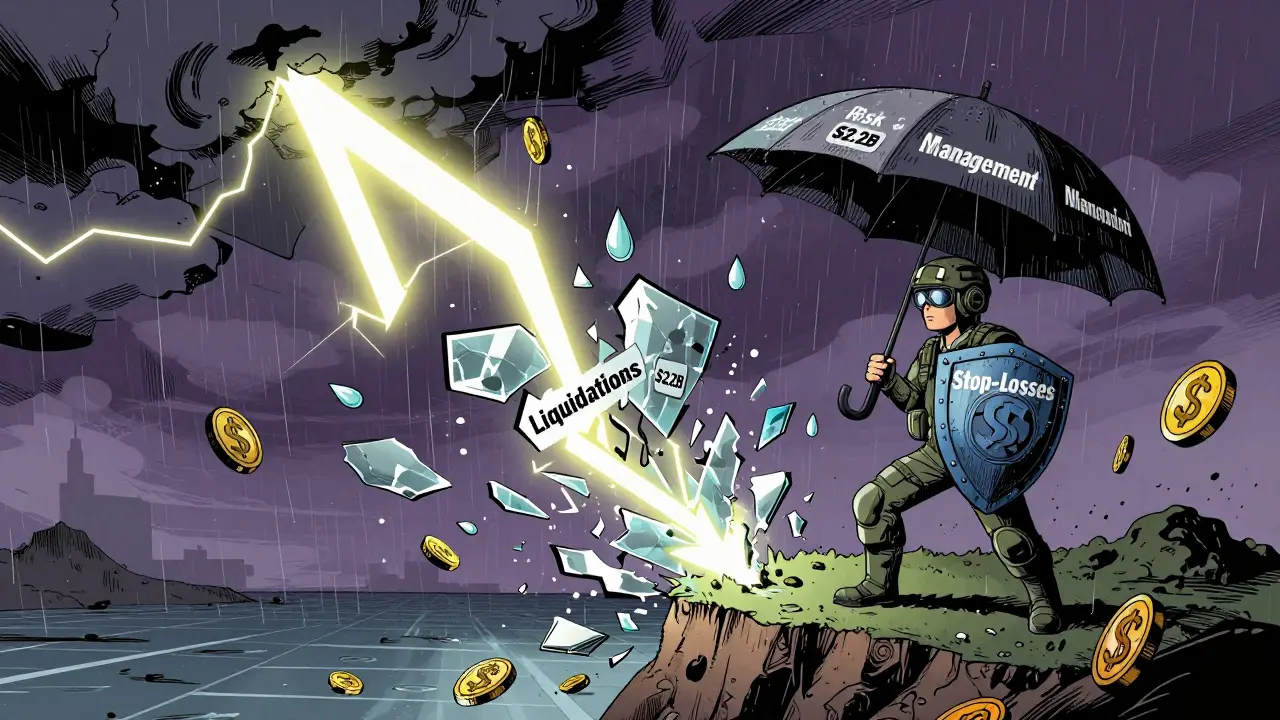
Then came the market crash on February 3, 2025. Triggered by geopolitical uncertainties, this event caused widespread liquidations totaling $2.2 billion within 24 hours. Bitcoin futures saw liquidations of approximately $409 million, while Ethereum futures experienced $600 million in liquidations. This highlights the sensitivity of derivative markets to macroeconomic and policy developments.
These events serve as critical reminders. Leverage amplifies both gains and losses. In a volatile market, even small price movements can trigger cascading liquidations. Traders must employ strict risk management protocols, including stop-losses and position sizing, to survive these shocks.
- Hot Wallet Vulnerabilities: Exchanges storing user funds online are prime targets for hackers.
- Liquidation Cascades: High leverage leads to rapid margin calls during market drops.
- Geopolitical Sensitivity: Crypto markets react quickly to global news, unlike traditional markets which may have circuit breakers.
Despite these risks, the market continues to grow. Why? Because the tools for managing risk are also improving. Better data infrastructure, aggregated options data platforms, and comprehensive metrics reporting help traders make informed decisions.
Innovative Product Development
The future of crypto derivatives isn’t just about buying and selling Bitcoin futures. It’s about product innovation. Several breakthrough offerings are reshaping the landscape.
Crypto.com introduced UpDown options, simplifying binary outcomes for retail traders. Luxor Technology developed Hashprice non-deliverable forward (NDF) products, allowing miners to hedge their revenue without delivering physical coins. FalconX created staking yield swap instruments, enabling investors to trade the difference in yields between different staking protocols.
Perhaps most exciting is the overlap with DeFi. Some protocols are experimenting with perpetual or "everlasting" option constructs. These challenge traditional derivative structures by removing expiration dates, offering continuous exposure. Traditional exchanges and financial institutions are increasingly integrating DeFi solutions to provide these innovative products, expanding access while maintaining blockchain technology’s security and efficiency benefits.
Future Projections and Long-Term Viability
Looking ahead, several transformative trends will shape the crypto derivatives landscape. First, the integration of cryptocurrencies with traditional financial instruments will gain momentum. Expect to see additional crypto-based ETFs and hybrid derivative products that combine stocks, bonds, and digital assets.
Second, the expansion of digital asset exchanges will drive adoption of decentralized finance protocols in futures and derivatives trading. As regulations become less restrictive, more firms will bring operations onshore, increasing competition and lowering costs for users.
Third, tax treatment may improve. More favorable tax policies for cryptocurrency trades could encourage greater participation from both individual and institutional investors. Potential legal framework reforms may also address existing challenges related to crypto mining, possibly overriding local restrictions to promote sector growth.
Market data infrastructure will continue to mature. More exchanges will report options metrics, and data aggregators will provide greater transparency. This supports increased market participation by reducing information asymmetry.
Long-term viability assessment suggests the crypto derivatives market is positioned for continued expansion. The establishment of more exchanges dedicated to digital assets will enhance market accessibility and liquidity. The adoption of DeFi protocols represents a fundamental shift toward more accessible and transparent market structures.
However, the market’s sensitivity to regulatory changes, security vulnerabilities, and extreme volatility events remains a critical risk factor. Ongoing monitoring and robust risk management protocols are essential. The convergence of traditional finance expertise with crypto innovation suggests a maturing market structure that could support sustained institutional adoption and product development in the coming years.
What are crypto derivatives?
Crypto derivatives are financial contracts whose value is derived from an underlying cryptocurrency asset, such as Bitcoin or Ethereum. Common types include futures, options, and swaps. They allow traders to speculate on price movements or hedge existing positions without necessarily owning the underlying asset.
How did the 2025 regulatory changes affect the crypto market?
The 2025 regulatory changes, particularly under the Trump administration, significantly boosted market confidence. Executive Order 14178 promoted digital assets, and the reversal of the "Dealer Rule" protected DeFi liquidity providers. These moves reduced regulatory uncertainty, encouraging institutional adoption and onshore business operations.
Is it safer to trade derivatives on centralized or decentralized exchanges?
It depends on your risk tolerance. Centralized exchanges (CEX) offer high liquidity and familiar interfaces but carry counterparty risk (the exchange could fail or be hacked). Decentralized exchanges (DEX) eliminate counterparty risk by using smart contracts but introduce smart contract vulnerability risks. DEXs also offer permissionless access, while CEXs require KYC/AML verification.
What happened during the February 2025 market crash?
On February 3, 2025, geopolitical uncertainties triggered a historic market crash. Within 24 hours, $2.2 billion in positions were liquidated across crypto derivatives markets. Bitcoin futures saw $409 million in liquidations, and Ethereum futures saw $600 million. This event highlighted the extreme sensitivity of leveraged derivative markets to macroeconomic shocks.
What are some innovative new crypto derivative products?
Recent innovations include UpDown options by Crypto.com, which simplify binary outcomes; Hashprice NDFs by Luxor Technology, allowing miners to hedge revenue; and staking yield swaps by FalconX. Additionally, DeFi protocols are experimenting with perpetual options that lack expiration dates, offering continuous exposure to market conditions.
 Cryptocurrency Guides