
Coinbase Country Limits: Where You Can and Can't Use Coinbase in 2025
When you try to sign up for Coinbase, a major U.S.-based cryptocurrency exchange that supports buying, selling, and storing digital assets. Also known as Coinbase Global, it operates under strict financial regulations that vary by country. You might get blocked—even if you’re in a country where crypto is legal. That’s not a glitch. It’s Coinbase country limits in action. Unlike decentralized platforms, Coinbase is a centralized exchange that answers to governments, banks, and regulators. If a country doesn’t meet their compliance bar, you simply can’t sign up—or you’ll get locked out later.
These limits aren’t random. They’re tied to financial regulation, rules set by national authorities that control how money moves, who can access it, and how it’s reported. Places like Germany and Japan have clear licensing systems, so Coinbase operates openly. But in countries like Nigeria, where banks ban crypto transactions, or India, where heavy taxes and reporting rules make compliance costly, Coinbase either restricts services or pulls out entirely. Even within the EU, MiCAR, the new European Union crypto regulation that standardizes licensing and consumer protections. is forcing Coinbase to tighten access in some member states. And then there are places like China, where crypto trading is banned outright—Coinbase doesn’t even try to operate there.
It’s not just about legality. It’s about risk. If a country has weak AML rules, high fraud rates, or unstable banking systems, Coinbase avoids it. That’s why you’ll find Coinbase in Canada and Australia but not in Venezuela or Zimbabwe. Even if you use a VPN, your account can get flagged, frozen, or permanently closed. They track IP addresses, device fingerprints, and bank details. Trying to bypass these limits doesn’t work—it just puts your funds at risk.
What you’ll find in the posts below are real-world examples of how crypto exchanges handle borders. From Germany’s BaFin licensing rules to Thailand’s jail-time penalties for non-compliance, these aren’t theoretical debates—they’re live consequences. You’ll see how Nigeria’s banking ban pushes users toward P2P, how Cuba uses Bitcoin to survive U.S. sanctions, and why Upbit got hit with a $34 billion fine for failing KYC checks. These stories all connect to the same truth: Coinbase country limits aren’t about technology. They’re about money, power, and who gets to play.
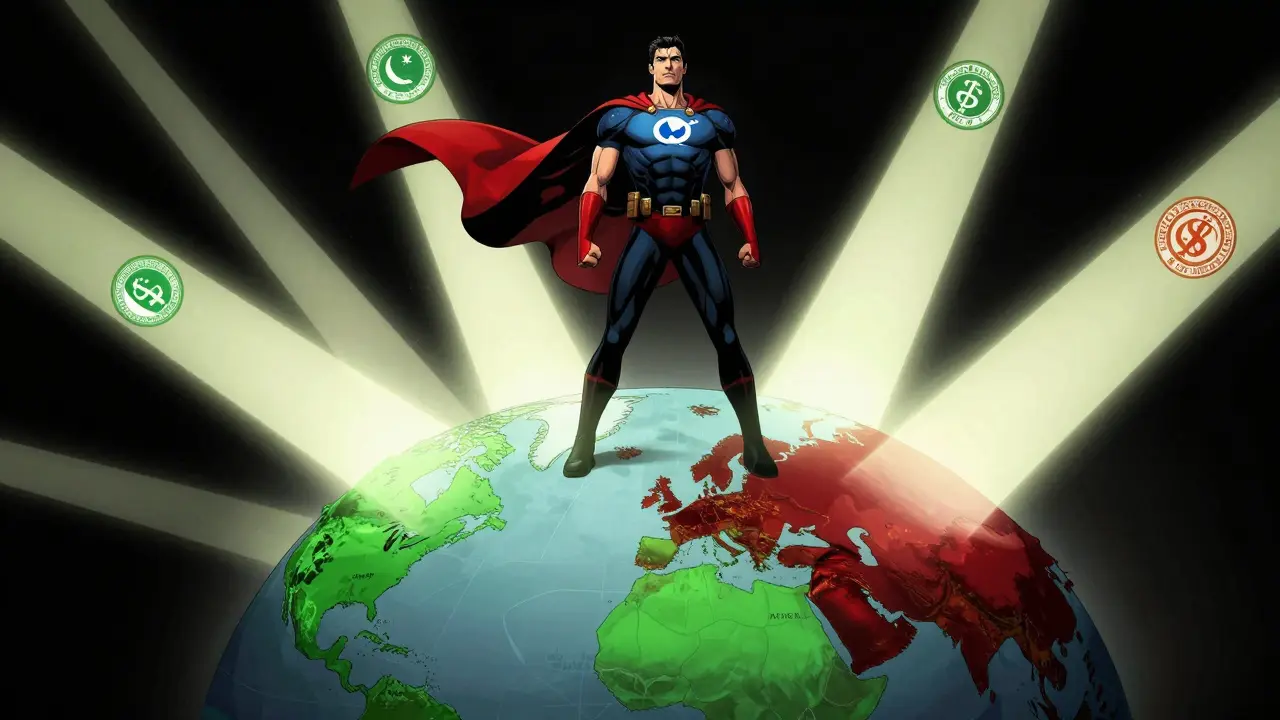
Coinbase blocks fiat crypto services in 63+ countries due to U.S. sanctions and local regulations. Learn where you can buy crypto with real money, where you can't, and what alternatives exist.
 Cryptocurrency Guides