
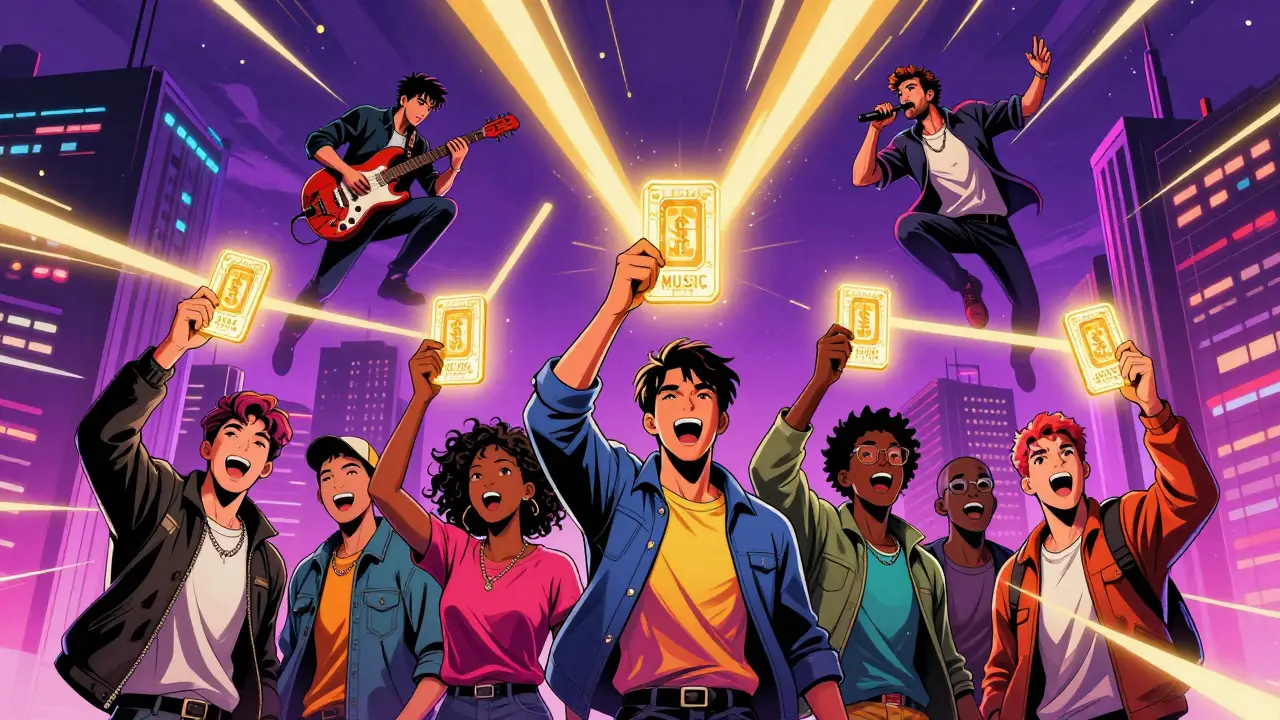
Imagine being a fan of your favorite musician, podcaster, or artist - and instead of just buying their merch or streaming their content, you actually own a piece of their success. That’s what social tokens do. They’re not just another crypto trend. They’re a new way for creators to build real economic relationships with their audiences - and for fans to become active participants, not just spectators.
What Exactly Is a Social Token?
A social token is a digital coin created by an individual, brand, or community on a blockchain like Ethereum, Solana, or Polygon. It’s tied to a person’s reputation, content, or influence. Think of it like a membership card, but it’s a real cryptocurrency you can buy, sell, and hold in your wallet.
Unlike NFTs - which are unique, one-of-a-kind digital items - social tokens are fungible. That means every token is identical to the next, just like a dollar bill. You can trade them easily on exchanges, and their value changes based on demand. If more people want to own the token, its price goes up. If interest fades, it drops.
Creators use social tokens to turn followers into stakeholders. When you buy a creator’s token, you’re not just supporting them - you’re investing in their future. And in return, you get access to things regular fans don’t: private Discord channels, early concert tickets, voting rights on new projects, exclusive merchandise, or even a share of future revenue.
How Do Social Tokens Work?
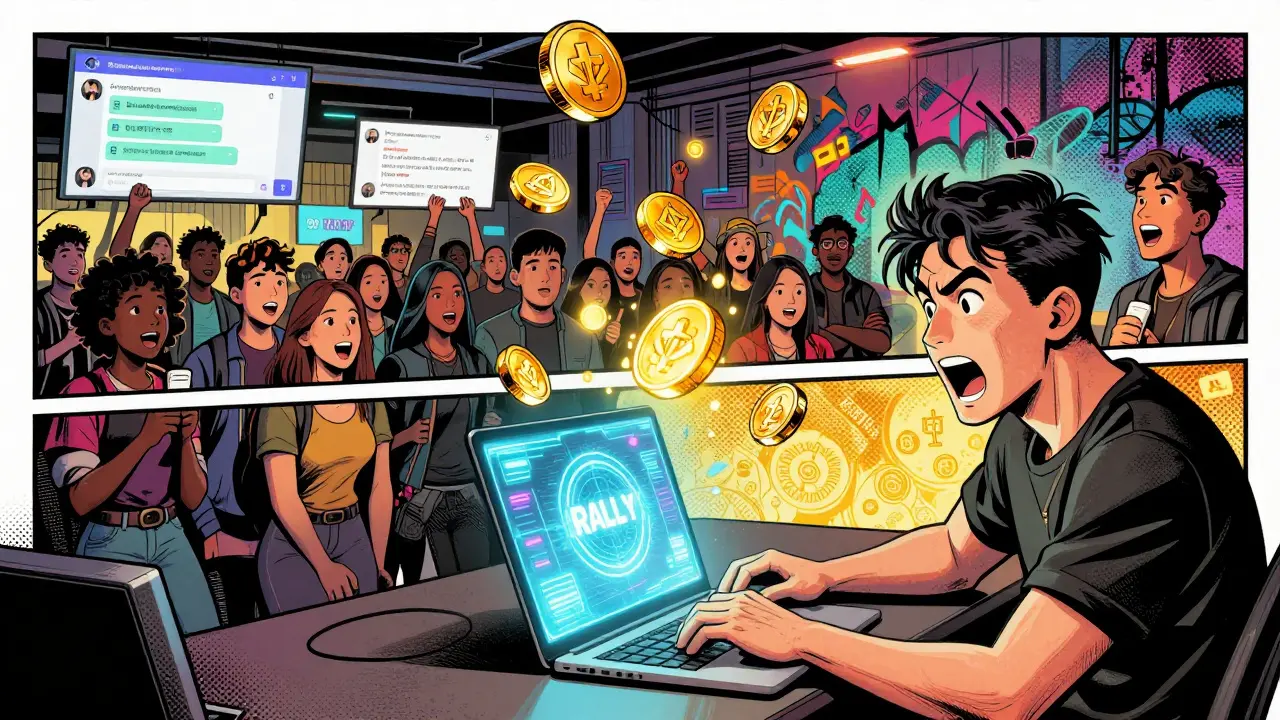
Creating a social token doesn’t require coding skills. Platforms like Rally and Roll let anyone launch a token in minutes. A creator picks a name - say, $JAM for a musician - sets a total supply (like 1 million tokens), and defines what benefits token holders get.
Once the token is live, fans can buy it using crypto or even credit cards on supported platforms. The tokens are stored in digital wallets like MetaMask or Phantom. From there, holders can use them to unlock perks:
- Access to private online communities
- Voting on album releases, tour dates, or podcast topics
- Discounts on merch or ticket presales
- Exclusive content like unreleased tracks or behind-the-scenes footage
- Opportunities to meet the creator in person
Here’s how it plays out in real life: A podcaster launches $SHOW, giving holders early access to new episodes and the power to vote on next week’s guest. A thousand fans buy in. The podcaster uses the funds to hire a better mic and editor. The show improves. More people join. The token’s value rises. Everyone wins.
Why Are Social Tokens Better Than Traditional Fan Clubs?
Traditional fan clubs charge monthly fees. You pay, you get a newsletter and maybe a T-shirt. There’s no upside. No ownership. No say in what happens next.
Social tokens change that. They turn passive fans into active participants. When you hold a social token, you’re not just a customer - you’re a co-owner of the creator’s ecosystem. If the creator grows, your token grows in value. If they fail, you lose money too. That alignment of incentives is powerful.
Also, social tokens are global and open. You don’t need to join a platform like Patreon or Substack. You don’t pay their fees. You interact directly with the creator through blockchain technology. No middlemen. No hidden rules. Just clear, transparent rules coded into smart contracts.
Real Examples of Social Tokens in Action
Some of the earliest and most successful social tokens came from independent creators:
- $FRIEND - launched by crypto educator and YouTuber Daniele Sestagalli. Token holders get access to weekly AMAs, early insights on market moves, and voting rights on educational content topics. Over 10,000 people hold the token.
- $MUSIC - created by indie artist and producer Moxie. Holders can vote on which songs get remixed, enter raffles for vinyl pressings, and receive exclusive studio sessions.
- $BROOKLYN - a community token for a group of artists in Brooklyn. It funds public art projects, and token holders vote on which murals get painted next.
Even non-celebrities are using social tokens. A local coffee shop owner in Portland launched $COFFEE to reward regulars with free drinks, early access to new blends, and a say in seasonal menu changes. It’s not about fame - it’s about building real community value.
Social Tokens vs. NFTs: What’s the Difference?
People often confuse social tokens with NFTs. They’re related, but not the same.
NFTs are unique. Each one is different - think of a digital artwork, a collectible card, or a virtual land plot. They’re meant to be owned, collected, or traded as singular items.
Social tokens are mass-produced. They’re like shares in a company. Everyone gets the same token. Their value comes from collective participation, not scarcity of the item itself.
The best creators use both. The social token builds the community and powers the economy. NFTs add special, limited-edition perks on top - like a rare digital poster or a one-time virtual concert experience. Together, they create a layered ecosystem: tokens for daily access, NFTs for exclusive moments.
Who Can Create a Social Token?
You don’t need a million followers. You don’t need to be famous. You just need a community that cares.
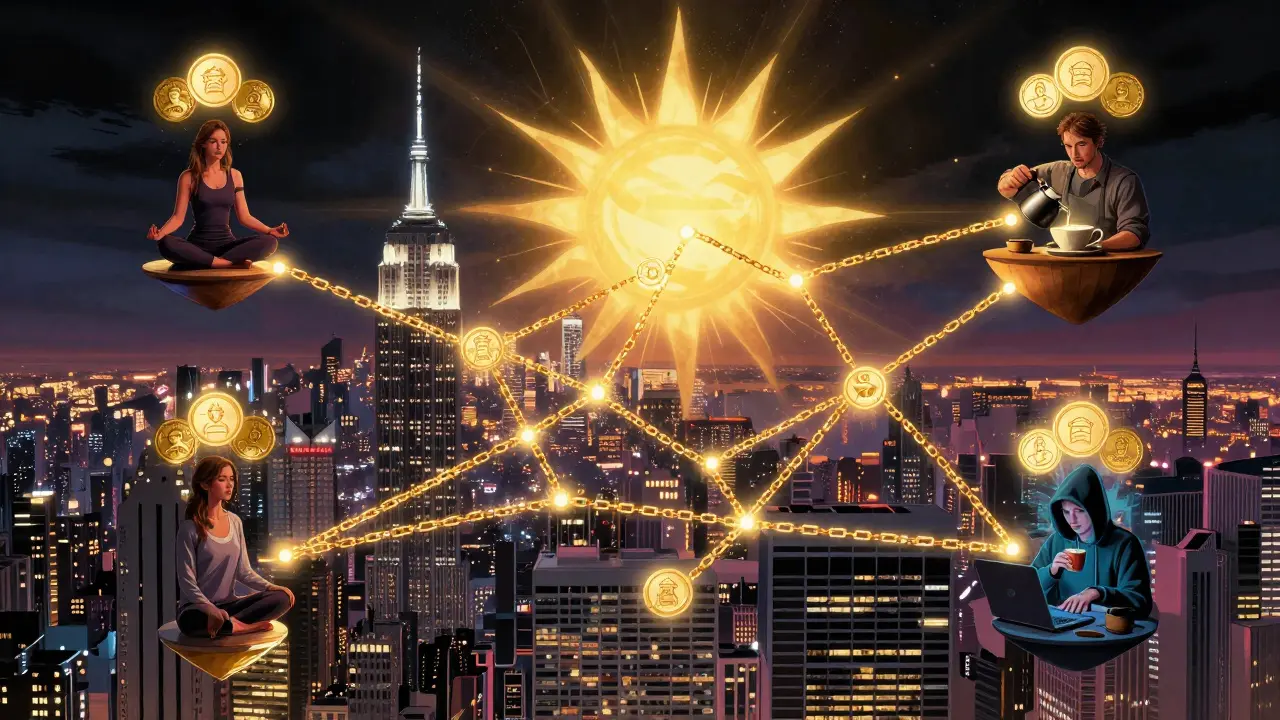
A yoga instructor with 5,000 dedicated students can launch a token that gives holders access to live-streamed meditations, personalized routines, and voting rights on next month’s theme. A game developer with a loyal Discord server can use tokens to fund their next update and let fans vote on features.
The barrier to entry is low. Platforms handle the technical side. All you need is a clear idea of what value you’re offering and how you’ll reward your holders.
That’s the real power of social tokens: they democratize economic participation. Anyone with an audience - no matter how small - can build their own economy.
What Are the Risks?
Like any crypto asset, social tokens aren’t risk-free.
- Value can drop - If the creator loses momentum, the token price can fall. There’s no guarantee of returns.
- Scams exist - Some creators launch tokens with no real plan, then disappear. Always check for transparency: Do they have a public roadmap? Do they answer questions openly?
- Regulation is unclear - In some countries, social tokens could be classified as securities. Creators need to be careful about how they market them.
- Wallet management - If you lose your private key, you lose your tokens. No customer service can help you recover them.
Do your homework. Look at the creator’s history. Read their whitepaper or community guidelines. Join their Discord. If they’re serious, they’ll be open and active.
What’s Next for Social Tokens?
The space is still young. But adoption is growing fast. More creators are ditching platform-dependent monetization (like YouTube ad revenue or Instagram sponsorships) in favor of direct, blockchain-based relationships.
Tools are getting easier. Wallets are improving. Exchanges are listing more social tokens. Even traditional brands - like sports teams and record labels - are experimenting with them.
The big shift? It’s no longer about who has the biggest audience. It’s about who can build the most loyal, engaged community. Social tokens make that possible.
Soon, every online community - from book clubs to coding groups - could have its own token. Your favorite blogger might offer token-based rewards. Your local gym might let you vote on new equipment using tokens. The internet is becoming a place where you don’t just consume content - you help shape it, and you share in its value.
Social tokens aren’t magic. But they’re one of the clearest signs that the creator economy is evolving - from attention-based models to ownership-based ones. And that’s worth paying attention to.
Are social tokens the same as NFTs?
No. Social tokens are fungible - meaning each one is identical and can be traded like regular money. NFTs are unique digital items, like collectibles or artwork. Creators often use social tokens as the foundation of their community and NFTs as special, limited-edition perks on top.
Can anyone create a social token?
Yes. You don’t need to be famous or have a large following. Platforms like Rally and Roll let anyone launch a token in minutes. All you need is a group of people who care about what you do and are willing to support you directly.
How do I buy a social token?
You can buy social tokens on decentralized exchanges (DEXs) like Uniswap or centralized exchanges that list them. Some creators also sell tokens directly through their websites using payment processors that accept crypto or credit cards. You’ll need a crypto wallet like MetaMask to store them.
Do social tokens have real value?
Yes - but only if the community believes in them. Their value comes from the perks they unlock and the creator’s ability to deliver on promises. If a creator grows their audience and adds real benefits, the token’s price rises. If they disappear or stop delivering, the value drops. It’s market-driven, not guaranteed.
Are social tokens legal?
It depends on where you live and how the token is structured. In some countries, if a token promises financial returns or profit-sharing, regulators may treat it like a security. Creators are advised to avoid promising specific returns and focus on access and participation instead. Always check local regulations before launching or buying.
 Cryptocurrency Guides
Naman Modi
December 21, 2025 AT 05:38Lloyd Yang
December 22, 2025 AT 06:41Mmathapelo Ndlovu
December 23, 2025 AT 03:15Tyler Porter
December 24, 2025 AT 14:08Rishav Ranjan
December 25, 2025 AT 06:37Steve B
December 26, 2025 AT 21:07Sophia Wade
December 27, 2025 AT 16:38Rebecca F
December 28, 2025 AT 19:26vaibhav pushilkar
December 28, 2025 AT 22:52SHEFFIN ANTONY
December 30, 2025 AT 09:17Vyas Koduvayur
December 30, 2025 AT 20:01Jake Mepham
January 1, 2026 AT 19:32Craig Fraser
January 3, 2026 AT 04:14Jacob Lawrenson
January 3, 2026 AT 04:35Zavier McGuire
January 5, 2026 AT 01:42Sybille Wernheim
January 5, 2026 AT 14:40Cathy Bounchareune
January 6, 2026 AT 05:36Jordan Renaud
January 6, 2026 AT 09:16Luke Steven
January 7, 2026 AT 06:55