
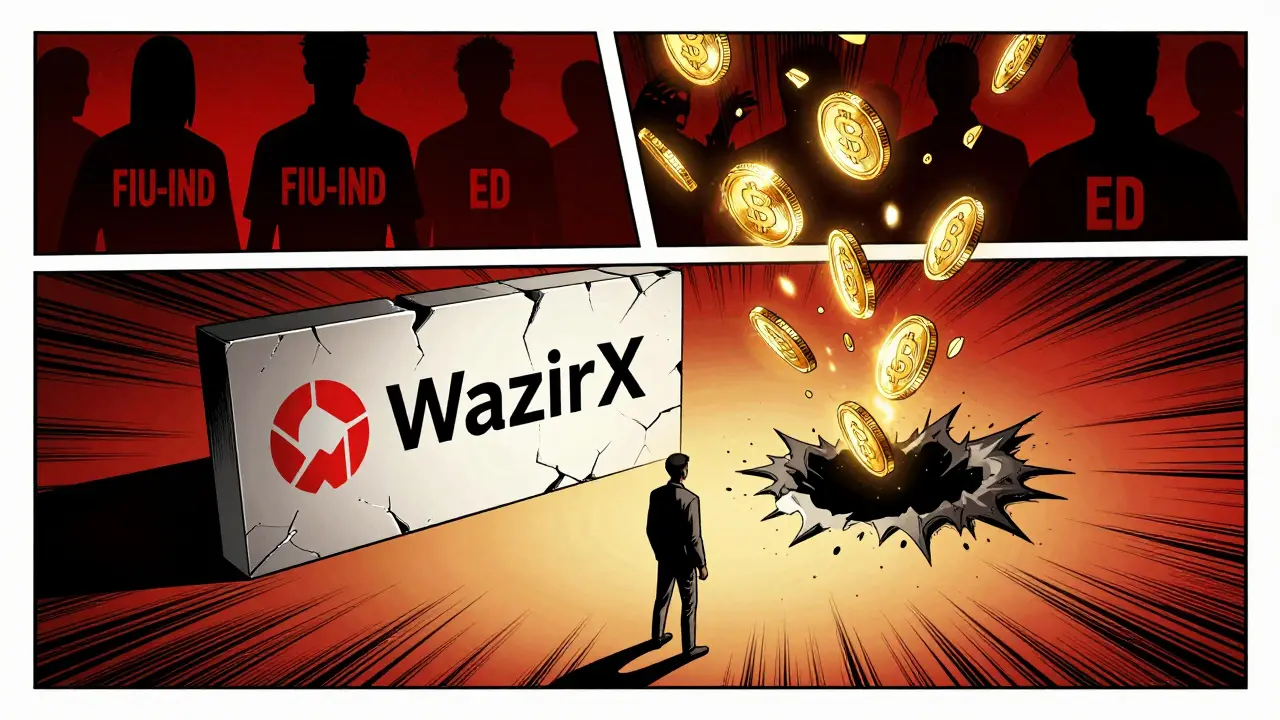
If you're an Indian crypto trader, choosing the wrong exchange isn't just a mistake-it can cost you everything. You might think all platforms are equal, but the truth is, some exchanges are actively putting your money at risk. And it's not just about hacking or scams. It's about regulation, banking blocks, tax traps, and being left with zero recourse when things go wrong. The Indian crypto scene is a minefield, and if you're not careful, you could end up trapped with frozen funds, no legal help, and a huge tax bill you didn't even know you owed.
Why Indian Regulators Are Watching Crypto Exchanges Closely
The Financial Intelligence Unit of India (FIU-IND) is the main body tracking crypto transactions. It doesn’t approve or ban exchanges, but it demands strict compliance: every exchange handling INR must report user data, track transactions, and verify identities. If they don’t, they get fined-millions of dollars worth. Binance and Bybit have already been hit with massive penalties for ignoring these rules. That’s not a warning. It’s a red flag.What does this mean for you? If an exchange isn’t compliant with FIU-IND, your money isn’t safe. Indian banks won’t work with them. Deposits get blocked. Withdrawals fail. Your account might get frozen without explanation. And if the exchange shuts down or gets raided? You have no legal protection. Indian authorities won’t step in because the platform isn’t recognized under local law.
The WazirX Disaster: A Case Study in Broken Trust
WazirX was once India’s biggest crypto exchange-6 million users, $5.4 billion in monthly trades, backed by Binance and the Blockchain India Fund. Then, in July 2024, everything collapsed.A multi-signature wallet was hacked. $230 million vanished. That’s not a small loss. That’s one of the largest crypto heists in history. And instead of returning funds, WazirX announced a “restructuring.” But months later, users are still locked out. No clear timeline. No refunds. No transparency. Just silence.
Even worse, WazirX still holds onto user funds while claiming to be “working on solutions.” That’s not recovery. That’s holding people hostage. If you’re still using WazirX, you’re gambling with money you may never see again.
International Exchanges That Can’t Operate in India
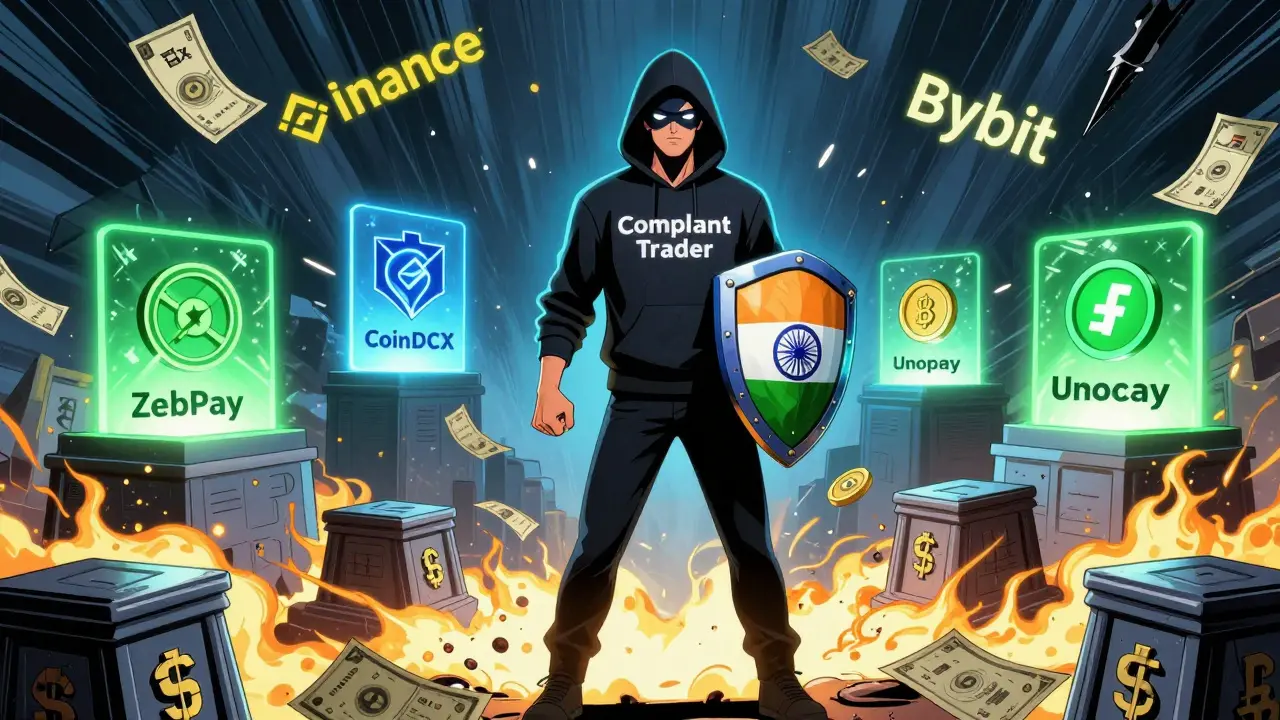
Binance and Bybit are two of the biggest names in crypto globally. But in India, they’re non-starters. Both have been penalized by FIU-IND for failing to meet reporting standards. That means:- Your INR deposits might get rejected without warning
- Your withdrawals could be delayed indefinitely
- You won’t get tax reports that match Indian rules
- If hacked, you have no legal path to recover funds
Some users still use these platforms through third-party payment processors. But that’s not safer-it’s riskier. You’re bypassing banking systems entirely, which makes you a target for scrutiny by the Enforcement Directorate (ED). Even if you’re not doing anything illegal, using a non-compliant exchange can trigger a money laundering investigation. That’s not a rumor. That’s happened to real people.
The Tax Trap: When You Get Audited and Have No Records
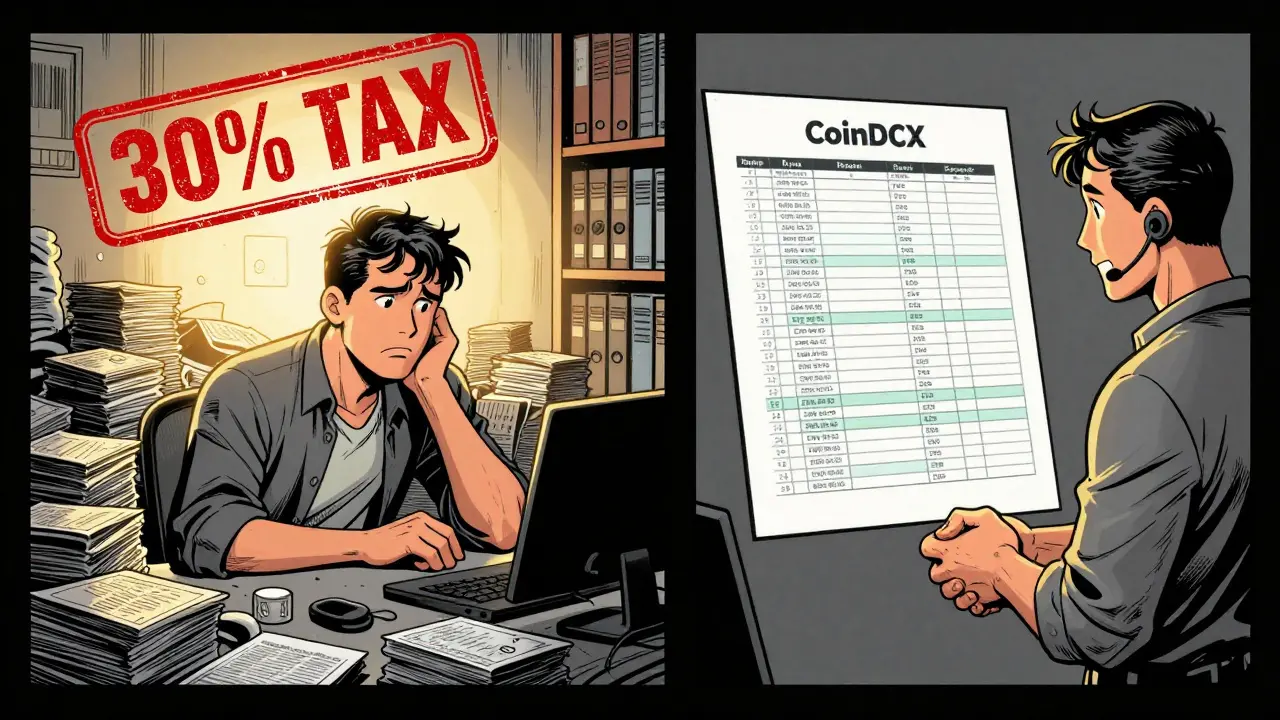
India taxes crypto profits at 30%. Plus, there’s a 1% TDS on every sale over ₹50,000 in a financial year. If you’re trading on a non-compliant exchange, you’re on your own.These platforms don’t generate tax reports. They don’t auto-calculate gains. They don’t even tell you how much you made or lost. That means you have to manually track every trade-every buy, every sell, every swap. One missed transaction? You could owe thousands in back taxes. And if the IT department audits you? No records = no defense.
Compliant exchanges like CoinDCX and ZebPay give you downloadable tax statements. Non-compliant ones? Nothing. You’re forced to become your own accountant. And if you mess it up? You’re liable for penalties, interest, and legal fees.
No Customer Support? No Protection
When you use a bank, you have rights. If your account is frozen, you can call, file a complaint, escalate. With non-compliant crypto exchanges, there’s no such thing.WazirX’s customer support vanished after the hack. Binance’s chat system is useless for Indian users. Bybit doesn’t even have a local support team. If your account gets flagged for “suspicious activity,” you might be locked out for weeks-with no one to talk to. No email replies. No phone number. No escalation path.
And if the exchange gets shut down? Good luck finding someone who cares. Indian regulators won’t help. The exchange won’t answer. Your money? Gone.
What Happens If You Use a Non-Compliant Exchange?
Here’s the cold reality:- Your INR deposits may vanish without notice
- Your withdrawals could be blocked indefinitely
- You might be investigated for money laundering just because of the platform you chose
- You’ll have to manually track taxes-risking huge penalties
- If hacked, you have zero legal recourse
- Your funds could be frozen forever, like with WazirX
It doesn’t matter if you’re trading Bitcoin, Ethereum, or Solana. If the exchange isn’t compliant, you’re playing with fire.
Which Exchanges Are Safer for Indian Users?
You don’t have to give up crypto. But you do need to pick wisely. These exchanges are known to follow FIU-IND guidelines and have working banking partnerships:- CoinDCX: Offers tax reports, INR deposits, and regulatory transparency
- CoinSwitch: Integrates with Indian banks, provides transaction history
- ZebPay: One of the oldest Indian platforms with consistent compliance
- Unocoin: Fully licensed, tax-ready reports, active customer support
- Bitbns: Supports INR, clear fee structure, and regular compliance updates
Even these aren’t perfect. The rules keep changing. But they’re the best we have right now. They report to FIU-IND. They work with banks. They give you tax documents. And if something goes wrong, you have at least a chance of getting help.
How to Protect Yourself in 2026
Here’s what you need to do right now:- Check if your exchange has a public FIU-IND compliance statement
- Verify that you can deposit and withdraw INR without third-party intermediaries
- Make sure the platform provides downloadable tax reports for Indian filers
- Avoid any exchange that doesn’t have a clear Indian customer support channel
- Never use an exchange that doesn’t clearly state its regulatory status
And if you’re still using WazirX, Binance, or Bybit? Move your funds. Now. Don’t wait for a hack. Don’t wait for a bank block. Don’t wait for a tax notice. Get out while you still can.
The crypto market is risky enough. You don’t need to make it worse by picking the wrong platform. Stay compliant. Stay safe. Your money depends on it.
Is cryptocurrency trading illegal in India?
No, trading crypto is not illegal in India. The Supreme Court lifted the RBI’s banking ban in 2020, and crypto trading remains legal. But it’s not regulated like stocks or banks. You’re on your own legally if something goes wrong-unless you use a compliant exchange.
Can Indian banks block crypto transactions?
Yes. Banks treat non-FIU-compliant crypto exchanges as high-risk. If you try to deposit INR into Binance or Bybit through your bank, the transaction may be rejected. Even if it goes through, your account could be flagged for review. Compliant exchanges like CoinDCX and ZebPay have direct banking partnerships to avoid this.
Why did WazirX lose $230 million?
A hacker gained access to WazirX’s multi-signature wallet by compromising private keys. The exchange admitted the breach but didn’t disclose how the keys were stolen. Critics say poor security practices and lack of independent audits made the attack possible. Even after the hack, WazirX hasn’t returned funds or provided a clear recovery plan.
Do I need to pay tax on crypto even if I didn’t cash out?
Yes. In India, swapping one crypto for another (like BTC to ETH) is considered a taxable event. Even if you never converted to INR, you owe 30% capital gains tax on the profit. Non-compliant exchanges won’t track this for you-you have to calculate it yourself using transaction history.
Can the Enforcement Directorate (ED) investigate me for using Binance?
Yes. The ED has already investigated Indian users for using non-compliant exchanges, even if they weren’t involved in illegal activity. The reasoning: using platforms that evade Indian reporting rules raises red flags for money laundering. If you’re using Binance or Bybit, you’re already in a higher-risk category.
What should I do if my funds are frozen on WazirX?
There is no guaranteed solution. WazirX has not provided refunds or timelines. Your best options are: (1) Document everything-transaction IDs, screenshots, emails; (2) Join user groups to pressure the company; (3) Consult a lawyer about civil recourse; (4) Move remaining funds to a compliant exchange. Don’t expect help from regulators-they won’t intervene.
 Cryptocurrency Guides
Craig Gregory
March 13, 2026 AT 05:33Let’s be real-regulation isn’t about protecting users. It’s about control. The FIU-IND doesn’t care if you lose money. They care if you bypass their surveillance. Indian crypto users are being forced into a corner where compliance = submission. And yet, the same people who scream about financial freedom are the first to cheer when the government cracks down on decentralized systems. Hypocrisy is the national sport.
Anshita Koul
March 13, 2026 AT 23:52Oh my god, this is so true!!! I lost three months of savings on WazirX and no one even replied to my ticket!!! I’m not mad, I’m just… heartbroken?? Like, I trusted them!!! They had Binance backing them!!! And now?? Silence!!! I’ve been checking their app every day for a year!!!
vishnu mr
March 15, 2026 AT 22:30i just moved all my funds to coinDCX after wazirx thing… its kinda scary how fast things can go south right?? like one day u r trading like a boss next day ur wallet is ghosted… i never thought i’d say this but thank u indian govt for making us use legit exchanges lol… kinda ironic huh??
Zephora Zonum
March 16, 2026 AT 22:01It’s fascinating how people treat crypto like a bank when it’s clearly not. The expectation of recourse is delusional. If you’re using a platform that doesn’t have a banking license, you’re not a customer-you’re a speculator. And speculators don’t get bailouts. They get lessons. Maybe if you didn’t treat crypto like a savings account, you wouldn’t be crying when it blows up.
Anthony Marshall
March 18, 2026 AT 19:39STOP WAITING FOR PERMISSION TO BE SAFE! The compliant exchanges are your lifeline-USE THEM! CoinDCX, ZebPay, Unocoin-they’re not perfect, but they’re the only ones keeping your money from vanishing into the void! Don’t be a fool waiting for Binance to come back. It won’t. Move. Now. Your future self will thank you.
Mara Alves Mariano
March 20, 2026 AT 06:17Ohhh so now we’re supposed to trust the government’s ‘compliant’ exchanges? LOL. You know who else had ‘compliance’? Enron. Lehman Brothers. Bernie Madoff. The system doesn’t protect you-it harvests you. If you think CoinDCX is your savior, you’re just trading one cage for another with better lighting. And tax reports? Please. They’re just data points for the next audit. You think you’re safe? You’re just in a prettier prison.
Sharon Tuck
March 21, 2026 AT 02:08I really appreciate how thoughtful this post is. It’s easy to get swept up in the hype, but this breaks down the real risks in a way that’s both clear and compassionate. I’ve been helping friends navigate this, and I’ve been telling them: if an exchange doesn’t have a clear Indian banking partnership, walk away. No exceptions. It’s not about fear-it’s about smart stewardship.
karan narware
March 22, 2026 AT 03:59So let me get this straight-we’re being told to use Indian exchanges because they’re ‘compliant’… but the same government that shuts down your bank account for using Binance is also the one that can freeze your entire portfolio at any moment? And you call this safety? My grandpa used to say, ‘If the fox offers you a cage, it’s not a home-it’s a menu.’
Michael Suttle
March 22, 2026 AT 12:36Wazirx hack? Pfft. That was an inside job. FIU-IND and the ED are working with the compliant exchanges to push out the competition. You think Binance got fined because they didn’t report? Nah. They got fined because they didn’t pay enough bribes. The ‘safe’ exchanges? They’re all owned by shell companies linked to the same political elites. You’re not choosing safety-you’re choosing which cartel you pay tribute to.
Jenni James
March 23, 2026 AT 19:07While I appreciate the intent behind this article, it fundamentally misunderstands the nature of decentralized finance. Compliance is antithetical to the ethos of crypto. The fact that Indian users are being coerced into centralized, state-sanctioned platforms under the guise of ‘protection’ is not a feature-it is the very pathology of authoritarian financial control. You are not securing assets; you are institutionalizing surveillance.
Chelsea Boonstra
March 25, 2026 AT 01:16Wait-so if I swap BTC for ETH on CoinDCX, they give me a tax report? Cool. But what if I swap ETH for USDT and then back to BTC? Do they track that? Or do I need to manually log every single transaction? Because if I miss one, I’m on the hook for 30% on a $20k profit? That’s insane. And what if the exchange’s system glitches? Who’s liable then? Not them. Me. Always me.
Alex Thorn
March 26, 2026 AT 22:14Look, I get it. You’re scared. You’ve seen friends lose money. You’ve heard horror stories. But the answer isn’t just ‘use CoinDCX’-it’s ‘learn how to self-custody.’ If you’re putting your life savings on an exchange-even a ‘compliant’ one-you’re still gambling. The real safety isn’t in regulation. It’s in your own hands. Get a hardware wallet. Learn seed phrases. Stop outsourcing your security to anyone who says ‘we’ve got you covered.’ You don’t need a savior. You need sovereignty.
Howard Headlee
March 27, 2026 AT 04:01WazirX was a dumpster fire wrapped in a Binance logo and doused in Indian nationalism. But here’s the truth no one wants to admit: the entire Indian crypto ecosystem is built on sand. The ‘safe’ exchanges? They’re just the ones with lawyers who know how to dance with the FIU. One day, they’ll get caught in the same net. And when that happens? You think they’ll refund you? Nah. They’ll just shut down, rename, and start again under a new name. This isn’t finance. It’s a reality show with your money as the prize.
Julie Tomek
March 27, 2026 AT 17:00While the concerns raised in this article are valid and well-documented, it is imperative to recognize that regulatory compliance does not inherently equate to security. The platforms identified as ‘compliant’-CoinDCX, CoinSwitch, ZebPay, Unocoin, and Bitbns-are subject to the same systemic vulnerabilities as any centralized entity. Moreover, the Indian regulatory framework remains in a state of flux, with evolving interpretations of tax law and financial reporting obligations. Therefore, while these exchanges may currently represent the least risky option, they are not immune to operational failure, legal pressure, or policy reversal. The prudent investor must maintain a diversified approach, with a significant portion of assets held in self-custodied wallets, and must engage independent tax professionals for compliance. Reliance on any single platform, regardless of its regulatory status, constitutes an unacceptable concentration of risk.