
Quick Summary
- Core Purpose: Powers the XI Protocol, using space infrastructure for data reporting and visual representation.
- Blockchain: Operates as an ERC-20 token on the Ethereum network.
- Unique Use Case: Allows users to buy advertising time on CubeSats in Low Earth Orbit (LEO).
- Supply: Capped at 1 billion tokens, with roughly 421 million currently circulating.
- Risk Level: High, due to centralized controls like minting and blacklisting capabilities.
What Exactly is the XI Protocol?
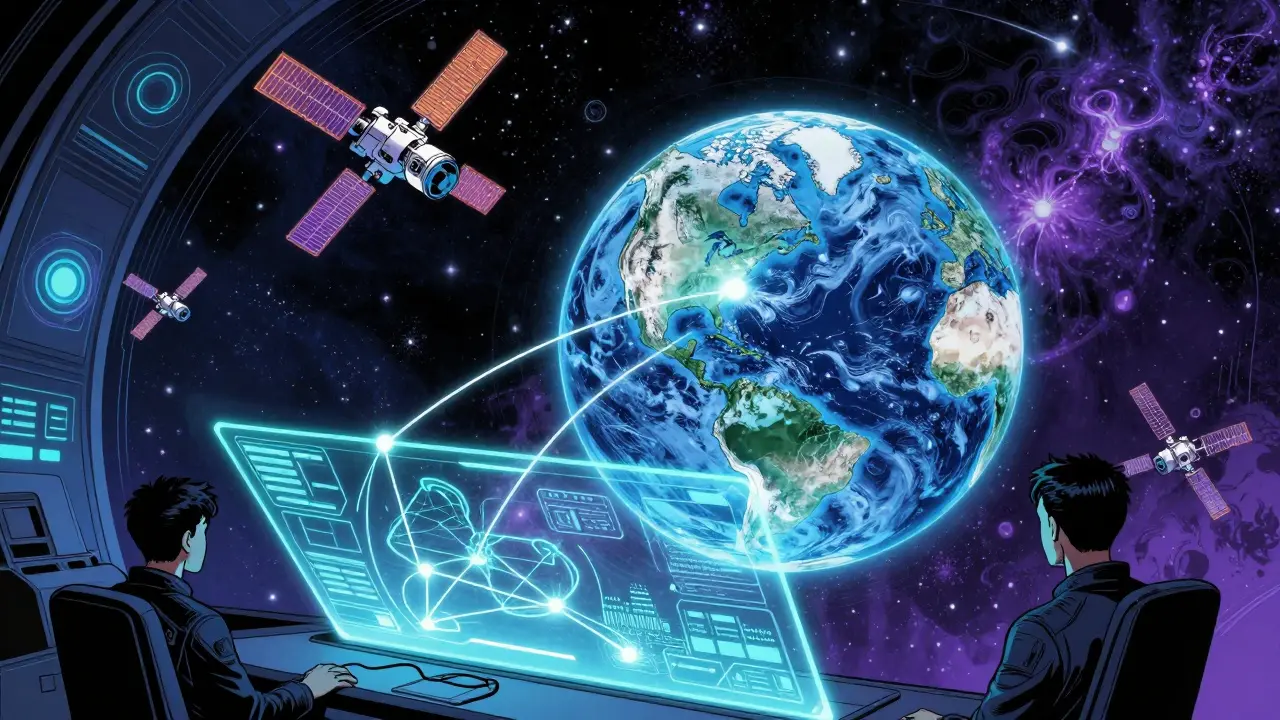
To understand the token, you have to understand the XI Protocol is a distributed ledger solution that uses space-based hardware, like orbital satellites and SATCOM systems, to represent and report physical data. Essentially, it turns space into a physical layer for a decentralized supercomputer. This isn't just marketing fluff. The protocol uses something called "Cascade Computing" to create a system of Metaoracles. Think of an oracle as a bridge that tells a blockchain what is happening in the real world (like the price of gold or the weather). The XI Protocol takes this further by using a commit-reveal schema and staking to make sure the data coming from space sensors is accurate and hasn't been tampered with. It's a complex way of ensuring that if a satellite reports a specific physical event, the network agrees on that fact without needing a single central authority to vouch for it.Practical Ways to Use Xi Token
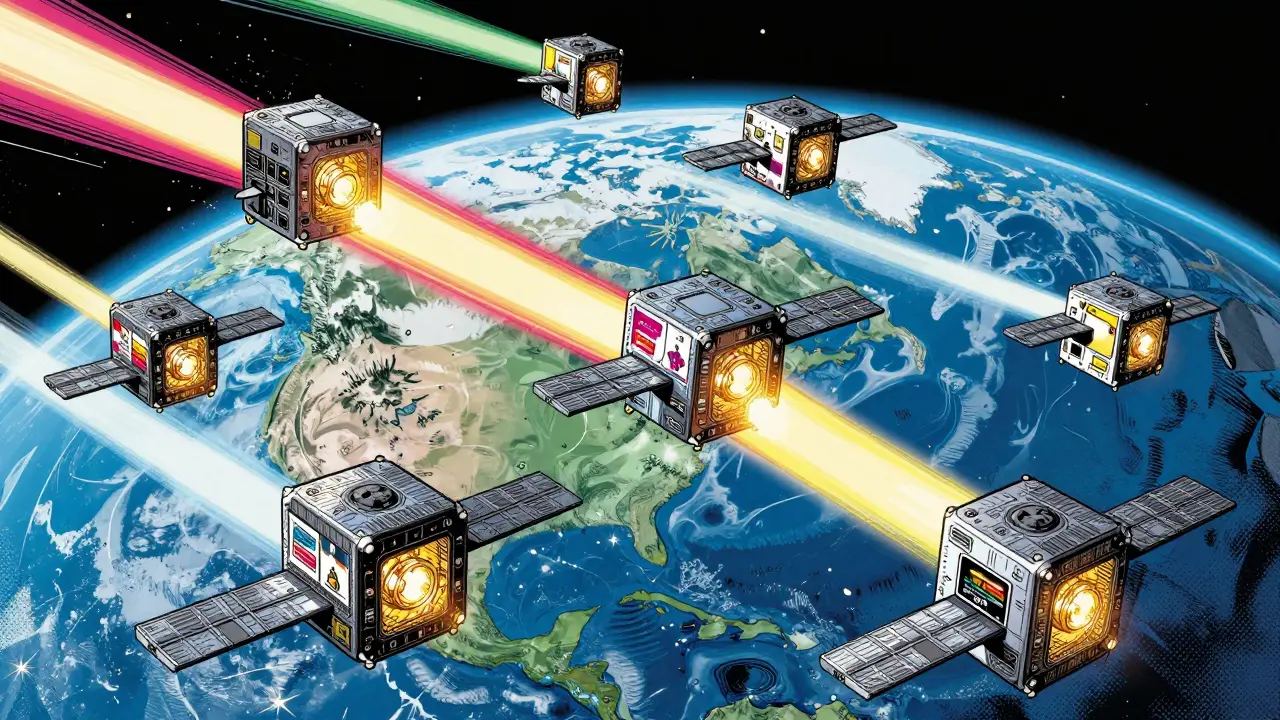
Most people buy crypto and hope the price goes up, but XI actually has a variety of functional roles. It's not just a speculative asset; it's a utility tool for a very specific set of services.- Sattelite Advertising: This is the most striking feature. You can use XI tokens to purchase advertising slots on CubeSats. If you've ever wondered how to get your brand literally orbiting the planet, this is the mechanism.
- X-WOID Social Platform: The token serves as the primary medium of exchange within this social ecosystem, driving the platform's internal economy.
- Mathematical Incentives: The project rewards people who solve open mathematical problems with tokens, effectively crowdsourcing brainpower for complex calculations.
- DeFi and Staking: Like many modern tokens, you can stake your XI to help secure the network and earn rewards, or use it as collateral for borrowing and lending.
- Gaming: It functions as an in-game currency for various applications built on top of the protocol.
The Technical Side: Supply and Market Dynamics
When looking at the numbers, XI behaves like a typical low-cap, high-volatility asset. As of early 2026, prices fluctuate wildly across different exchanges. For instance, you might see it trading around $0.0007 on one platform and nearly $0.0009 on another. This happens because there isn't a massive amount of liquidity-the total 24-hour trading volume is often under $1,000 on some trackers-meaning a few large trades can swing the price significantly.| Attribute | Value/Detail |
|---|---|
| Maximum Supply | 1,000,000,000 XI |
| Circulating Supply | ~421,000,000 XI |
| Token Standard | ERC-20 (Ethereum) |
| Consensus Mechanism | Proof-of-Stake (PoS) via XIP Protocol |
| Primary Utility | Space Infra & Data Reporting |
The Red Flags: Centralization and Risks
Here is where you need to be careful. While the XI Protocol talks a lot about decentralization, the actual smart contract has some "god mode" features that are common in early-stage projects but risky for investors. Security audits and data from platforms like CoinStats have highlighted several critical risks. The developers have the ability to mint new tokens out of thin air, which could dilute the value of your holdings. They also have a blacklist function, meaning they can block specific wallets from trading. Even more concerning are the proxy upgradeable contracts and self-destruct capabilities. In a truly decentralized world, the code is law and cannot be changed. With XI, the developers can essentially change the laws of the token after you've already bought in. If you are a conservative investor, these features are major warning signs. It means you are trusting the developers' integrity more than you are trusting the mathematics of the blockchain.XIP Protocol: Privacy and Peer-to-Peer Power
To handle the actual movement of value, the project introduced the XIP Protocol. This is a variant designed specifically for secure, peer-to-peer transactions. While the main XI token handles the "big picture" infrastructure and governance, XIP focuses on the plumbing-making sure that when you send tokens to someone else, the transaction is private and secure. By using advanced cryptography and a Proof-of-Stake (PoS) model, the XIP Protocol allows developers to build their own apps-like games or social networks-directly on top of the system. This creates a layered effect: Space Infrastructure $\rightarrow$ XI Protocol $\rightarrow$ XIP Protocol $\rightarrow$ End User Applications.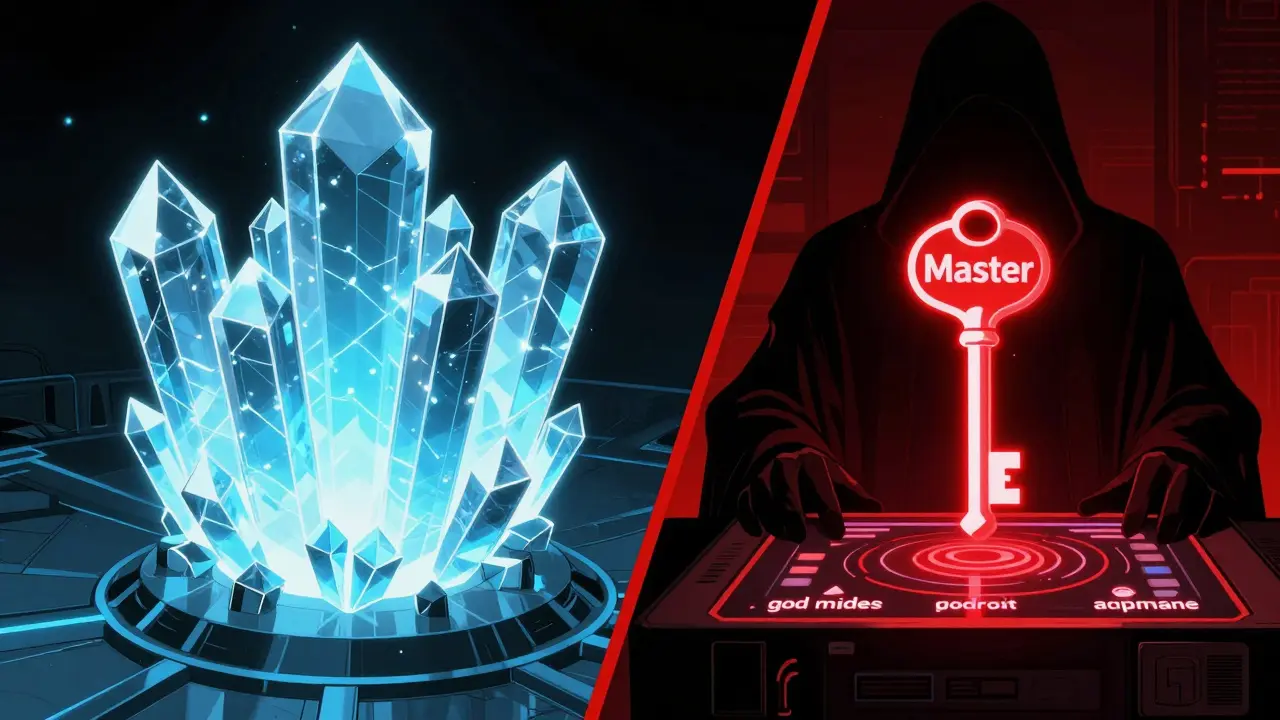
Is Space-Crypto Actually Viable?
Combining blockchain with orbital assets is a bold move, but it's a niche market. The success of Xi Token depends on whether people actually want to buy satellite ads or need trustless data from space sensors. Right now, it's an emerging sector. Unlike Bitcoin, which wants to be digital gold, or Ethereum, which wants to be a global computer, XI wants to be the operating system for the space economy. If the "New Space" race continues to grow-with more private companies launching CubeSats-the infrastructure provided by the XI Protocol becomes much more valuable. However, because it's so specialized, it won't have the same mass-market appeal as a payment coin. It's a bet on the future of space commercialization.Is Xi Token (XI) safe to invest in?
XI is considered a high-risk asset. While the technology is innovative, the developers maintain centralized powers, including the ability to mint new tokens, blacklist wallets, and upgrade contracts. This creates a significant level of counterparty risk compared to fully decentralized coins.
How does the satellite advertising work?
Users can use XI tokens to pay for time or space on CubeSats (miniature satellites) located in Low Earth Orbit. This allows digital content or advertisements to be physically linked to orbital hardware.
What is the difference between XI and XIP?
XI is the primary token used for staking, governance, and paying for space services. XIP is the underlying protocol variant focused on providing a secure, private, peer-to-peer transaction layer for applications built on the network.
What is a Metaoracle in the XI Protocol?
A Metaoracle is a specialized node within the XI Protocol that reports physical data from space sensors. By using a distributed consensus mechanism, the protocol ensures that this data is accurate and trustless before it is recorded on the ledger.
Where can I trade Xi Token?
XI is listed on several exchanges and tracked by major platforms like CoinGecko, CoinMarketCap, and Crypto.com. However, due to low liquidity, prices can vary significantly between these venues.
Next Steps for Interested Users
If you're looking to get involved, your path depends on your goals:- For Speculators: Monitor the liquidity on exchanges. Because the volume is low, avoid large market orders and use limit orders to prevent slippage.
- For Developers: Explore the open-source codebase of the XIP Protocol to see if you can build a game or app that leverages space-based data.
- For Space Enthusiasts: Look into the X-WOID platform to see how the integration of social networking and orbital advertising actually looks in practice.
- For Risk-Averse Investors: Carefully review the smart contract's centralized functions on a blockchain explorer before committing significant capital.
 Cryptocurrency Guides
Greg Reynolds
April 21, 2026 AT 08:16The whole concept of "space-based crypto" is essentially a marketing gimmick to lure in retail investors who don't understand how satellites actually work. You don't need a blockchain to store data from a sensor; a simple signed API call to a centralized database is infinitely more efficient. Adding a layer of ERC-20 tokens just creates unnecessary friction and gas costs for a problem that doesn't exist. Most of these "innovations" are just buzzwords layered on top of a standard Ethereum contract.
Tara Aman
April 22, 2026 AT 16:35I think it's actually really exciting to see someone pushing the boundaries like this! Imagine the possibilities for the future of the internet if we can truly decentralize orbital data. Let's stay positive about the tech and see where it goes!
Jennifer Taylor
April 23, 2026 AT 22:38The blacklist function is the biggest red flag here. It's just a tool for the elites to freeze your money whenever they want. They tell us it's about security but it's really about total control of the network from the shadows. Wake up people, this is just another trap to track our every move from space.
Larry Yang
April 24, 2026 AT 14:30The liquidity is a joke. Trading volume under a thousand bucks is basically a ghost town. It's barely a market, more like a private club for a few whales to pump and dump on the rubes. Typical low-cap trashy project with too many "features" and zero actual users. The math doesn't add up, honestly.
Charlie Queen
April 26, 2026 AT 01:09Wow, satellite ads sound so futuristic! 🚀 I can just imagine a little logo floating over the Pacific 🌏 It's a wild time to be alive and the tech is just mind-blowing! Let's all keep an open mind about these new frontiers! 🌟✨
Paige Raulerson
April 26, 2026 AT 06:05I find the obsession with "CubeSats" utterly tedious. It's clearly a desperate attempt to appear sophisticated by piggybacking on the New Space trend. One would think a project claiming to be a "supercomputer" would have more substance than a few proxy contracts and a hope for advertising revenue. It's all so terribly quaint.
Kathleen Bergin
April 27, 2026 AT 16:02It's just a coin on Ethereum. Nothing special.
Sara Ellis
April 29, 2026 AT 06:55money is just a dream and space is a big void so putting them together is just poetic really it doesnt matter if the tech works because the idea of it is the real art
Doc Coyle
April 30, 2026 AT 03:34The developers having the ability to mint new tokens is fundamentally wrong. It goes against the very morality of decentralized finance. If the supply can be changed by a few people in a room, the token has no real value. People should stop rewarding this kind of behavior from devs.
debashish sahu
April 30, 2026 AT 11:37The integration of satellites and blockchain could be very useful for monitoring agricultural changes in various regions. It provides a way to verify land use without relying on government reports which can sometimes be biased.
Jagdish Sutar
May 1, 2026 AT 19:15That is a very good point about the agricultural use. For those new to this, the Metaoracle part is basically like having a witness in the sky that cannot be bribed. It is a great way to learn about how real-world data meets the blockchain!
jill huyo-a
May 3, 2026 AT 02:05I wonder if the XIP protocol could be expanded to handle other types of orbital data, like weather patterns or maritime tracking. It would be interesting to see if a community-led effort could build a more transparent version of the oracle system to reduce that centralization risk mentioned in the post.
Alex Wan
May 4, 2026 AT 14:24I must concur with the sentiment that we should expllor the open source side of this venture! It is a truely marvelous opportunity for young developers to engage with the vastness of space via code. Let us strive to lauch a new era of colabration together in this digital expanse!
Jennifer L
May 4, 2026 AT 21:46Oh my goodness, the risk of a self-destruct function in the contract is absolutely terrifying! I cannot imagine the horror of losing all one's investments because of a single line of code gone wrong. It is truly a heart-wrenching prospect for any honest investorr.