
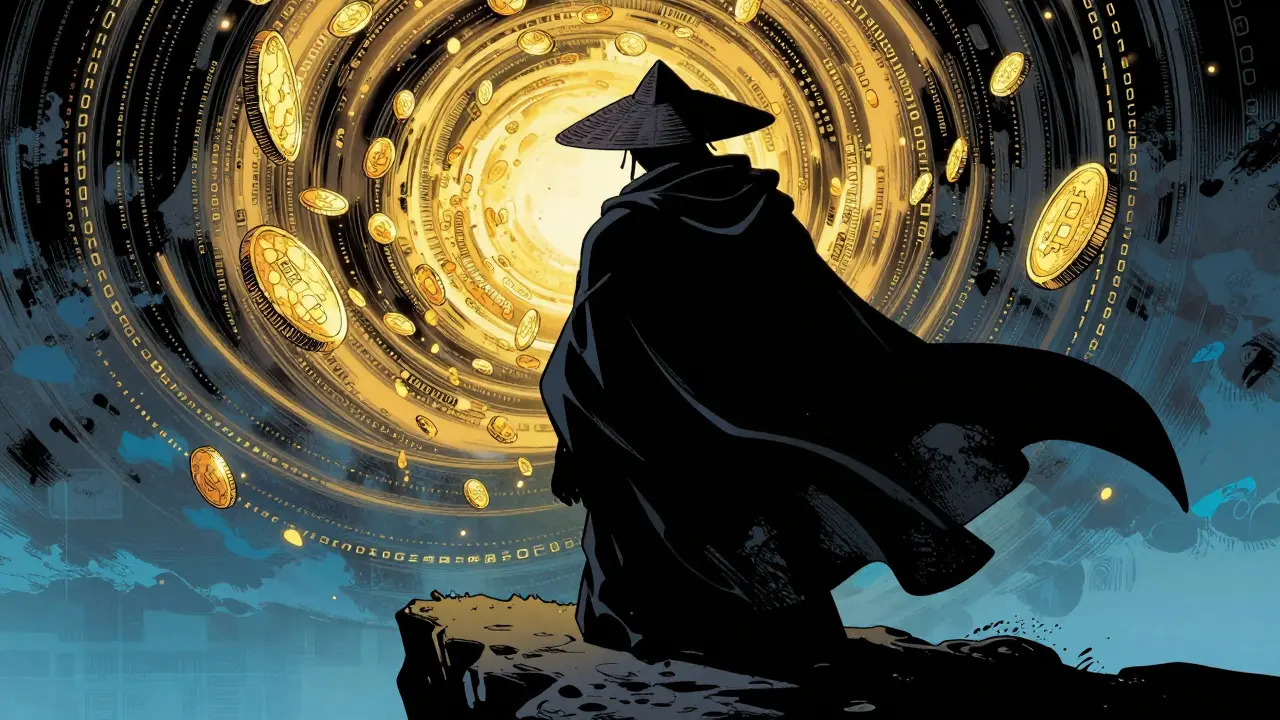
Imagine a digital asset launched by a ghost. In August 2020, an anonymous figure calling themselves Ryoshi dropped a new token into the crypto wild. Much like the mystery surrounding Satoshi Nakamoto and the birth of Bitcoin, nobody knows if Ryoshi is one person or a coordinated group. The name itself comes from the Japanese word for "fisherman" (漁師), which is a fitting metaphor for someone navigating the choppy waters of the speculative crypto market. But is this just another copycat coin, or does it actually offer something different?
The Story Behind Ryoshi Token
To understand Ryoshi Token is a community-driven, deflationary cryptocurrency designed to improve upon the flaws of early meme coins. Also known as RYOSHI, it was built specifically to tackle the high transaction fees and lack of transparency that often frustrated holders of assets like Dogecoin and Shiba Inu.
The project isn't trying to reinvent the wheel. Instead, it wants to keep the "meme energy"-that social-media-driven hype that sends prices skyrocketing-while fixing the technical plumbing. The goal was to create a token "by the people, for the people," moving away from centralized control and focusing on a decentralized structure where the community holds the power.
How RYOSHI Actually Works
Unlike traditional currencies, Ryoshi operates on a deflationary model. In simple terms, this means the total supply of tokens is designed to shrink over time. This is usually achieved through "burning," where a portion of tokens is permanently removed from circulation, theoretically making the remaining tokens more scarce and valuable.
Technically, the token lives on the Binance Smart Chain (BSC), which allows it to benefit from faster transaction speeds and lower costs compared to the Ethereum network. If you're looking for it on a block explorer, its contract address is 0x0e5f989ce525acc4ee45506af91964f7f4c9f2e9. Because it's on the BSC, you can't just buy it on a traditional stock exchange; you need a digital wallet and access to a Decentralized Exchange (DEX).
Market Reality: Price and Volatility
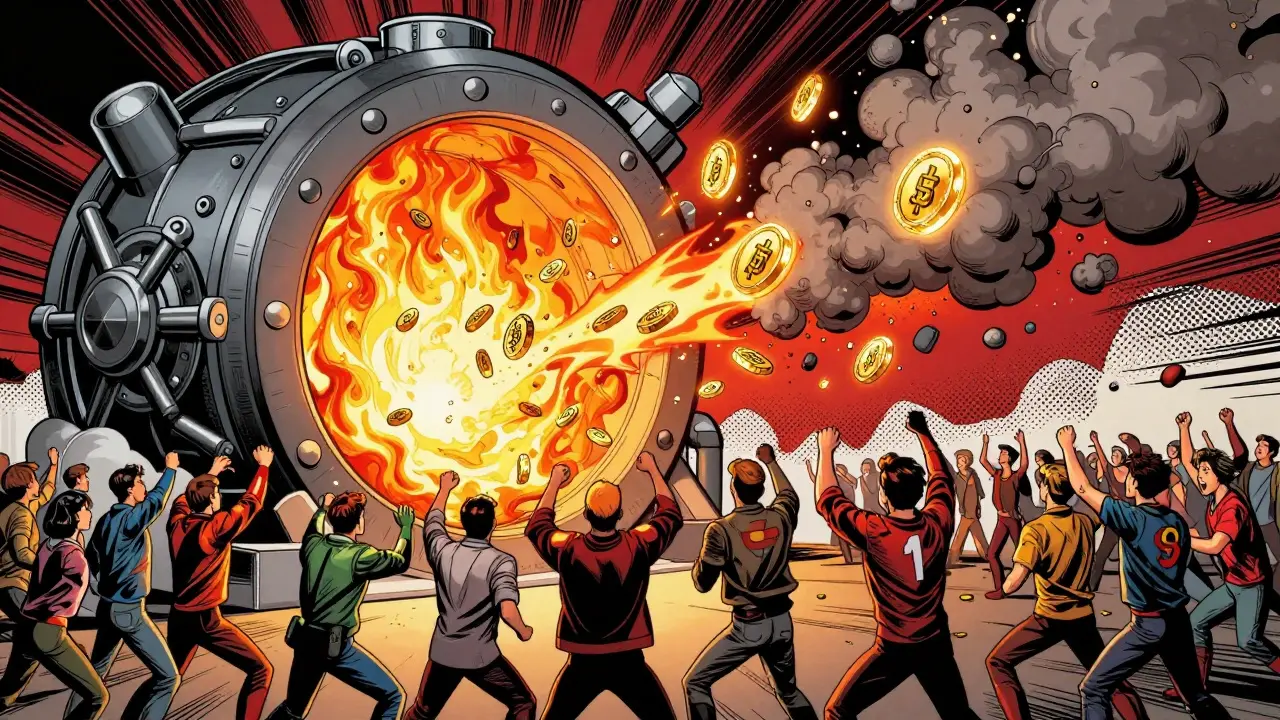
If you look at the charts for Ryoshi Token, you'll see a rollercoaster. Like most meme coins, it experienced a massive surge followed by a steep decline. Some data sources show the coin is currently trading at a fraction of a cent-around $0.0000000001544. In fact, it has plummeted over 99% from its all-time high (ATH) of approximately $0.000014.
One of the strangest things about RYOSHI is that different tracking sites show different numbers. This often happens when there are multiple versions of a token or when liquidity is low. For instance, while CoinMarketCap might rank it around #5500, other trackers place it much lower. This discrepancy is a red flag for cautious investors, as it suggests the asset is highly speculative with limited liquidity.
| Attribute | Value (Approx.) | Context |
|---|---|---|
| Current Price | $0.0000000001544 | Highly volatile |
| Total Supply | 332.99 Trillion | Based on V2 reports |
| Blockchain | Binance Smart Chain | BSC Network |
| All-Time High | $0.000014 | Historical peak |
| Primary DEX | Ebisu's Bay | Popular trading venue |
Ryoshi vs. The Meme Giants
How does this stack up against the "big dogs" like Dogecoin or Shiba Inu? While Dogecoin was a joke that became a payment method and Shiba Inu created an entire ecosystem (including its own Layer 2 network), Ryoshi positions itself as a corrective measure. It claims to solve the transparency issues those coins faced early on.
However, the reality is that Ryoshi has a much smaller community and far less trading volume. While Dogecoin is traded on almost every major global exchange, Ryoshi is mostly confined to smaller DEXs. This makes it a "micro-cap" play-meaning it's incredibly risky, but the theoretical upside (if a community rally happens) is higher because the starting price is so low.
The Risks of Investing in RYOSHI
You shouldn't treat this like a savings account. Investing in a token with an anonymous creator and massive price drops is essentially gambling. Here are the primary risks you should keep in mind:
- Liquidity Traps: With very low 24-hour trading volumes (sometimes just a few dollars on certain platforms), you might find it impossible to sell your tokens if there are no buyers.
- Anonymous Ownership: Since "Ryoshi" is a mystery, there is no legal entity to hold accountable if the project disappears.
- Extreme Volatility: A small buy or sell order can swing the price by double-digit percentages in minutes.
- Version Confusion: As mentioned, there are multiple versions of RYOSHI tokens, which can lead to buying the wrong contract address.
Final Verdict: Is it for You?
If you are a professional trader who loves high-risk, high-reward plays and understands how to use Web3 Wallets like MetaMask or Trust Wallet, you might find the speculation interesting. However, for the average person looking to get into crypto, this is a dangerous entry point. Most of the value in meme coins comes from social sentiment, not technical utility. Without a massive surge in social media attention, tokens like RYOSHI often struggle to regain their former glory.
Who is the creator of Ryoshi Token?
The creator is an anonymous person or group known as Ryoshi. Their identity remains unknown to this day, mirroring the mystery of Bitcoin's creator, Satoshi Nakamoto.
What blockchain does RYOSHI use?
Ryoshi Token is built on the Binance Smart Chain (BSC), which allows for faster and cheaper transactions than the Ethereum network.
Is Ryoshi Token a safe investment?
It is considered highly speculative and risky. Due to its massive price drop from all-time highs, low liquidity, and anonymous leadership, it should be treated as a high-risk asset rather than a safe investment.
Where can I trade RYOSHI tokens?
RYOSHI is primarily traded on decentralized exchanges (DEXs), with Ebisu's Bay being one of the most frequently cited platforms for this token.
What does "deflationary" mean in the context of RYOSHI?
A deflationary model means the total supply of tokens decreases over time, often through a process called "burning," which aims to increase the value of the remaining tokens by making them more scarce.
 Cryptocurrency Guides
Kathleen Bergin
April 24, 2026 AT 03:07Basically just another scam coin with zero real use
Robert Mosolygo
April 24, 2026 AT 15:21Look at the contract address and the 'anonymous' creator. It is textbook rug-pull architecture. The BSC network is just a breeding ground for these phantom projects because the barrier to entry is non-existent. They lure in the retail crowd with 'deflationary' buzzwords to hide the fact that liquidity is nonexistent and the insiders are just waiting for a final exit pump before vanishing into the void. It is all a coordinated play to drain wallets of people who think they found the next Bitcoin
Miranda Jamieson
April 25, 2026 AT 13:43Only an idiot would touch this. If you can't see that a 99% drop is a death spiral, you deserve to lose your money
jill huyo-a
April 27, 2026 AT 02:46It is interesting how these community-driven projects start. I wonder if the deflationary model actually helps long-term or if it just creates a panic loop when the price dips
Candace Sherrard
April 28, 2026 AT 01:24There is something almost poetic about the name Ryoshi meaning fisherman, as it reflects the eternal struggle of the human condition to cast a net into the unknown, hoping for a windfall of wealth that usually evaporates like morning mist in the digital wind. We seek patterns in the chaos of the blockchain, attributing intent to anonymous ghosts, perhaps because the idea of a hidden architect is more comforting than the reality that these assets are often just algorithmic accidents fueled by collective delusions of grandeur. In the end, the volatility is not just a market feature but a mirror reflecting our own desperation for a shortcut to financial liberation in an increasingly rigid economic landscape
Keith Garcia
April 29, 2026 AT 02:18Imagine thinking a 'deflationary model' on BSC is a revolutionary breakthrough 🙄 The sheer audacity of these developers to call this a 'corrective measure' for Doge is laughable. It is essentially a digital lottery ticket where the house owns all the tickets and the prize is a handful of dust. Truly a masterpiece of modern financial delusion 💅✨
Ali Tate
April 29, 2026 AT 04:40absolute garbage coin just a bunch of clowns chasing a ghost while real american assets are what actually build wealth
Liz Ariza
April 29, 2026 AT 11:10Staying positive here! 🌟 Even if it's risky, the community effort is kinda cool. Just be careful with your bags everyone! 🌈💎
Mike Krasner
May 1, 2026 AT 09:52Who cares about the utility anyway everything in crypto is just a gamble so why pretend otherwise
Tony Gurley-Ward
May 1, 2026 AT 14:15I actually love how pointless this is. The idea of buying a coin named after a fisherman just to get fished out of your own money is a top-tier irony
Hannah Rubia
May 3, 2026 AT 03:51I would suggest that potential investors exercise extreme caution and thoroughly research the liquidity pools on Ebisu's Bay before committing any capital to such a volatile instrument.
Ellie Drews
May 4, 2026 AT 03:18Let's just keep it friendly and remember that everyone is learning. If this isn't for you, just scroll past it
Jennifer L
May 6, 2026 AT 01:55Oh my goodness the thoght of losing everything on a meme coin is just heart breking!! I can't even imagine the stress of watching a chart go down 99% 😭
debashish sahu
May 6, 2026 AT 12:12It is quite common for these types of tokens to emerge in the current market cycle
Lisa Camp
May 7, 2026 AT 17:08JUST BUY THE DIP AND HOLD ON FOR DEAR LIFE! TO THE MOON OR BUST! 🚀🚀🚀
Gary Lingrel
May 8, 2026 AT 13:50waste of time basically :)
Matthew Morse
May 9, 2026 AT 23:28i bet the creator just laughed while the price crashed
Tara Aman
May 11, 2026 AT 10:56I'm with you on the community part! It's all about the hype and the people involved!
Paige Raulerson
May 11, 2026 AT 17:22Honestly the lack of technical depth in this whole conversation is just exhausting. It's a BSC token, not a revelation
Mary Tawfall
May 12, 2026 AT 02:14Still, it's a brave attempt at making a better meme coin. Hope it finds its way back!
Charlie Queen
May 13, 2026 AT 22:42Love seeing all the different perspectives here! 🌍 Let's hope for a market that rewards innovation! 🚀