
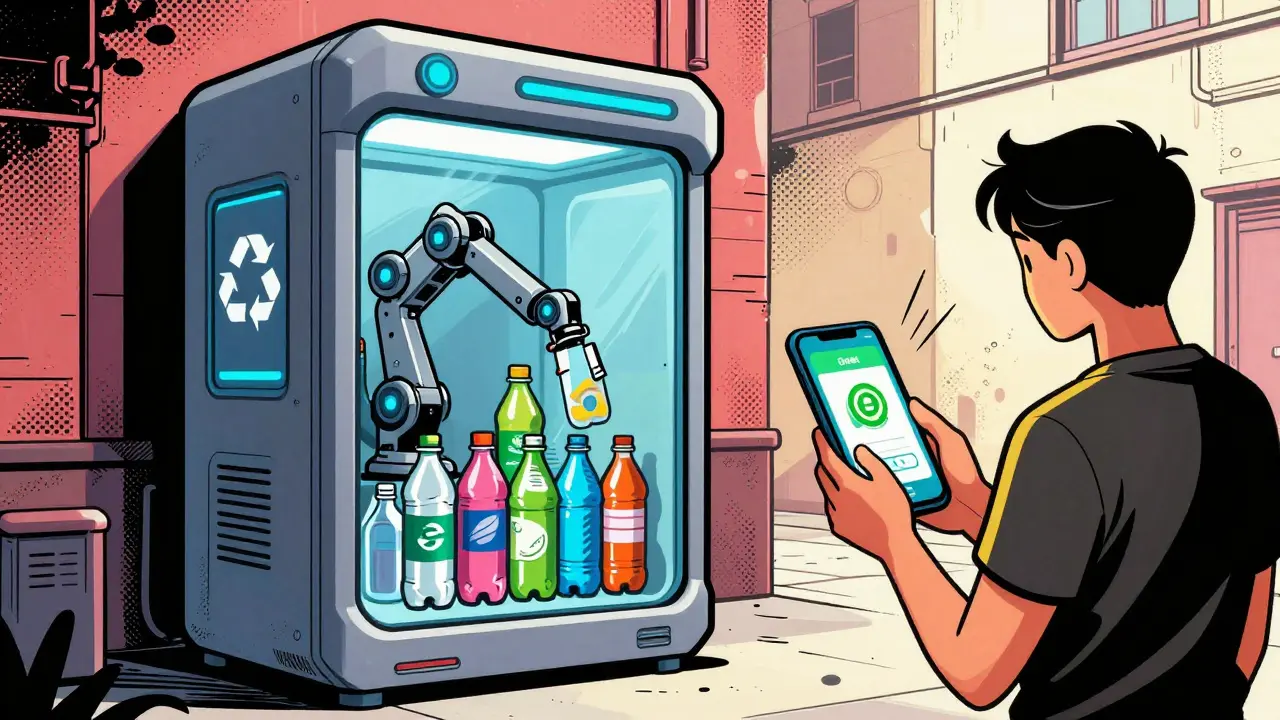
Imagine walking up to a sleek kiosk, dropping in your empty water bottles, and watching an AI robot sort them while your phone wallet fills up with cryptocurrency. It sounds like the future of eco-friendly finance, right? That was exactly the promise of PlasticHero. But here is the catch: if you are looking at PlasticHero (PTH) today, you aren't looking at a thriving environmental movement. You are looking at a ghost.
The project that once promised to revolutionize waste management through blockchain rewards has effectively shut down its development. Yet, the token still trades on major exchanges, confusing new investors who see "green tech" and assume it is active. So, what is PlasticHero really? Is it a hidden gem for eco-investors, or a trap for those who don't check the fine print? Let's break down the reality behind the hype, the numbers, and the risks involved with this specific asset.
The Original Vision: Recycle-to-Earn
To understand why people still talk about PlasticHero, we have to look at what it was supposed to be. Launched as part of the "green crypto" wave, PTH aimed to solve two problems at once: plastic pollution and the lack of tangible utility in many cryptocurrencies.
The model was called "recycle-to-earn." Here is how the system was designed to work:
- Physical Kiosks: Users would bring plastic waste to dedicated PlasticHero recycling stations.
- AI Sorting: An artificial intelligence-powered robot inside the kiosk would identify and sort the plastic types efficiently.
- Digital Rewards: A mobile app would track the volume of recycled material and instantly credit the user’s account with PTH tokens.
- Ecosystem Spending: Users could then spend these tokens within the app ecosystem to buy goods or services from partner merchants.
This created a theoretical closed-loop economy. You recycle, you get paid in crypto, you spend that crypto. It sounded perfect. However, building physical infrastructure-kiosks, robots, supply chains-is exponentially harder than writing code for a token. While the token launched easily, the real-world hardware never scaled as promised.
Current Status: A Project in Stasis
Here is the most critical piece of information you need before touching this coin: the project is inactive.
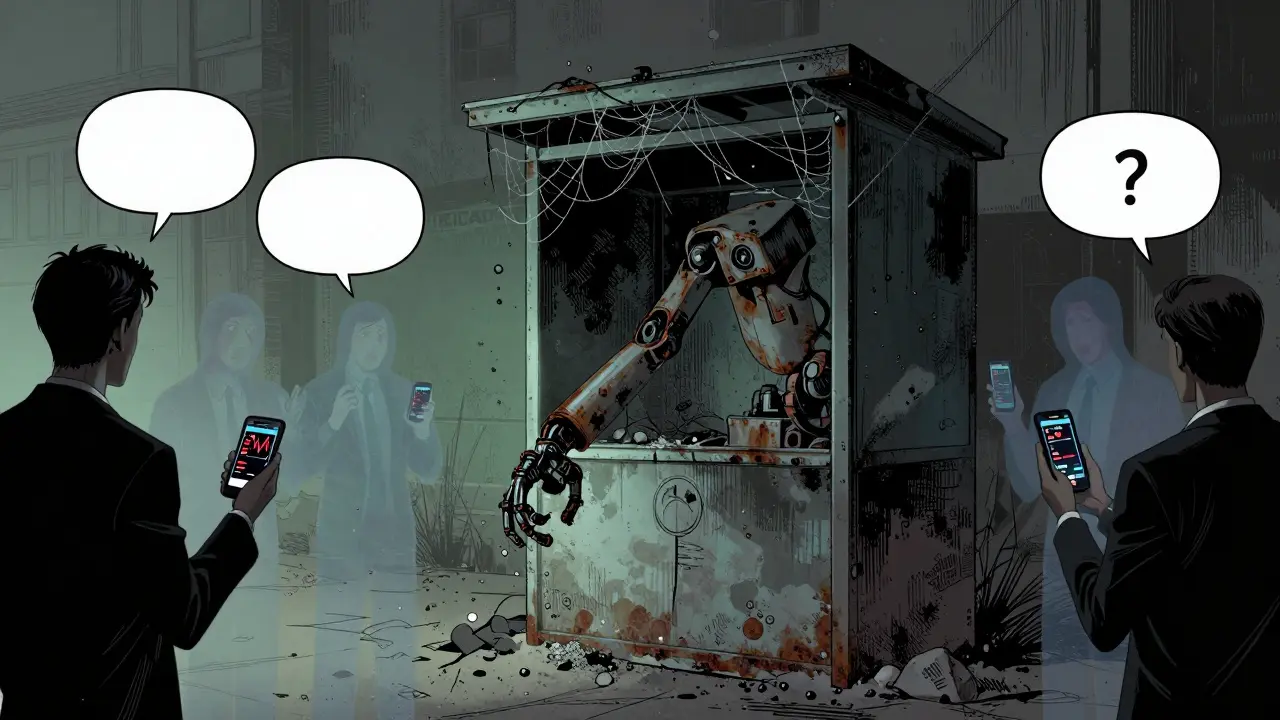
Data aggregators like CoinMarketCap explicitly note that there have been no contributions to the PlasticHero project in the last year. More importantly, records indicate that the project concluded its operations roughly two years ago. This means the team behind the kiosks and the app has likely moved on, ceased development, or dissolved.
Why does the token still exist? Because once a cryptocurrency is listed on exchanges, it doesn't just disappear when the company stops working. The secondary market remains open. Traders can still buy and sell PTH, but they are trading a speculative asset with no underlying product, no active team, and no roadmap. It is essentially a shell of its former self.
The Data Discrepancy Problem
If you try to research the fundamentals of PTH, you will run into a wall of conflicting data. This is a classic red flag in the micro-cap crypto space. Different platforms show wildly different numbers for the same token.
| Platform | Circulating Supply | Market Cap | Price Snapshot |
|---|---|---|---|
| CoinMarketCap | 1.69 Billion | ~$26.89 Million | $0.01587 |
| Binance | 0 | $0 | $0.041777 |
| Coinbase | 0 | $0 | $0.007289 - $0.0480 |
| Phemex | 0 | $0 | $0.036958 |
| Crypto.com | 0 | $0 | $0.008248 |
Look closely at that table. CoinMarketCap lists a supply of 1.69 billion tokens and a market cap of nearly $27 million. Meanwhile, giants like Binance, Coinbase, and Phemex list the circulating supply as zero. How can a token have a price but zero supply? It usually means the exchange hasn't received verified supply data from the project team, so they default to zero. Or, it suggests that the "supply" exists only on paper or in illiquid pockets of the market.
This lack of transparency makes it impossible to calculate true valuation metrics. Are you buying a slice of a $27 million company, or are you buying into a void with no clear ownership structure?
Price History and Volatility
Let's talk money. If you bought PTH at its peak, you are currently holding a bag that has lost most of its weight. The all-time high (ATH) for PlasticHero was $0.1945 back in July 2024. Since then, the token has crashed by approximately 91.84%.
By February 2026, the price hit an all-time low of around $0.006083. Even with some minor fluctuations, the trend is overwhelmingly downward. This extreme volatility is typical for micro-cap tokens (ranked #3983-#4107 on CoinMarketCap), where small amounts of trading volume can cause massive price swings.
For example, Crypto.com showed a 24-hour volume of roughly $105,000, while Binance showed over $307,000. These volumes are tiny compared to established coins like Bitcoin or Ethereum. In thin markets, a single large sell order can crash the price by 20% or more in minutes. There is no deep liquidity buffer to protect you.
Technical Details: Where Does It Live?
Technically, PTH operates as an ERC-20 token on the Ethereum blockchain. You can find its contract address on Etherscan, which confirms its existence as a smart contract. However, beyond that basic classification, technical documentation is scarce.
There are no public details on:
- Smart contract audits by reputable security firms.
- Vesting schedules for team tokens.
- Treasury management or burn mechanisms.
- Specific gas fee optimizations or Layer 2 integrations.
Without an audit, you cannot be sure the contract doesn't have hidden functions that allow developers to manipulate supply or freeze wallets. Given the project's inactive status, the risk of interacting with the contract directly (outside of major exchanges) is significantly higher.
Who Is Behind PlasticHero?
In the world of crypto, trust is built on transparency. Who runs the show? For PlasticHero, the answer is... nobody, publicly speaking.
None of the major aggregator profiles list named founders, core team members, or a registered corporate entity. The project descriptions use generic language like "our innovative kiosks" without linking to LinkedIn profiles or press releases featuring actual humans. There is no foundation, no non-profit registration, and no institutional backing cited in any reliable source.
This anonymity is common in early-stage or failed projects. When the excitement fades and the hardware doesn't ship, the team often goes quiet. The absence of a verifiable team means there is no one to hold accountable if things go wrong-and in this case, things already have gone wrong.
Should You Buy PTH in 2026?
I am going to be direct here. If you are looking for an investment in the green technology sector, PlasticHero is not it. The fundamental value proposition-the kiosks and the recycling service-is offline. You are not investing in a business; you are speculating on whether someone else will pay more for a token that has no utility.
However, if you are a trader who specializes in micro-cap gems and understands how to read order books on thin liquidity, PTH might occasionally offer short-term volatility plays. Just remember:
- No Development: The project ended two years ago.
- Data Confusion: Supply numbers are unreliable across exchanges.
- High Risk: Over 90% drop from ATH shows severe downside potential.
- No Team: No one is publicly responsible for the project's success.
Most investors seeking "green crypto" exposure would be better served by projects that are actively developing carbon credit protocols, renewable energy financing platforms, or verified supply chain tracking systems with active GitHub repositories and transparent teams.
Final Thoughts on PlasticHero
PlasticHero serves as a cautionary tale in the crypto industry. It shows how easy it is to launch a token with a compelling story, and how hard it is to build the real-world infrastructure to back it up. The dream of earning crypto for saving the planet is noble, but PTH is no longer the vehicle for that dream.
Today, it stands as a dormant asset, traded mostly by bots and speculators who ignore the fundamentals. If you encounter PTH in your feed, treat it with extreme skepticism. Do the due diligence. Check the dates. Look for activity. In this case, the silence speaks louder than the marketing ever did.
Is PlasticHero (PTH) still an active project?
No. According to data from CoinMarketCap and other aggregators, the project concluded its operations approximately two years ago. There have been no significant development contributions in the last year, indicating the team is no longer active.
Why do different exchanges show different prices for PTH?
The discrepancies arise because PTH is a micro-cap token with low liquidity. Different exchanges have different order books, update frequencies, and liquidity sources. Additionally, some platforms list the circulating supply as zero due to lack of verified data, which distorts market cap calculations and price stability.
Prices vary because of low liquidity and inconsistent data reporting. Some exchanges show zero supply, while others show high supplies, leading to fragmented pricing across platforms like Binance, Coinbase, and Crypto.com.
Can I still earn PTH by recycling plastic?
It is highly unlikely. The original model relied on physical kiosks and an AI sorting robot. Since the project is considered inactive and concluded, these physical infrastructures are likely no longer maintained or operational. Users should not expect to receive rewards for recycling via the PlasticHero app today.
What blockchain is PlasticHero built on?
PlasticHero (PTH) is an ERC-20 token, meaning it is built on the Ethereum blockchain. You can verify its contract address on Etherscan, though detailed technical specifications and audit reports are not publicly available.
Is PTH a good investment for beginners?
No. PTH is a high-risk, micro-cap asset with no active development, no transparent team, and extreme volatility. It has dropped over 90% from its all-time high. Beginners should avoid such assets and focus on established cryptocurrencies with clear utility and active communities.
Who founded PlasticHero?
The identities of the founders and the core team are not publicly disclosed in major aggregator profiles. The project lacks transparent leadership information, which is a significant risk factor for investors.
 Cryptocurrency Guides