
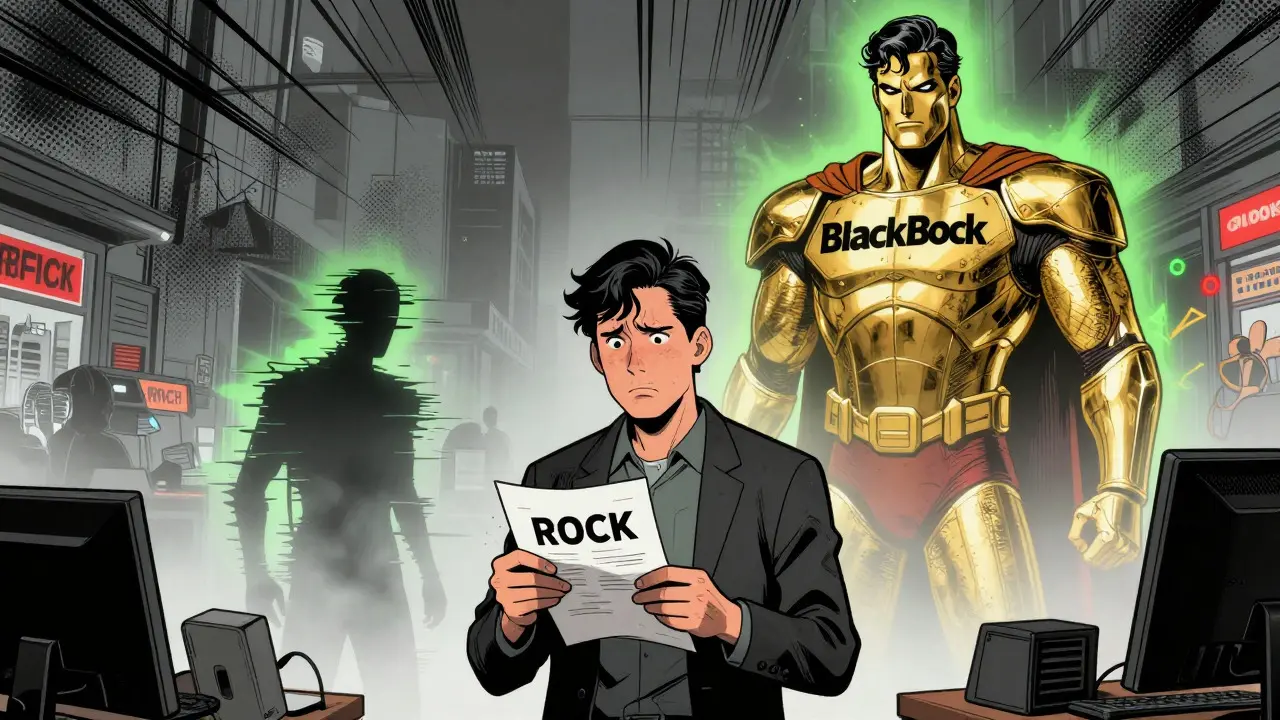
Have you seen the ticker ROCK on a chart and assumed it was tied to the financial giant BlackRock? You aren't alone. In the messy world of cryptocurrency, name confusion is a common trap for investors. The token known as BLACK ROCK (ROCK) is a speculative cryptocurrency token operating on the Base blockchain with no official affiliation to BlackRock Inc. has caused significant head-scratching since its launch in 2024.
Here is the hard truth: this token is not backed by the asset management firm that manages over $10 trillion. It is a separate, retail-focused digital asset that trades at a fraction of a cent. If you are holding it or thinking about buying it, you need to understand exactly what you are dealing with before you risk your capital.
The Critical Distinction: Token vs. Corporation
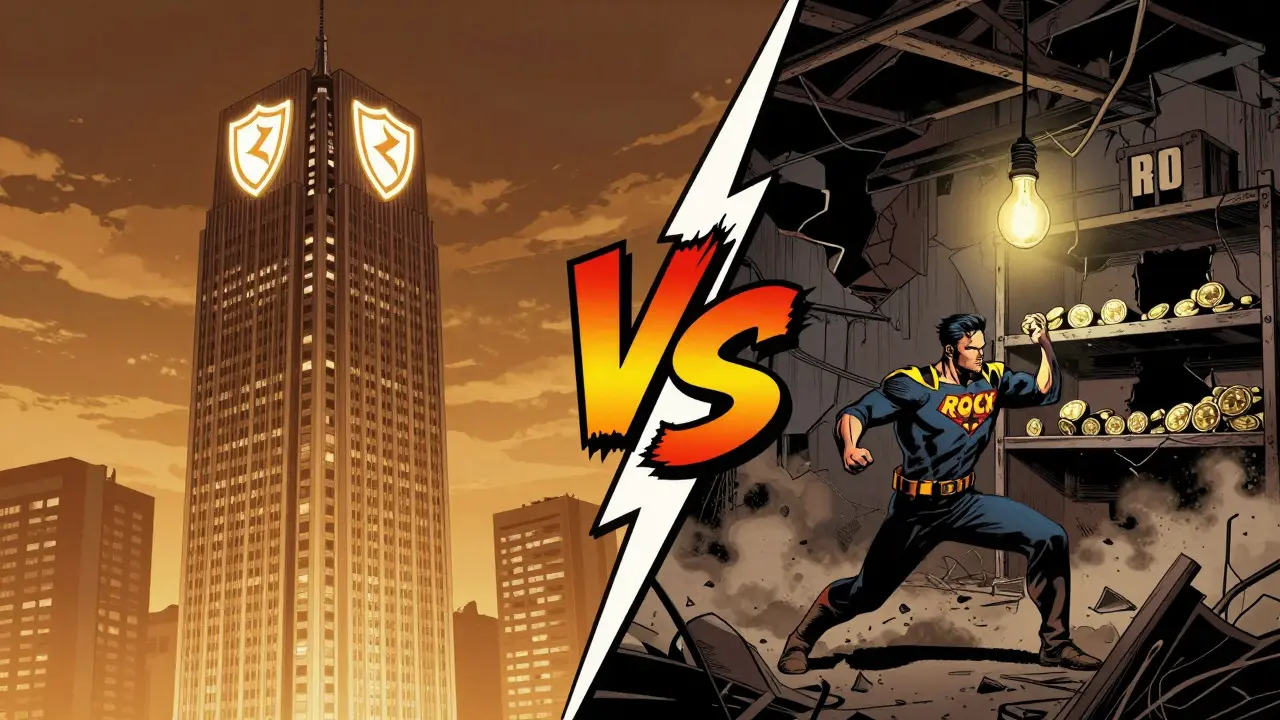
The biggest issue surrounding the ROCK token is the name. BlackRock Inc. is the world's largest asset management company, managing over $10 trillion in assets. They have made massive moves into crypto, most notably through the iShares Bitcoin Trust ETF (IBIT), which holds nearly $100 billion in assets. They also launched the BUIDL fund for institutional liquidity.
However, there is zero evidence that BlackRock Inc. created or endorses the BLACK ROCK (ROCK) token. This is a classic case of "name squatting" or brand association in the crypto space. Projects often pick names of famous companies to attract attention from confused retail investors. When you buy the ROCK token, you are not buying a share in BlackRock’s success. You are buying a micro-cap token with minimal utility and high volatility.
| Feature | BLACK ROCK (ROCK) Token | BlackRock Inc. (iShares/BUIDL) |
|---|---|---|
| Affiliation | None / Unaffiliated | Official Corporate Product |
| Blockchain | Base (Layer 2) | Ethereum / Traditional Finance |
| Target Audience | Retail Speculators | Institutional Investors |
| Assets Under Management | $113k Market Cap | $10 Trillion+ (Total Firm) |
| Risk Level | Extremely High | Moderate to Low (depending on product) |
Technical Specifications and Tokenomics
To understand the value-or lack thereof-you need to look at the numbers. The BLACK ROCK (ROCK) token operates on the Base blockchain is Coinbase's Layer 2 scaling solution built on Ethereum, offering lower fees and faster transactions. While being on Base provides technical benefits like speed, it doesn't guarantee value if there is no demand for the token itself.
Here are the key metrics as of late 2025:
- Total Supply: 10,000,000,000 (10 Billion) tokens
- Circulating Supply: 100% (All tokens are in circulation)
- Maximum Supply: 10,000,000,000 tokens
- Price Range: Approximately $0.000011 USD
- All-Time High: $0.000038 (Reached July 7, 2025)
- Market Capitalization: ~$113,150 USD
Notice the supply number. Ten billion tokens is a massive amount. For a token to reach a price of just $0.01, it would need a market cap of $100 million. Currently, with a market cap of roughly $113k, the token is classified as a micro-cap. This means even small sell orders can crash the price due to low liquidity.
Price Performance and Liquidity Crisis
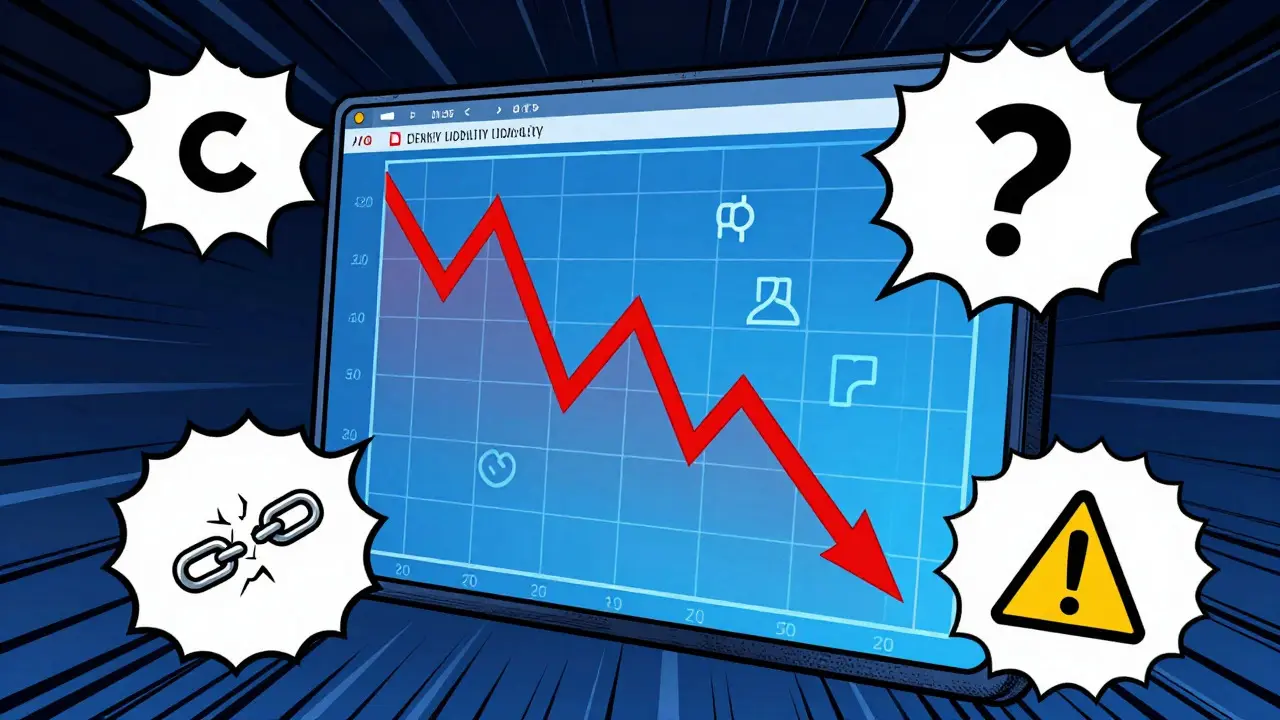
If you are looking at the chart for ROCK, you might see green candles indicating a 1% or 2% increase. But look closer at the volume. As of October 2025, the trading volume for this token is virtually non-existent. Reports show 24-hour trading volumes hitting $0 on multiple occasions. Over a 7-day period, the total volume traded was just $2.23.
This is a major red flag. Liquidity is the lifeblood of any cryptocurrency. Without volume, you cannot easily buy or sell without moving the price significantly against yourself. The token dropped 70% from its all-time high of $0.000038 in just three months. That kind of decline, combined with zero daily volume, suggests that interest has evaporated.
Why did it drop? Likely because early speculators sold their positions once the initial hype faded. With no new buyers entering the market to absorb those sales, the price collapsed. Now, it sits in a state of stagnation, with very few people trading it.
Lack of Fundamental Value and Roadmap
When evaluating a legitimate project, you look for a whitepaper, a development team, a clear use case, and a roadmap. For the BLACK ROCK (ROCK) token, these elements are largely missing.
- No Verified Team: There is no public information about who developed this token. Anonymous teams are common in crypto, but they carry higher risk.
- No Clear Utility: What does the token do? Does it govern a protocol? Does it provide access to a service? Currently, there is no documented utility beyond speculation.
- No Community Presence: Successful projects have active Discord servers, Twitter accounts, and developer updates. ROCK lacks a verified social media presence or ongoing community engagement.
- No Reserve Holdings: Unlike many projects that keep tokens in reserve for future development or marketing, 100% of the ROCK supply is already circulating. This means there is no "future unlock" pressure, but also no remaining treasury to fund development.
Without a product or a team to drive adoption, the token relies entirely on narrative. And the narrative here-confusing investors with the name BlackRock-is a fragile one.
The Broader Crypto Context in 2026
We are now in mid-2026. The crypto landscape has matured significantly. Bitcoin reached new all-time highs above $125,000, driven by institutional adoption and favorable regulatory environments following political shifts in the US. Europe now has 25 million crypto investors, treating digital assets as a mainstream investment class.
In this environment, capital flows to quality. Institutional players like BlackRock Inc. are focusing on Bitcoin ETFs, Ethereum staking products, and Real World Assets (RWAs) via funds like BUIDL. They are not backing obscure micro-cap tokens on Layer 2 networks. Retail investors are becoming more sophisticated too. They are learning to check contract addresses and verify affiliations.
This leaves tokens like ROCK in a difficult spot. They don't have the safety of established assets like BTC or ETH, nor do they have the innovation of top-tier DeFi protocols. They exist in the "junk drawer" of the market-tokens that survive only on hope and name recognition.
Risks for Potential Investors
If you are considering buying ROCK, you must accept the following risks:
- Liquidity Risk: You may be unable to sell your tokens when you want to. With daily volumes near zero, exiting a position could take days or result in massive slippage.
- Value Erosion: The token has already lost 70% of its peak value. Without new catalysts, further decline is likely.
- Scam Potential: While listed on exchanges like Coinbase (which adds some legitimacy), the lack of transparency regarding the team and utility raises questions about long-term viability. It may simply be an abandoned project.
- Opportunity Cost: Money tied up in a stagnant micro-cap token is money not invested in assets with proven growth trajectories.
Conclusion: Proceed with Extreme Caution
The BLACK ROCK (ROCK) token is a prime example of why due diligence matters in crypto. It shares a name with a financial titan but lacks the substance, backing, or utility to match. It is a micro-cap asset on the Base blockchain with negligible trading volume and a steep price decline.
Unless you are an experienced trader comfortable with high-risk, low-liquidity speculative plays, this token offers little value. For most investors, the confusion between the token and BlackRock Inc. is enough reason to stay away. Focus on assets with clear fundamentals, transparent teams, and strong liquidity instead.
Is the BLACK ROCK (ROCK) token owned by BlackRock Inc.?
No. The BLACK ROCK (ROCK) token is not owned, endorsed, or affiliated with BlackRock Inc., the global asset management firm. It is a separate cryptocurrency token that likely uses the name for marketing purposes. BlackRock Inc. focuses on products like the iShares Bitcoin Trust (IBIT) and the BUIDL fund.
What blockchain does the ROCK token operate on?
The ROCK token operates on the Base blockchain, which is a Layer 2 scaling solution built on top of Ethereum. Base is known for low transaction fees and fast processing speeds, making it popular for many retail-focused tokens.
How much is one ROCK token worth?
As of late 2025, the price of one ROCK token is approximately $0.000011 USD. The price is highly volatile and has dropped significantly from its all-time high of $0.000038.
Is it safe to invest in the ROCK token?
Investing in the ROCK token carries extreme risk. It has very low liquidity, meaning you might struggle to sell your holdings. Additionally, there is no clear utility or verified development team behind the project. It should be considered a high-speculation asset.
What is the total supply of ROCK tokens?
The maximum and total supply of the ROCK token is 10,000,000,000 (10 billion). All of these tokens are currently in circulation, with no reserves held back by developers.
Why has the price of ROCK dropped so much?
The price dropped 70% from its peak due to a lack of sustained investor interest, low trading volume, and the absence of fundamental value drivers like a working product or strong community. Early speculators likely sold off their positions, causing the price to collapse.
 Cryptocurrency Guides
Lisa Chong
July 24, 2026 AT 15:32It is abundantly clear that the entire financial system is a elaborate hoax designed to keep us in perpetual servitude. The so-called 'experts' want you to believe this token is worthless, but they are merely protecting their own ill-gotten gains from the shadowy cabal controlling BlackRock. I have seen the documents, or at least I feel them in my spirit, and there is a deeper connection here that the mainstream media refuses to acknowledge. They want you to stay poor and confused by these trivial distinctions between tokens and corporations. Do not let them gaslight you into thinking liquidity matters when the real game is played in the dark corners of the blockchain. We must remain vigilant against the narrative imposed upon us by the elite few who profit from our ignorance. It is a conspiracy of silence, a wall of lies built to crush the individual investor before they can rise.
Heather Austin
July 25, 2026 AT 13:24honestly just check the contract address on basescan bro its totally different from blackrock's official channels which dont even use base for retail stuff anyway
the volume is literally zero like i checked yesterday and it was dead silent so yeah probably not worth your time unless you like gambling with pennies
Ran Tao
July 26, 2026 AT 21:08Oh please 🙄 everyone here is so boringly cautious. Why buy low if you can't handle the volatility? This is exactly why crypto fails-too many sheep waiting for permission to be rich. I bought in at the peak and now I'm down 70% and I LOVE IT because it shows character. You guys are missing the art of the dip. It’s not about utility, it’s about the vibe. And the vibe is chaotic energy. Embrace the loss, it builds muscle memory for the next rug pull. 📉💀
Andrew Schneider
July 26, 2026 AT 23:19Let me guess, another one of those 'micro-cap gems' that turns out to be digital confetti? I’ve seen this movie a thousand times. The script is always the same: some anon dev slaps a famous name on a token, hopes for a pump, and then vanishes into the ether while the rest of us hold the bag. It’s pathetic really. But hey, if you enjoy watching your savings evaporate into thin air faster than a snowball in hell, go ahead. Just don’t come crying to me when you realize you’re trading dollars for dust. 🤡🔥
Eric Braddock
July 28, 2026 AT 16:53The matrix wants you to think this is isolated. It isn’t. Look at the timing of the launch relative to the ETF approvals. It’s a distraction technique. While you’re staring at this rock token, the central banks are printing trillions. The lack of utility is a feature, not a bug. It keeps you focused on the screen rather than the reality of asset seizure. Wake up. The token is a honeypot for your attention span. They don’t care about the price, they care about keeping you engaged in the simulation. Follow the money, not the ticker. 🕵️♂️👁️
Nick G
July 30, 2026 AT 02:43I understand that it can be quite disheartening to see an investment lose value, especially when there is such confusion surrounding the branding. However, it is important to remember that the cryptocurrency market is inherently volatile and often driven by sentiment rather than fundamental value. Perhaps we can view this as a learning experience for the community, fostering a greater sense of due diligence and transparency in future endeavors. Let us support each other through these turbulent times and strive for a more informed approach to digital assets.
Nick Wengel
July 30, 2026 AT 03:23just stick to bitcoin or ethereum if you want safety. this looks like noise.
Alicia Hull
July 31, 2026 AT 17:08This article is incredibly misleading! How can you call it 'extreme risk' without acknowledging the potential for a 100x moonshot? You are clearly biased against small caps. Show me the data where a micro-cap failed and didn't recover! I demand answers! Stop scaring people away from innovation! 📢
Johan Otto
August 1, 2026 AT 07:40boring. sell.
Anuj Kashyap
August 2, 2026 AT 05:50In the grand tapestry of existence, what is a token but a symbol of our collective desire for meaning in a void? We assign value to paper, to metal, to bits. Now we assign it to a name. Is it BlackRock? No. Is it nothing? Also no. It is a mirror reflecting our greed and fear. Observe the chart, observe yourself. The drop is not a failure, it is a lesson in impermanence. 🧘♂️✨
Tracy Marshall
August 2, 2026 AT 23:45they are all lying to us :: the government the banks the crypto influencers everything is rigged to steal our life force through these meaningless numbers ((why do we trust strangers with our money??))
Guy Davis
August 4, 2026 AT 17:01typical scam. avoid.
KEITH WONG
August 5, 2026 AT 14:18Listen up chumps. If you cant tell the difference between a $10T firm and a meme coin on Base, you deserve to get rekt. Its that simple. Smart money stays in IBIT. Dumb money buys ROCK. Which one are you? 🤷♂️
Natalie Lucas
August 6, 2026 AT 09:11hey dont be so hard on yerself if u bought it lol. mistakes happen! maybe its a sign to try something new? keep that positive energy flowing! 💖
Curtis Johnson
August 6, 2026 AT 11:06it feels like everyone is so divided on this topic. some see danger others see opportunity. perhaps there is truth in both perspectives. let us not judge too harshly but instead seek to understand the underlying motivations of the market participants. peace and love to all traders 🙏
Steven Briggs
August 7, 2026 AT 15:29looks dead to me.
Korn Arrieta
August 8, 2026 AT 18:36The analysis provided is superficial at best. It ignores the subtle nuances of market microstructure and the psychological warfare waged by high-frequency traders. The liquidity crisis mentioned is merely a temporary dislocation caused by algorithmic arbitrage bots testing the depths. To dismiss the token based on current volume is to misunderstand the very nature of speculative bubbles. They inflate, they burst, they reform. This is not a warning; it is a diagnosis of your own analytical incompetence.
Ruth Williams
August 9, 2026 AT 17:00One must possess a certain level of sophistication to navigate these waters. The uninitiated will invariably fall prey to such obvious misdirections. It is unfortunate that the masses lack the discernment to distinguish between genuine institutional backing and mere parasitic branding. Read more. Think harder. Invest wisely.
Sophie Nakasako
August 10, 2026 AT 12:46What if the confusion itself is the product? Imagine a world where brand recognition transcends actual ownership. Could this be a social experiment gone wrong? Let’s discuss the implications of decentralized identity versus corporate identity. It’s fascinating how easily we conflate the two. Who are we really buying into? 🤔
Kristy Morrow
August 11, 2026 AT 17:48everyone says its a scam but what if its the only honest thing left? the big corps lie every day. this token has no team no promises just raw speculation. isn't that pure? stop overthinking it. buy or don't. freedom is doing whatever you want even if it makes no sense.
Antony Lopez
August 13, 2026 AT 11:34Another foreign nonsense token trying to infiltrate our markets. American companies build real things. These crypto scams are eroding our economic sovereignty. Stick to US-based assets. Support local industry. Don't let the globalists trick you into buying garbage.
Kat Barr
August 15, 2026 AT 02:58omg so much negativity here!! 😱 but hey look on the bright side! at least its cheap so you can buy a lot of them! maybe one day itll bounce back!!! stay strong friends!!! 🌈💪✨