

Have you heard the buzz about the POLYS PolyStarter Community Program airdrop? If you are scrolling through Twitter or Telegram groups right now, you might feel like everyone except you knows exactly how to claim free tokens. It is easy to get swept up in the hype, especially when projects promise massive returns for simple tasks. But here is the hard truth: specific details regarding a dedicated POLYS token airdrop from PolyStarter are currently scarce and unverified.
Before you connect your wallet to any random site or spend hours on social media tasks, you need to separate fact from fiction. This guide breaks down what we know about PolyStarter, clarifies the confusion with Polygon’s official programs, and gives you a safe checklist to protect your assets while hunting for legitimate opportunities.
What Is PolyStarter?
To understand the potential airdrop, you first need to understand the platform itself. PolyStarter is a decentralized launchpad built on the Polygon network that helps new crypto projects raise capital securely. Think of it as a middleman between early-stage blockchain startups and investors. Instead of letting anyone buy into a risky project, PolyStarter vets these projects, ensures their liquidity is locked, and sets up fair distribution mechanisms like token vesting.
The platform leverages Polygon (MATIC/POL)’s low transaction fees and high speed to make investing accessible. For users, this means you can participate in early token sales without worrying about the gas wars that plague Ethereum mainnet. However, PolyStarter primarily operates as a service provider for other projects. Historically, launchpads often reward their community members with points or native tokens, but the specifics of a "POLYS" token distribution remain unclear in public records as of mid-2026.
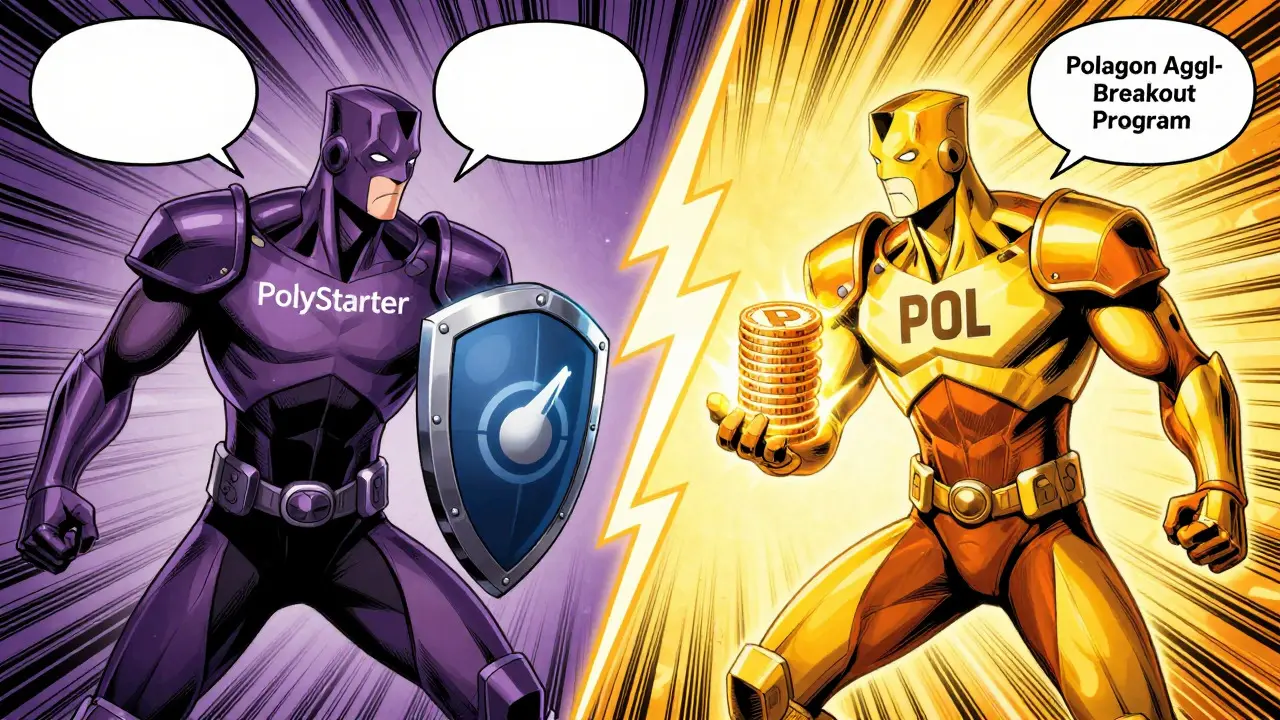
The Confusion: PolyStarter vs. Polygon Agglayer Breakout
A major reason for the current confusion is the overlap between PolyStarter and the broader Polygon ecosystem. In April 2025, the Polygon Foundation launched the Agglayer Breakout Program. This is an official initiative where successful graduate projects airdrop 5-15% of their native token supply to holders who stake POL (Polygon’s native token).
Many users mistakenly believe that PolyStarter is running this program. They are not the same thing. The Agglayer Breakout Program is run by Polygon Labs to support projects building on the Agglayer network. Projects like Privado ID and Miden have graduated from this program and are distributing tokens to POL stakers. PolyStarter, on the other hand, is a separate entity that uses Polygon technology. While PolyStarter might host projects that eventually qualify for such airdrops, there is no evidence that PolyStarter itself is issuing a POLYS token through this specific mechanism.
| Feature | PolyStarter | Polygon Agglayer Breakout |
|---|---|---|
| Operator | PolyStarter Team | Polygon Foundation / Polygon Labs |
| Primary Goal | Launchpad for ICOs/IDO fundraising | Ecosystem growth for Agglayer projects |
| Reward Token | Unclear / Potential POLYS (Unconfirmed) | Native tokens of graduate projects (e.g., Privado, Miden) |
| Eligibility | Platform users / Point holders (Speculative) | POL Token Stakers |
| Status in 2026 | Active Launchpad | Active Distribution Program |
Is There a POLYS Token?
This is the million-dollar question. As of July 2026, there is no widely recognized, officially verified POLYS token listed on major exchanges like Binance or Coinbase. In the crypto world, many scam tokens mimic the names of popular projects. If you see a contract address for "POLYS" floating around on Discord or Telegram, treat it with extreme caution.
Launchpads often use internal point systems before launching a governance token. It is possible that PolyStarter has a "Community Program" that awards points for activity-such as completing KYC (Know Your Customer), referring friends, or participating in past launches. These points might convert to a future token, but until there is an official announcement from PolyStarter’s verified channels, any claim of a live airdrop is speculative.
How to Verify Legitimate Opportunities
If you want to participate in PolyStarter’s ecosystem safely, follow these steps. Do not skip them. The cost of making a mistake in crypto is total loss of funds.
- Check Official Sources Only: Go directly to
polystarter.com. Look for announcements on their official blog or verified Twitter account. Ignore DMs from "support" accounts; they are almost always scammers. - Verify Contract Addresses: If a token named POLYS appears, check its contract address on Etherscan or Polygonscan. Does the creator match PolyStarter? Is the liquidity locked? If the contract was created yesterday, it is a rug pull waiting to happen.
- Understand the Snapshot: Legitimate airdrops usually take a "snapshot" of wallets at a specific block height. If a program asks you to send tokens to a wallet to "qualify," it is a scam. Real airdrops never require you to pay upfront to receive rewards.
- Use a Burner Wallet: Never connect your main wallet holding significant funds to new or unverified dApps. Use a secondary wallet with only the amount you are willing to lose for gas fees.
The Broader 2026 Airdrop Landscape
Why is everyone talking about airdrops right now? The market has shifted. After the massive successes of projects like Hyperliquid and Magic Eden in previous years, airdrops have become a primary marketing tool. Projects realize that giving away tokens builds a loyal community faster than traditional advertising.
In 2026, the bar for eligibility is higher. Simply having a wallet is not enough. Projects look for "sybil-resistant" behavior. This means they analyze your transaction history. Did you just create ten wallets to farm points? Or do you have a genuine history of interacting with DeFi protocols, swapping tokens, and providing liquidity? Platforms like PolyStarter likely track user engagement metrics. If you have been active on their launchpad during previous IDOs (Initial DEX Offerings), you are in a better position than someone who just joined today.

Safety First: Red Flags to Watch For
Scammers are aggressive. They know people are looking for free money. Here are the signs that a "PolyStarter Airdrop" message is fake:
- Urgency: "Claim within 24 hours or lose forever." Real programs give you time.
- Unsolicited Links: You received a link via email or DM that looks like polystarter-airdrop.com. Check the URL carefully. One letter difference means it is a phishing site.
- Private Key Requests: No legitimate site will ever ask for your seed phrase or private key. If a popup asks for it, close the tab immediately.
- High Minimum Deposits: If you must deposit $500 to claim a $50 airdrop, it is a scam.
Next Steps for Investors
If you are serious about getting involved with PolyStarter, start by using the platform legitimately. Participate in whitelists for upcoming projects. Complete the required KYC if asked. Engage with their community on official Discord servers. Build a reputation as an active user. If a POLYS token does launch, your historical data will be your ticket in.
Simultaneously, keep an eye on the Polygon ecosystem. Staking POL tokens remains one of the most reliable ways to benefit from the Agglayer Breakout Program. Even if PolyStarter doesn’t drop a token, the projects launching on PolyStarter might. By staying informed and patient, you avoid scams and position yourself for real gains.
Is the POLYS PolyStarter airdrop real in 2026?
As of July 2026, there is no official confirmation of a POLYS token airdrop from PolyStarter. Be wary of unofficial claims. Always verify information through PolyStarter's official website and social media channels before connecting your wallet.
How do I qualify for the Polygon Agglayer Breakout airdrop?
To qualify for the Agglayer Breakout Program airdrops, you typically need to stake POL (Polygon's native token) on the Polygon PoS chain or zkEVM. Successful graduate projects like Privado ID distribute tokens to these stakers. Check the Polygon Foundation's official announcements for snapshot dates.
What is the difference between PolyStarter and Polygon?
Polygon is the blockchain network (Layer 2 solution) that provides infrastructure. PolyStarter is a decentralized application (dApp) built on top of Polygon. PolyStarter acts as a launchpad for fundraising, while Polygon provides the underlying technology and security.
Can I get scammed by a fake PolyStarter airdrop?
Yes, it is very common. Scammers create fake websites and social media accounts promising free POLYS tokens. They trick users into connecting wallets and signing malicious transactions that drain funds. Never click unsolicited links and always verify URLs.
Do I need to pay gas fees to claim an airdrop?
You may need a small amount of MATIC or POL in your wallet to pay for the gas fee of the claim transaction on the blockchain. However, you should never have to send tokens to a third party or pay a large sum to "unlock" your airdrop. That is a sign of a scam.
 Cryptocurrency Guides