
On October 22, 2024, a new crypto project called exSat Network launched with a bold promise: let you earn serious returns on your Bitcoin without giving up control. The token behind it, XSAT, quickly jumped into headlines - and into wild price swings. But what exactly is exSat Network? Is it a breakthrough for Bitcoin, or just another speculative gamble?
What exSat Network actually does
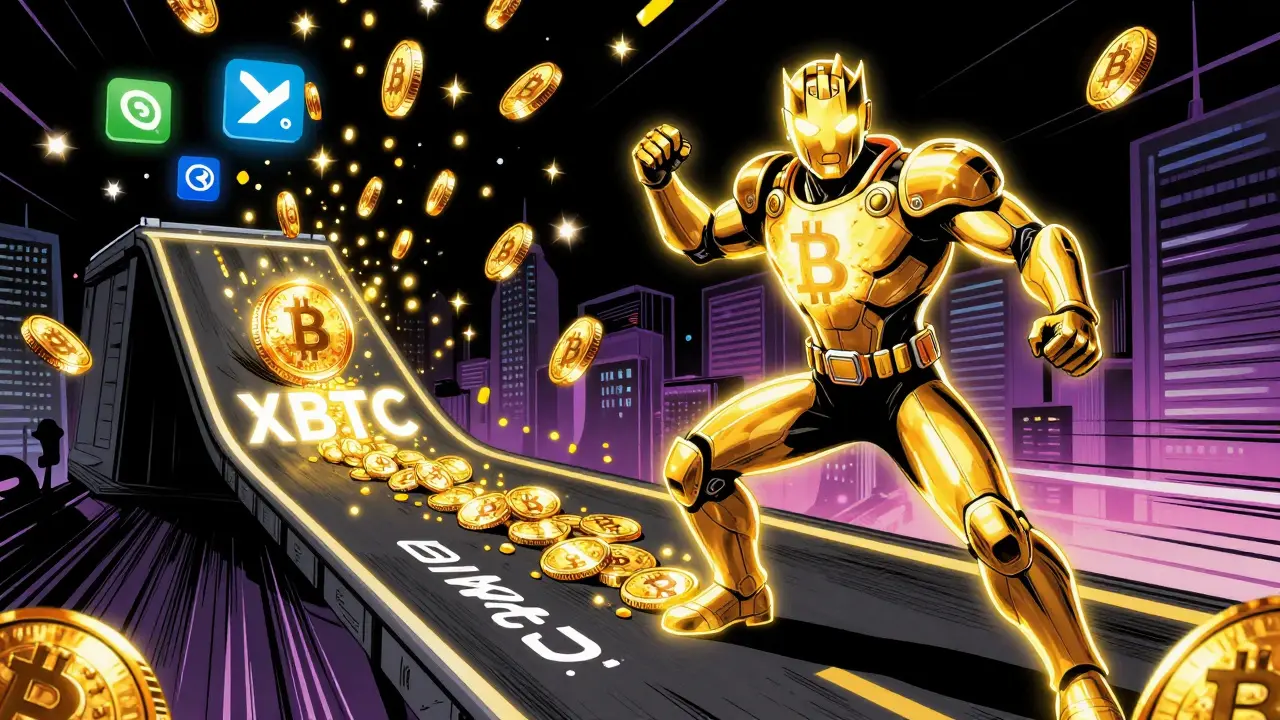
exSat Network isn’t another altcoin trying to replace Bitcoin. It’s a "Docking Layer" - a bridge between Bitcoin’s main chain and Layer 2 solutions. Think of it like a highway ramp that lets Bitcoin traffic flow into faster, cheaper lanes without leaving the main road. The core idea is simple: you send your Bitcoin to exSat’s system, get back a wrapped version called XBTC, and then stake that XBTC to earn XSAT tokens as rewards. Your original Bitcoin stays locked in custody, but you still earn yield. The project claims a 1:1 backing - meaning every XBTC is fully backed by real BTC on the Bitcoin blockchain. That’s a big deal if true. The system is designed to let you earn without needing to trust a third party with your private keys. You sign a transaction, bridge your BTC, and start earning. No exchange needed. No surrendering control. At least, that’s the pitch.How XSAT staking works (and the numbers behind it)
The biggest draw? The returns. According to exSat’s promotional materials, if you stake 1 BTC worth $90,000, you get 3 XSAT tokens per day. At $50 per XSAT, that’s $150 daily, or $4,590 a month. That’s an annual return of about $55,000 - roughly 61% APR. That number sounds unbelievable. And it is. For context, Bitcoin staking on established platforms like Coinbase or Kraken offers 0.5% to 3% APR. Even top DeFi protocols rarely go above 10%. A 61% yield isn’t just high - it’s suspiciously high for a system that claims to be secure and backed by Bitcoin. Here’s the catch: those returns are based on a $50 XSAT price. But that price doesn’t exist anymore. As of January 2026, XSAT trades between $2 and $2.30 on the few exchanges that list it. If you plug in the real price, your daily earnings drop from $150 to just $6-$7. That’s still decent - but nowhere near the hype.Market data: Chaos on the exchanges
The market for XSAT is a mess. Different platforms show wildly different numbers. - Binance shows XSAT at $2.15 with a 24-hour volume of $227,594 - but also says the circulating supply is zero. That’s impossible. If supply is zero, how is it trading? - Coinlore lists a $46.9 million market cap with a $3,000 daily volume. That’s a 100x difference from Binance. - Bitget says the market cap is $0.00 and ranks XSAT at #3929. The all-time high? $19.82 (Coinlore) or $36.15 (Binance). The all-time low? $1.50. That’s a rollercoaster. The token is trading like a meme coin, not a Bitcoin infrastructure project. This isn’t normal for a project that claims to be building serious infrastructure. It’s a red flag. High volatility, inconsistent data, and conflicting exchange listings suggest low liquidity and heavy speculation.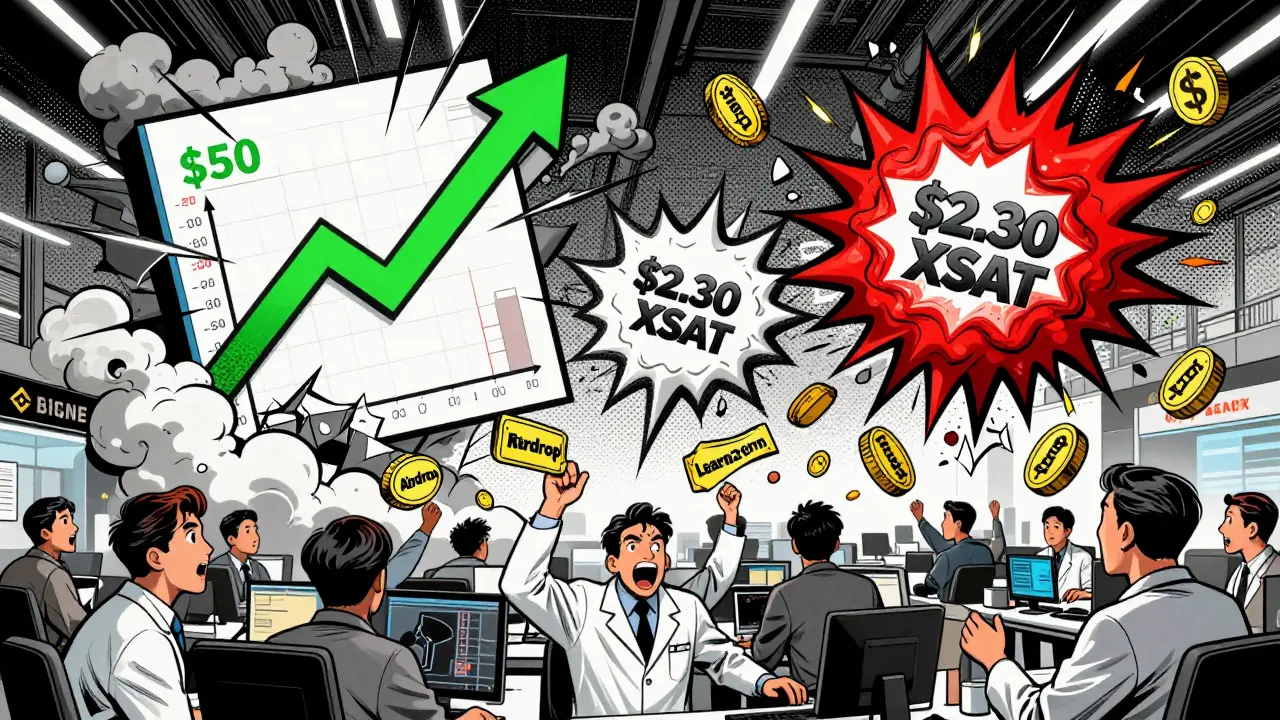
How exSat Network secures your Bitcoin
exSat Network is currently in Phase 1. That means your Bitcoin isn’t stored in a decentralized wallet. It’s held by regulated custodians - think banks or licensed financial firms. That’s unusual for crypto, but it’s intentional. The project argues this is a safety feature. If someone hacks the system, the custodian can freeze the stolen XBTC and blacklist the address. That’s something decentralized protocols can’t do. It’s a trade-off: you gain security through oversight, but you lose decentralization. Phase 2, still unlaunched, promises to use Multi-Party Computation (MPC) to remove centralized custody entirely. That would make the system more aligned with Bitcoin’s ethos. But there’s no timeline. No beta. No testnet. Just a promise.Where you can buy XSAT - and why it matters
Right now, XSAT trades on only one major exchange: Coinex. That’s it. A few smaller platforms list it, but liquidity is thin. You won’t find it on Coinbase, Kraken, or even KuCoin. Limited exchange availability means two things: 1. It’s hard to buy and sell without moving the price. 2. There’s no real market depth. A single large trade can crash or spike the price. If you want to get XSAT, you’ll likely need to trade from another coin on Coinex. That’s a barrier for beginners. And if you want to cash out? Good luck finding a buyer willing to pay more than $2.30.How to earn XSAT - beyond staking
The project isn’t just relying on staking to attract users. It’s running aggressive incentive programs: - Learn2Earn: Complete short lessons on Bitget to get free XSAT. - Assist2Earn: Refer friends and earn rewards based on their activity. - Airdrop challenges: Complete tasks like joining Telegram or Twitter to claim tokens. These aren’t unique - many new coins use them. But they’re the main way most people are getting XSAT right now. Not because they believe in the tech, but because they want free tokens. You can also trade XSAT for profit. The wild price swings make it a playground for short-term traders. But that’s gambling, not investing.
Is exSat Network legit? The risks
There’s no fraud proof. No audit reports published. No team names or photos. The website is clean, but it’s all marketing. No GitHub repo. No public code. No developer updates. The biggest risk? The 61% APR. It’s unsustainable. If the project can’t keep paying out that much in XSAT, the token price will collapse. And if the custodians get hacked or shut down? Your XBTC could become worthless overnight. Also, Bitcoin purists hate this. They don’t want wrapped tokens. They don’t want custodians. They want to hold their own keys. exSat’s Phase 1 model goes against that. Phase 2 might fix it - but it’s still just a promise.Who should consider XSAT?
If you’re looking for: - A safe, long-term Bitcoin investment? Skip it. - A high-yield DeFi play? Look elsewhere - there are better, audited options. - A speculative gamble with a chance to get lucky? Maybe. But only with money you can afford to lose. The only real use case right now is for people who want to participate in the airdrop or trade the volatility. Not for anyone who wants to earn yield on Bitcoin safely.What’s next for exSat Network?
The project’s future depends on one thing: Phase 2. If they launch a true decentralized custody system using MPC - and if it’s secure, transparent, and audited - then exSat could become a real player in Bitcoin scaling. But right now? It’s a speculative token with a flashy promise and zero track record. The market cap, trading volume, and price swings tell you everything you need to know. Don’t believe the hype. Don’t chase the 61% APR. Do your own research. And if you do invest - keep it small.Is XSAT a good investment?
XSAT is not a good investment for most people. The high staking returns are based on an inflated token price that no longer exists. The project is less than 3 months old, has no public code, no audited smart contracts, and relies on centralized custody. The price is extremely volatile and supported by speculation, not fundamentals. Only risk-tolerant traders should consider it - and even then, only with money they can afford to lose.
Can I stake Bitcoin directly on exSat Network?
No, you can’t stake native Bitcoin. You must first bridge your BTC to get XBTC - a wrapped version of Bitcoin issued by exSat. Your original BTC is held by regulated custodians, while XBTC is what you stake to earn XSAT rewards. This means you don’t control your Bitcoin during staking, which contradicts Bitcoin’s self-custody philosophy.
Why is XSAT price so different on different exchanges?
XSAT trades on very few exchanges with extremely low liquidity. On Coinex, trading volume is minimal, so even small trades can move the price. Other platforms like Binance and Bitget either don’t list it properly or show outdated data. This inconsistency is common with new, low-cap tokens and signals high risk and poor market depth.
Is exSat Network decentralized?
Not yet. Phase 1 uses regulated custodians to hold Bitcoin, which means the system is centralized. That’s a major departure from Bitcoin’s core principles. Phase 2 plans to use Multi-Party Computation (MPC) for decentralized custody, but there’s no timeline or technical details available. Until that launch, exSat is not truly decentralized.
Where can I buy XSAT?
XSAT is primarily listed on Coinex. A few smaller exchanges may carry it, but it’s not available on major platforms like Binance, Coinbase, or Kraken. To buy XSAT, you’ll need to trade another cryptocurrency for it on Coinex. Be aware that low liquidity means prices can swing sharply with small trades.
 Cryptocurrency Guides