
When you hear the word "NFT," do you think of a jpeg monkey or a pixelated ape? For many, that’s the first image that comes to mind. But behind those popular profile pictures lies a history of staggering financial transactions that have redefined what we consider valuable in the digital age. In just a few short years, digital ownership shifted from a niche concept to a multi-billion dollar industry, driven by a handful of record-breaking sales.
The peak of this frenzy occurred between late 2021 and early 2022. During this window, collectors and institutions spent tens of millions of dollars on unique digital assets. These weren’t just random purchases; they were statements about art, technology, and the future of ownership. Today, looking back at these sales helps us understand not just who bought what, but why the market exploded in the first place.
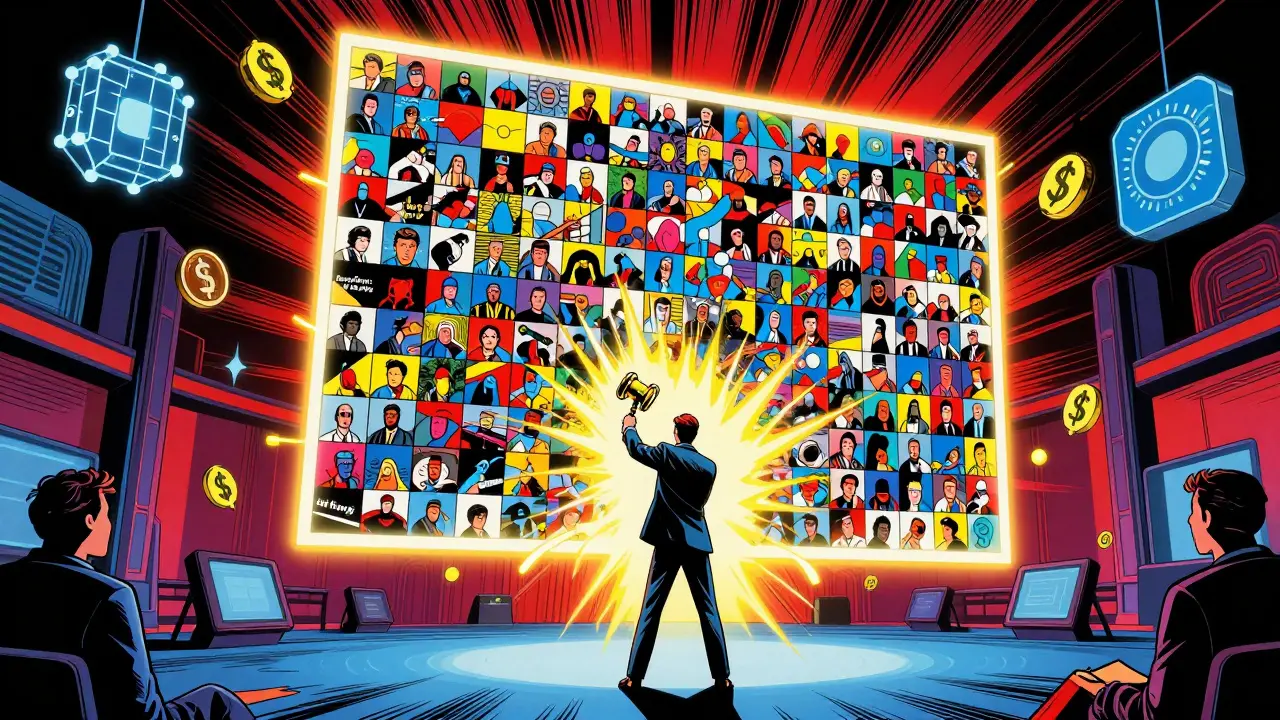
The Unbreakable Record: Murat Pak's The Merge is a dynamic digital artwork that sold for $91.8 million through fractional ownership
If you are looking for the single most expensive NFT ever sold, the answer is The Merge. Created by the enigmatic digital artist Murat Pak, this piece shattered all previous records when it sold for $91.8 million in December 2021. However, calling it a "single sale" requires a bit of nuance.
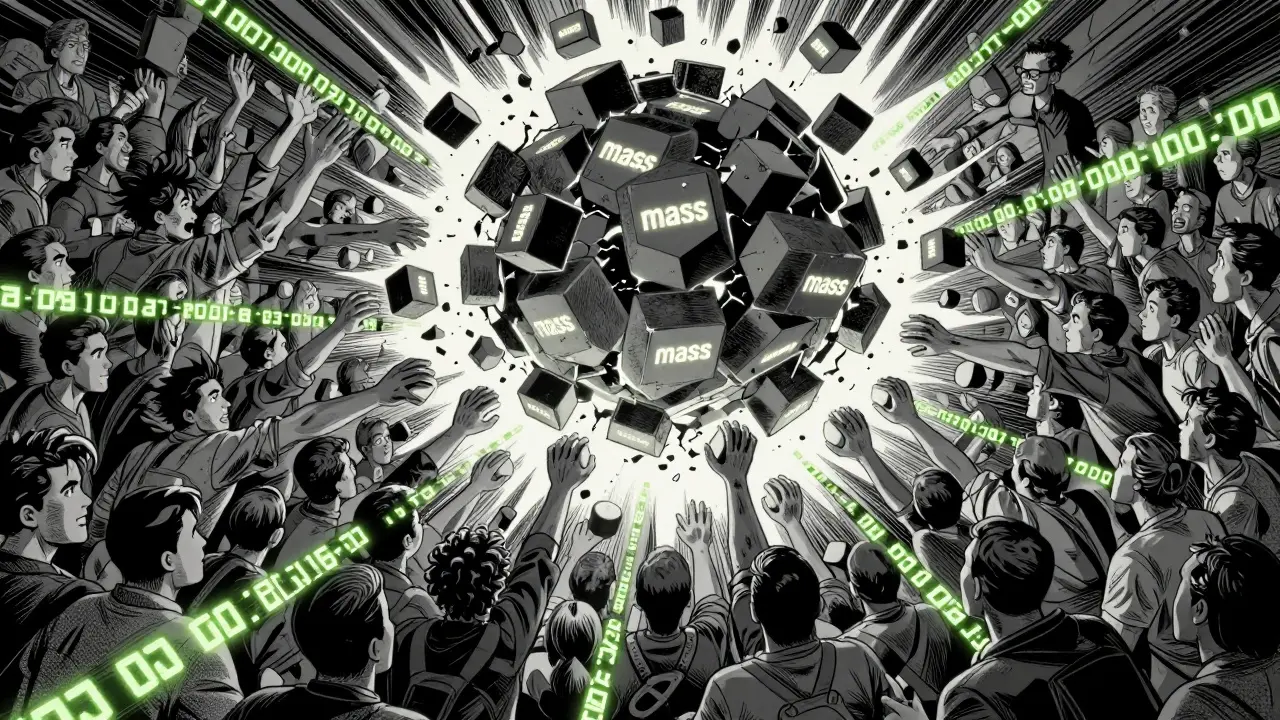
Unlike traditional auctions where one buyer walks away with the entire asset, The Merge was structured differently. It functioned more like a public offering than a standard auction. Over a 48-hour period, 28,893 different collectors purchased individual units called "mass." In total, 295,417 units were sold. The genius-and complexity-of the work lay in its smart contract code. As buyers acquired more mass, their files grew heavier. If two holders decided to merge their files, the artwork would visually change, becoming denser and darker.
This structure challenged the traditional notion of singular ownership. Instead of one person owning the art, thousands shared in its value and visual evolution. While some purists argue whether a fractional sale counts as a "single" NFT record, the total revenue generated remains unmatched. It proved that digital art could scale beyond the reach of ultra-wealthy individuals, inviting a broader community into high-value collecting.
Beeple's Landmark Sale: Everydays: The First 5000 Days is a collage of 5,000 daily images sold for $69.3 million at Christie's
Before The Merge, the crown belonged to another digital pioneer: Beeple, whose real name is Mike Winkelmann. His work, titled Everydays: The First 5000 Days, sold for $69.3 million in March 2021. This sale was historic not just for the price, but for where it happened: Christie's, one of the world’s oldest and most prestigious auction houses.
For the first time, a major traditional institution validated digital art as a serious asset class. The piece itself is a massive collage containing 5,000 individual images. Winkelmann created one new image every day for 13 years, starting in May 2007. These images documented cultural events, political moments, and personal reflections. The sheer discipline required to create such a body of work added significant narrative weight to the final product.
The buyer was Vignesh Sundaresan, known online as MetaKovan. He didn't buy it purely for investment; he stated publicly that the purchase was "to show the world that digital art matters." This sentiment resonated across the crypto community, signaling that established wealth was beginning to flow into Web3 spaces. Unlike The Merge, this was a traditional single-owner transaction, making it the highest-priced NFT bought by one entity.
The Political Statement: Clock is an NFT by Pak and Julian Assange that counted down to Assange's release from prison
Art often intersects with politics, and nowhere was this more evident than in the sale of Clock. Also created by Murat Pak, this piece sold for $52.7 million. What made Clock unique was its purpose. It was commissioned by the Freedom in Tech organization to raise funds for Julian Assange’s legal defense fund.
The artwork was a simple countdown timer. It started at zero and ticked up with every second that passed since Assange’s arrest. The plan was for the clock to stop once Assange was released from prison. Unfortunately, the project faced significant backlash from major platforms. Twitter (now X) banned the NFT, and OpenSea removed it from their marketplace due to pressure from various governments and tech companies.
Despite the controversy, the sale proceeded via direct wallet transfers. The buyer was an anonymous collector who reportedly paid using cryptocurrency. This sale highlighted both the power and the vulnerability of decentralized assets. While the blockchain ensured the transaction happened, centralized platforms could still censor visibility. It remains a powerful example of how NFTs can be used for activism, even if the outcome isn't always smooth.
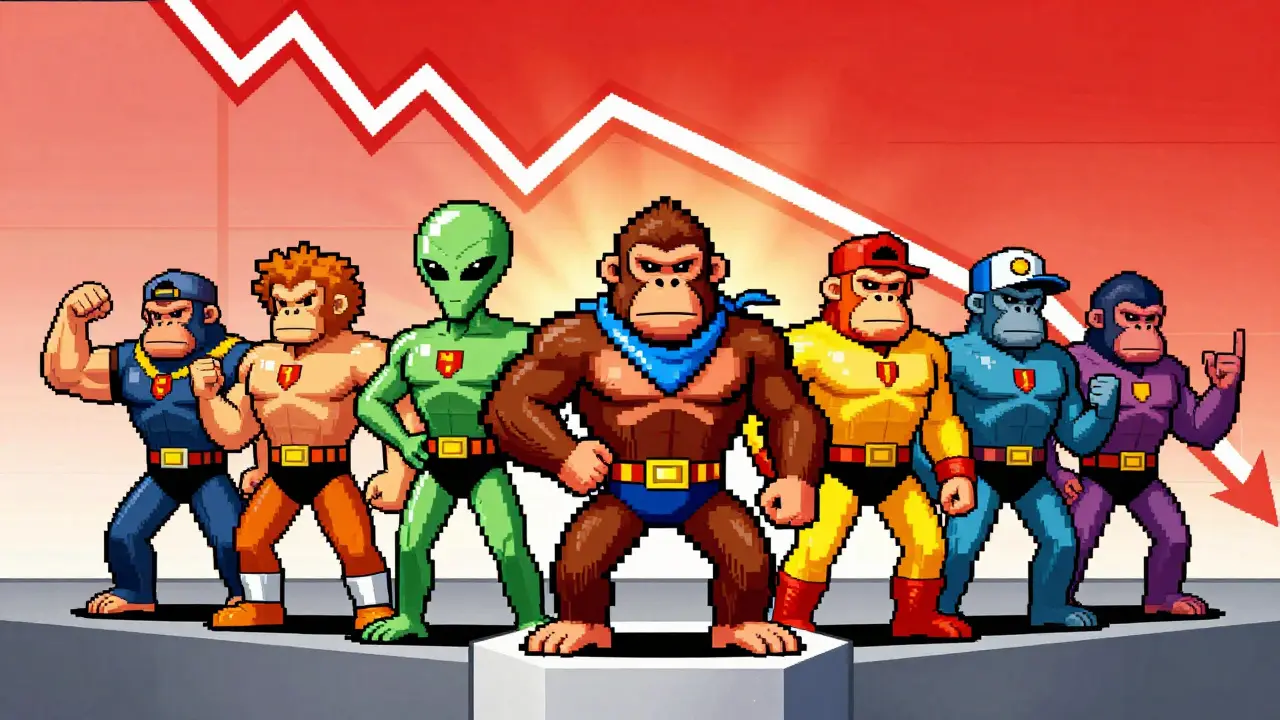
The Blue Chips: CryptoPunks are 10,000 unique pixelated characters created by Larva Labs that pioneered the PFP category
You cannot talk about expensive NFTs without mentioning CryptoPunks. Created by Larva Labs (Matt Hall and John Watkinson), this collection consists of 10,000 unique 24x24 pixel art characters. They were originally given away for free in 2017, but their rarity and historical significance have made them some of the most valuable digital assets in existence.
Several CryptoPunks appear in the top list of most expensive sales. Here is a breakdown of the notable ones:
| Punk ID | Type/Rarity | Sale Price (USD) | Year |
|---|---|---|---|
| #5822 | Ape with Bandana | $23.7 million | 2021 |
| #4156 | Ape with Cap | $10.26 million | 2021 |
| #3100 | Alien | $7.6 million | 2021 |
| #7804 | Ape with Medical Mask | $7.5 million | 2021 |
The value of CryptoPunks lies in scarcity and attributes. There are only nine Alien punks and 24 Ape punks in the entire collection. Punk #4156, for instance, saw its price jump from $1.17 million to over $10 million in a single month. This volatility demonstrated the speculative nature of the market at its peak. Collectors viewed these punks as "blue chips"-digital equivalents of blue-chip stocks or classic paintings like Monet or Picasso.
Generative Art and Cross-Chain Experiments
While CryptoPunks dominated the profile picture space, other forms of digital art also commanded high prices. One notable example is Ringers #109 by Canadian artist and coder Dmitri Cherniak. This piece sold for $6.93 million on the Art Blocks platform.
Art Blocks specializes in generative art, where the artwork is created by an algorithm stored on the blockchain. Each buyer receives a unique variation based on the code. Ringers #109 features complex string patterns around pegs, creating a visually striking composition. Its high price signaled that collectors valued not just static images, but the underlying code and the artistic process itself.
Another interesting case is TPunk #3442, known as "Joker." This NFT sold for $10.5 million on the Tron blockchain. The buyer was Justin Sun, CEO of Tron. Interestingly, Sun had previously tried to buy Beeple’s Everydays but was outbid by just $250,000. Frustrated, he turned to TPunks, which were minted on his own blockchain. While critics argued that TPunks were derivative of CryptoPunks, the sale demonstrated cross-chain adoption and the influence of prominent figures in driving prices.
Why Did Prices Reach Such Heights?
It’s easy to look at these numbers today and wonder what went wrong. But during 2021 and 2022, several factors aligned to create a perfect storm for high-value NFT sales.
- Traditional Legitimacy: When Christie’s and Sotheby’s entered the market, it signaled to high-net-worth individuals that NFTs were a viable asset class.
- FOMO (Fear Of Missing Out): As prices rose, more people jumped in, fearing they would miss the next big boom. This drove bids higher in competitive auctions.
- Scarcity: Collections like CryptoPunks had fixed supplies. With only 10,000 punks, rare traits became incredibly valuable.
- Speculation: Many buyers weren’t interested in the art itself. They were betting on the secondary market price increasing further.
Additionally, the rise of Ethereum as the primary blockchain for NFTs meant that transactions were secure and transparent. However, this also led to high gas fees, sometimes exceeding $300 per transaction. Despite these costs, buyers were willing to pay premiums for access to exclusive digital assets.
The Market Correction: What Happened After the Peak?
The euphoria of 2021 did not last. By mid-2022, the NFT market began a sharp correction. Floor prices for major collections dropped significantly. CryptoPunks that once traded for millions now see much lower average values, though rare variants still hold premium status. Generative art platforms like Art Blocks also saw decreased secondary market activity.
This correction wasn’t entirely unexpected. Markets rarely grow linearly forever. Speculative bubbles burst, and investors reassess value. However, the infrastructure built during the boom remains. Blockchain technology has improved, user experiences have smoothed out, and institutional interest has shifted toward more utility-driven projects rather than pure speculation.
Today, the focus is less on breaking records and more on sustainability. Projects that offer real utility-such as access to communities, gaming assets, or intellectual property rights-are showing more resilience. The era of buying a jpeg for $10 million may be over, but the foundation for digital ownership is stronger than ever.
Who owns the most expensive NFT ever sold?
The most expensive NFT, The Merge by Murat Pak, does not have a single owner. It was purchased by 28,893 different collectors who bought fractional units called "mass." If you are referring to the highest single-collector purchase, that is Beeple's Everydays: The First 5000 Days, owned by Vignesh Sundaresan (MetaKovan).
How much did Beeple's NFT sell for?
Beeple's Everydays: The First 5000 Days sold for $69.3 million at Christie's auction house in March 2021. This was the first time a major traditional auction house sold an NFT.
What is the most expensive CryptoPunk ever sold?
CryptoPunk #5822, an Ape with a bandana, holds the record for the most expensive CryptoPunk sold, fetching $23.7 million in 2021. Other highly valuable punks include #4156 ($10.26 million) and #3100 ($7.6 million).
Why did NFT prices drop after 2022?
NFT prices dropped due to a combination of factors including market saturation, reduced speculative interest, macroeconomic downturns, and a shift in investor focus toward more utility-based projects. The initial hype cycle ended, leading to a natural correction in valuations.
Is The Merge considered a single NFT?
Technically, no. The Merge was sold as multiple fractional units. However, it is widely recognized as the highest-grossing NFT project because the total revenue ($91.8 million) exceeded any other single-sale event. The debate continues among analysts about whether fractional sales should be compared directly to single-owner auctions.
Which blockchain hosts the most expensive NFTs?
The vast majority of the most expensive NFTs, including The Merge, Everydays, and CryptoPunks, were sold on the Ethereum blockchain. Some exceptions exist, such as TPunk #3442 on the Tron blockchain, but Ethereum remains the dominant platform for high-value digital art.
 Cryptocurrency Guides
Arun Prabhu
May 3, 2026 AT 15:16I find the entire premise of this digital hoarding utterly repugnant. It is a grotesque display of wealth that serves no higher purpose than ego inflation. The notion that pixelated squares hold intrinsic value is laughable, bordering on delusional. We are witnessing the commodification of nothingness, wrapped in the shiny veneer of blockchain technology. It is a moral failure of society to allow such absurdity to flourish unchecked. The money spent could have fed thousands or advanced medical research. Instead, it fuels a speculative bubble built on sand. I suppose we should applaud these collectors for their 'vision.' How quaint.
The art world has always been elitist, but this is a new low. It strips art of its soul and replaces it with a receipt.
April D Thompson
May 5, 2026 AT 10:32Arun, I hear your frustration, but let’s try to look at this through a different lens. Art has always been about perception and value assignment, whether it’s a Renaissance painting or a jpeg. What if this isn’t just about money, but about redefining ownership in a digital age? Imagine a world where everyone can participate in owning a piece of history, not just the ultra-wealthy. The Merge did exactly that by allowing thousands to own a fraction. It’s inclusive, isn’t it? Let’s not dismiss the technological innovation so quickly. There’s beauty in the code, in the community, and in the shared experience. Maybe we’re all learning together how to navigate this new frontier.
It’s okay to feel skeptical, but keep an open heart.
Kara Spadone
May 7, 2026 AT 10:30:) You people are missing the forest for the trees. The real story here is the psychological manipulation involved. FOMO is a powerful drug, and these platforms are the dealers. They create artificial scarcity to drive prices up. It’s not art; it’s a pyramid scheme dressed up in fancy language. Don’t be fooled by the buzzwords like 'Web3' or 'decentralization.' It’s still centralized power, just hidden behind complex code. Wake up! :)
Aaron Zeiler
May 7, 2026 AT 23:06actually the smart contract mechanics were pretty solid for the time. gas fees were high but the security was there. most people dont understand how immutable the ledger is. once its on chain its on chain forever. thats the main selling point besides the hype
Ryan Nakielny
May 9, 2026 AT 20:34Solid mechanics sure, but did anyone actually enjoy looking at them? Or was it just a trophy case for tech bros? I’m just saying, if you can’t hang it on your wall, does it really matter?
Not that I’m judging. I just prefer my art tangible. Something you can touch. A jpeg feels... empty. Like eating air.
Brendan Thraxton
May 9, 2026 AT 21:19Hey Ryan, don't knock it till you try it! The community aspect is huge. You get access to exclusive groups, events, and networking opportunities. It's more than just the image. Think of it as a membership card to the future. Plus, the tech is evolving fast. VR galleries are coming soon. You'll be able to walk around your collection in virtual space. It's exciting stuff! Keep an open mind, man. You might surprise yourself.
Tracy McBurney
May 10, 2026 AT 01:45The analysis provided in the post is superficial at best. It fails to address the underlying economic models that sustained these valuations. Specifically, the role of liquidity providers and market makers in creating artificial demand is ignored. Furthermore, the environmental impact of Proof-of-Work consensus mechanisms during the peak period was catastrophic. To discuss NFTs without addressing carbon emissions is intellectually dishonest. The correction was inevitable because the fundamental value proposition was flawed. Speculation cannot replace utility indefinitely.
Sri Astuti
May 11, 2026 AT 20:28Oh wow, another critic jumping on the bandwagon :) But seriously, have you considered the cultural shift? For years, digital files were free. Copy-paste-delete. NFTs introduced the concept of originality in a medium that was inherently reproducible. It’s a philosophical breakthrough, even if the execution was messy. The long-winded debates about value are part of the process. We are rewriting the rules of ownership. It’s messy, yes, but also thrilling. Who knows what comes next? Maybe music rights. Maybe movie tickets. The possibilities are endless. :)
debra hoskins
May 13, 2026 AT 15:51I bought a punk for fun and lost half the value overnight. Classic.
The irony is thick enough to cut with a knife. Everyone said it was the future. Now it’s a ghost town. I miss the days when art was just art. Now it’s a spreadsheet with a picture attached. Sad.
Carli Bates
May 15, 2026 AT 11:54oh sure tell me about it. the whole thing was a circus. clowns on both sides. buyers sellers artists critics. everyone got burned eventually. except maybe the exchange fees. those guys made out like bandits. i guess someone had to win. probably not us.
Andrew Todd
May 17, 2026 AT 01:51This is all foreign nonsense anyway. Real value is built here in America. Steel. Cars. Jobs. Not pictures on a computer screen. These crypto things are a scam designed to steal from hardworking people. Stick to what works. Don’t fall for the hype. It’s garbage.
Jehan ZA
May 17, 2026 AT 13:43Mr. Todd, while your sentiments regarding traditional industry are noted, it is important to recognize that financial markets operate globally. The valuation of digital assets is not confined by national borders. Furthermore, dismissing an entire sector based on ideological grounds may limit one’s understanding of emerging economic trends. Respectful dialogue allows for a broader perspective. Perhaps there is merit in exploring how these technologies might integrate with existing systems rather than rejecting them outright.
Janis Naglis
May 19, 2026 AT 02:06Wow!! This discussion is getting intense!!! But hey, that’s what makes it interesting right??? I think we need to focus on the positive aspects!!! The innovation!!! The creativity!!! Yes, there were mistakes, but we learned from them!!! Now we have better tools, better security, and better communities!!! Let’s move forward together!!! No hate!!! Just love and support for the creators!!! They are brave souls navigating uncharted waters!!! Cheering them on!!! 🚀🎨💻
Lynne Teperman
May 21, 2026 AT 00:11the cultural implications are fascinating. it challenges the gatekeepers of the art world. museums galleries auction houses. they used to decide what was valuable. now the community decides. democratization of taste. messy but beautiful. i see parallels in indigenous art movements too. reclaiming narrative control. digital spaces offer new ways to express identity. worth watching.
Jimmy vasquez
May 22, 2026 AT 11:10Hey folks, just wanted to say thanks for the detailed breakdown. As someone who dabbled in minting back in 2021, I remember the excitement. The energy was palpable. Sure, prices crashed, but the tech remains. Smart contracts are useful beyond art. Supply chain tracking, voting systems, identity verification. The NFT hype was just the tip of the iceberg. Let’s not throw the baby out with the bathwater. Keep building!