
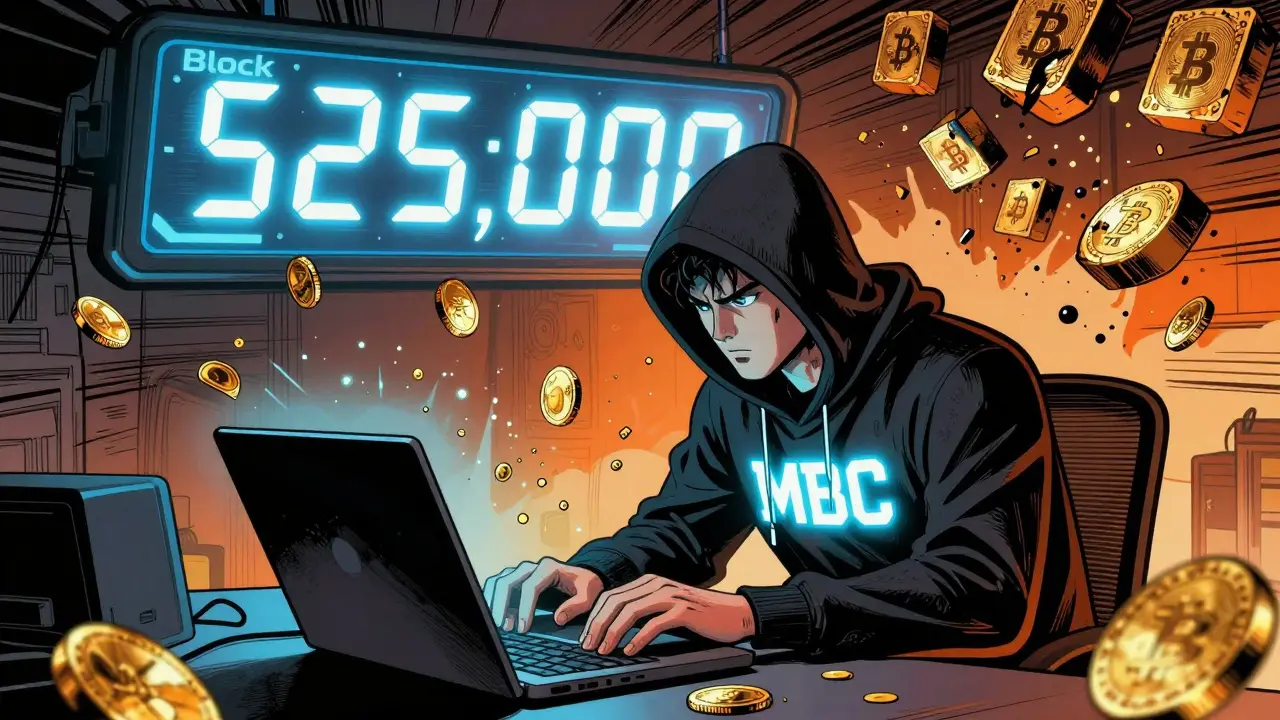
Most people think Bitcoin is the only cryptocurrency that matters. But what if there was a version of Bitcoin built specifically for buying coffee, tipping a streamer, or paying 1 cent for a news article? That’s where MicroBitcoin is a cryptocurrency created as a hard fork of Bitcoin at block 525,000, designed to restore Satoshi Nakamoto’s original vision of peer-to-peer electronic cash for everyday microtransactions. Unlike Bitcoin, which now costs $2.50 in fees per transaction and takes 10 minutes to confirm, MicroBitcoin was built from the ground up to handle payments as small as a penny - and do it in under a minute.
Why MicroBitcoin Exists
Bitcoin was meant to be digital cash. Not a store of value. Not a speculative asset. Cash. But over time, transaction fees rose, block times stayed slow, and mining became dominated by giant data centers with ASIC chips. Regular people couldn’t use it for small purchases anymore. MicroBitcoin came along to fix that.
At block 525,000 - which happened in early 2025 - the MicroBitcoin network split from Bitcoin. Every Bitcoin wallet that had coins at that moment got an equal amount of MBC. But here’s the twist: if you hadn’t moved your Bitcoin since before that block, your coins were burned. No one got them. No premine. No insider advantage. The idea was to reward active users, not hoarders.
This wasn’t just a copy-paste job. It was a redesign. The goal? Make crypto work like email - simple, instant, and everywhere.
How MicroBitcoin Works Differently
MicroBitcoin isn’t just Bitcoin with a smaller price tag. It’s a completely different engine under the hood.
- Block time: 1 minute - Bitcoin takes 10 minutes to confirm a transaction. MicroBitcoin does it in 60 seconds. That means you can pay for lunch and have the transaction confirmed before you sit down.
- Algorithm: Power2b - Bitcoin uses SHA-256, which needs expensive ASIC miners. MicroBitcoin uses Power2b, a mining algorithm designed to run on regular CPUs. That means you can mine MBC on an old laptop or a Raspberry Pi. No need to spend $5,000 on a mining rig.
- Hashing: Blake2b - Instead of SHA-2 or SHA-3, MicroBitcoin uses Blake2b. It’s faster, more efficient, and just as secure. It’s the same hashing method used in some modern password systems and blockchain projects because it balances speed and safety.
- Total supply: 81.5 billion MBC - Bitcoin caps out at 21 million. MicroBitcoin has over 3,800 times more coins. Why? So each coin is worth a fraction of a cent. This makes it practical for microtransactions. You’re not paying $0.000001 for a song - you’re paying 0.00000000039 BTC equivalent in MBC, which feels more natural.
The network also uses an algorithm called LWMA-3 for difficulty adjustment. It’s the first time this algorithm has been used in a live cryptocurrency. It helps keep block times stable even if mining power suddenly spikes or drops.
Who Uses MicroBitcoin?
Right now, MicroBitcoin is mostly traded on smaller exchanges like LBank, Coinstore, and XeggeX. The main trading pair is MBC/USDT. In July 2025, daily trading volume hit $269,600 - all from that one pair. That’s not huge compared to Bitcoin or Ethereum, but it’s growing.
There’s no big corporate adoption yet. No Starbucks accepting MBC. No PayPal integration. But that’s not the point.
The project’s community - mostly developers and enthusiasts from Korea, the U.S., and Ukraine - is focused on building tools for micro-payments. Think of it like this: you could use MBC to pay $0.01 per second for a live stream, tip a writer $0.05 for a quick article, or buy a single song for $0.003. These are the kinds of payments that are impossible on Bitcoin today.
It’s also designed as the foundation for Layer-2 tokenization. That means developers can build their own tokens on top of the MicroBitcoin network without needing a new blockchain. Think of it like creating a custom currency for a game, a fan club, or a local market - all powered by MBC.
How It Compares to Other Microtransaction Coins
MicroBitcoin isn’t the only coin trying to solve microtransactions. But it’s one of the few that starts from Bitcoin’s code.
| Feature | MicroBitcoin (MBC) | Nano (NANO) | Bitcoin (BTC) | Dogecoin (DOGE) |
|---|---|---|---|---|
| Block Time | 1 minute | ~4 seconds | 10 minutes | 1 minute |
| Transaction Fee | ~$0.0001 | $0 | $2.50 | $0.01 |
| Mining Algorithm | Power2b (CPU-friendly) | None (OpenLedger) | SHA-256 (ASIC-only) | Scrypt (ASIC-friendly) |
| Total Supply | 81.5 billion | 133 billion | 21 million | 145 billion |
| Primary Use Case | Micro-payments + tokenization | Instant payments | Store of value | Community tipping |
Nano is faster and free, but it doesn’t have Bitcoin’s legacy or community trust. Dogecoin is popular but still too expensive for true microtransactions. Bitcoin? Forget it - fees and speed make it useless for buying a $0.10 app. MicroBitcoin sits in the middle: Bitcoin’s credibility, but built for daily use.
The Challenges
MicroBitcoin has big potential - but it’s not without problems.
First, the price is incredibly low. At $0.00000000039 per MBC, most wallets and exchanges don’t even support transactions below $0.01. If you try to send 100 MBC, your wallet might say “too small.” That’s a real barrier to adoption.
Second, there’s no audit. The project claims to use “thorough security” with LWMA-3 and Blake2b, but there’s no public report from a third-party security firm. No one knows if the code is truly bulletproof.
Third, no major merchants accept it. You can’t buy groceries with MBC. You can’t pay your rent. Without real-world use, it’s just a digital experiment.
And finally, it’s competing with the Lightning Network - Bitcoin’s own solution for microtransactions. Lightning already handles over 4,000 transactions per second. Why build a new coin when you can upgrade the old one?

Is MicroBitcoin Worth It?
If you’re a miner with an old PC? Maybe. You can still mine MBC without spending thousands on hardware. If you’re a developer who wants to build micro-payment apps? Maybe. The open-source nature and Layer-2 support make it a clean canvas. If you’re just looking to invest? Proceed with caution.
There’s no guarantee MicroBitcoin will succeed. But it’s one of the few projects trying to solve the real problem: making crypto useful for everyday life.
It’s not trying to be the next Bitcoin. It’s trying to be the next email.
Is MicroBitcoin a scam?
No, MicroBitcoin isn’t a scam. It’s an open-source project with no premine, no private sale, and no central team controlling the coins. All code and development is public. However, being open-source doesn’t mean it’s safe. Always research before investing. There’s no guarantee of future value, and the low price makes it volatile and hard to use practically.
Can I mine MicroBitcoin on my laptop?
Yes. Unlike Bitcoin, which requires expensive ASIC miners, MicroBitcoin uses the Power2b algorithm - designed to be CPU-friendly. This means you can mine it with a regular computer, even an older one. It’s not profitable in terms of money, but it’s one of the few cryptocurrencies where you can still participate in mining without special hardware.
Where can I buy MicroBitcoin (MBC)?
As of July 2025, MicroBitcoin trades on LBank, Coinstore, and XeggeX. The most common trading pair is MBC/USDT. You won’t find it on Coinbase, Binance, or Kraken. You’ll need to sign up on one of those smaller exchanges, deposit USDT, and then trade for MBC. Always double-check the official website (microbitcoin.org) before sending funds.
Why does MicroBitcoin have such a low price per coin?
It’s intentional. With 81.5 billion coins in circulation, each MBC is worth a tiny fraction of a cent. This makes it practical for microtransactions - like paying 0.001 MBC for a 1-second video ad or tipping someone 50 MBC for a helpful comment. The low price isn’t a bug; it’s the whole point.
How is MicroBitcoin different from Bitcoin’s Lightning Network?
Lightning Network is a layer-2 solution built on top of Bitcoin. It lets you send fast, cheap payments using Bitcoin, but you still need Bitcoin to fund the channel. MicroBitcoin is a separate blockchain with its own coins, rules, and mining. It doesn’t rely on Bitcoin at all. If you want to avoid Bitcoin’s fees and use a coin built from scratch for microtransactions, MBC is the direct alternative.
Final Thoughts
MicroBitcoin doesn’t aim to replace Bitcoin. It aims to fix what Bitcoin became too big to do. It’s not about being the most valuable coin. It’s about being the most usable one.
For now, it’s still a niche project. But if someone builds a real app - a tipping system, a pay-per-click content platform, a micropayment marketplace - using MBC, then this could be the quiet revolution we didn’t know we needed.
 Cryptocurrency Guides
Tracy Peterson
February 23, 2026 AT 07:38George Suggs
February 24, 2026 AT 03:51Dianna Bethea
February 25, 2026 AT 00:06KingDesigners &Co
February 25, 2026 AT 18:19Felicia Eriksson
February 27, 2026 AT 18:08aaron marp
February 28, 2026 AT 16:34Patrick Streeb
March 2, 2026 AT 11:39Phillip Marson
March 3, 2026 AT 21:44Alyssa Herndon
March 4, 2026 AT 21:50Ifeanyi Uche
March 6, 2026 AT 09:11Jeff French
March 7, 2026 AT 10:24Elana Vorspan
March 7, 2026 AT 11:51Kenneth Genodiala
March 7, 2026 AT 20:25Michael Rozputniy
March 9, 2026 AT 18:50Danny Kim
March 9, 2026 AT 21:13Cathy Sunshine
March 10, 2026 AT 13:58Shannon Black
March 12, 2026 AT 09:19Richard Cooper
March 13, 2026 AT 05:03Dee Resin
March 14, 2026 AT 13:28Tanvi Atal
March 16, 2026 AT 00:29Sony Sebastian
March 16, 2026 AT 14:54Brian Lemke
March 18, 2026 AT 10:06Amita Pandey
March 19, 2026 AT 01:43Alyssa Herndon
March 19, 2026 AT 05:48