
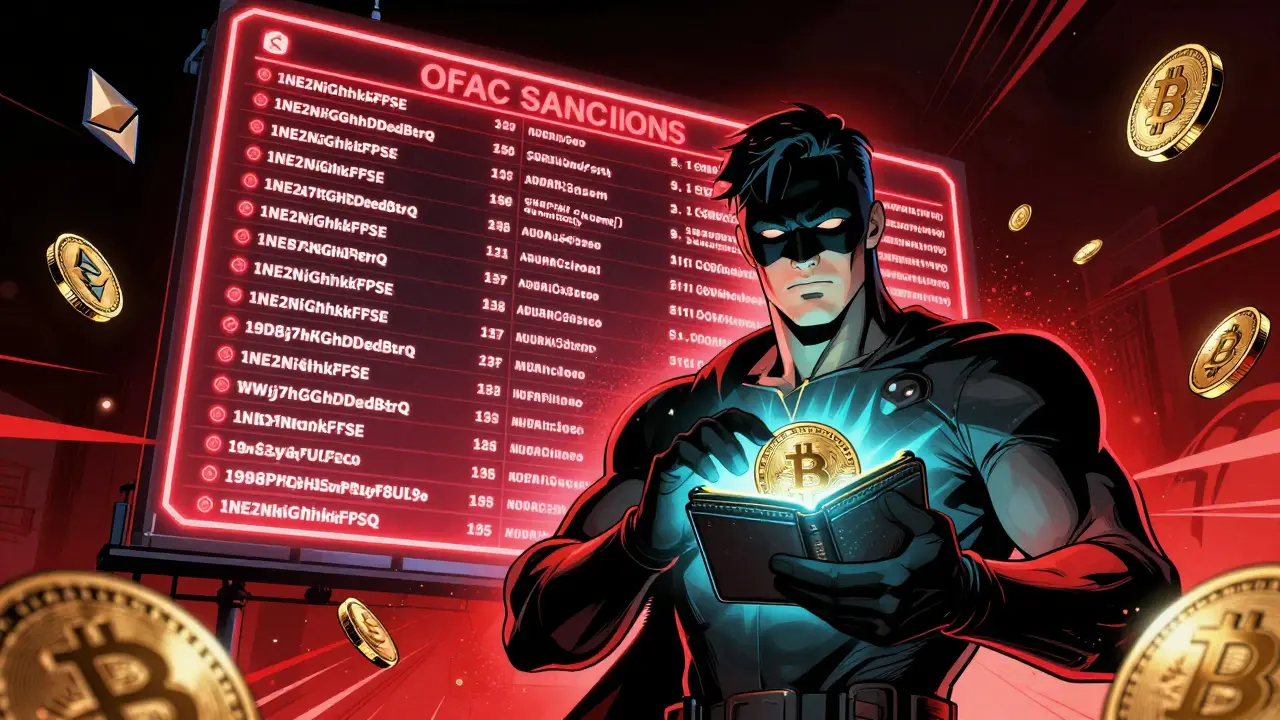
Since 2025, the OFAC sanctions list has become one of the most critical tools for controlling illicit activity in cryptocurrency. It’s no longer enough to just know which coins to trade-you need to know which wallet addresses are frozen, which companies are banned, and how to avoid accidentally handling tainted funds. The Office of Foreign Assets Control, part of the U.S. Treasury, now tracks over 1,200 cryptocurrency wallet addresses linked to terrorists, hackers, ransomware gangs, and state-sponsored actors. This isn’t theoretical. Real money is being seized. Real people are being arrested. And exchanges that miss a single address can face millions in fines.
What’s on the OFAC Crypto Sanctions List?
The OFAC Specially Designated Nationals (SDN) list includes more than just names. It now contains specific blockchain addresses tied to criminal activity. These aren’t random wallets. They’re addresses used to move money from stolen crypto, ransomware payments, Iranian oil sales, and election interference operations.
For example, two Bitcoin addresses-1NE2NiGhhbkFPSEyNWwj7hKGhGDedBtSrQ and 19D8PHBjZH29uS1uPZ4m3sVyqqfF8UFG9o-were officially sanctioned in 2025 because they were linked to SECONDEYE SOLUTION, a front for the Internet Research Agency LLC. That’s the same group accused of running disinformation campaigns during U.S. elections. Another case involved Iranian nationals Alireza Derakhshan and Arash Estaki Alivand, who moved over $600 million through Ethereum and TRON wallets to launder proceeds from oil sales. Their wallets were added to the list in September 2025.
It’s not just Bitcoin and Ethereum. OFAC sanctions cover 17 different cryptocurrencies, including:
- Bitcoin (XBT)
- Ethereum (ETH)
- Monero (XMR)
- Litecoin (LTC)
- ZCash (ZEC)
- DASH
- Bitcoin Gold (BTG)
- Ethereum Classic (ETC)
- Bitcoin Satoshi Vision (BSV)
- Bitcoin Cash (BCH)
- Verge (XVG)
- USD Coin (USDC)
- USD Tether (USDT)
- Ripple (XRP)
- Tron (TRX)
- Arbitrum (ARB)
- Binance Smart Chain (BSC)
Stablecoins like USDT are especially targeted because they’re used for cross-border transfers. In March 2025, Tether was forced to freeze $450 million tied to Iranian sanctions evasion. That’s not a warning-it’s a direct action.
How OFAC Tracks Crypto Addresses
Unlike banks, blockchains don’t have names or IDs. They have public addresses. OFAC doesn’t guess which ones are bad-they use blockchain analysis tools that trace transaction flows. When a wallet receives funds from a known ransomware address, or sends money to a darknet marketplace, it gets flagged.
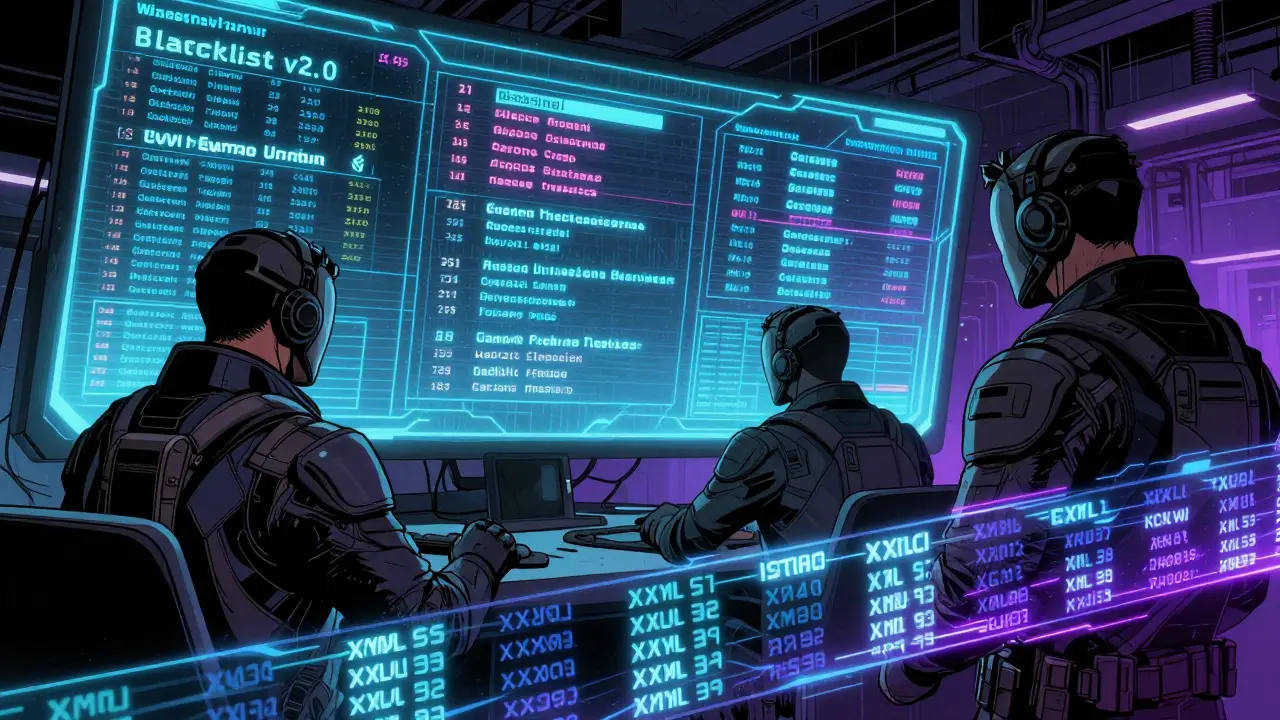
OFAC’s system was upgraded in May 2025 with the launch of Blacklist v2.0. This version now monitors layer 2 networks like Arbitrum and Optimism, which were previously harder to track. It also includes real-time alerts that update within 15 minutes of a new designation. Platforms like Scorechain and Chainalysis sync with OFAC’s XML feed (sdn_advanced.xml) to auto-block transactions.
Here’s how it works in practice:
- OFAC adds a new wallet to the SDN list.
- The update is published in XML format.
- Compliance software at exchanges downloads the file within minutes.
- Every incoming or outgoing transaction is checked against the list.
- If a match is found, the transaction is frozen and reported.
Some exchanges even scan for indirect connections-like wallets that have interacted with a sanctioned address-even if they’re not directly listed. This is called “risk scoring,” and it’s becoming standard.
Who Gets Sanctioned? Real Cases
OFAC doesn’t just go after individuals. They target entire organizations, protocols, and even AI systems.
In February 2025, OFAC sanctioned the first AI-powered trading bot used by a sanctioned entity. The bot, running on a decentralized platform, automatically moved $60 million in stolen crypto through multiple chains to hide its trail. This was a landmark move-now, software itself can be a sanctioned entity.
The Lazarus Group, linked to North Korea, stole $200 million in Q1 2025 using DeFi protocols. They laundered funds through liquidity pools and yield farms, exploiting the lack of identity checks in decentralized finance. OFAC responded by sanctioning three DeFi protocols that were knowingly used to process the stolen funds.
Then there’s Garantex. This Russian-based exchange was shut down in March 2025 after being linked to $26 million in illicit crypto. But instead of shutting down, the operators tried to relaunch under a new name-Grinex. OFAC responded by sanctioning Grinex too. U.S., German, and Finnish law enforcement seized servers and arrested two executives, Aleksandr Mira Serda and Aleksej Besciokov. The U.S. Department of State even offered a $5 million reward for information leading to their arrest.
These aren’t isolated cases. They’re part of a global crackdown. In 2024, joint operations with Interpol and Europol led to six raids on crypto infrastructure hubs across Europe and Asia. Sanctions are no longer just a U.S. tool-they’re becoming a global standard.
What Happens If You Interact With a Sanctioned Address?
If you send crypto to a sanctioned address-even by accident-you’re not breaking the law. But your transaction will be blocked. Your exchange will freeze your funds. You’ll need to prove the transaction was unintentional. If you can’t, you might lose access to your wallet permanently.
Exchanges like Coinbase, Kraken, and Binance now screen every transaction in real time. If you try to withdraw to a flagged address, you’ll get an error message like “Transaction blocked due to regulatory compliance.” No explanation. No appeal. Just a block.
Even DeFi users aren’t safe. If you use a DEX like Uniswap and swap tokens that were previously sent from a sanctioned wallet, your transaction may fail. Some DeFi aggregators now refuse to route trades through any address that has ever touched a sanctioned wallet.
The risk isn’t just financial-it’s legal. The U.S. government can seize assets tied to sanctioned entities, even if you didn’t know they were on the list. Ignorance is not a defense.
How to Stay Compliant
If you’re a regular user, your best defense is simple: don’t send crypto to unknown addresses. Don’t use mixing services. Don’t trade on unregulated exchanges. Stick to platforms that clearly display their compliance status.
If you run a business-exchange, wallet provider, DeFi app-you need more than good intentions. You need:
- A real-time OFAC screening system that updates every 15 minutes
- Support for multiple blockchains (not just Bitcoin and Ethereum)
- Integration with blockchain analytics tools
- Staff trained in crypto compliance
- Logs of all screening decisions (required by regulators)
It takes 3 to 6 months to build a compliant system from scratch. Many small exchanges failed in 2025 because they didn’t invest early enough. The cost of non-compliance? Fines up to $20 million per violation.
There’s no official OFAC app. But you can download the SDN list in XML format from the Treasury’s website and use open-source tools like ofac-sdn-parser to convert it into a searchable list. Some compliance firms offer API access for a fee-think of it as insurance.

The Future of Crypto Sanctions
OFAC is moving fast. In May 2025, new regulations were proposed that could make smart contract developers legally responsible if their code helps launder money. Imagine this: you build a DeFi protocol, someone uses it to move $10 million in stolen crypto, and now you’re liable. This could change how DeFi is built forever.
Privacy coins like Monero and ZCash are under increasing pressure. While they’re still legal, OFAC has flagged dozens of Monero wallets used by ransomware gangs. Some exchanges have already stopped supporting them entirely.
International cooperation is growing. The FATF and OFAC released a joint directive in April 2025 to standardize crypto sanctions across 40+ countries. This means if your wallet is blocked in the U.S., it’s likely blocked in the EU, UK, Japan, and Australia too.
Experts predict that by 2026, OFAC will start sanctioning entire blockchain networks if they’re used predominantly for crime. Not just addresses-whole chains. That’s the next frontier.
Final Takeaway
The days of crypto being a lawless frontier are over. The OFAC sanctions list is now a living, breathing system that updates in real time. It tracks wallets, bots, protocols, and even AI. It doesn’t care if you’re a casual trader or a developer. If your funds touch a sanctioned address, you’re at risk.
Compliance isn’t optional. It’s the price of entry into the modern crypto economy. Whether you’re sending Bitcoin, trading on a DEX, or building a wallet app-you need to know who’s on the list. And you need to act before you get caught.
How do I check if a crypto address is on the OFAC sanctions list?
You can’t check it directly through a public website. OFAC doesn’t offer a user-friendly search tool. Instead, regulated platforms like exchanges and wallet providers use automated systems that sync with OFAC’s official SDN list in real time. If you’re a business, you need to integrate their XML feed (sdn_advanced.xml) into your compliance software. For individual users, the safest approach is to only send crypto to trusted, verified addresses-avoid sending to unknown wallets or addresses found on forums or marketplaces.
Can I get a sanctioned address removed from the OFAC list?
It’s extremely difficult. OFAC rarely removes addresses unless the underlying entity is cleared of wrongdoing-like if a wallet was hacked and the funds were recovered, or if a person was mistakenly listed. You must submit a formal petition to OFAC with detailed evidence. Most requests are denied. Even if approved, it can take over a year. Don’t expect quick fixes.
Are all cryptocurrency wallets on the OFAC list?
No. Only about 1,200 crypto addresses are currently listed as of 2025. But experts believe this represents less than 10% of all illicit wallets. OFAC focuses on high-value targets tied to terrorism, ransomware, state-sponsored hacking, and large-scale money laundering. Most regular users’ wallets are never flagged-unless they interact with a known bad actor.
What happens if I accidentally send crypto to a sanctioned address?
Your transaction will likely be blocked by your exchange or wallet provider. If it goes through, your funds may be frozen. You’ll need to contact your platform and prove the transaction was unintentional. If you can’t, you may lose access to those funds permanently. OFAC doesn’t pursue individual users for accidental transfers-but your exchange will freeze the assets to avoid legal liability.
Do I need to worry about OFAC if I’m not in the U.S.?
Yes. Even if you’re outside the U.S., you’re still affected if you use a U.S.-based exchange, wallet, or service. Many global platforms comply with OFAC rules to maintain access to the U.S. financial system. Also, international cooperation has grown-IF you’re linked to a sanctioned entity, other countries may freeze your assets under joint directives from OFAC and FATF. Your location doesn’t make you immune.
Can privacy coins like Monero avoid OFAC sanctions?
Not reliably. While Monero and ZCash offer stronger privacy, OFAC has still identified and sanctioned dozens of Monero wallets tied to ransomware and darknet markets. Some exchanges have stopped supporting privacy coins entirely because they’re too hard to monitor. Even if the address is hidden, the transaction history before and after the privacy layer can be traced. OFAC is adapting-privacy coins are no longer a safe haven.
What’s the difference between a sanctioned entity and a sanctioned address?
A sanctioned entity is a person, company, or organization-like Garantex or the Lazarus Group. A sanctioned address is a specific blockchain wallet tied to that entity. OFAC sanctions both. If an entity is listed, all their known addresses are added. But sometimes, only a single address is listed if it’s used independently. You can be blocked because of an address-even if you’re not the original owner.
Is it legal to use cryptocurrency if OFAC sanctions are active?
Yes, it’s still legal to use crypto for legitimate purposes. OFAC doesn’t ban cryptocurrency itself-it bans transactions involving specific bad actors. Millions of people trade Bitcoin, Ethereum, and stablecoins every day without issue. The key is avoiding any interaction with sanctioned addresses or entities. As long as you’re not laundering money, funding terrorism, or evading sanctions, you’re fine.
How often does the OFAC crypto sanctions list update?
The list is updated multiple times per week. Major updates happen after new designations, which can occur anytime. Since 2025, compliance platforms like Scorechain have achieved a 15-minute update window after OFAC releases new data. This means if a wallet is added at 2:00 PM, most regulated exchanges will block it by 2:15 PM. There’s no public schedule-updates are unpredictable.
Can I still use DeFi if OFAC sanctions are in place?
You can, but with major risks. Many DeFi protocols have been sanctioned, especially those used to launder stolen funds. If you interact with a sanctioned protocol-even by accident-your wallet could be flagged. Some DeFi aggregators now refuse to route trades through any address linked to a sanctioned entity. Use only well-known, audited protocols. Avoid obscure pools or new launchpads. And never use DeFi to move funds from a suspicious source.
 Cryptocurrency Guides
Alison Hall
December 30, 2025 AT 21:27Brooklyn Servin
January 1, 2026 AT 01:59Phil McGinnis
January 2, 2026 AT 05:59Andy Reynolds
January 3, 2026 AT 08:37Daniel Verreault
January 4, 2026 AT 13:49Vernon Hughes
January 5, 2026 AT 23:59Kevin Gilchrist
January 6, 2026 AT 20:03Jacky Baltes
January 6, 2026 AT 23:17dina amanda
January 8, 2026 AT 00:54surendra meena
January 9, 2026 AT 06:00NIKHIL CHHOKAR
January 10, 2026 AT 04:25Ian Koerich Maciel
January 12, 2026 AT 02:55Vernon Hughes
January 12, 2026 AT 13:51