

When you’re trading on the Cronos Chain, you don’t need another centralized exchange. You need a CronaSwap - a true decentralized exchange built just for Cronos. It’s fast, cheap, and simple. But here’s the catch: it only offers 8 trading pairs. That’s not a typo. Eight. And if you’re trying to move more than $3,000 in a single trade, you might get crushed by slippage.
What Is CronaSwap?
CronaSwap is the first decentralized exchange built specifically for the Cronos blockchain. It launched to fill a gap: traders on Cronos needed a native DEX that didn’t charge high fees or force them to use Ethereum-based tools. Unlike centralized exchanges like Binance or Coinbase, CronaSwap doesn’t hold your crypto. You connect your wallet - MetaMask, Trust Wallet, or Crypto.com DeFi Wallet - and swap tokens directly through smart contracts. Your keys, your coins. No middleman.
It’s built on the Cronos Chain, which is Ethereum Virtual Machine (EVM) compatible. That means if you’ve used Uniswap or SushiSwap before, CronaSwap feels familiar. The interface is clean. The steps are simple. You pick your token, pick the one you want, set your slippage, and click swap. Done.
Why CronaSwap’s 0.25% Fee Matters
The biggest reason people use CronaSwap? The fee. At 0.25%, it’s the lowest on the Cronos Chain. Competitors like VVS Finance and KardiaDex charge between 0.3% and 0.4%. That might not sound like much, but if you’re swapping $10,000 a week, you’re saving $25 to $50 every week. That adds up to over $1,000 a year.
That low fee isn’t just a marketing trick. It’s a strategy. CronaSwap targets high-frequency traders, arbitrage bots, and retail users who make small, frequent swaps. For someone juggling CRC-20 tokens like CRO, USDC, or CRONA, every fraction of a percent matters. Gas fees on Cronos are already low - averaging 0.0005 CRO per transaction - so the total cost to swap is often under $0.05.
But here’s the problem: low fees mean low revenue. CronaSwap doesn’t make money from trading fees alone. It needs volume. And volume needs liquidity. And liquidity needs more tokens. That’s where things get shaky.
Only 8 Tokens? That’s Not Enough
CronaSwap lists exactly eight cryptocurrencies as of February 2026. That’s it. No Shiba Inu. No Polygon. No Solana wrapped tokens. Just the core CRC-20 tokens native to Cronos: CRO, USDC, CRONA, WAVES, BAND, VVS, KAI, and USDT.
Compare that to VVS Finance, which lists over 85 tokens. Or even KardiaDex, with 40+. If you want to trade a new token that just launched on Cronos, you’re out of luck on CronaSwap. You’ll have to go elsewhere - and pay higher fees.
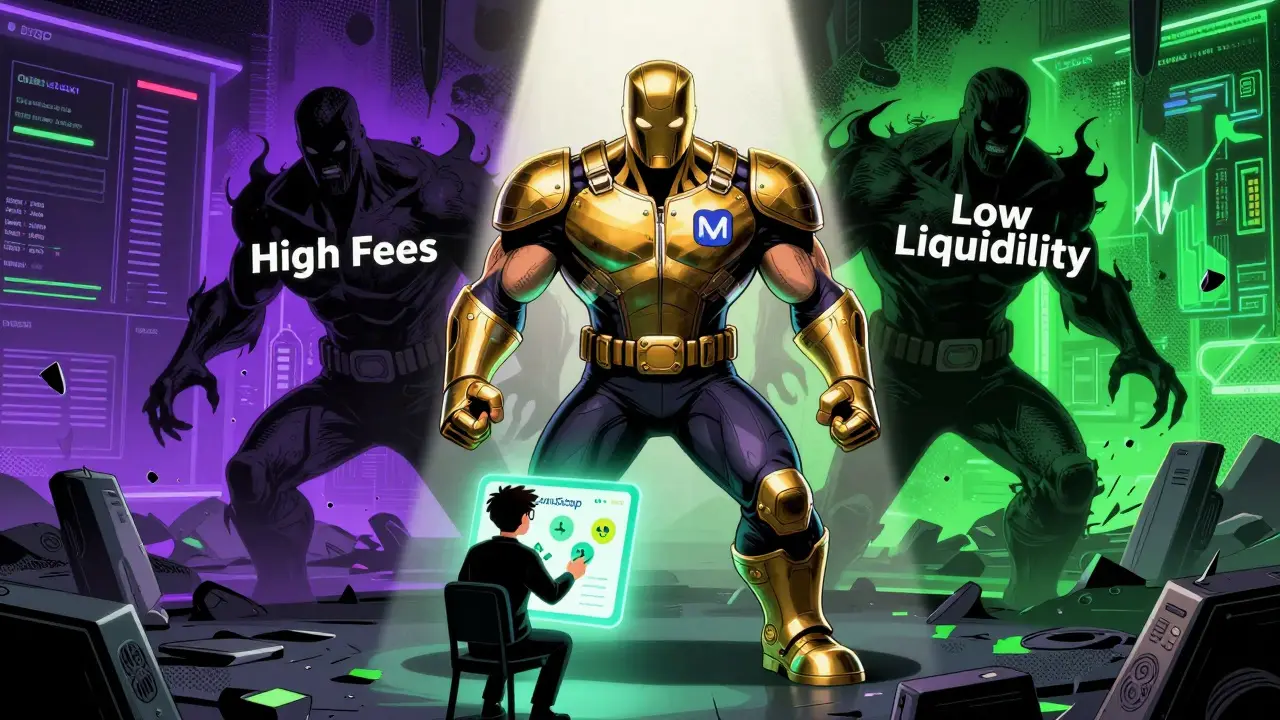
That limited selection isn’t just inconvenient. It’s dangerous. Low liquidity on most pairs means high slippage. A Reddit user reported 45% slippage on a $2,500 CRONA/USDC trade. That’s not a glitch - it’s how the platform works when there’s not enough depth in the pool. For trades over $3,000, you’re likely to get a worse price than you expected. Institutional traders? They won’t touch it. Retail traders with small amounts? They’re fine.
CRONA Token: Worth Holding?
The native token, CRONA, is used for governance and future staking rewards. As of February 3, 2026, it trades at $0.000290. That’s a market cap of about $2.9 million. Compare that to VVS Finance’s VVS token, which sits at $0.0028 with a $28 million market cap. CRONA is a micro-cap token - small, volatile, and risky.
Right now, holding CRONA doesn’t give you much. No staking. No yield. No airdrops. The roadmap says staking rewards are coming in Q3 2026 with CRONA v2. But that’s six months away. And even then, it’s just a promise. If you’re buying CRONA hoping for a quick flip, you’re playing a game with thin liquidity and low trading volume. If you’re buying because you believe in CronaSwap’s long-term future - and you’re willing to wait - then maybe.
Security and Audits: No Red Flags
Good news: CronaSwap’s smart contracts were audited by CertiK in November 2025. No critical vulnerabilities were found. That’s a big deal. Many small DEXs skip audits to save money. CronaSwap didn’t. That’s a sign they care about safety.
OpenZeppelin also reviewed the platform’s performance after its December 2025 upgrade and confirmed a 23.7% reduction in gas consumption. That’s a technical win. Fewer gas fees mean more people can trade without worrying about cost spikes.
That said, security isn’t just about code. It’s about liquidity concentration. Right now, 80% of CronaSwap’s liquidity is locked in just three pairs: CRO/USDC, CRONA/USDC, and USDC/USDT. If one of those pools gets drained - by a whale or a hack - the whole exchange could destabilize. It’s not likely. But it’s possible.
Who Is CronaSwap For?
Let’s be clear: CronaSwap isn’t for everyone.
It’s perfect for:
- Traders who swap small amounts (under $2,000) of CRC-20 tokens
- Users who want the lowest possible fee on Cronos
- Beginners who want a simple, no-frills DEX
- People already using Crypto.com DeFi Wallet and want seamless integration
It’s bad for:
- Anyone trading over $3,000 in a single swap
- Traders who want access to new or niche tokens
- Investors looking for yield or staking
- Institutional traders or anyone who needs deep liquidity
If you’re just starting on Cronos and want to swap CRO for USDC without paying extra, CronaSwap is the best choice. But if you’re building a diversified portfolio, you’ll need to use other DEXs too.
What’s Next for CronaSwap?
The roadmap isn’t empty. There’s real planning here.
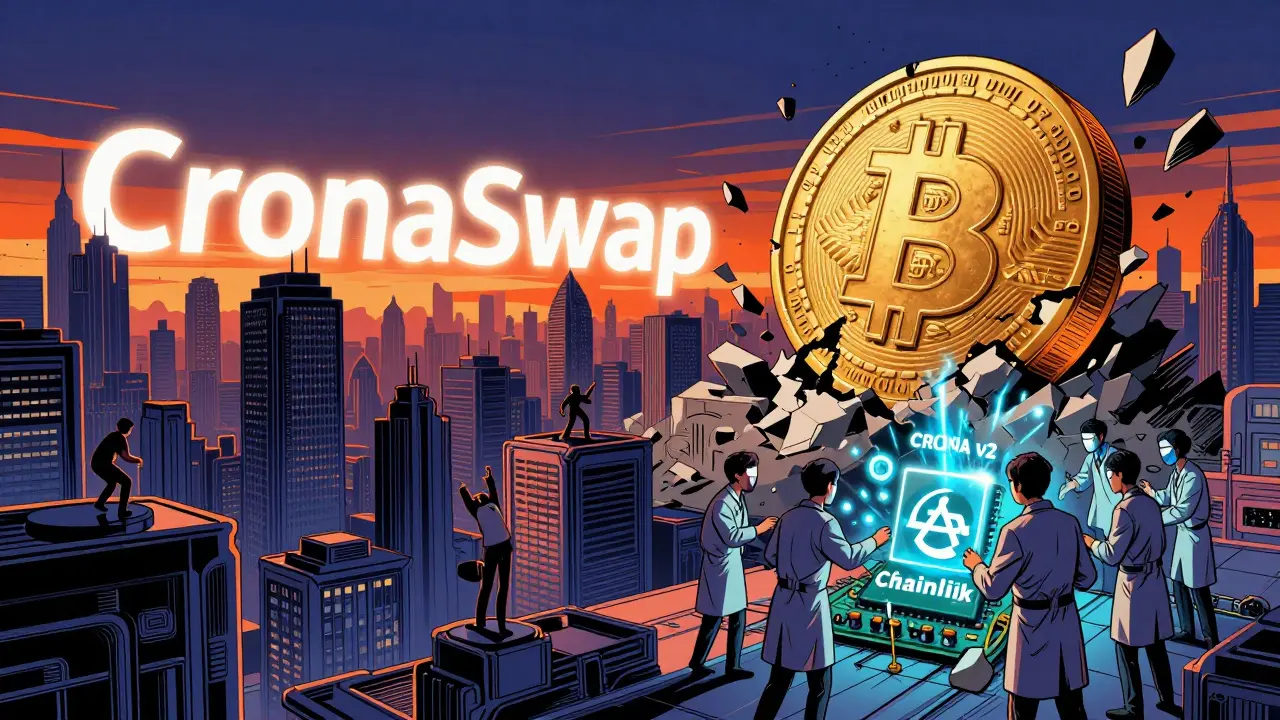
- Chainlink price feeds are coming in Q2 2026 - that’ll make stablecoin swaps more accurate and reduce oracle risks.
- CRONA v2 with staking rewards is scheduled for Q3 2026. That could attract long-term holders.
- A cross-chain bridge to Ethereum and BNB Chain is planned for Q4 2026. If that happens, CronaSwap could become a bridge between ecosystems.
Delphi Digital predicts CronaSwap could grow to 25-30 trading pairs by late 2026. If they pull that off, and add liquidity, their market share could jump from 12.7% to over 20%. But that’s a big “if.”
Right now, CronaSwap is a niche tool. Not a powerhouse. But it’s the cheapest tool on the Cronos Chain. And sometimes, that’s enough.
User Feedback: Mixed, But Mostly Positive
On Trustpilot, CronaSwap has a 3.7/5 rating from 28 verified reviews. Most people like the interface and speed. “Easy to use for beginners,” says one user. “Fast confirmations,” says another.
But the complaints are loud and clear: “I lost $120 on slippage.” “No support when things go wrong.” “Why are there only 8 tokens?”
Reddit users are split. Some, like CryptoTrader89, have done over 100 swaps with zero issues. Others, like DeFiNewbie2025, got burned by poor liquidity. The common thread? Small trades work. Big trades don’t.
The Discord community has over 14,000 members and responds in under 30 minutes. That’s better than most DEXs. But it’s still a community-run support system. No live chat. No phone line. No email ticket system. You get help from other users - or you don’t.
Final Verdict: Use It, But Don’t Rely On It
CronaSwap isn’t the future of decentralized trading. But right now, it’s the best option for cheap, simple swaps on Cronos.
If you’re a casual trader, swapping small amounts of CRO, USDC, or CRONA - and you hate paying extra fees - CronaSwap is your go-to. It’s fast, secure, and cheap. The interface is better than most DEXs twice its size.
But if you’re serious about DeFi - if you trade large amounts, want access to new tokens, or need deep liquidity - look elsewhere. VVS Finance or KardiaDex will give you more options. You’ll just pay more per trade.
CronaSwap is a specialist. Not a generalist. And in DeFi, specialists can thrive - if they grow. Right now, they’re holding on. The next 12 months will tell us if they can expand… or if they’ll stay stuck at eight tokens and 12% market share.
Is CronaSwap safe to use?
Yes, CronaSwap is safe for basic use. Its smart contracts were audited by CertiK in November 2025 with no critical vulnerabilities found. You retain control of your funds since it’s a decentralized exchange. However, low liquidity on most trading pairs creates slippage risk, and concentrated liquidity in just three pairs could pose a systemic risk if those pools are drained. Always use a trusted wallet like MetaMask or Trust Wallet, and never send funds directly from a centralized exchange.
What’s the transaction fee on CronaSwap?
CronaSwap charges a flat 0.25% fee on every trade, which is the lowest among all DEXs on the Cronos Chain. Gas fees on Cronos average 0.0005 CRO per transaction - roughly $0.0001 at current prices. So the total cost to swap is usually under $0.05, making it ideal for frequent, small trades.
How many tokens can I trade on CronaSwap?
As of February 2026, CronaSwap supports exactly eight cryptocurrency trading pairs. These include CRO, USDC, CRONA, WAVES, BAND, VVS, KAI, and USDT. It does not list any new or niche tokens. For broader selection, you’ll need to use other DEXs like VVS Finance or KardiaDex.
Can I stake CRONA tokens on CronaSwap?
No, staking is not available yet. The CRONA token currently has no yield or staking rewards. However, the platform’s roadmap includes a CRONA v2 upgrade with staking features, expected in Q3 2026. Until then, holding CRONA offers no passive income - only potential governance rights in the future.
Why is my trade failing or showing high slippage?
High slippage or failed trades happen because CronaSwap has low liquidity on most pairs outside the top three (CRO/USDC, CRONA/USDC, USDC/USDT). For trades over $3,000, price impact can exceed 20-45%. To fix this, increase your slippage tolerance to 0.8-1.0% in the swap settings. Avoid large trades until liquidity improves. If the transaction still fails, wait for lower network congestion or try splitting your trade into smaller amounts.
 Cryptocurrency Guides