
Fear and Greed Index: What It Really Tells You About Crypto Markets
When you check the fear and greed index, a real-time metric that tracks investor emotion in cryptocurrency markets. Also known as crypto market sentiment indicator, it tells you whether people are panicking or betting big — not based on news, but on actual trading behavior. It’s not a prediction tool. It’s a mirror. And if you’re trading crypto without looking at it, you’re flying blind.
The index runs from 0 to 100. Zero means extreme fear — people are dumping everything because they think the market is collapsing. One hundred means extreme greed — everyone’s FOMOing in, chasing pumps, ignoring red flags. Most of the time, it sits somewhere in the middle. But when it spikes into greed territory above 80, history shows crashes often follow. When it drops below 20, that’s when smart buyers start looking. It doesn’t tell you when to buy or sell. It tells you when others are acting irrationally — and that’s your edge.
This index pulls data from five sources: volatility, market momentum, social media buzz, survey results, and Bitcoin dominance. It’s not perfect, but it’s the closest thing we have to reading the crowd’s heartbeat. You’ll see it spike during Bitcoin halvings, after Elon Musk tweets, or when a major exchange gets hacked. It’s why you saw panic during the Terra collapse in 2022 — the index hit 5. And why it jumped to 85 in early 2024 when Bitcoin hit $70K — everyone was convinced it was going to $100K.
Related to this is crypto market sentiment, the collective mood of traders that drives short-term price action. Sentiment isn’t just about fear and greed — it’s about FOMO, revenge trading, and the illusion of control. The fear and greed index is the easiest way to spot when sentiment has gone off the rails. And when it does, you can either get caught in the rush or use it as a signal to step back.
Don’t treat this like a magic number. It doesn’t replace fundamentals. But it does tell you whether the market is acting like a casino or a marketplace. And in crypto, where news moves prices faster than earnings reports ever could, that matters. If you’re holding Bitcoin and the index is at 90, ask yourself: are you holding because you believe in it — or because everyone else is?
You’ll find posts here that show how this index played out during the Upbit fine panic, how it spiked during the RichQUACK airdrop hype, and why it stayed low during the PSUB token collapse — because no one cared. It’s not about the coin. It’s about the crowd. And the crowd doesn’t lie. What you’ll see below are real examples of how fear and greed moved prices, triggered crashes, and created buying opportunities — not guesses, not theories, but what actually happened when traders lost their heads.
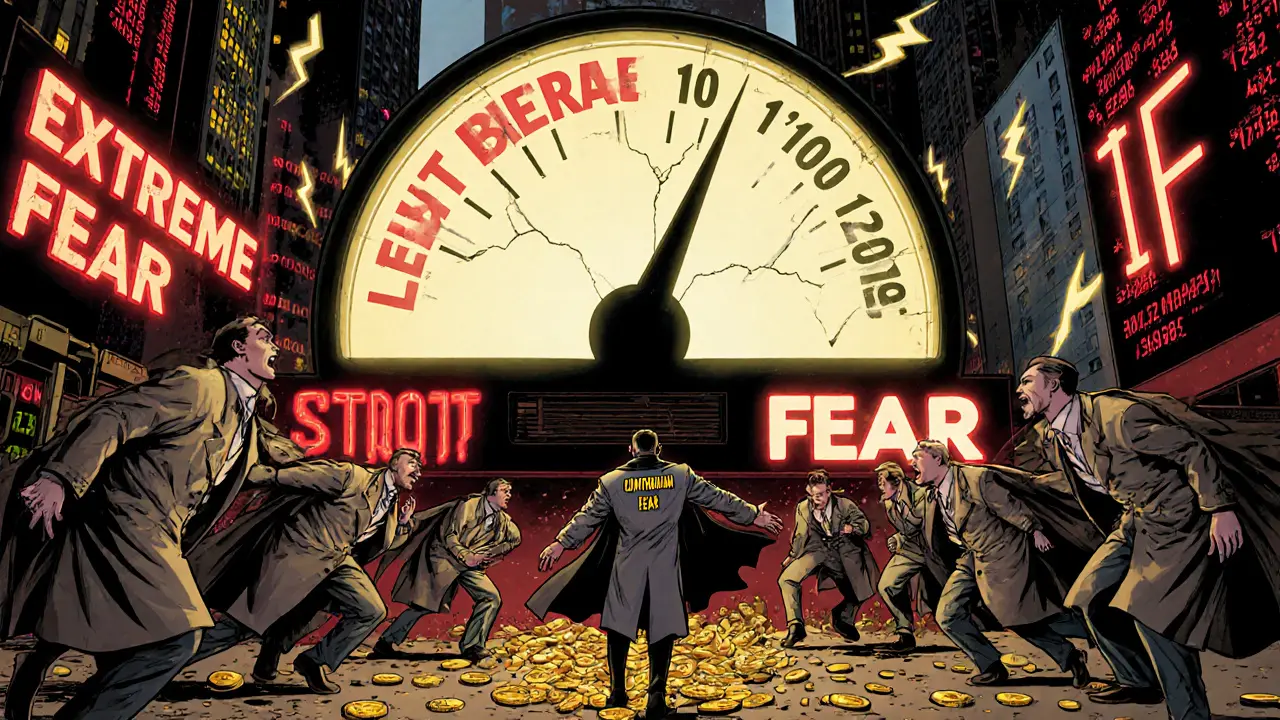
The Fear and Greed Index measures investor emotion in crypto and stock markets, helping you spot when crowds are overreacting. Learn how to use it as a contrarian tool - not a trading signal.
 Cryptocurrency Guides