
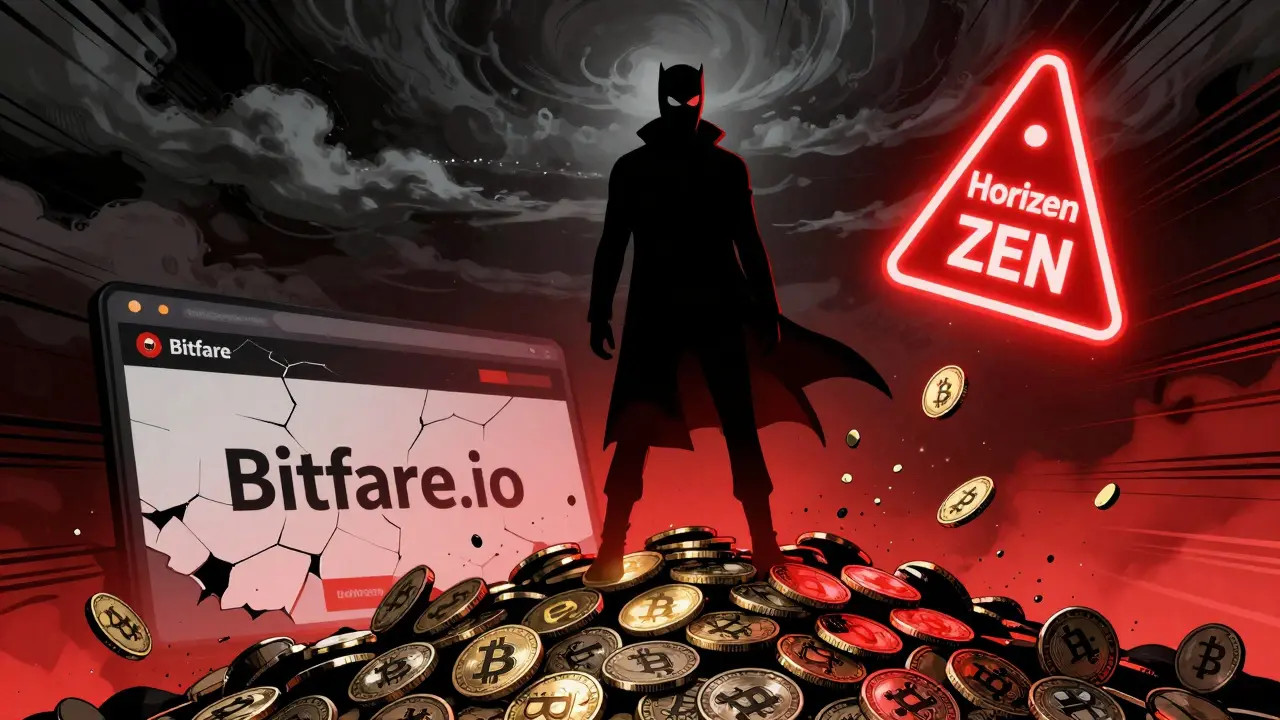
When you’re looking for a new crypto exchange, you want safety, transparency, and reliability. You don’t want to risk your money on a platform that might vanish overnight. That’s exactly what happened with Bitfare - a crypto exchange that appeared in late 2022 and disappeared under a cloud of serious allegations.
Why Bitfare Raised Immediate Red Flags
Bitfare.io launched in September 2022, claiming to offer trading for dozens of cryptocurrencies against six base pairs: BTC, ETH, BSV, USDT, USDC, and TRX. At first glance, it looked like any other exchange - a simple website, a list of coins, a trading interface. But within months, serious warnings started appearing. The biggest red flag came from Horizen, the team behind the ZEN cryptocurrency. On July 17, 2023, Horizen issued a public warning: "Do not send ZEN, or any other cryptocurrency, to Bitfare.io or attempt to utilize any other services it might offer." This wasn’t a vague rumor. It was a direct, official statement from a legitimate blockchain project with a real token and a track record. Why does this matter? Because Horizen doesn’t make accusations lightly. They have a vested interest in protecting their users. If Bitfare had been a legitimate partner or even a mistaken listing, they would have reached out for clarification. Instead, Bitfare stayed silent for 48 hours - the exact window Horizen noted as suspicious. No response. No explanation. No apology. Just silence.No Regulation, No Transparency, No Trust
Legitimate crypto exchanges don’t operate in the shadows. They publish their licenses, security audits, and proof-of-reserves. Bitfare published none of it. Compare this to bitFlyer, which holds full licenses to operate in the U.S., EU, and Japan. Or Bitfinex, which has been running since 2012 and maintains clear regulatory compliance across multiple jurisdictions. Even platforms like BYDFi, which serve over a million users globally, publish regular security reports and user testimonials. Bitfare? Nothing. No regulatory body has ever listed it. No third-party auditor has verified its reserves. No user reviews exist on Trustpilot, CryptoSlate, or Reddit. No customer support channels were ever confirmed. The company claimed to be headquartered in Wellington, New Zealand - but no business registry entry matches that address. No phone number. No physical office. No employees listed. This isn’t negligence. This is a classic scam pattern: create a professional-looking website, attract deposits, then disappear.The Silence That Speaks Volumes
When a legitimate exchange faces an accusation, they respond. Fast. Bittrex Global, even as it entered liquidation in 2024, kept users updated with clear timelines - like their February 25, 2025 announcement about restoring withdrawals for users in Liechtenstein. Bitfare didn’t do that. After Horizen’s warning, there was no update. No blog post. No tweet. No email to users. Just radio silence. That silence tells you everything. If you’re running a real business, you defend your reputation. If you’re running a scam, you cut your losses and vanish.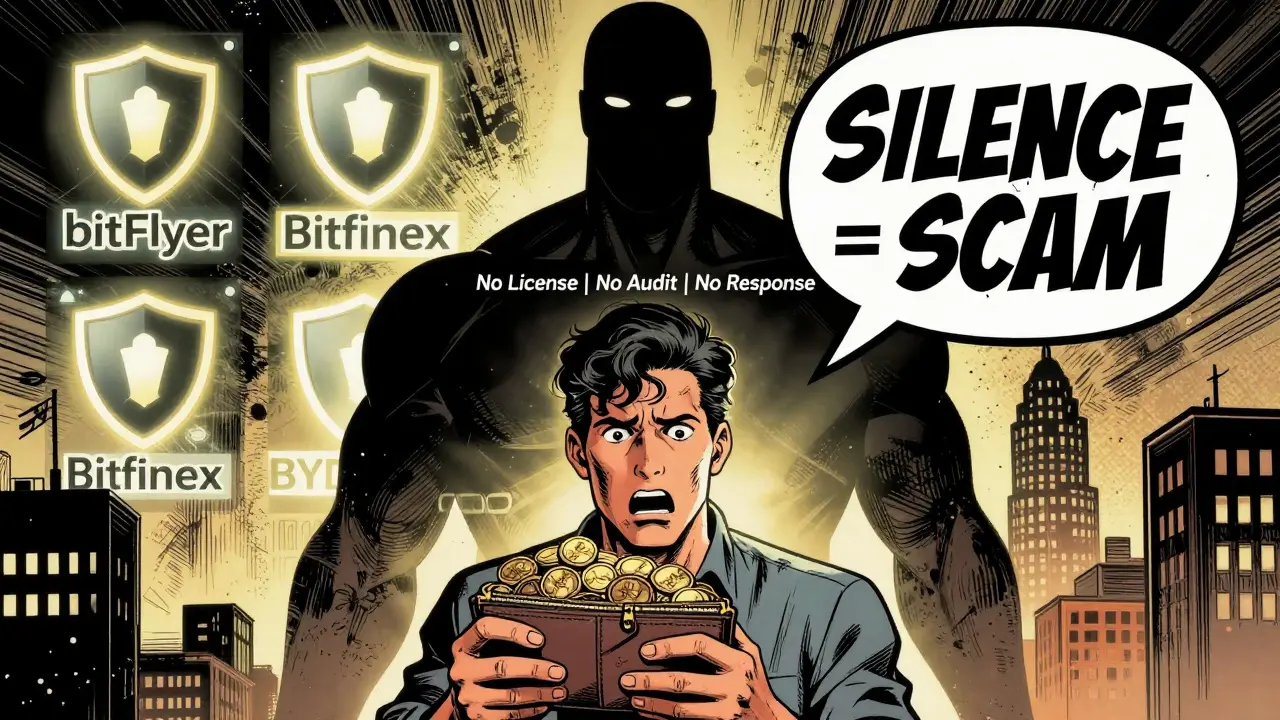
No Users, No Volume, No History
You can’t fake a user base. Real exchanges have thousands of active traders, real transaction volumes, and public trading history. Bitfare had none of it. There are no verified user testimonials. No Reddit threads discussing trading experiences. No YouTube videos showing how to withdraw funds. No Twitter followers reacting to market moves. Even scam platforms usually have at least a few users who post complaints - but Bitfare’s name doesn’t appear in any credible forum or review site. The absence of data isn’t an oversight. It’s a sign the platform never had real users. Or, if it did, they lost their funds and moved on - quietly.What Happened to Bitfare?
As of early 2026, the Bitfare.io website is either offline or redirects to a placeholder page. The domain may still be registered, but it’s not functioning as an exchange. There are no recent updates, no social media activity, and no customer service replies. This fits the pattern documented by Chainalysis and CipherTrace: 85% of fraudulent crypto exchanges shut down within six months of launch. Bitfare lasted about 10 months - longer than most, but still within the expected window. The $3.78 billion in cryptocurrency fraud losses in 2022 didn’t come from well-known exchanges. They came from platforms like Bitfare - flashy websites, fake testimonials, and no accountability.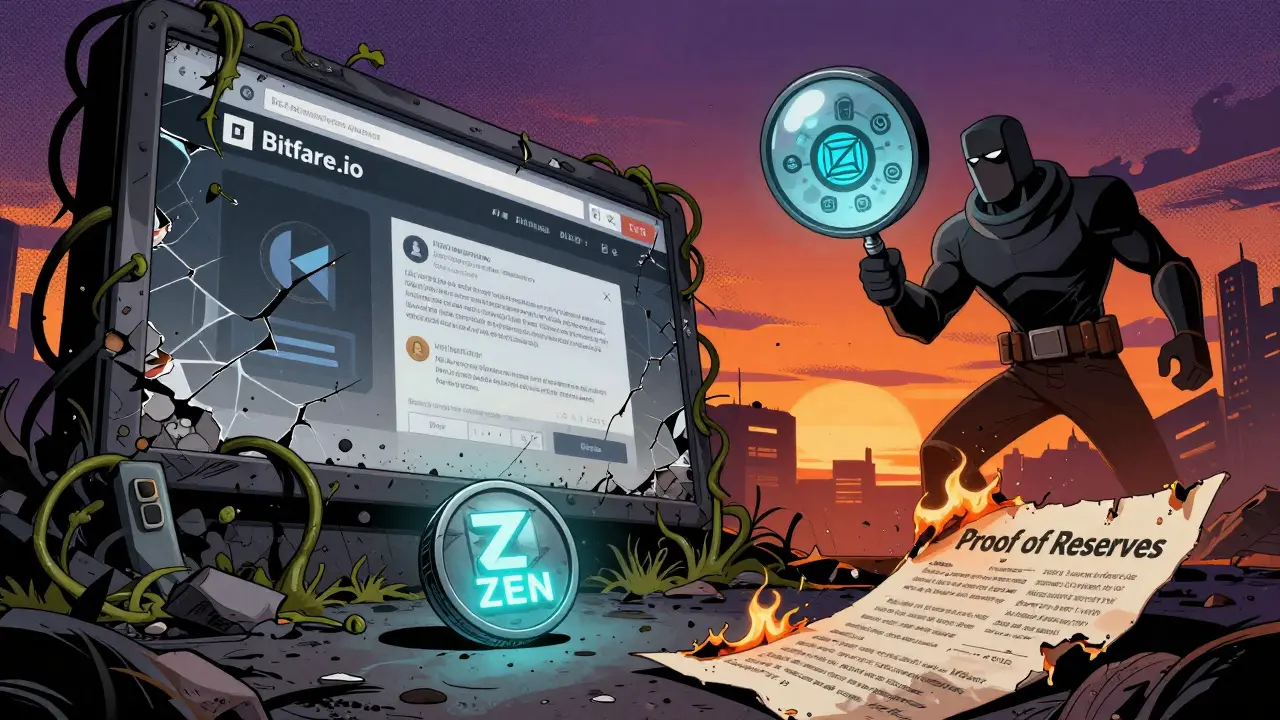
How to Avoid Bitfare-Like Scams
If you’re shopping for a crypto exchange today, here’s what to check before depositing a single coin:- Verify licenses - Does the exchange hold official registrations in the U.S., EU, UK, or Japan? Check their website’s legal section.
- Look for proof-of-reserves - Legit exchanges publish on-chain audits showing they hold all user funds. Bitfare never did.
- Check for third-party security audits - Companies like CertiK or Hacken audit exchanges. If it’s not listed, walk away.
- Search for user reviews - Look on Trustpilot, Reddit, and specialized forums. If you find zero real reviews, that’s a red flag.
- Watch for official warnings - If a major crypto project like Horizen, Chainlink, or Uniswap warns users against a platform, take it seriously.
Final Verdict: Avoid Bitfare Completely
Bitfare isn’t just risky - it’s confirmed as a suspected scam. The warning from Horizen, the lack of any response, the absence of regulation, and the total lack of user data all point to one conclusion: this was never a real exchange. It was a front to collect cryptocurrency from unsuspecting users. Even if the website comes back online tomorrow, treat it with extreme caution. The same team could be rebranding under a new name - a common tactic in crypto scams. Stick to exchanges with a proven track record. Use platforms that are transparent, regulated, and accountable. Your funds are too valuable to gamble on a name you can’t verify.Is Bitfare a legitimate crypto exchange?
No, Bitfare is not legitimate. In July 2023, Horizen - the team behind the ZEN cryptocurrency - issued a public warning stating Bitfare appeared to be running a fraudulent service. Bitfare never responded to the allegations, and no verifiable regulatory, security, or user data exists for the platform. It is considered a suspected scam.
What happened to Bitfare after the warning?
After Horizen’s warning in July 2023, Bitfare disappeared from public communication. No updates, no customer support, no response to media inquiries. By early 2024, the website became unreliable or inactive. As of 2026, the domain is either offline or non-functional, which aligns with the typical behavior of fraudulent crypto exchanges that vanish after collecting funds.
Can I trust Bitfare if it comes back online?
No. Even if the Bitfare website reappears, it should not be trusted. Scam platforms often rebrand under new names or revive old domains to lure back users. The original Bitfare had no licenses, no audits, no user base, and no response to serious allegations. Reappearing doesn’t fix those facts. Always verify new platforms through independent sources before depositing funds.
Which exchanges are safer alternatives to Bitfare?
Safer alternatives include bitFlyer, which holds licenses in the U.S., EU, and Japan; Bitfinex, which has operated since 2012 with full regulatory compliance; and BYDFi, which serves over a million users globally and publishes regular security audits. These platforms provide proof-of-reserves, third-party audits, and responsive customer support - all missing from Bitfare.
How do I know if a crypto exchange is a scam?
Look for these red flags: no regulatory license, no proof-of-reserves, no third-party security audits, no user reviews on trusted platforms, silence after public warnings, and a lack of transparent contact information. If an exchange can’t answer basic questions about its operations, walk away. Legitimate exchanges don’t hide - they publish.
 Cryptocurrency Guides
steven sun
January 21, 2026 AT 18:28Tammy Goodwin
January 22, 2026 AT 09:54Margaret Roberts
January 22, 2026 AT 12:54carol johnson
January 24, 2026 AT 08:29Jessica Boling
January 24, 2026 AT 15:03Harshal Parmar
January 25, 2026 AT 06:32Steve Fennell
January 25, 2026 AT 13:45Kevin Pivko
January 27, 2026 AT 00:21Shamari Harrison
January 28, 2026 AT 20:28Roshmi Chatterjee
January 30, 2026 AT 14:30Catherine Hays
February 1, 2026 AT 03:24Mathew Finch
February 3, 2026 AT 00:36Darrell Cole
February 3, 2026 AT 16:42Dave Ellender
February 4, 2026 AT 02:46