
Deflationary Crypto: How Scarce Tokens Drive Value and Why Most Fail
When you hear deflationary crypto, a cryptocurrency designed to reduce its total supply over time through burning or locking tokens. Also known as token burn models, it's the idea that making a coin rarer will make it more valuable—like gold, but digital. Sounds simple, right? But here’s the truth: almost every token that claims to be deflationary is just marketing noise. Real scarcity isn’t about burning 0.1% of supply every month. It’s about whether the token actually loses coins from circulation in a way that changes market dynamics.
Most deflationary tokens don’t even come close. They burn a few coins here and there, but the total supply is still billions—meaning the burn has zero real impact. Compare that to Bitcoin, which has a hard cap of 21 million and no way to create more. That’s scarcity. Or look at BNB, which burns tokens quarterly based on trading volume. Those burns are tied to real usage, not just code. That’s what matters. tokenomics, the economic design behind a cryptocurrency’s supply, distribution, and incentives isn’t just a buzzword—it’s the foundation. If the token’s value relies on burning instead of demand, it’s a house of cards. And if the team can mint more tokens anytime, it’s not deflationary at all—it’s a trick.
Then there’s crypto inflation, the process of increasing a cryptocurrency’s supply over time, often through mining rewards or staking payouts. Most coins are inflationary by design—Ethereum, Solana, even Dogecoin. They’re meant to circulate, not hoard. But the market doesn’t care about that. It cares about what’s happening to supply and demand right now. If a deflationary token has no users, no utility, and no trading volume, burning 100 coins a day won’t save it. That’s why 98% of deflationary tokens crash within a year. The ones that survive? They solve real problems. CargoX uses CXO to pay for shipping docs. Bless rewards you for sharing idle computer power. These aren’t tokens that burn—they’re tokens that get used.
You’ll find posts here that cut through the hype. You’ll see how Baby Doge Billionaire (BABYDB) is a fake with zero supply, how MDX has no airdrop but real liquidity mining, and why Upbit could face a $34 billion fine for not verifying users. You’ll learn how Thailand and India are cracking down on crypto, how China still trades despite the ban, and why Norway is blocking new mining farms to save renewable energy. None of these are about burning tokens. They’re about real rules, real risks, and real value. Deflationary crypto isn’t a magic bullet. It’s a tool—and only a few are using it right. What follows isn’t a list of tokens that promise to go to the moon. It’s a list of what actually works, what’s a scam, and why most people lose money chasing the wrong kind of scarcity.
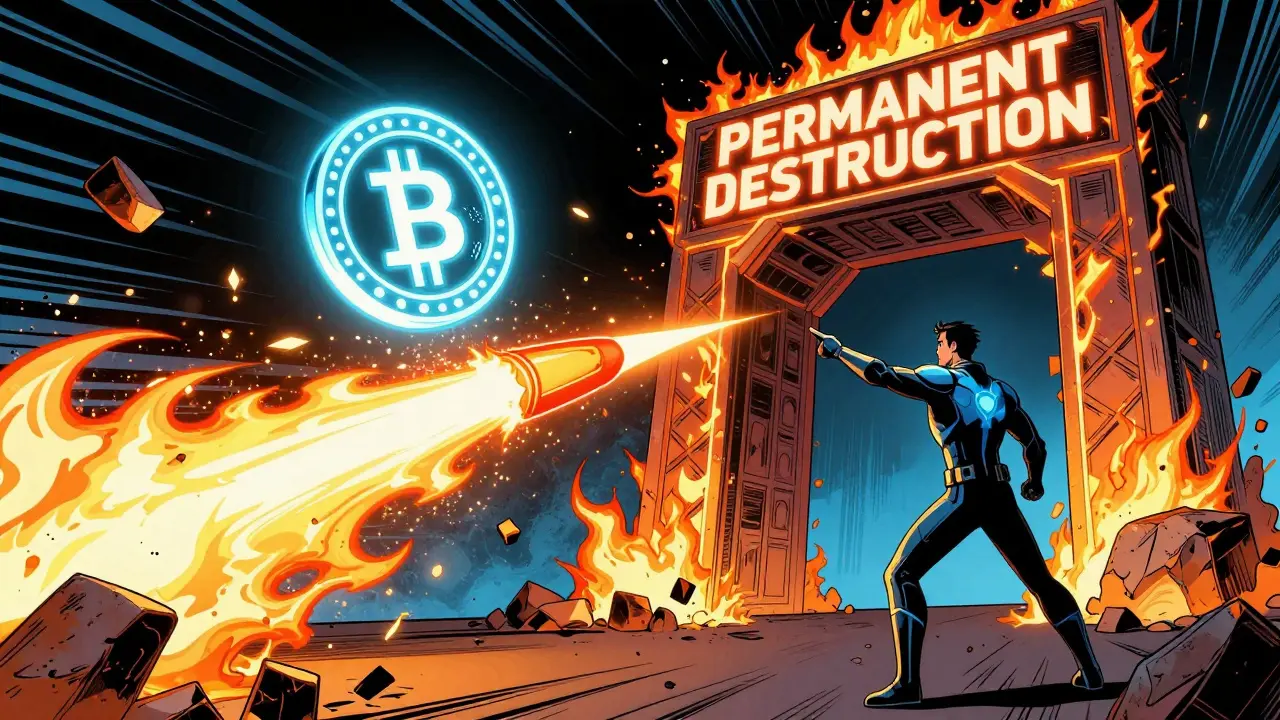
Token burning permanently removes crypto tokens from circulation, reducing supply and increasing scarcity. This drives value, controls inflation, boosts staking rewards, and builds investor trust. Projects like BNB and Terra have proven its impact.
 Cryptocurrency Guides