
Crypto Sentiment: What Moves Markets and How to Read the Noise
When you hear traders talk about crypto sentiment, the collective mood of investors driving cryptocurrency prices up or down, often independent of fundamentals. Also known as market psychology, it’s what turns a quiet Bitcoin dip into a panic sell-off—or a meme coin with no code into a 10x rally. It’s not about charts or whitepapers. It’s about fear, FOMO, and the echo chamber on Twitter, Telegram, and Reddit.
Investor behavior, how people actually act under pressure, not what they say they’ll do is messy. Look at Upbit’s $34 billion fine: regulators didn’t punish them for bad tech—they punished them for ignoring how users felt unsafe. Or take Cuba, where people use Bitcoin not because they love crypto, but because banks shut them out. Sentiment here isn’t speculative—it’s survival. Meanwhile, in India, a 30% tax doesn’t stop trading. People keep buying because the sentiment says: "This is my only shot."
Market psychology, the hidden force behind crypto’s wild swings is why RichQUACK’s airdrop hype exploded even though the token had no real utility. It’s why PSUB crashed 99.8% after a flashy launch—no one believed in it. And it’s why Norway wants to ban new mining: the sentiment around energy waste is stronger than the profit motive. Sentiment doesn’t care if something is "real." It cares if enough people believe it will go up.
What you’ll find below isn’t a list of opinions. It’s a collection of real cases where sentiment drove decisions—sometimes wisely, often dangerously. From North Korea cashing out stolen crypto to Chinese traders bypassing bans with P2P apps, these stories show how emotion, not economics, runs the show. You’ll see how fake exchanges like Bitsoda thrive because they exploit fear and greed. You’ll learn why BitMEX appeals to pros not for its features, but because it lets them bet big when the crowd is panicking. And you’ll understand why a token like CargoX, solving real shipping problems, barely moves the needle while Banana Gun bots trend because they promise quick wins.
There’s no magic formula to read crypto sentiment. But if you know where to look—what triggers panic, what fuels hype, and who benefits from the noise—you stop being a follower and start being a watcher. The market doesn’t move on data. It moves on belief. And belief? That’s something you can learn to spot.
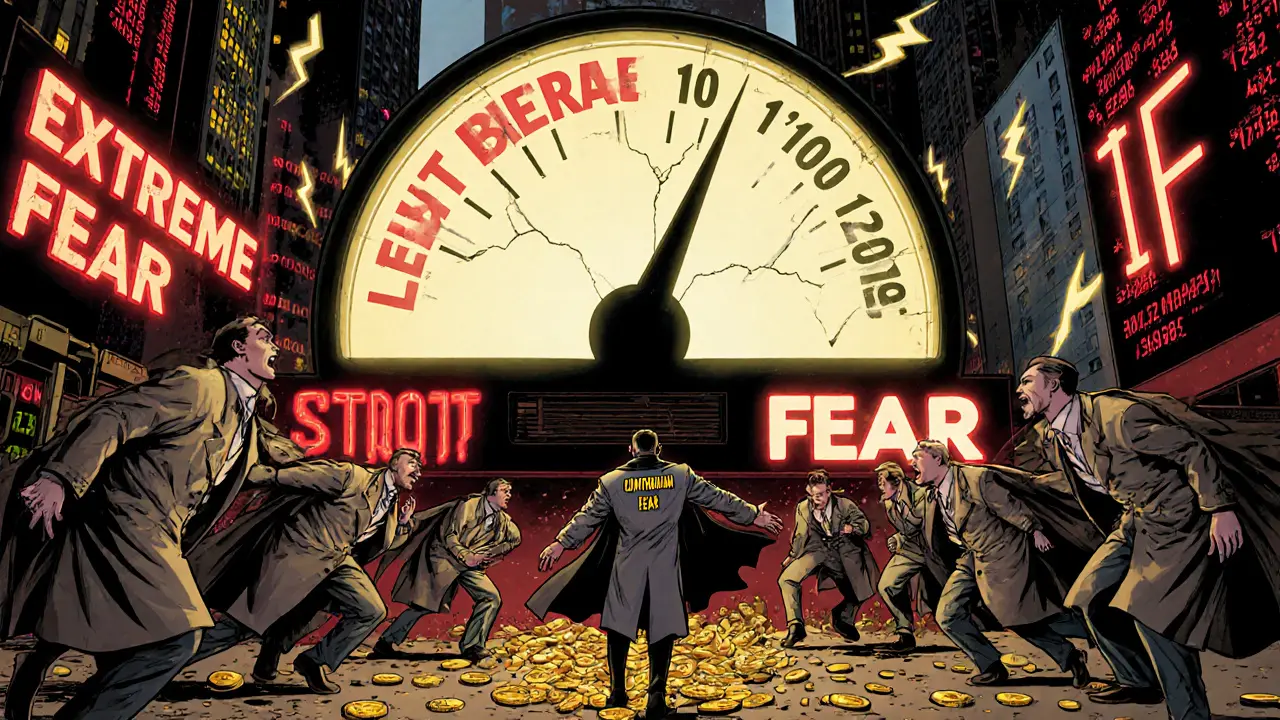
The Fear and Greed Index measures investor emotion in crypto and stock markets, helping you spot when crowds are overreacting. Learn how to use it as a contrarian tool - not a trading signal.
 Cryptocurrency Guides