
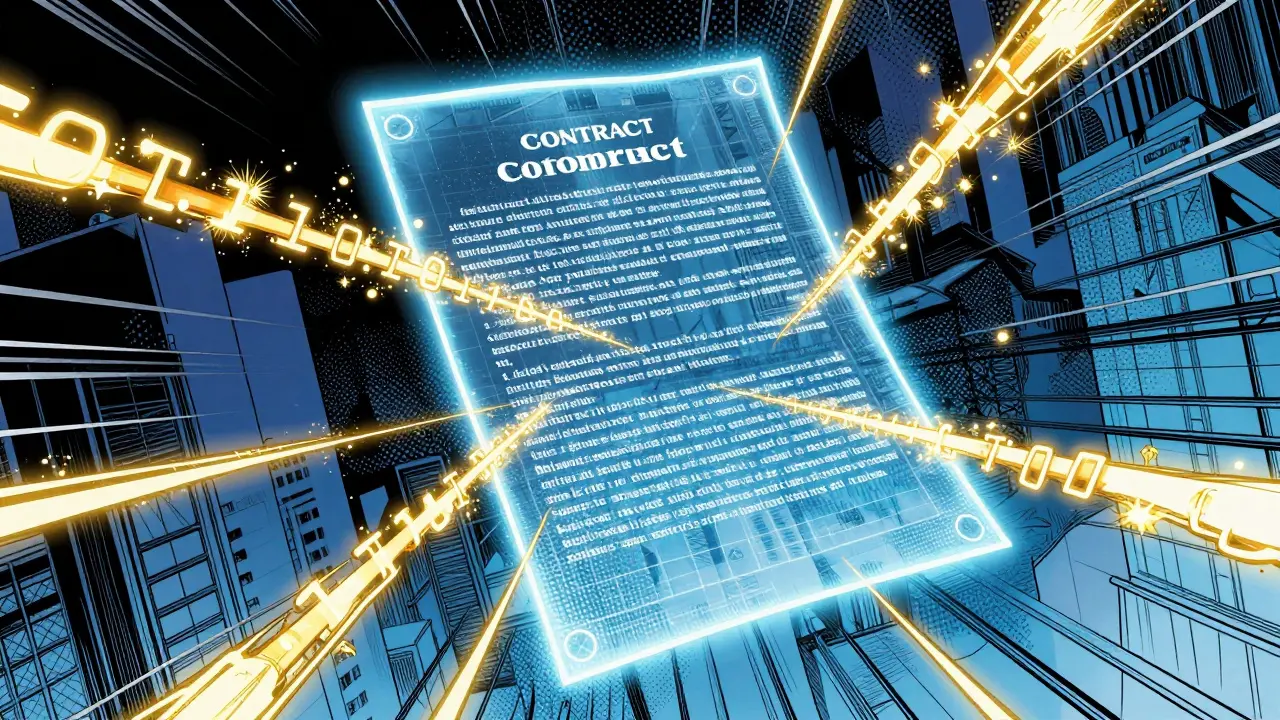
| Feature | Traditional Contract | Smart Contract |
|---|---|---|
| Execution | Manual / Legal Process | Automatic / Code-based |
| Trust Model | Third-party (Lawyer, Notary) | Cryptographic Proof |
| Speed | Days to Weeks | Near-Instant |
| Cost | High (Middleman fees) | Low (Network fees) |
Cutting the Red Tape in Real Estate
Real estate is famously slow. Between escrow agents, title companies, and mountains of paperwork, buying a home feels like a full-time job. Smart contracts flip this script by automating the most tedious parts of the process. In a blockchain-based system, a property sale can be programmed so that funds are released to the seller only when specific conditions are met: the digital signature is verified, the title search is clear, and the home inspection is uploaded as "passed." This removes the need for a central escrow agent to manually verify documents. Platforms like Propy are already doing this, recording deeds on-chain to make ownership transfers as easy as sending an email. Beyond just selling, we're seeing the rise of Tokenization, which is the process of dividing a physical asset into digital tokens. Instead of needing $500,000 to invest in a rental property, you could buy a token representing 1% of that building. This opens up high-value investing to regular people, not just the ultra-wealthy.Parametric Insurance: No More Waiting for Claims
Traditional insurance is a headache. You file a claim, an adjuster visits the site, and you wait weeks for a check. Parametric Insurance changes this by paying out based on a pre-defined event rather than a manual assessment of damage. This requires Oracles, which are services that feed real-world data (like weather or flight status) into a blockchain. For example, a farmer in a developing nation can buy crop insurance that uses Chainlink to monitor rainfall data from the National Oceanic and Atmospheric Administration (NOAA). If the rainfall drops below a certain millimeter threshold, the smart contract triggers an immediate payout. The farmer doesn't have to file a claim or prove their loss; the data speaks for itself. Similarly, flight insurance has become a primary example of this efficiency. Protocols like Etherisc can track flight data in real-time. If your flight is delayed by more than two hours, the contract automatically sends the compensation to your wallet. No phone calls, no forms, no arguing with airline staff.Fixing the Blind Spots in Supply Chains
If you've ever wondered if your "organic" coffee is actually organic, you're dealing with a supply chain opacity problem. Most companies have no real way to track a product's journey from a farm in Ethiopia to a shelf in Auckland. Smart contracts create an immutable ledger where every hand-off is recorded. When a shipment of medicine moves from a factory to a cold-storage truck, the smart contract can verify that the temperature remained below 4°C. If the temperature spikes, the contract can automatically flag the batch as spoiled and halt payment to the shipper. This transparency kills the counterfeit market. Since every legitimate item has a digital twin on the blockchain, a luxury handbag without a corresponding blockchain history is immediately obvious as a fake. It moves the industry from "trust me" to "verify it."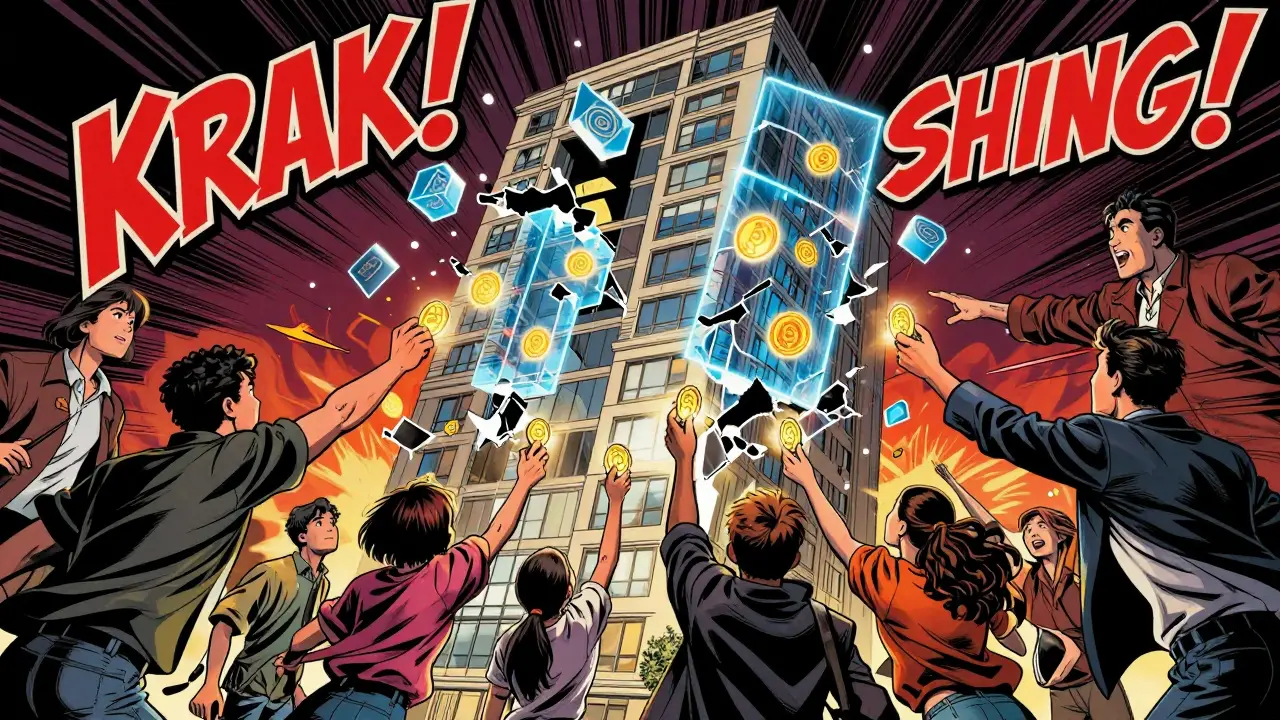
The New Energy Economy: Peer-to-Peer Trading
Why should you have to sell your excess solar energy back to a massive utility company at a discount? Smart contracts enable a peer-to-peer (P2P) energy market. Using platforms like Power Ledger, your solar panels can be linked to a smart contract that automatically sells excess electricity to your neighbor. When your neighbor's smart meter detects a need for power and your system has a surplus, the trade happens instantly. The payment is handled by the contract, and the energy flows through the existing grid. This decentralizes power production and gives homeowners a direct financial incentive to go green without needing a corporate middleman to manage the billing.Digital Identity and the End of Passwords
We are tired of creating 50 different accounts for every service we use. Decentralized Identity (DID) is a framework that allows users to own and control their personal identity data without a central authority. Instead of a company like Google or Facebook owning your identity, a smart contract stores your verified credentials. When you need to prove you are over 21 or have a certain credit score to get a loan, you don't send a PDF of your passport or a bank statement. Instead, the smart contract provides a "zero-knowledge proof"-it tells the requester "Yes, this person meets the criteria" without revealing your actual birthdate or account balance. This balances the need for verification with the right to privacy.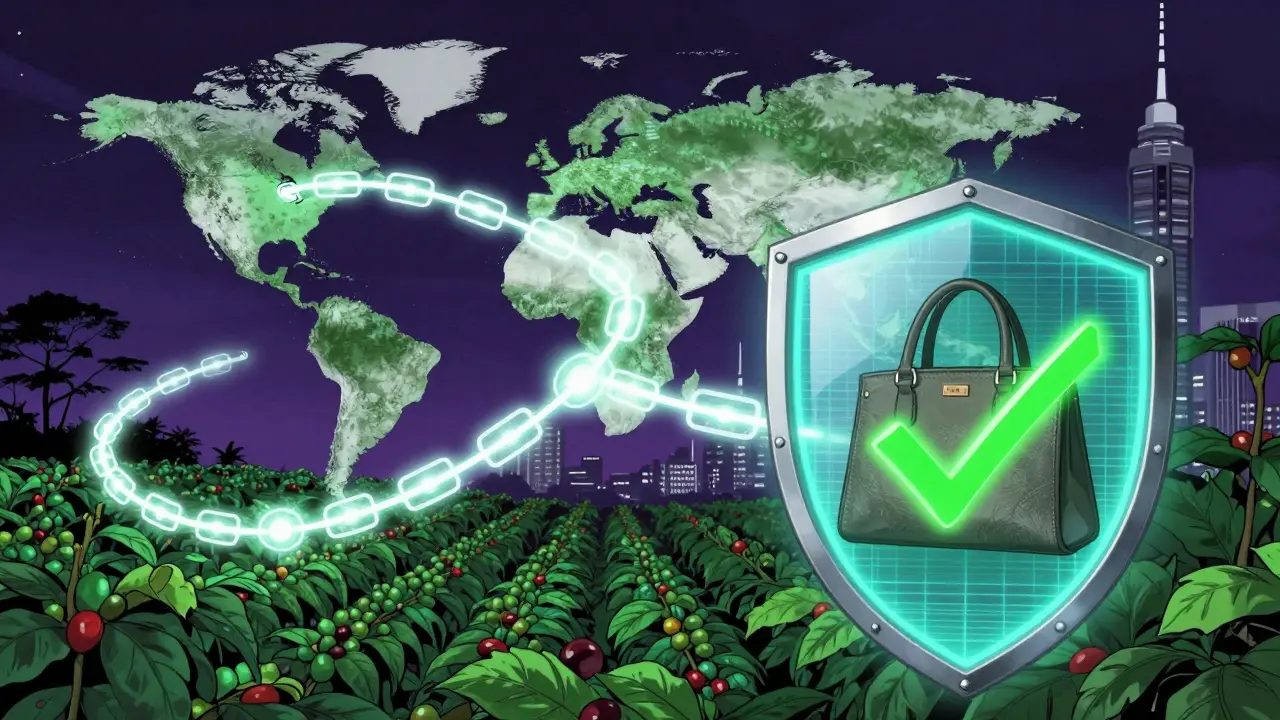
Creative Rights and Automated Royalties
Musicians and artists have historically been cheated by labels and streaming platforms. A lot of the money gets lost in administration or stays with the distributor. Smart contracts can automate royalty payments so that the creator gets paid the moment a song is played. By using NFTs (Non-Fungible Tokens), artists can program a "secondary sale royalty." This means that if a digital painting is sold from Collector A to Collector B, the original artist automatically receives a percentage of that sale. This is a massive shift in the creative economy, ensuring that as an artist's value grows, they actually benefit from it in real-time.Overcoming the Hurdles to Mainstream Adoption
If this all sounds so great, why isn't every contract a smart contract? There are a few big roadblocks. First, there's the "Oracle Problem." A smart contract is only as good as the data it receives. If a faulty sensor tells a contract that it rained when it didn't, the contract will still pay out. We need highly redundant, decentralized data sources to prevent this. Then there is the legal gray area. Most courts aren't equipped to handle a dispute where the "contract" is a piece of code that cannot be changed (immutable). If there's a bug in the code, you can't just call a lawyer to rewrite the agreement; the code is law. Lastly, scalability is an issue. While networks are getting faster, processing millions of real estate deeds or energy trades per second requires "Layer 2" solutions-secondary frameworks that handle the heavy lifting off the main chain to keep costs low and speeds high.Do smart contracts replace lawyers?
Not entirely. While they automate execution and verification, lawyers are still needed to draft the logic and ensure the code reflects the intended legal intent. Smart contracts handle the "how" of the agreement, but humans still need to decide the "what."
Are smart contracts actually secure?
They are secure from a data-tampering perspective because they are immutable. However, they are vulnerable to coding errors. If the developer leaves a bug in the script, a hacker could exploit it. This is why professional security audits are mandatory for high-value contracts.
What is the difference between a blockchain and a smart contract?
The blockchain is the database (the ledger) that records everything. A smart contract is a program that lives on that database and executes actions automatically when specific conditions are met.
Can a smart contract be changed once it is deployed?
Standard smart contracts are immutable, meaning they cannot be changed. To update a contract, developers usually deploy a new version and use a "proxy contract" to redirect users to the updated logic.
How do smart contracts help with government voting?
They provide an encrypted, transparent way to count votes that cannot be altered by a central authority. This reduces the risk of ballot stuffing and allows for secure remote voting, though it requires high-level security audits to prevent hacking.
 Cryptocurrency Guides
Candace Sherrard
April 22, 2026 AT 04:33The philosophical implication of "code is law" is actually quite terrifying when you think about the lack of human nuance in legal disputes. We are essentially outsourcing our moral judgment to a deterministic machine that cannot comprehend the spirit of an agreement, only the literal syntax of the script. While the efficiency of a smart contract is undeniable, the danger lies in the erasure of the gray area where most human justice actually resides. If we transition to a world of immutable agreements, we might find that we've traded our flexibility for a cold, algorithmic rigidity that doesn't allow for mercy or contextual understanding. It's a fascinating trade-off between absolute certainty and human empathy, and I suspect we aren't fully prepared for the social fallout when the code fails in a way that is technically correct but morally bankrupt.
Larry Yang
April 24, 2026 AT 00:26The oracle problem is basiclly the entire reason this is still vaporware for most use cases. Just cute that we think a sensor in a field is more trustworthie than a human adjuster.
Jason M
April 25, 2026 AT 03:20THIS IS A TOTAL GAME CHANGER! Imagine the empowerment of a small artist finally getting their fair share without some greedy label skimming off the top! It is absolutely exhilarating to see the walls of the old guard crumbling in real-time! We are witnessing the birth of a new creative era where the power returns to the people who actually do the work!
Liz Ariza
April 26, 2026 AT 11:03The tokenization part is such a vibe ✨ It makes the dream of owning real estate actually possible for people who aren't millionaires! Absolute magic 🌈
Ali Tate
April 27, 2026 AT 02:43finally some tech that actually works for the winners of the world
while the plebs are still filling out paper forms we'll be automating the whole damn planet into submission. american innovation at its peak baby
Matthew Morse
April 28, 2026 AT 11:27real estate is still gonna be a mess regardless of the tech
Mary Tawfall
April 28, 2026 AT 15:33It's so refreshing to see these practical applications. I truly believe this will help so many people in developing nations get fair insurance.
Miranda Jamieson
April 28, 2026 AT 18:45If you actually believe that decentralized identity solves privacy, you're delusional. You're just trading one set of overlords for a bunch of anonymous devs who can't even fix a bug in their own script without crashing the whole system.
Doc Coyle
April 30, 2026 AT 01:57It is simply not right to trust code over people. We are losing our humanity to these machines.
debashish sahu
April 30, 2026 AT 20:20The supply chain transparency would be very beneficial for our agricultural exports here in India.
Sarah Ingrams
May 1, 2026 AT 12:46this sounds so helpful for people who struggle with paperwork
Keith Garcia
May 2, 2026 AT 18:50The sheer audacity to call this "invisible infrastructure" when the UX is still a nightmare for anyone with a brain 🙄 It's a quaint little dream for the technologically optimistic, but let's be real: the average person can't even manage a password, let alone a private key 🤡 Absolute comedy.
Gloris Young
May 4, 2026 AT 08:05P2P energy trading is a great way to help the environment!
Tara Aman
May 5, 2026 AT 17:06I'm totally on board with this! Let's push for more automation to get rid of these useless middlemen!
Yvette P
May 6, 2026 AT 16:41Oh sure, let's just trust a bunch of "immutable" scripts to handle our legal deeds. I'm sure the synergistic integration of Layer 2 scaling solutions will definitely solve the catastrophic failure points of a decentralized oracle network before the entire system collapses under the weight of its own buzzwords. Truly a masterpiece of techno-optimism if you ignore every single historical precedent of software failure in critical infrastructure.
Guy Bianco
May 8, 2026 AT 04:12I would suggest that newcomers focus on the educational aspects of these contracts. :)
Paige Raulerson
May 8, 2026 AT 05:48The section on luxury handbags is a bit quaint. I can't imagine why anyone would actually trust a digital token to verify the authenticity of a Birkin when the physical craftsmanship is the only thing that matters.
Hannah Rubia
May 9, 2026 AT 19:43I believe it would be prudent to consider the regulatory frameworks required before such a system can be fully implemented on a global scale.
Ellie Drews
May 11, 2026 AT 06:11Let's try to keep the conversation positive and focused on how we can help each other learn this stuff.
Kyle Bush
May 13, 2026 AT 04:19USA is gonna dominate this space!! 🇺🇸💥 No one does tech better than us!! Get ready for the revolution!! 🚀🚀🚀
praveen subbiah
May 15, 2026 AT 00:00INDIA WILL LEAD THE WORLD IN BLOCKCHAIN ADOPTION!! 🇮🇳 The scale of our digital transformation is simply breathtaking!! We are the future!!