
Have you ever looked at your wallet balance after paying transaction fees on Ethereum and wondered if there had to be a better way? You are not alone. High gas fees have long been a barrier for everyday users trying to interact with decentralized applications. Enter REI Network, a blockchain platform designed specifically to solve this problem by offering virtually free transactions. But what exactly is it, and is it just another copycat project or something worth your attention?
REI Network is an Ethereum-compatible public blockchain that evolved from an older project called GXChain. Its main selling point is simple: speed and cost. By using a unique staking mechanism to cover resource costs, REI allows users to send transactions without paying traditional gas fees. This makes it attractive for developers building DeFi apps, gamers, and anyone who wants to use Web3 tools without worrying about their wallet draining on every click.
From GXChain to REI Network: The Evolution
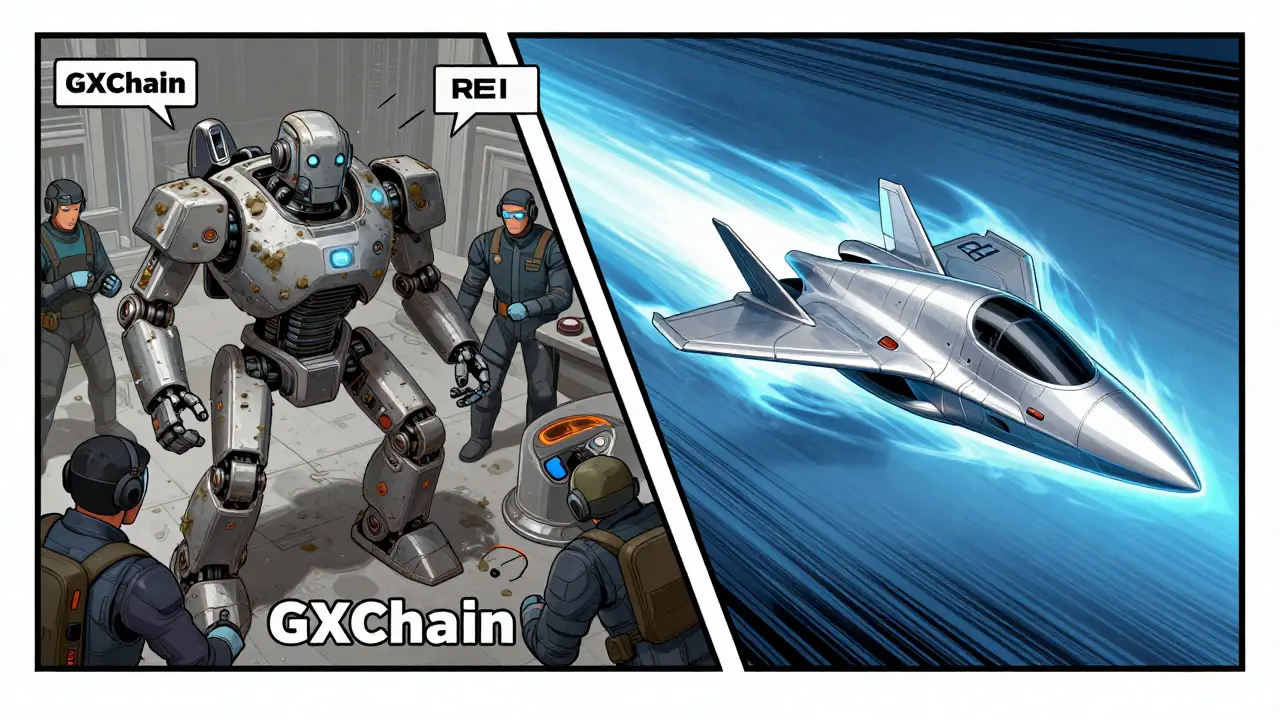
To understand where REI is going, you need to know where it came from. REI Network is not a brand-new concept built from scratch; it is a complete rebuild of GXChain. Originally launched as a high-performance blockchain, GXChain struggled with branding and market adoption despite having solid technology. In 2024, the team decided to rebrand and restructure the entire network into REI Network.
This wasn't just a name change. It was a strategic shift to align with modern blockchain trends. The goal was to create a lightweight, easy-to-use framework that could compete with giants like Ethereum and Binance Smart Chain but without the complexity or cost. The transition involved converting old tokens to new ones, updating the codebase for better performance, and focusing heavily on developer experience.
If you held GXC tokens before, you might remember the conversion ratio. Each GXC token converted to 10 REI tokens. This one-to-ten swap ensured existing holders maintained their stake in the ecosystem while giving the new brand a fresh start. For newcomers, this history matters because it shows the project has survived multiple market cycles and pivoted successfully when needed.
How Does REI Network Work? The Tech Behind the Speed
The magic of REI lies in its technical architecture. At its core, REI Network is fully compatible with the Ethereum Virtual Machine (EVM). What does this mean for you? It means any decentralized application (dApp) built for Ethereum can be moved to REI Network with minimal changes. Developers don't need to learn a new programming language or rewrite their smart contracts from scratch.
But compatibility isn't enough. Performance is key. REI boasts an average block time of just three seconds. Compare that to Ethereum's variable block times which can stretch during congestion, and you see why speed matters. The network handles over 3,000 transactions per second (TPS). While this might not beat some Layer-1 competitors like Solana, it is more than enough for most DeFi and gaming applications.
The standout feature, however, is the fee structure. Traditional blockchains charge "gas" fees to validators for processing transactions. REI eliminates this friction through a free gas system. Here is how it works: users stake REI tokens to become validators or vote for them. These staked tokens cover the computational resources needed for the network. As a result, end-users can execute transactions with zero direct fees. This model lowers the barrier to entry significantly, allowing micro-transactions and frequent interactions that were previously too expensive.
Tokenomics: Supply, Staking, and Rewards
Understanding the economics of a cryptocurrency is crucial before investing. REI Network has a fixed total supply of 1 billion REI tokens. Currently, about 950 million to 980 million tokens are in circulation, depending on the data source. This high percentage of circulating supply means inflationary pressure is low, as most tokens are already available in the market.
So, why would you hold REI? One major incentive is staking rewards. If you lock up your tokens to support the network, you can earn an Annual Percentage Rate (APR) of up to 10%. This is competitive compared to traditional savings accounts and many other proof-of-stake cryptocurrencies. Additionally, stakers get priority access to network resources and governance rights.
Let's look at the numbers closely:
- Total Supply: 1,000,000,000 REI
- Circulating Supply: ~950,000,000 - 980,000,000 REI
- Staking APR: Up to 10%
- Utility: Governance, staking, and covering network resources
This structure encourages long-term holding rather than quick flipping. When users stake their tokens, they reduce the sell pressure on exchanges, which can help stabilize the price. However, remember that staking locks your funds for a period, so liquidity is not immediate.
Market Performance and Price Analysis
As of late May 2026, REI trades in a relatively narrow range between $0.015 and $0.016. This price point reflects a mature phase for the token after significant volatility in previous years. To put this in perspective, REI reached its all-time high of $0.3575 in March 2024. Since then, it has corrected sharply, hitting an all-time low of $0.01341 in June 2025. The current price represents a recovery of about 17% from that bottom.
Market capitalization sits around $15 million. While this is small compared to top-tier cryptos like Bitcoin or Ethereum, it indicates a niche but active community. The daily trading volume fluctuates between $800,000 and $1 million, suggesting moderate liquidity. You should be able to buy or sell reasonable amounts without causing massive slippage, but large institutional moves could still impact the price significantly.
| Metric | Value |
|---|---|
| Current Price | $0.0152 - $0.0158 |
| Market Cap | ~$15 Million |
| All-Time High | $0.3575 (March 2024) |
| All-Time Low | $0.01341 (June 2025) |
| Daily Volume | $825k - $1M |
Price predictions vary widely. Some models suggest REI could reach $0.12 to $0.15 by the end of 2026 if adoption grows. More optimistic long-term forecasts see it potentially touching $0.50 by 2029. However, bearish scenarios warn of drops below $0.005 if interest wanes. Always treat these numbers with caution. Crypto markets are driven by sentiment, macroeconomic factors, and technological developments, none of which are perfectly predictable.
Ecosystem and Partnerships: Building Real-World Use Cases
A blockchain is only as good as the applications running on it. REI Network has focused on expanding its ecosystem across three main sectors: Decentralized Finance (DeFi), Gaming (GameFi), and Non-Fungible Tokens (NFTs). Because of its EVM compatibility, developers can port popular dApps from Ethereum easily. This creates a vibrant environment for users who want to trade, lend, borrow, or play games without high fees.
Partnerships play a huge role in this growth. REI has collaborated with several innovative companies:
- TAN: Enhancing blockchain efficiency and cross-platform collaboration.
- InfluxAI: Providing Web3 security solutions to protect user assets.
- CrossFi: Bridging the gap between fiat currency and cryptocurrency, making onboarding easier for non-crypto natives.
- PathPulse AI: Implementing blockchain solutions for smart cities, showing potential beyond finance.
These collaborations signal that REI is not just sitting idle. They are actively seeking ways to integrate into broader digital infrastructure. For example, the CrossFi partnership could allow users to pay for goods with credit cards and instantly receive REI, removing the hassle of buying crypto on exchanges first.
Governance: How REI DAO Works
Decentralization is a core value of blockchain, and REI embodies this through its REI DAO (Decentralized Autonomous Organization). Unlike centralized companies where a CEO makes decisions, REI's future is shaped by its community. Token holders can participate in governance by voting on proposals related to network upgrades, fund allocation, and partnership approvals.
You don't need to be a developer to contribute. There are roles for everyone:
- Validators: Run nodes to secure the network and process transactions.
- Voters: Stake tokens to vote for validators and earn rewards.
- Proposers: Submit ideas for new features or improvements.
This democratic approach ensures that the network evolves according to what the community actually wants, rather than what a single entity dictates. It also fosters loyalty, as stakeholders feel a sense of ownership over the project's success.
Is REI Network Right for You?
So, should you invest in or use REI Network? It depends on your goals. If you are a developer looking for a fast, cheap place to deploy EVM-based apps, REI is a strong candidate. The zero-fee model is a massive advantage for testing and launching products. If you are a trader, the low market cap offers higher risk but potentially higher reward compared to established coins. The staking yields provide a passive income stream, which appeals to long-term holders.
However, risks exist. The crypto market is volatile, and smaller projects face competition from larger, well-funded chains. Regulatory changes could also impact operations. Always do your own research (DYOR) and never invest more than you can afford to lose. Consider starting with a small amount to test the waters, perhaps by staking a few hundred dollars to see how the rewards work in practice.
Conclusion
REI Network stands out in the crowded blockchain space by prioritizing user experience through speed and zero fees. Its roots in GXChain give it a proven technical foundation, while its EVM compatibility ensures broad developer support. With active partnerships, a clear tokenomic model, and a engaged DAO, REI is positioning itself as a practical solution for everyday Web3 usage. Whether it becomes a household name remains to be seen, but for now, it offers a compelling alternative to expensive legacy networks.
What is the difference between REI Network and Ethereum?
The primary differences are speed and cost. Ethereum often has high gas fees and slower transaction times during peak usage. REI Network offers faster block times (3 seconds vs. Ethereum's variable time) and effectively zero transaction fees for users due to its staking-based resource model. Both are EVM compatible, meaning apps can run on both, but REI is optimized for low-cost, high-throughput interactions.
Can I convert my old GXChain (GXC) tokens to REI?
The conversion from GXC to REI happened during the rebranding in 2024. The ratio was 1 GXC to 10 REI. If you still hold GXC, check with your exchange or wallet provider to see if they support the swap. New investors will only deal with REI tokens.
How do I earn rewards on REI Network?
You can earn rewards by staking your REI tokens. By locking up your tokens to support the network (either as a validator or by voting for one), you can earn up to 10% APR. This rewards long-term commitment and helps secure the network.
Is REI Network safe to use?
Like any blockchain, security depends on how you manage your keys. REI Network itself uses robust consensus mechanisms and partners with security firms like InfluxAI. However, always use reputable wallets, enable two-factor authentication, and beware of phishing scams. The network's open-source nature allows for community audits, enhancing transparency.
Where can I buy REI tokens?
REI is listed on various cryptocurrency exchanges. You can typically find it on platforms that support mid-cap altcoins. Check sites like CoinMarketCap or CoinGecko for the most up-to-date list of supported exchanges. Always verify the contract address to ensure you are buying the correct token.
 Cryptocurrency Guides