
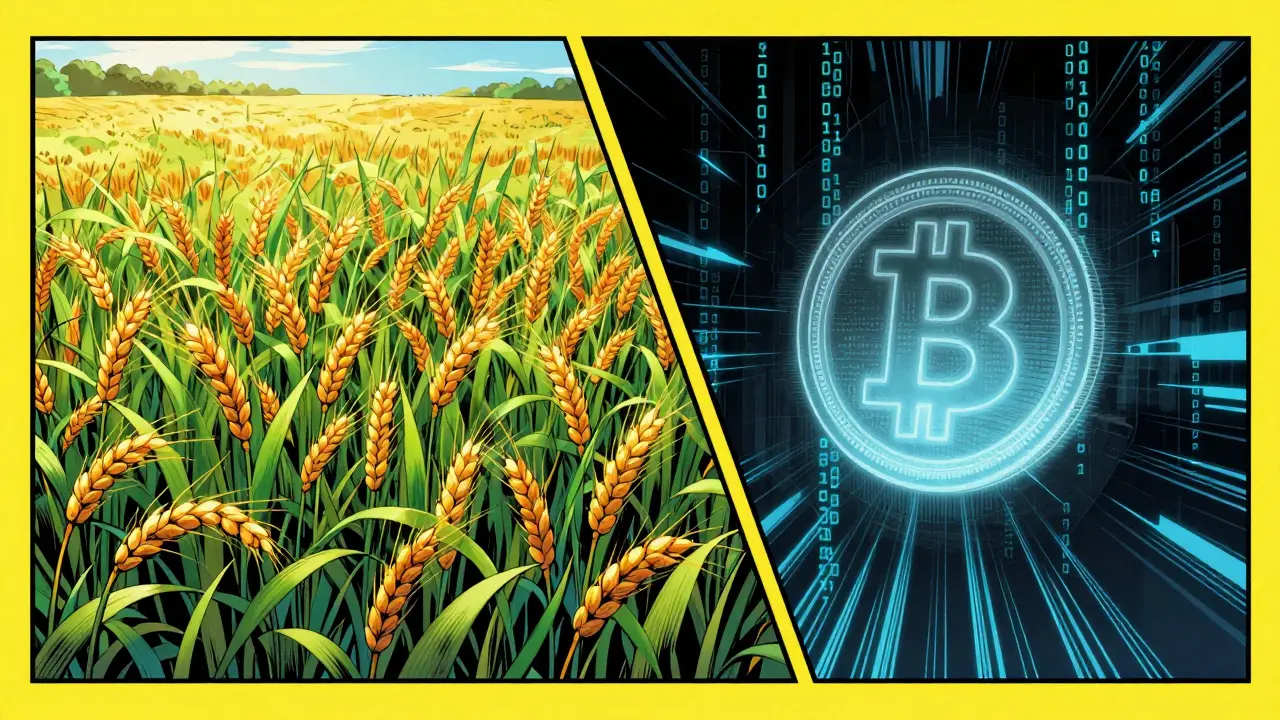
Have you ever stumbled upon a cryptocurrency with a catchy name and a promising mission, only to find that nobody really knows who built it? That is exactly where APF Coin (often traded as APFC) sits right now. It promises to bridge the gap between digital wallets and real-world farm investments, but if you dig into the data, the picture gets complicated fast.
If you are looking for the next Bitcoin or even a solid mid-cap play, APF Coin might not be what you expect. It is a micro-cap token with very limited liquidity, no clear founding team, and sparse technical documentation. But does that mean it is worthless? Not necessarily. For some traders, these obscure tokens offer high-risk opportunities. For others, they are red flags. Let’s break down what APF Coin actually is, how it works, and whether it deserves a spot in your portfolio.
The Core Concept: Crypto Meets Agriculture
At its heart, APF Coin tries to solve a specific problem: bringing stability and real-world value to the volatile world of cryptocurrencies. Most coins exist purely in the digital realm, their value driven by hype or speculation. APF Coin claims to link digital assets with real-world agricultural investments.
Think about it this way. When you buy shares in an agribusiness, you are betting on crops, land, and harvest yields. The idea behind APFC is to tokenize this sector, allowing investors to gain exposure to agriculture through blockchain technology. This places it squarely in the growing category of Real-World Assets (RWA) within the crypto space. Instead of just trading numbers on a screen, the narrative suggests you are supporting tangible economic activities like farming and supply chain logistics.
However, there is a catch. While the concept sounds robust, the execution details are missing from public records. There are no named farms, no listed agribusiness partners, and no transparent reports showing how much capital actually flows into these agricultural projects. Without that proof, the "agriculture" angle remains more of a marketing story than a verified utility.
Technical Foundation: Proof-of-Stake and Smart Contracts
Under the hood, APF Coin operates on a Proof-of-Stake (PoS) consensus mechanism. If you have been around crypto for a while, you know why this matters. Unlike Bitcoin’s energy-hungry Proof-of-Work system, PoS allows validators to secure the network by staking their own coins rather than burning electricity on mining rigs. This makes APFC theoretically more environmentally friendly and efficient.
The network also supports smart contracts. These are self-executing codes that automate agreements without needing a middleman. In theory, this enables several advanced features:
- Decentralized Finance (DeFi): Users can potentially lend, borrow, or provide liquidity using APFC tokens.
- Governance: Token holders might vote on protocol upgrades or fund allocations, giving the community a say in the project’s direction.
- Supply Chain Tracking: Developers could build apps to track agricultural goods from farm to table, ensuring transparency.
But here is the reality check: none of the major tracking platforms list specific smart contract addresses, audit reports, or developer documentation for APF Coin. You cannot easily verify if these features are fully functional or just lines in a whitepaper. The lack of a public GitHub repository or technical SDK means developers have little reason to build on this platform yet.
The Elephant in the Room: Liquidity and Market Data
This is where things get tricky. If you check major trackers like CoinMarketCap, Crypto.com, or Bitget, you will notice something strange. The data is often incomplete or misleading.
| Metric | Value / Status | Implication |
|---|---|---|
| Price | ~$0.00065 - $0.049 (varies wildly by source) | Extreme volatility or data errors due to low volume. |
| Circulating Supply | 33.57 Million APFC | Small supply, but total value is negligible. |
| 24h Volume | N/A or Near Zero | You might not be able to sell when you want to. |
| Market Cap | ~$22,000 (Estimated) | Micro-cap status; highly susceptible to manipulation. |
Let’s unpack that last point. With a circulating supply of roughly 33.57 million coins and a price hovering around fractions of a cent, the total market cap is incredibly small-likely under $25,000 based on recent snapshots. Compare that to Ethereum’s hundreds of billions, and you see the scale difference immediately.
Low liquidity is dangerous. It means that if you decide to sell a large amount of APFC, there may not be enough buyers to absorb your sale without crashing the price. Some exchanges show a price of "$0.00" simply because there haven’t been any trades in a long time. This isn’t a sign of stability; it’s a sign of stagnation.

Who Built It? The Transparency Problem
In the crypto world, trust is usually tied to identity. We know Vitalik Buterin built Ethereum. We know Satoshi Nakamoto created Bitcoin (even if anonymous, the code speaks). Who built APF Coin?
Surprisingly, nobody knows for sure. Major listings on Binance, Coinbase, and Investing.com do not name any founders, core development companies, or a governing foundation. There is no launch date clearly marked, and no country of origin is specified. This anonymity is a significant risk factor.
When a project lacks a visible team, you lose accountability. If the developers abandon the project, or worse, execute a "rug pull" (stealing the funds), there is no one to hold responsible. While some privacy-focused projects operate anonymously, APF Coin presents itself as a financial tool bridging real-world sectors-a role that typically requires regulatory compliance and public trust. The absence of this information should make any potential investor pause.
How to Buy APF Coin (And Why It’s Hard)
You won’t find APF Coin on the main order books of major centralized exchanges like Binance CEX or Coinbase Pro. You cannot just log in, click "Buy," and pay with a credit card. Instead, acquiring APFC requires a bit more technical know-how.
- Set Up a Web3 Wallet: You need a non-custodial wallet. Binance recommends using their Web3 Wallet feature, but MetaMask or Trust Wallet would likely work too.
- Fund Your Wallet: Transfer stablecoins (like USDT) or Ethereum (ETH) to your wallet address.
- Connect to a DEX: Use a Decentralized Exchange (DEX) interface. Since APFC is likely on an Ethereum-compatible chain or similar, you would connect your wallet to a swap platform.
- Swap for APFC: Enter the contract address for APFC carefully. Scammers often create fake tokens with the same name. Always double-check the address from multiple reliable sources.
This process introduces slippage risks. Because liquidity is so thin, the price you see might change drastically by the time your transaction confirms. You could end up paying significantly more than expected, or the trade might fail entirely.
Is APF Coin a Good Investment?
Let’s be direct. APF Coin is not a "safe" investment. It lacks the three pillars of a strong crypto asset: a known team, deep liquidity, and verifiable utility. The agricultural theme is interesting, but until we see actual partnerships with farms or transparent revenue streams, it remains speculative fiction.
However, for experienced traders who understand micro-caps, APFC represents a classic high-risk, high-reward scenario. If the project suddenly gains traction, lists on a major exchange, or proves its agricultural model, the price could surge from its current near-zero baseline. Conversely, it could fade into obscurity forever, leaving holders with worthless tokens.
Do not invest money you cannot afford to lose. Do not treat APF Coin as a savings account or a retirement plan. Treat it like a lottery ticket with a tech twist.
Final Thoughts
APF Coin occupies a weird space in the 2026 crypto landscape. It has the technical skeleton of a modern DeFi token-PoS, smart contracts, governance-but lacks the flesh and blood of a viable business: a team, users, and volume. The promise of linking crypto to agriculture is compelling, but promises don’t pay bills.
If you are curious, explore it. Read the available descriptions on CoinMarketCap or Cryptohopper. Try buying a tiny amount via a DEX to see how the transaction feels. But keep your expectations grounded. In the world of micro-cap cryptos, silence is often louder than noise, and APF Coin is currently very quiet.
Can I buy APF Coin on Binance directly?
No, you cannot buy APF Coin on the standard Binance centralized exchange. You must use the Binance Web3 Wallet to connect to a decentralized exchange (DEX) to purchase APFC tokens.
Who is the founder of APF Coin?
The founder or founding team of APF Coin is not publicly disclosed on major tracking platforms like CoinMarketCap, Crypto.com, or Binance. This lack of transparency is a notable risk factor for the project.
What is the current price of APFC?
The price of APFC is extremely volatile and often reported as near zero or unavailable due to low trading volume. Recent snapshots show prices ranging from $0.00065 to slightly higher, but these figures can be unreliable due to illiquidity.
Is APF Coin a scam?
There is no definitive evidence labeling APF Coin as a scam, but it exhibits many red flags associated with high-risk projects: anonymous team, low liquidity, and lack of technical documentation. Proceed with extreme caution.
How does APF Coin relate to agriculture?
APF Coin claims to bridge digital assets with real-world agricultural investments. However, specific details on how this works, such as partnerships with farms or tokenization mechanisms, are not clearly documented in public sources.
What consensus mechanism does APF Coin use?
APF Coin uses a Proof-of-Stake (PoS) consensus mechanism, which is generally more energy-efficient than Proof-of-Work systems used by older cryptocurrencies like Bitcoin.
 Cryptocurrency Guides