

Imagine you’re a farmer in rural India. You’ve never had a bank account. No paperwork, no ID, no minimum deposit. But you have a smartphone and an internet connection. In 20 minutes, you deposit $500 in USDC, lend it on Aave, and start earning 12% interest every year - no forms, no branches, no waiting. Meanwhile, your cousin in Chicago is stuck waiting three days for a wire transfer, paying $30 in fees, and earning 0.45% on her savings account. This isn’t science fiction. It’s today’s financial reality.
The gap between DeFi and traditional banking has never been wider - or more relevant. One is built on public blockchains, code, and global access. The other relies on centuries-old institutions, paperwork, and legal safeguards. Which one works better for you? Let’s break it down, honestly and without hype.
Who Can Use It?
DeFi doesn’t care where you live, what your credit score is, or whether you have a government-issued ID. All you need is a wallet and internet access. That opens doors for 5.4 billion people globally who are unbanked or underbanked, according to the World Bank’s 2025 report. In Kenya, Nigeria, or Bangladesh, people are using DeFi to save, borrow, and earn interest - bypassing banks that demand documents they can’t provide.
Traditional banking? It’s the opposite. Opening a checking account in the U.S. usually requires a Social Security number, proof of address, and often a $250 minimum deposit. In countries with weak infrastructure, this system shuts out entire communities. Even in the U.S., 7% of households are still unbanked. DeFi doesn’t fix everything - but it removes barriers that banks have built into their systems for decades.
Who Controls Your Money?
In traditional banking, your money lives in their system. The bank owns the ledger. You’re a customer with limited rights. If they freeze your account - maybe because of a suspicious transaction - you’re stuck until they decide to unfreeze it. You can’t access your own funds unless they allow it.
DeFi flips that. You control your money with private keys. No one can freeze your wallet. No bank officer can block your transaction. That’s freedom - but also responsibility. Lose your recovery phrase? Your $10,000 is gone forever. There’s no customer service line to call. No FDIC insurance. The system assumes you know what you’re doing. Most people don’t. That’s why 42% of DeFi users say wallet management is their biggest stress point, according to CoinMetro’s 2025 survey.
How Fast Are Transactions?
Send $1,000 from New York to Nairobi. In traditional banking? Three to five business days. SWIFT networks shuffle money through layers of intermediaries, each adding fees and delays. You pay $25-$50 in wire fees. The recipient gets less than you sent.
On DeFi? Same transfer, same amount. On Polygon or Stellar? Three to five seconds. Fees? Under $0.50. No middlemen. No delays. No hidden charges. Ethereum takes longer - around 15 seconds - but even that’s faster than any bank. And with Ethereum’s Dencun upgrade in early 2025, Layer 2 fees dropped 90%. Now, a transaction costs as little as $0.15. That’s not an improvement. It’s a revolution.

Fees: What You Actually Pay
Traditional banks make money off fees. Here’s what you pay on average in 2025:
- $25-$30 for international wire transfers
- $2-$3 per ATM withdrawal
- $12.50 monthly maintenance fee
- 5-7% for currency conversion
DeFi? You pay gas fees - but they’re transparent and variable. On Ethereum, it’s $3.50 during normal traffic. On Polygon? $1.20. On Solana? Less than $0.01. No monthly fees. No minimum balance penalties. No overdraft charges. You only pay when you move money. And if you’re lending or staking? You earn interest - not pay for the privilege.
DeFi’s average transaction fee in Q2 2025 was $1.85. Traditional banking’s average per-transaction cost? $11.70, including hidden fees. The math doesn’t lie.
Interest Rates: Earn More or Just Survive?
Your savings account earns 0.45% APY in the U.S. - barely keeping up with inflation. In India? 3-4% if you’re lucky. In Nigeria? 15% - but with hyperinflation, that still loses value.
DeFi offers something different. In July 2025, Aave’s USDC lending pool paid 8.7% APY. Compound paid 7.9%. You can earn 9-12% on stablecoins, risk-free in terms of counterparty failure - but not risk-free in terms of smart contract bugs. That’s not a gimmick. It’s market-driven yield. No central bank setting rates. No bureaucracy. Just supply and demand.
Traditional banks can’t compete. They’re bound by regulations, capital reserves, and profit margins. DeFi isn’t. That’s why 57% of Millennials and Gen Z now prefer DeFi apps over mobile banking, per Motilal Oswal’s 2025 study. They’re not chasing crypto hype. They’re chasing real returns.
Security: Code vs. Courts
DeFi has had some brutal hacks. The Poly Network breach in 2021 stole $610 million. In 2022-2024, over $3.2 billion was lost to smart contract exploits, according to Dr. Garrick Hileman. But here’s what most people miss: 38% of those attacks were caught and reversed within 24 hours by the community. Code is public. Anyone can audit it. Bugs get patched fast.
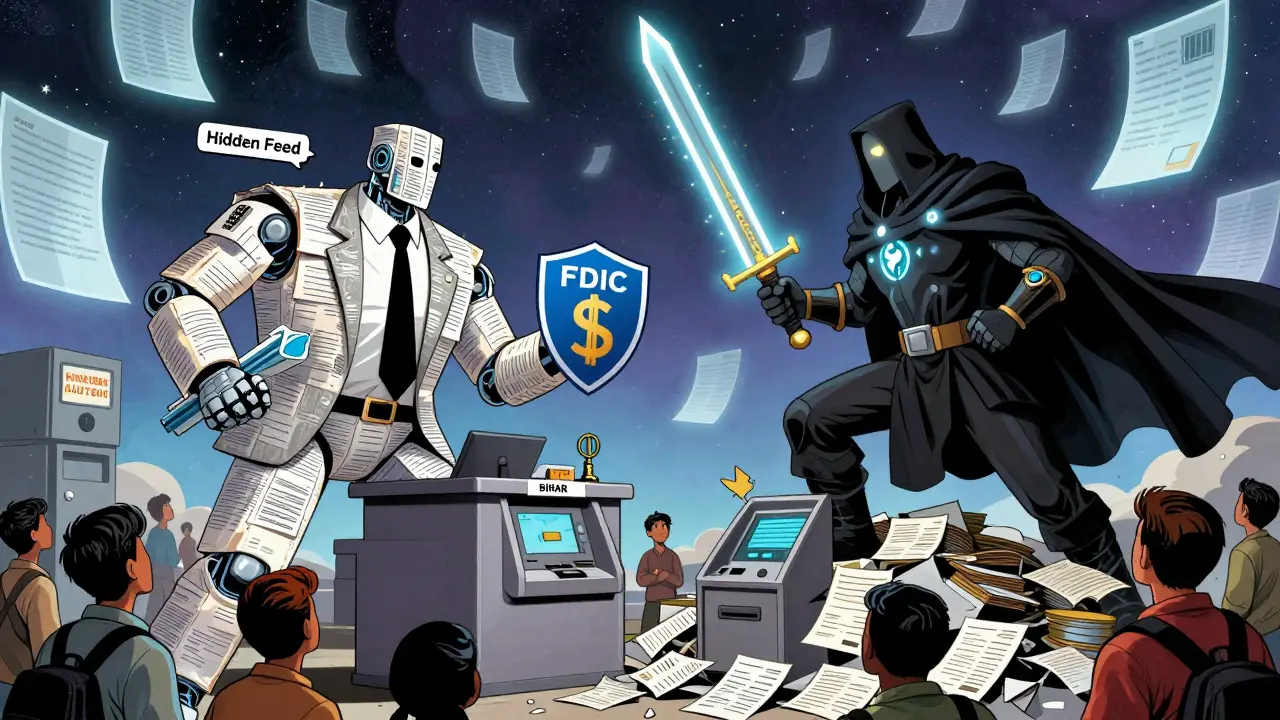
Traditional banking? No one sees the ledger. Fraud happens silently. But when it does, you have recourse. FDIC insurance covers $250,000 per account. Banks have legal teams. You can sue. You can get your money back. 97% of account takeover fraud in traditional banking is resolved, per FDIC data. In DeFi? 97% of victims get nothing back.
So which is safer? Depends on what you fear. If you’re scared of hackers, DeFi feels risky. If you’re scared of banks freezing your money or charging hidden fees, DeFi feels like freedom.
Transparency: Can You See It?
Every DeFi transaction is on the blockchain. Public. Permanent. Verifiable. You can look up any Uniswap trade, any Aave loan, any liquidity pool. No secrets. No black boxes.
Traditional banks? Their ledgers are private. You get a statement. You don’t know how your money moves. You don’t know who’s using your data. You don’t know if your loan application was flagged by an algorithm you can’t challenge.
DeFi’s transparency isn’t perfect - but it’s revolutionary. You can audit the system yourself. That’s power. And power scares institutions.
Who’s Winning?
DeFi’s total value locked (TVL) hit $247 billion in Q2 2025. Sounds big? It’s still just 4.8% of traditional banking’s $19.7 trillion in U.S. assets alone. But it’s growing 31% year-over-year. Traditional banking? Growing at 3.2%.
DeFi is winning in places banks ignore: Southeast Asia, Africa, Latin America. In Nairobi, a user told XRPL’s 2025 case study: “I went from no banking access to earning 9.1% APY in 20 minutes.” In Bihar, a farmer earns more on Aave than his local bank pays in interest.
Meanwhile, big banks aren’t ignoring DeFi. JPMorgan’s Onyx processed $1.2 trillion in blockchain transactions in 2024. Singapore’s Project Guardian is testing regulated DeFi. The U.S. OCC approved 17 national banks for crypto custody. This isn’t war. It’s evolution.
What’s the Real Trade-Off?
DeFi gives you control, speed, transparency, and higher yields. But it demands responsibility. You’re your own bank. No safety net. No help line. No refunds.
Traditional banking gives you safety, support, and legal protection. But it’s slow, expensive, and exclusionary. You pay for convenience. And you pay for the privilege of being trusted.
There’s no “better” option. Only the right one for your life.
If you’re in a country with stable banks, good infrastructure, and legal protections - stick with traditional banking. It’s safe, reliable, and familiar.
If you’re unbanked, underbanked, tired of fees, or just want better returns - DeFi isn’t just an alternative. It’s your only option.
The future won’t be DeFi or banks. It’ll be both - working side by side. But for millions, DeFi isn’t the future. It’s already here.
Is DeFi safer than traditional banking?
It depends on what you mean by "safe." DeFi has no government insurance or legal recourse - if you lose your keys or get hacked, you’re out of luck. But DeFi transactions are transparent and can’t be frozen by a bank. Traditional banking offers FDIC insurance and fraud protection - 97% of account takeovers are resolved. But banks can freeze your account, charge hidden fees, or deny service. DeFi is safer for control. Traditional banking is safer for recovery.
Can I use DeFi without knowing how blockchain works?
Yes - but you shouldn’t. Apps like MetaMask and Trust Wallet make it easy to send and receive crypto. You can lend on Aave with a few clicks. But if you don’t understand private keys, gas fees, or slippage, you risk losing money. 68% of new DeFi users take 2-3 weeks to get comfortable. Don’t rush. Start small. Learn before you invest.
Why do DeFi interest rates look so high?
DeFi rates are set by supply and demand - not central banks. When lots of people want to borrow stablecoins, lenders earn more. In 2025, USDC yields hit 8.7% on Aave because demand for loans was high. Traditional banks pay low rates because they lend at higher rates to borrowers and keep the difference. DeFi cuts out the middleman - so you get more.
Is DeFi legal?
In most countries, yes - but with limits. The U.S., EU, and Singapore allow DeFi but regulate exchanges and tax earnings. India taxes crypto profits at 30% and adds 1% TDS. Some countries ban it outright. Always check local laws. DeFi itself isn’t illegal - but using it might trigger tax or reporting obligations.
Can DeFi replace banks entirely?
Not yet. DeFi can handle lending, trading, and payments - but it can’t replace mortgages, payroll, or credit scores. Banks still handle complex financial products, legal contracts, and insurance. DeFi excels at simple, automated tasks. The future isn’t replacement - it’s coexistence. Banks will use DeFi for faster settlements. DeFi will rely on banks for fiat on-ramps.
 Cryptocurrency Guides
Lisa Parker
February 17, 2026 AT 01:45Nicole Stewart
February 17, 2026 AT 02:05Kyle Tully
February 18, 2026 AT 03:38kieron reid
February 20, 2026 AT 01:11yogesh negi
February 20, 2026 AT 11:25george chehwane
February 20, 2026 AT 12:02Charrie VanVleet
February 20, 2026 AT 18:25Scott McCrossan
February 22, 2026 AT 15:30Rajib Hossaim
February 23, 2026 AT 03:15Ruby Ababio-Fernandez
February 24, 2026 AT 19:08Geet Kulkarni
February 26, 2026 AT 02:41Chris Thomas
February 27, 2026 AT 04:20James Breithaupt
February 27, 2026 AT 22:35Alex Williams
March 1, 2026 AT 17:30Sarah Shergold
March 1, 2026 AT 21:16sruthi magesh
March 2, 2026 AT 23:49Nova Meristiana
March 3, 2026 AT 07:22