
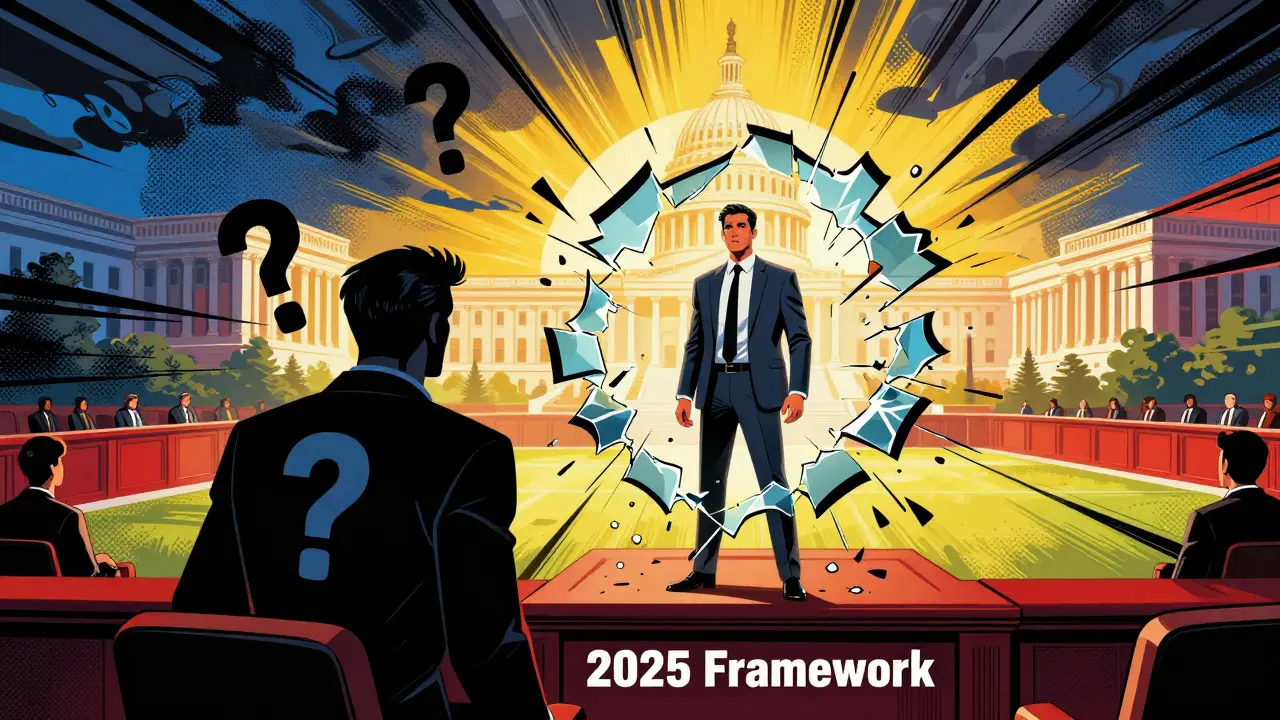
For years, the crypto industry operated under a cloud of uncertainty. You built your product, but you never quite knew if it was a security or a commodity until an enforcement letter landed on your desk. That era of "regulation by enforcement" ended dramatically in 2025. The United States underwent a seismic shift in how it handles cryptocurrency regulation, moving from punitive oversight to a framework designed to foster innovation while protecting investors. This wasn't just a tweak; it was a complete rewrite of the rules of the game.
If you are navigating the digital asset space today, understanding this shift is critical. The balance between fostering technological growth and ensuring consumer safety has been recalibrated. We are no longer guessing where the lines are drawn. Instead, we have clear legislative boundaries and regulatory bodies actively working to support, rather than stifle, the industry. Let’s break down what changed, why it matters for your business, and how you can prepare for this new reality.
The End of Regulatory Uncertainty
Before 2025, the primary strategy used by regulators like the SEC (Securities and Exchange Commission) and CFTC (Commodity Futures Trading Commission) was enforcement-first. They issued guidance through lawsuits. This created a chilling effect. Many startups moved offshore to jurisdictions with clearer rules, such as Switzerland or Singapore. Traditional financial institutions stayed on the sidelines because the legal risk was too high.
This changed with President Trump’s executive order on January 23, 2025, titled "Strengthening American Leadership in Digital Financial Technology." This order did two crucial things:
- It eliminated restrictive policies from the previous administration.
- It established the President's Working Group on Digital Asset Markets to coordinate federal efforts.
The message was clear: the U.S. wanted to lead in digital finance, not lag behind due to internal gridlock. This executive action set the stage for what became known as "Crypto Week" in Congress, where three major bills were advanced simultaneously.
Key Legislation: GENIUS, CLARITY, and Anti-CBDC
The legislative package passed in 2025 represents the most significant progress in crypto law since Bitcoin’s inception. Here is how these laws reshape the landscape:
| Legislation | Full Name | Primary Focus | Impact on Innovation |
|---|---|---|---|
| GENIUS Act | Guiding and Establishing National Innovation for U.S. Stablecoins Act | Stablecoin issuance and reserve requirements | Provides clear federal preemption for compliant stablecoins, encouraging institutional adoption. |
| CLARITY Act | Digital Asset Market Clarity Act | Classification of digital assets (security vs. commodity) | Defines jurisdictional boundaries between SEC and CFTC, reducing legal ambiguity for token issuers. |
| Anti-CBDC Act | Prohibition on Central Bank Digital Currency | Bans creation of a U.S. central bank digital currency | Protects private sector innovation from government competition, preserving decentralized finance models. |
The GENIUS Act was the first to be signed into law. It specifically addresses stablecoins, which are crucial for payments and liquidity in DeFi. By setting strict reserve requirements and oversight mechanisms, it gives banks and payment processors the confidence to integrate stablecoins without fearing sudden regulatory crackdowns. Meanwhile, the CLARITY Act tackles the biggest headache for developers: classification. It provides a roadmap for determining whether a token falls under securities law or commodity law, ending the guesswork that plagued projects for over a decade.

Regulatory Bodies Pivot to Collaboration
Legislation is only half the story. The execution depends on the agencies enforcing it. In 2025, both the SEC and CFTC underwent leadership changes that signaled a new philosophy.
The SEC relaunched its Crypto Task Force under Acting Chairman Mark Uyeda, appointing Commissioner Hester Peirce-a long-time advocate for crypto clarity-to lead the effort. The agency launched "Project Crypto," aimed at modernizing securities laws to fit digital assets. Instead of waiting for violations to occur, the SEC began engaging with firms proactively. They rolled back problematic accounting guidance and paused certain enforcement actions against major companies, allowing them to focus on compliance rather than litigation.
Similarly, the CFTC initiated a "crypto sprint" to enable trading of digital assets under the Commodity Exchange Act. With Brian Quintenz nominated to lead the CFTC, the agency focused on creating a robust market structure for commodities like Bitcoin and Ethereum. This dual-agency approach ensures that different types of assets are regulated by the appropriate body, reducing overlap and confusion.
How This Balances Innovation and Protection
Critics often argue that regulation stifles innovation. However, the 2025 framework proves that clarity actually accelerates it. When rules are ambiguous, capital flees to safer jurisdictions. When rules are clear, even if strict, capital flows in because businesses can plan for the long term.
Consider the impact on venture capital. Before 2025, many VCs hesitated to fund early-stage crypto projects due to the risk of retroactive securities charges. Post-2025, with the CLARITY Act providing classification guidelines, VCs feel more secure investing in U.S.-based startups. This influx of capital fuels research and development, leading to better technology and more secure protocols.
At the same time, consumer protection remains a priority. The GENIUS Act requires stablecoin issuers to maintain transparent reserves and undergo regular audits. This protects users from runs on unstable coins, similar to what happened with TerraUSD in 2022. The SEC continues to enforce anti-fraud provisions, ensuring that bad actors do not exploit the new freedoms granted to legitimate businesses.

What This Means for Your Business
If you operate in the crypto space, you cannot simply relax and assume everything is fine. The absence of enforcement does not mean the absence of scrutiny. In fact, expectations for governance, supervision, and documentation are rising. Here is what you need to do now:
- Reassess Token Classification: Review your tokenomics against the CLARITY Act guidelines. Determine if your asset is a security or a commodity. If it’s a security, ensure you are complying with SEC registration or exemption requirements.
- Prepare for Stablecoin Rules: If you issue or hold stablecoins, align your operations with the GENIUS Act’s reserve and reporting standards. Expect formal rule proposals on custody and issuance soon.
- Enhance Compliance Infrastructure: Invest in systems that track communications, risk assessments, and operational workflows. Regulators will look for evidence of proactive control, not just reactive fixes.
- Monitor State-Level Actions: While federal law provides a baseline, states may still impose additional requirements. Keep an eye on local regulations, especially in hubs like New York and California.
Success in this new environment depends on transparency and adaptability. Companies that treat compliance as a strategic advantage will outperform those that view it as a burden.
Global Competitiveness and Future Outlook
The U.S. regulatory shift is also about global competitiveness. For years, countries like the EU (with MiCA), Singapore, and Japan have attracted crypto businesses with clear frameworks. The 2025 legislation aims to reclaim America’s position as the leader in digital asset innovation. Senator Bill Hagerty noted that these bills are "vital to ensuring America is at the forefront of innovation in the digital asset space."
Looking ahead, we expect to see increased integration between traditional finance and crypto. Banks are likely to offer custody services for digital assets, and insurance products tailored to crypto risks will emerge. The DeFi sector will continue to grow, but with greater emphasis on identity verification and anti-money laundering (AML) controls.
The transformation from punitive enforcement to collaborative regulation is not just a policy change; it’s a cultural shift within the industry. It recognizes that innovation and oversight don’t have to be at odds. By balancing the need for rapid technological advancement with robust consumer protections, the U.S. is setting a template that other nations may follow.
What is the GENIUS Act?
The GENIUS Act (Guiding and Establishing National Innovation for U.S. Stablecoins Act) is federal legislation passed in 2025 that establishes clear rules for the issuance and oversight of stablecoins. It requires issuers to maintain transparent reserves and comply with federal standards, providing certainty for businesses using stablecoins for payments and settlements.
How does the CLARITY Act help crypto projects?
The CLARITY Act (Digital Asset Market Clarity Act) provides a framework for classifying digital assets as either securities or commodities. This reduces legal ambiguity by defining the jurisdictional boundaries between the SEC and CFTC, allowing developers to know which regulations apply to their tokens before launching.
Did the SEC stop regulating crypto?
No, the SEC did not stop regulating crypto. Instead, it shifted from an enforcement-heavy approach to a more collaborative one. The agency launched "Project Crypto" to modernize securities laws and engage with firms proactively. Enforcement actions still occur for fraud and non-compliance, but the focus is now on guiding innovation within legal boundaries.
What is the Anti-CBDC Act?
The Anti-CBDC Act prohibits the creation of a central bank digital currency by the Federal Reserve. This legislation aims to protect private sector innovation and preserve the decentralized nature of cryptocurrencies by preventing government-backed digital currencies from competing with or displacing existing crypto assets.
How should businesses prepare for the new crypto regulations?
Businesses should reassess their token classifications under the CLARITY Act, align stablecoin operations with GENIUS Act standards, and enhance their compliance infrastructure. This includes improving documentation, risk assessment processes, and communication tracking to demonstrate proactive control to regulators.
 Cryptocurrency Guides