
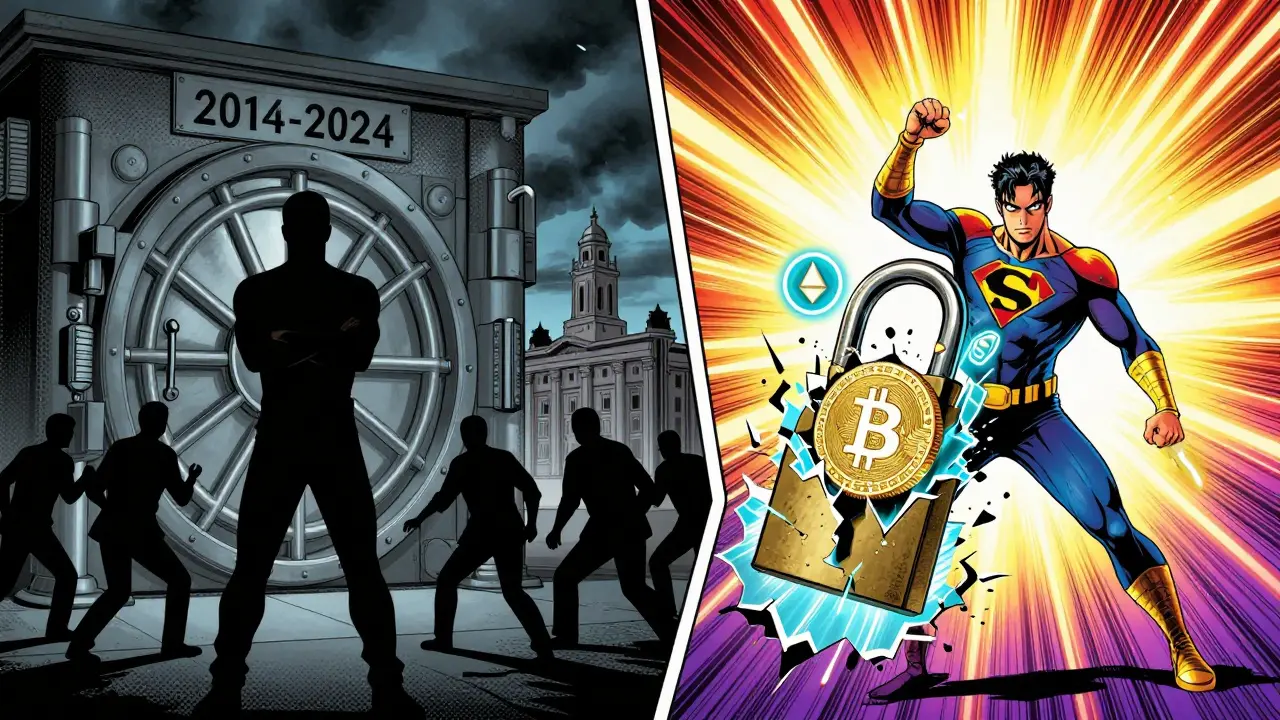
For over a decade, trying to use Bitcoin or Ethereum in Bolivia was like trying to buy coffee with a foreign currency that no one recognized. It was illegal, risky, and practically impossible for the average citizen. If you were living in La Paz or Santa Cruz during those years, you likely relied on informal networks or expensive remittance services because the official financial system shut its door to digital assets.
But the rules changed. Fast.
In June 2024, the Central Bank of Bolivia (BCB) officially ended the total prohibition on cryptocurrencies. By mid-2026, the landscape has flipped entirely. What was once a black market is now a regulated, booming sector with hundreds of millions of dollars flowing through local wallets. This isn't just a policy tweak; it’s a complete overhaul of how Bolivians save, send, and spend money.
The Shift from Total Ban to Active Regulation
To understand where we are today, you have to look at where we started. On May 6, 2014, the BCB issued a strict ban on all cryptocurrency activities. The logic back then was protectionism: the government wanted to shield the Bolivian financial system from volatility and prevent capital flight. They reaffirmed this stance in December 2020 with Resolution N° 144/2020, keeping the lid tightly screwed on any digital asset innovation.
Then came the pivot. On June 26, 2024, the government enacted Resolution No. 82/2024, which officially lifted the ban. This wasn't a sudden whim. It was a response to reality. The demand for crypto didn't disappear just because it was illegal; it went underground. The government realized that rather than fighting an unwinnable battle against technology, they could regulate it and capture the economic benefits.
By April 2025, the groundwork was laid with Resolution no. 019/2025, which formally recognized virtual assets and Virtual Asset Service Providers (VASPs). Then, in May 2025, Supreme Decree No. 5384 established the full legal framework. Today, if you want to run a crypto exchange or offer wallet services in Bolivia, you need a license. The era of the wild west is over; the era of compliance has begun.
Why the Change? Economic Reality and Stability
You might wonder why a country known for state control would embrace decentralized finance. The answer lies in stability and utility. Bolivia’s local currency, the Boliviano, is pegged to the US Dollar, but access to actual USD can be tight. Inflation fears and limited banking options left many citizens looking for alternatives.
Cryptocurrencies, particularly stablecoins, offered a solution. In March 2025, the BCB itself began utilizing USD-pegged stablecoins for cross-border payments and trading. This institutional adoption sent a powerful signal to the market: the central bank sees value in these tools. It’s not about replacing the Boliviano overnight; it’s about adding a layer of financial infrastructure that works better for international trade and remittances.
This pragmatic approach differs sharply from neighbors like El Salvador, which made Bitcoin legal tender in a top-down push. Bolivia’s path is more measured. Users choose tools based on utility-stablecoins for saving value, Bitcoin for sending money abroad, and various platforms depending on fees. It’s a bottom-up adoption driven by real needs, not just political ideology.

The Explosion of Adoption in 2025-2026
The numbers tell a dramatic story. Once the ban was lifted, pent-up demand exploded. According to official BCB figures, virtual asset transactions in Bolivia reached $294 million in the first half of 2025 alone. That is a massive jump from near-zero legal activity just a year prior.
Consider the case of Meru, a crypto wallet platform founded by Carlos Neira. After the ban lifted, Meru saw a staggering 6,600% increase in Bolivian users. Bloomberg reported this surge as a clear indicator of how hungry the market was for accessible, compliant crypto services. These aren't just tech-savvy teenagers buying meme coins; these are families receiving remittances, small businesses paying suppliers, and individuals protecting their savings from inflation.
The growth rate exceeds 500% within a single year of legalization. This kind of velocity is rare in traditional finance. It shows that when you remove artificial barriers, people will adopt efficient technologies quickly. The learning curve proved manageable, with thousands of new users onboarding successfully within months.
| Aspect | Pre-June 2024 (Ban Era) | Post-June 2024 (Regulated Era) |
|---|---|---|
| Legal Status | Illegal, prohibited by BCB | Legal, regulated under Supreme Decree 5384 |
| User Access | Informal, high-risk P2P networks | Licensed VASPs, public exchanges |
| Transaction Volume | Unrecorded, underground | $294M+ in H1 2025 |
| Government Stance | Hostile, restrictive | Collaborative, educational |
| International Relations | Isolated | MOU with El Salvador (CNAD) |
How Bolivia Compares to Its Neighbors
Bolivia’s journey is unique in Latin America. While El Salvador went all-in on Bitcoin as legal tender, creating a highly visible but controversial model, Bolivia chose a quieter, more diverse path. There is no mandatory Bitcoin adoption here. Instead, the focus is on building a robust regulatory framework that allows multiple types of digital assets to coexist.
This contrast is stark when compared to countries like Algeria, which recently announced sweeping bans on crypto activities, criminalizing operations. Bolivia moved in the opposite direction, recognizing that prohibition drives activity underground without stopping it. By bringing crypto into the light, the BCB can monitor flows, tax revenues, and protect consumers.
A key part of this strategy is international cooperation. Bolivia signed a Memorandum of Understanding (MOU) with El Salvador’s National Commission for Digital Assets (CNAD). This isn’t just symbolic. It involves sharing blockchain intelligence tools, data analytics, and risk analysis techniques. Both countries train staff together and exchange information on VASPs. For Bolivia, this means accelerating its regulatory maturity by learning from a neighbor that has already navigated the early pitfalls of crypto adoption.

What This Means for You: Practical Steps
If you are in Bolivia or planning to do business there, the shift to regulation changes everything. Here is what you need to know to navigate the new environment safely.
- Use Licensed Providers Only: Since Supreme Decree No. 5384 requires licensing for service providers, ensure your exchange or wallet provider is registered with the BCB. Unlicensed platforms may still operate, but they offer no consumer protection. Stick to platforms that publicly display their compliance status.
- Understand Stablecoin Utility: With the BCB using USD-pegged stablecoins for cross-border payments, these assets have gained significant legitimacy. Use them for saving value against inflation or for international transfers where traditional banking fees are prohibitive.
- Watch for Educational Resources: The government has launched public awareness campaigns to educate citizens on risks and basics. Take advantage of these resources. Scams still exist, and understanding how private keys and cold storage work is essential for security.
- Stay Updated on Regulatory Changes: The framework is still evolving. The BCB is actively drafting further regulations focusing on transparency and safety. Follow official BCB announcements rather than social media rumors to stay compliant.
The transition hasn’t been without friction. Some users worry about the pace of regulatory development. Is the government moving too fast? Others argue that stronger consumer protections are needed as the market matures. These are valid concerns. However, the alternative-a return to prohibition-is widely seen as economically damaging. The current path balances innovation with oversight, aiming to prevent scams while fostering growth.
The Future of Crypto in Bolivia
Where does this leave us in 2026? Bolivia is positioning itself as an emerging hub for digital asset adoption in Latin America. The combination of a clear legal framework, institutional support from the Central Bank, and strong international partnerships creates a fertile ground for fintech innovation.
Industry analysts predict continued growth. The $294 million transaction volume in early 2025 is just the beginning. As more businesses accept crypto payments and more individuals use digital wallets for daily transactions, the ecosystem will deepen. We may see the rise of local DeFi protocols, tokenized real estate, or other innovative financial products tailored to the Bolivian market.
The transformation from complete prohibition to active adoption is one of the most significant policy reversals in recent history. It serves as a model for other countries facing similar challenges: how to integrate disruptive technology without sacrificing financial stability. For Bolivians, it means greater financial inclusion, lower costs for remittances, and new opportunities for investment. The ban is gone, and the future is digital.
When did Bolivia lift its cryptocurrency ban?
Bolivia officially lifted its complete cryptocurrency ban on June 26, 2024, through the enactment of Resolution No. 82/2024. This marked the end of a prohibition period that began in 2014.
Is it legal to use Bitcoin in Bolivia in 2026?
Yes, it is fully legal. Following the lifting of the ban in 2024 and the implementation of Supreme Decree No. 5384 in May 2025, citizens can legally buy, sell, and hold cryptocurrencies like Bitcoin, provided they use licensed service providers.
What is the role of the Central Bank of Bolivia (BCB) in crypto?
The BCB regulates the cryptocurrency sector. It issues licenses to Virtual Asset Service Providers (VASPs), monitors transactions for compliance, and has even adopted USD-pegged stablecoins for its own cross-border payment needs.
How does Bolivia's crypto policy compare to El Salvador's?
Unlike El Salvador, which made Bitcoin legal tender, Bolivia has taken a more measured approach. Bolivia allows crypto usage and regulation without making it official currency. The two countries cooperate through an MOU, with Bolivia learning from El Salvador's regulatory experiences.
Are there specific taxes on cryptocurrency in Bolivia?
While the initial frameworks focused on licensing and anti-money laundering, the government is working on integrating crypto into the broader tax system. Users should consult with local tax advisors to understand their obligations regarding capital gains and income from digital assets.
What happened to the Meru wallet after the ban was lifted?
Meru experienced a 6,600% increase in Bolivian users after the ban was lifted, highlighting the massive pent-up demand for accessible and compliant cryptocurrency services in the country.
 Cryptocurrency Guides