

When the Iranian rial lost 90% of its value over six years, people didn’t just stop buying bread-they started buying Bitcoin. In 2024, Iranians moved $4.18 billion out of the country using cryptocurrency. That’s not a government scheme. It’s not a hacking ring. It’s moms, teachers, mechanics, and students who lost everything in their bank accounts and turned to digital money just to survive.
Why Bitcoin Became Iran’s Lifeline
The Iranian rial isn’t just weak-it’s collapsing. Inflation hit 48% in 2024. Prices doubled in some cities within months. A loaf of bread that cost 30,000 rials in 2020 cost over 500,000 by late 2024. People couldn’t trust their own currency. So they looked for something that wouldn’t vanish overnight. Bitcoin became that something. Not because Iranians are crypto fans. Not because they love decentralization. But because Bitcoin doesn’t need a bank. It doesn’t need permission. And it doesn’t care about U.S. sanctions. Chainalysis, the blockchain analytics firm, found that Bitcoin made up the bulk of those $4.18 billion outflows. Not stablecoins. Not Ethereum. Bitcoin. Why? Because it’s the most trusted, most liquid, and most recognizable digital asset globally. When a family in Tehran needed to send money abroad for medical treatment, they didn’t try to wire it through a blocked bank. They bought Bitcoin, sent it to a relative in Turkey or Armenia, and had them cash it out in local currency. Simple. Fast. Untraceable by the government.When War Broke Out, Crypto Flowed
The spikes in outflows didn’t happen randomly. They lined up perfectly with moments of crisis. On April 9 and 14, 2024, Israel bombed the Iranian embassy in Damascus. Iran retaliated with missile strikes. Within hours, Bitcoin transaction volumes from Iran jumped 300%. The same thing happened in late September and early October, when tensions flared again. Google searches for "Iran Israel" spiked on the exact same days. People weren’t trading. They were fleeing. They saw war coming and knew their savings could vanish overnight. So they converted their rials into Bitcoin, then sent it out before borders closed, banks froze, or internet access got cut. Smaller transactions-under $1,000-drove most of this. Not big investors. Not state actors. Ordinary people. One user on a Persian-language Reddit thread wrote: "I sold my car and bought Bitcoin. Now I can pay for my daughter’s surgery in Germany. The bank wouldn’t let me send the money. Bitcoin did."How They Did It-Without Banks
Iranians didn’t use Coinbase or Binance directly. Those platforms blocked Iranian IPs years ago. Instead, they used VPNs. Thousands of them. Some paid $5 a month. Others shared accounts with neighbors. They connected to exchanges in Turkey, the UAE, or even South Korea. Domestic exchanges like Nobitex and Wallex helped bridge the gap. Before late 2024, you could open an account, deposit rials, and buy Bitcoin without leaving your house. But the government cracked down. They forced these platforms to hand over every user’s ID, phone number, and transaction history. Many shut down. Others went underground. Now, Iranians use peer-to-peer (P2P) trading. They meet in cafes, send money via mobile wallets, then receive Bitcoin in a private wallet. No middleman. No bank. No paper trail. It’s risky. If caught, you could be fined or jailed. But for many, the risk of losing everything is worse.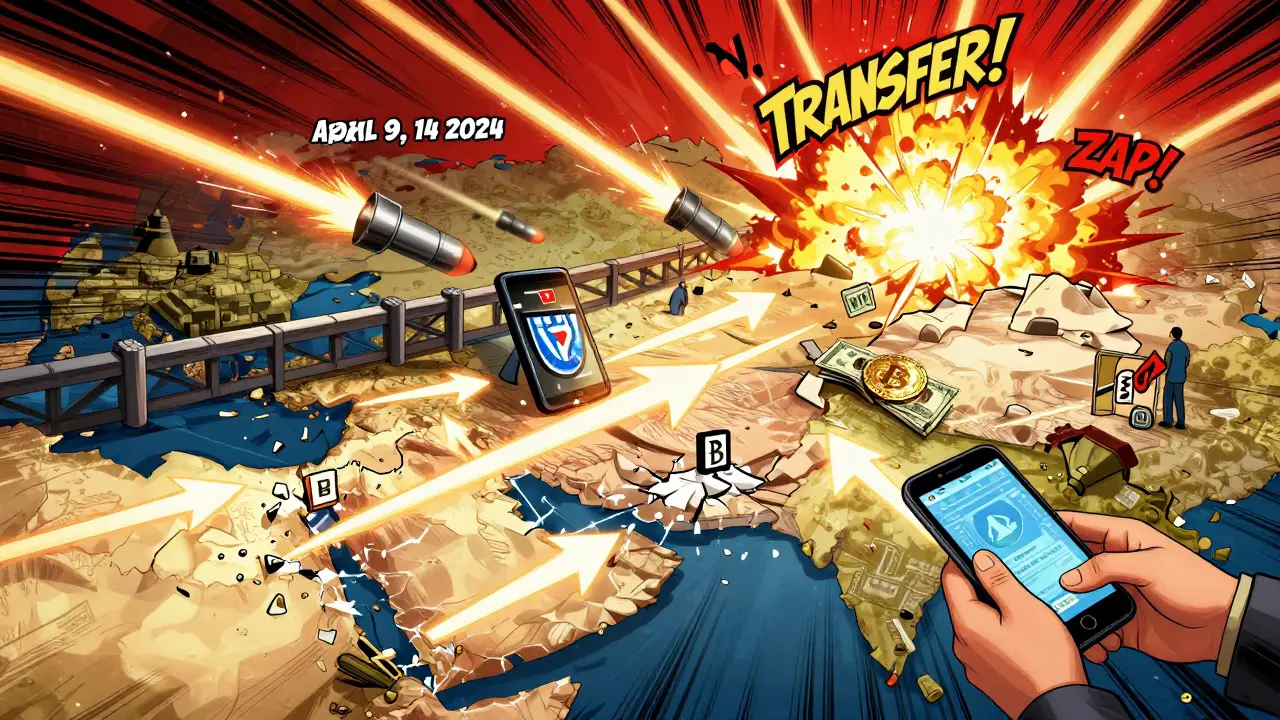
How Iran’s Crypto Scene Is Different
Other sanctioned countries use crypto too. Russia. Venezuela. North Korea. But Iran’s case is unique. Russia’s crypto use is mostly about bypassing Western banking. North Korea steals crypto through hacking. Venezuela’s citizens use crypto because their currency is worthless-but they never moved $4 billion out. Iran did. And they did it without state support. In fact, the government is trying to stop it. Here’s the twist: while ordinary Iranians flee to Bitcoin, the state is building its own digital currency. The Central Bank launched the Digital Rial in 2023. It’s supposed to replace cash. But no one trusts it. Why? Because it’s fully controlled by the government. If they can freeze your bank account, they can freeze your digital rial too. So while the state pushes a digital currency, the people are running to Bitcoin. It’s not a contradiction. It’s a survival strategy.The Cost of Sanctions
The $4.18 billion outflow isn’t just about money. It’s about trust. U.S. sanctions were meant to pressure Iran’s government. Instead, they pushed millions of ordinary people into crypto. The result? A decentralized, underground financial system that can’t be shut down. Every time a bank refuses to process a transfer, every time a wire is blocked, every time a family can’t pay for medicine-it pushes another person to Bitcoin. Experts from the U.S. Treasury admit this. In their 2025 National Security Memorandum, they wrote: "Sanctions are accelerating the adoption of decentralized finance in sanctioned economies. This is not a bug. It’s a feature of the digital age." The irony? The more you try to isolate Iran, the more it builds its own financial world outside yours.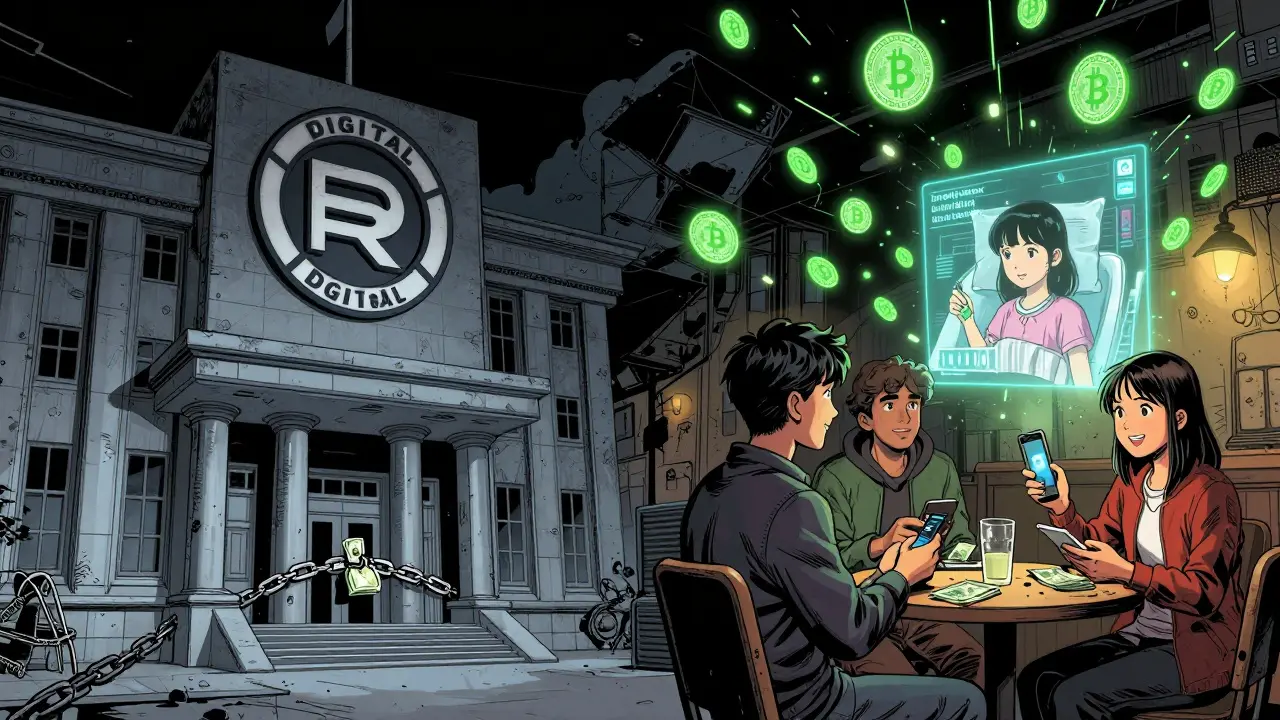
 Cryptocurrency Guides
Brandon Kaufman
March 11, 2026 AT 00:11It’s wild how Bitcoin became the silent hero here. Not because it’s flashy or revolutionary, but because it just… works. No bureaucracy. No sanctions that can freeze a child’s surgery. Just a phone, a VPN, and a little courage.
These aren’t speculators. They’re parents. Teachers. Mechanics. People who just wanted to keep their families alive.
Anshita Koul
March 11, 2026 AT 06:43It’s not just about money-it’s about dignity! When your currency is a joke, when your government can’t even keep bread affordable, what else is left? Bitcoin isn’t a choice-it’s a last breath.
And yes, it’s ironic that the same powers that imposed sanctions are now scrambling to control the very tools that let people survive them.
Jenni James
March 12, 2026 AT 19:26Oh please. This is just another crypto-bro fairy tale. The real story? Iran’s regime is using crypto to launder money under the guise of ‘people’s survival.’
Chainalysis doesn’t prove what you think it does. And don’t pretend this isn’t state-sponsored evasion dressed up as humanitarianism.
Chelsea Boonstra
March 13, 2026 AT 16:52So let me get this straight-you’re saying ordinary Iranians are outsmarting U.S. sanctions by using Bitcoin, but the government is pushing a digital rial that everyone hates? That’s not a paradox. That’s a failure of policy.
Sanctions were supposed to hurt the regime. Instead, they forced millions into crypto. That’s not a bug. It’s a feature of incompetence.
Alex Thorn
March 15, 2026 AT 12:49There’s something deeply human here. Not crypto. Not geopolitics. Just people trying to survive.
They didn’t wake up one day and say, ‘Let’s adopt Bitcoin.’ They woke up and realized their life savings were worth less than toilet paper. So they found a way. No fanfare. No ideology. Just love for their children.
That’s the real story behind the numbers.
Howard Headlee
March 17, 2026 AT 01:20Let’s be real-this isn’t just crypto. This is a revolution. A quiet, underground, peer-to-peer uprising against economic tyranny.
These people aren’t traders. They’re hackers of the system. They’re using code, anonymity, and sheer grit to outmaneuver sanctions that were meant to crush them.
And guess what? It’s working. The U.S. Treasury admits it. The regime can’t stop it. And the world? It’s watching in stunned silence.
Anthony Marshall
March 18, 2026 AT 04:58This is the future. Not in Silicon Valley. Not in Wall Street. But in Tehran basements, in Mashhad cafes, in rural villages where a mom sells her wedding ring to buy Bitcoin so her kid can get cancer treatment abroad.
Sanctions didn’t break Iran. They forged something stronger. A decentralized lifeline. And it’s spreading.
ann neumann
March 18, 2026 AT 22:48They’re all being manipulated. You think this is about survival? No. It’s a psyop. The U.S. and Israel are secretly funding this crypto exodus to destabilize Iran’s economy even further.
Every Bitcoin transaction? Tracked. Every wallet? Monitored. They’re letting people think they’re free-but they’re just building a digital prison for the next phase of control.
Wake up. This isn’t liberation. It’s a trap.
William Montgomery
March 19, 2026 AT 19:20So the solution to inflation is crypto? How quaint. Next you’ll say we should all start bartering with gold coins.
People who flee to Bitcoin are just running from responsibility. A real society fixes its currency. Not hides behind a blockchain.
Mara Alves Mariano
March 21, 2026 AT 15:58Oh my god, I can’t believe you’re actually praising Iran for using crypto. Like, what’s next? Should we send them our tax dollars to fund their Bitcoin mining rigs?
These people live under a dictatorship that bombs its own neighbors and starves its citizens. And now you’re giving them a financial loophole? What a hero.
Tom Jewell
March 23, 2026 AT 07:23There’s poetry here. Not the kind in books. The kind in real life.
When a teacher in Shiraz sells her textbooks to buy Bitcoin so her nephew can get insulin in Turkey? That’s not economics. That’s love, coded into a blockchain.
We talk about decentralization like it’s a tech trend. But for them? It’s oxygen.
karan narware
March 24, 2026 AT 16:35Interesting how India, too, has millions using crypto to bypass capital controls-yet no one calls it a revolution.
Maybe because we’re brown? Maybe because we don’t have a war with Israel? Or maybe… because the West only sees heroism in suffering when it happens to people they don’t like.
Julie Tomek
March 25, 2026 AT 16:39While the narrative paints this as a grassroots movement of resilience, we must not overlook the systemic failures that led here.
The Iranian government’s mismanagement of monetary policy, coupled with prolonged sanctions that disproportionately affect civilians, created a vacuum-one that Bitcoin, for all its volatility, has filled.
Yet the irony remains: the very institutions that preach financial freedom are the ones that made this necessary.
This isn’t crypto’s triumph. It’s the failure of global economic governance.
We are witnessing not innovation, but desperation made algorithmic.
And while we celebrate the ingenuity of ordinary Iranians, we must ask: why did the world allow this to happen?
Why did diplomatic channels fail? Why were humanitarian exemptions so poorly enforced?
Why is the solution to state collapse a decentralized asset that no central authority can regulate?
Because we built a system that values control over compassion.
And now, the people are rewriting the rules-with code, not ballots.
Perhaps the most radical act isn’t buying Bitcoin.
It’s refusing to accept that this is inevitable.
And yet… here we are.
And here they are.
Still sending money. Still surviving.