
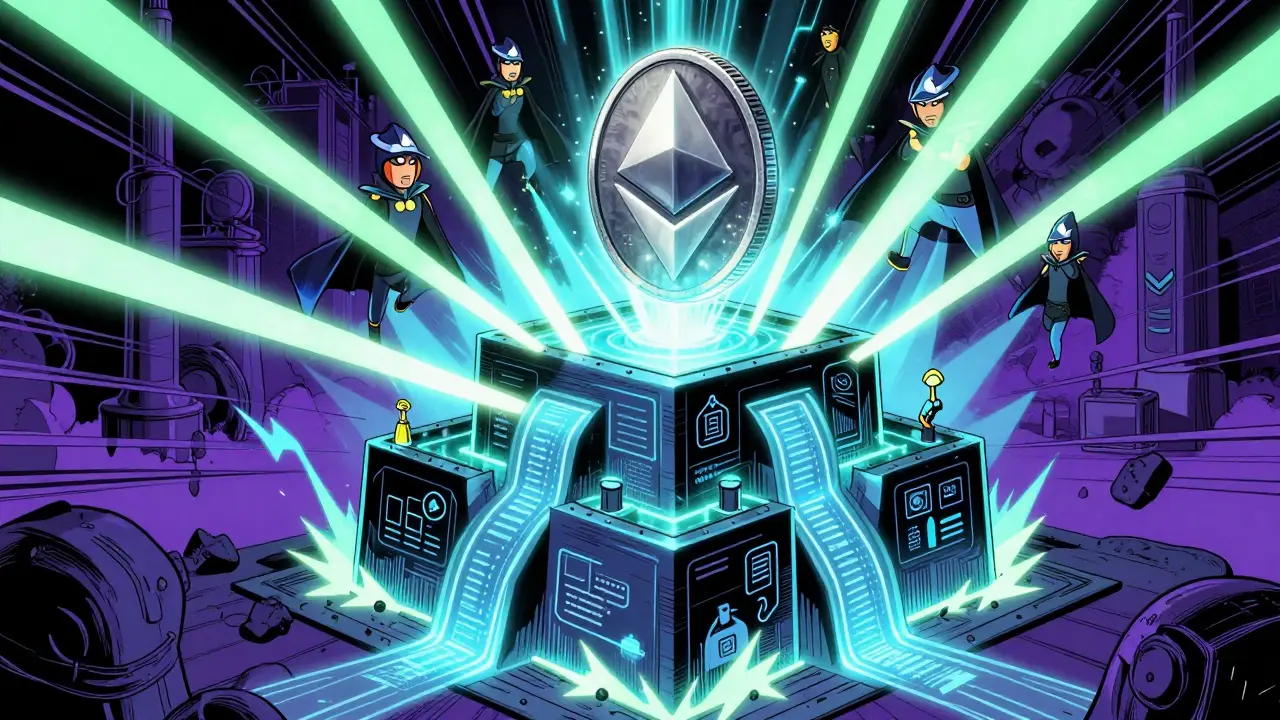
There’s a lot of confusion around ETH 2.0. Some people think it’s a new coin. Others believe it’s a separate blockchain. The truth? ETH 2.0 isn’t a coin at all. It’s the biggest upgrade in Ethereum’s history - a complete rebuild of how the network works, without changing the currency you already own.
If you hold Ethereum (ETH), you already own ETH 2.0. There’s no new token to buy. No airdrop. No swap. Your ETH from before the upgrade is the same ETH you have today. The upgrade changed how it’s secured, how fast transactions move, and how much energy the network uses - not what you hold.
Why Ethereum Needed an Upgrade
Back in 2020, Ethereum could only handle about 15 transactions per second. That’s slower than your old PayPal payments. Meanwhile, thousands of apps - from DeFi platforms to NFT marketplaces - were trying to run on it. When demand spiked, gas fees shot up to $50, $100, even $200 per transaction. People couldn’t afford to use the network. Miners were busy. Users were frustrated.
And then there was the energy problem. Ethereum used Proof-of-Work (PoW), the same system Bitcoin uses. That meant thousands of powerful computers were running nonstop, burning electricity just to validate one block. A single year of Ethereum mining used more power than entire countries like Argentina or the Netherlands. Critics called it unsustainable. Developers knew they had to fix it.
What ETH 2.0 Actually Is
ETH 2.0 is a multi-phase upgrade that transforms Ethereum from a single, slow chain into a faster, greener, scalable network. It’s not a new blockchain. It’s not a fork. It’s a redesign of Ethereum’s core architecture into two main layers:
- Execution Layer (formerly Eth1): This is where transactions happen. Smart contracts run. DApps live. It’s the same Ethereum you’ve always used.
- Consensus Layer (formerly Eth2): This is the new heart of the network. It handles security and agreement using Proof-of-Stake instead of mining.
The two layers talk to each other. Together, they form one seamless network. You don’t need to do anything. Your wallet still shows ETH. Your transactions still go through. But now, everything runs smoother.
The Beacon Chain: The First Step
The upgrade started in December 2020 with the launch of the Beacon Chain. This was a brand-new blockchain that had nothing to do with transactions or smart contracts. Its only job? To manage validators.
Validators are people who lock up 32 ETH as collateral to help secure the network. In return, they earn rewards for confirming blocks. If they act dishonestly - like trying to approve fake transactions - they lose part of their stake. It’s called slashing. This economic incentive keeps the network honest.
Before the Beacon Chain, miners used GPUs to solve math puzzles. Now, validators use ordinary laptops. No mining rigs. No power bills. Just software running quietly in the background.
The Merge: The Big Switch
For years, Ethereum ran two parallel systems: the old PoW chain and the new PoS Beacon Chain. Then, in September 2022, they merged.
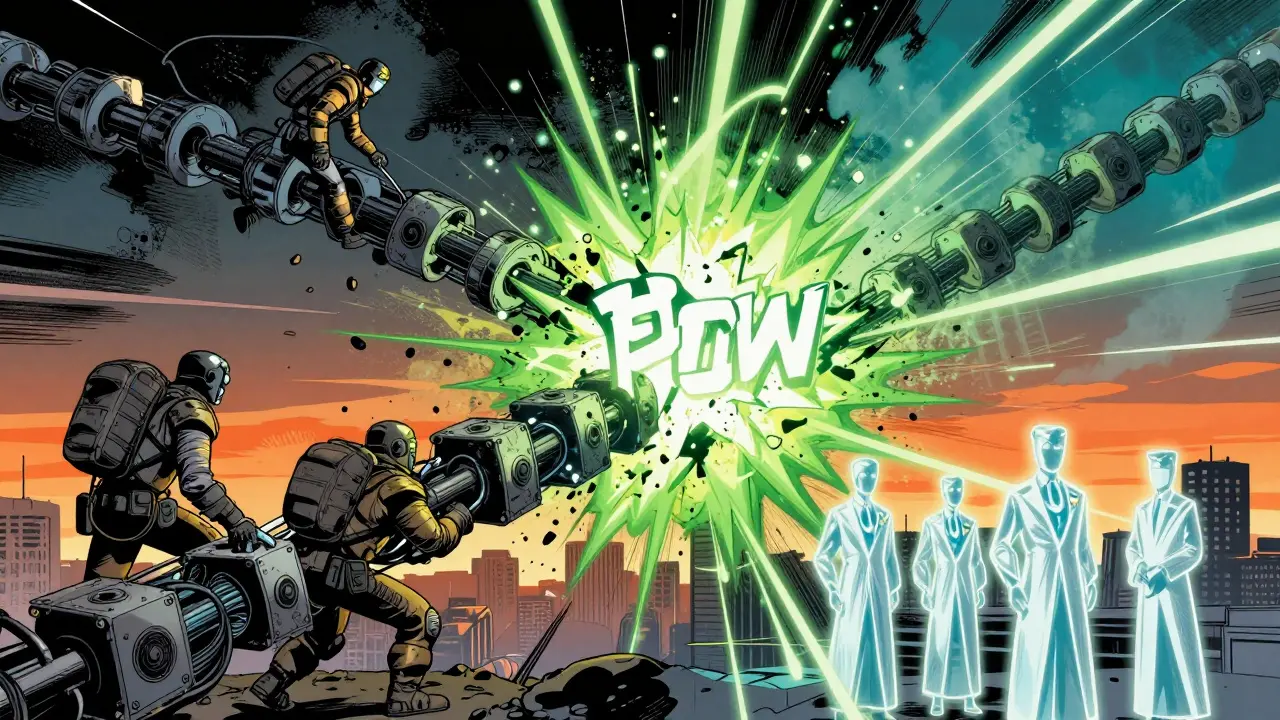
This was called The Merge. The old mining chain was shut down. All transaction processing moved to the Beacon Chain. Proof-of-Stake became the only way to validate Ethereum. The network’s energy use dropped by over 99.95%. That’s like turning off a power plant the size of a small city.
After The Merge, Ethereum no longer needed miners. It no longer needed ASICs. It no longer needed massive data centers. Validators replaced them all.
Sharding: The Next Big Leap
Proof-of-Stake solved the energy issue. But it didn’t fix the speed problem. Ethereum still processed transactions one after another - just like before. To truly scale, it needed parallel processing.
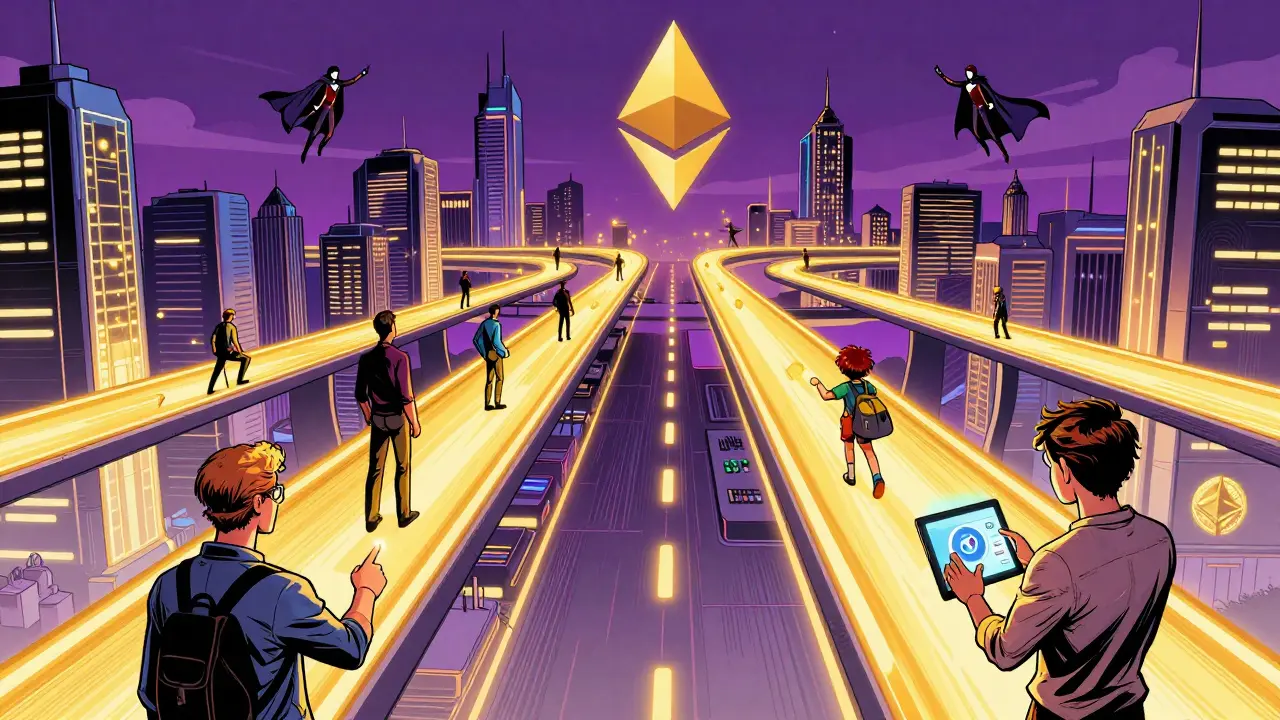
That’s where sharding comes in. Ethereum 2.0 will eventually split into 64 separate chains called shard chains. Each shard handles its own transactions and smart contracts independently. Think of it like adding 64 lanes to a highway that only had one lane before.
Right now, the Beacon Chain manages these shards. In the future, each shard will have its own validator set, and they’ll all report back to the Beacon Chain for final agreement. This design lets Ethereum process tens of thousands of transactions per second - not 15.
Sharding isn’t fully live yet. But the technology is being tested. Client teams are already running test networks with multiple shards. The full rollout is expected in stages over the next few years.
What ETH 2.0 Changes - And What Doesn’t
Let’s clear up the biggest myths:
- Myth: ETH 2.0 is a new coin. Truth: It’s the same ETH. Your wallet balance didn’t change.
- Myth: You need to swap your ETH. Truth: No action is needed. Your ETH automatically became part of ETH 2.0 after The Merge.
- Myth: ETH 2.0 has a different ticker. Truth: It’s still ETH. No "ETH2" token exists.
- Myth: Gas fees disappeared. Truth: They’re still here - but they’re dropping. With sharding, fees will fall dramatically.
What changed? Security. Speed. Sustainability. Everything else? Still Ethereum.
How ETH 2.0 Compares to the Old Ethereum
| Feature | Ethereum 1.0 (Pre-Merge) | Ethereum 2.0 (Post-Merge) |
|---|---|---|
| Consensus Mechanism | Proof-of-Work (PoW) | Proof-of-Stake (PoS) |
| Transaction Speed | ~15 TPS | ~15 TPS (for now), up to 100,000+ TPS with sharding |
| Energy Use | High (equivalent to a small country) | Low (less than a household appliance) |
| Block Validation | Miners with ASICs | Validators with staked ETH |
| Scalability | Single chain bottleneck | 64 parallel shard chains |
| Security Model | Computational power | Economic incentives + slashing |
What’s Still Coming?
The Merge was huge. But it wasn’t the end. The full vision of ETH 2.0 includes:
- Full sharding: All 64 shards live and process transactions independently.
- Withdrawals: Validators can now withdraw staked ETH and rewards - fully enabled since April 2023.
- Cross-shard communication: Smart contracts on one shard can interact with contracts on another.
- Account abstraction: Making wallets easier to use - no more needing ETH to pay gas fees.
These features are being tested on testnets. Some are already live in limited form. The full system will roll out gradually over the next few years.
Why ETH 2.0 Matters
ETH 2.0 isn’t just about speed or savings. It’s about making Ethereum usable for billions.
Imagine a world where:
- You can send crypto to a friend in seconds for less than a cent.
- A decentralized social media app runs without crashing during peak hours.
- Global remittances happen without banks, fees, or delays.
That’s the future ETH 2.0 is building. It’s not about speculation. It’s about infrastructure. Ethereum is becoming the operating system for the decentralized web - and ETH 2.0 is the engine that makes it possible.
Common Misconceptions
Here are a few things you still hear - and why they’re wrong:
- "ETH 2.0 is a new blockchain." No. It’s the same chain, just upgraded. Think of it like Windows 11 - same PC, better software.
- "I need to move my ETH to a new wallet for ETH 2.0." False. Your ETH on MetaMask, Coinbase, or Ledger is already on ETH 2.0.
- "ETH 2.0 means ETH will go up." Price is unpredictable. The upgrade improves the network - not the price chart.
- "Miners lost everything." True - but they didn’t vanish. Many became validators. Others moved to other PoW chains like Bitcoin or Litecoin.
Is ETH 2.0 a new cryptocurrency?
No. ETH 2.0 is not a new coin. It’s an upgrade to the existing Ethereum network. The ETH you already own is the same ETH used in ETH 2.0. There is no separate token, no swap required, and no new wallet needed.
Did Ethereum stop working during The Merge?
No. The Merge was designed to happen without downtime. Transactions continued as normal. Wallets stayed connected. Exchanges didn’t pause. The transition was seamless because the Beacon Chain had already been running for over two years, validating staked ETH in parallel.
Can I still mine Ethereum after ETH 2.0?
No. Mining was permanently disabled after The Merge in September 2022. Ethereum now runs entirely on Proof-of-Stake. The only way to participate in securing the network is by staking ETH as a validator.
How much does it cost to become a validator?
You need exactly 32 ETH to run your own validator. If you don’t have that much, you can join a staking pool - like Lido or Coinbase - where you stake smaller amounts and earn a share of rewards. The minimum is still 32 ETH for solo validators.
Will gas fees drop to zero with ETH 2.0?
No, but they’ll get much lower. Gas fees are still determined by demand and network congestion. However, once all 64 shard chains are active, Ethereum will handle far more transactions at once, which will reduce pressure and lower fees significantly - likely by 80-90% compared to 2021 levels.
What’s Next?
ETH 2.0 is still evolving. The next big milestone is full sharding. After that, Ethereum will focus on making smart contracts easier to use, improving privacy, and integrating with other blockchains.
One thing’s clear: Ethereum isn’t just surviving. It’s evolving into something more powerful than ever. And you don’t need to do a thing to be part of it. Your ETH already is.
 Cryptocurrency Guides
Tabitha Davis
February 23, 2026 AT 05:31Arya Dev
February 23, 2026 AT 07:09Fiona Monroe
February 24, 2026 AT 03:59Molley Spencer
February 24, 2026 AT 05:00John Fuller
February 25, 2026 AT 08:34Maggie House
February 26, 2026 AT 00:55Dana Sikand
February 27, 2026 AT 00:24Cameron Pearce Macfarlane
February 28, 2026 AT 16:20Elizabeth Smith
February 28, 2026 AT 19:57Robert Kromberg
March 2, 2026 AT 04:09Daisy Boliaan
March 3, 2026 AT 05:32Nicki Casey
March 3, 2026 AT 22:56Jessica Carvajal montiel
March 4, 2026 AT 20:10Sean Logue
March 6, 2026 AT 17:20Carl Gaard
March 8, 2026 AT 07:33bella gonzales
March 9, 2026 AT 02:06Paul Reinhart
March 9, 2026 AT 07:30Robert Conmy
March 9, 2026 AT 16:24