

You’ve probably seen a strange ticker symbol pop up in your search results or on a lesser-known tracking site. Maybe you’re looking for the next big thing before it explodes, or maybe you just stumbled upon Marmaj and wondered what the fuss was about. The short answer? There isn’t much of a fuss. In fact, there’s barely anything there at all.
When we talk about cryptocurrencies, we usually think of Bitcoin, Ethereum, or even smaller but active projects like Solana or Cardano. But Marmaj (MARMAJ) is an obscure digital asset that ranks #33,261 by market capitalization, sitting so far down the list that it effectively doesn't exist in the mainstream market. As of early 2026, this token presents a confusing picture filled with missing data, zero circulation, and contradictory price reports. If you are considering buying, selling, or even just holding MARMAJ, you need to understand why this coin is raising red flags across every major metric.
The Mystery of Zero Circulating Supply
Let’s start with the most glaring issue: the math doesn’t add up. According to data from Coinbase and Liquidity Finder dated January 17, 2026, Marmaj has a total supply of roughly 21,019 coins. That sounds specific, right? But here is the catch: the circulating supply is listed as zero.
In the world of crypto, circulating supply represents the number of tokens currently available for trading in the open market. If the circulating supply is zero, nobody can buy or sell the token. Yet, some platforms still show a price. Liquidity Finder lists a last known price of around $0.20, while other sources show prices fluctuating slightly or sitting at null values. This creates a paradox. How can an asset have a price if no one owns any of it?
This anomaly suggests three possibilities:
- Listing Error: Multiple data aggregators may have incorrectly indexed a testnet token or a placeholder contract.
- Pre-Launch Stasis: The project might be in a very early stage where tokens are minted but not yet distributed, though usually, these don't appear on public trackers with fake price history.
- Defunct Project: The developers abandoned the project, leaving behind a ghost entry on various databases.
For context, compare this to Bitcoin, which has a fixed supply cap of 21 million coins, with over 19 million already in circulation. Or look at Ethereum, which has an elastic supply model managed by validators. Both have clear, verifiable metrics. Marmaj has none.
Data Discrepancies Across Major Platforms
If you try to track Marmaj’s performance, you’ll hit a wall of inconsistent information. Different platforms tell different stories, and none of them seem reliable. Let’s break down what the major trackers say as of early 2026.
| Platform | Reported Price | Circulating Supply | Data Reliability |
|---|---|---|---|
| Coinbase | N/A (Supply only) | 0 | Low (No trading pair) |
| Liquidity Finder | $0.2068 | 0 | Very Low (Static price) |
| CentralCharts | 0.2067 USDT | Not Specified | Outdated (Oct 2025) |
| Binance | $0.00 | 0 | Null (Likely delisted) |
| LiveCoinWatch | Null / $0.12 High | 0 | Inconsistent |
Notice the pattern? Binance, one of the largest exchanges in the world, lists the price as $0 with 0% change. This usually means the trading pair is inactive or the asset has been removed from active trading. Meanwhile, CentralCharts shows data from October 2025, suggesting their feed hasn't updated in months. LiveCoinWatch shows a daily high but a current price of "null." These aren't just minor differences; they indicate that Marmaj is not being traded actively anywhere.
Why Is It Ranked #33,261?
You might wonder why such a non-functional token appears on ranking lists at all. The answer lies in how cryptocurrency aggregators work. Sites like CoinGecko and CoinMarketCap scrape data from hundreds of exchanges and APIs. If a new token is created on a blockchain, it automatically gets picked up by bots. However, reputable platforms apply filters.
Marmaj fails almost every filter used by top-tier aggregators. It lacks:
- A verified smart contract address linked to a known developer.
- Any significant liquidity pools on decentralized exchanges (DEXs).
- A minimum market capitalization threshold (usually at least $1,000-$10,000).
Because of this, Marmaj sits at rank #33,261 on LiveCoinWatch. To put that in perspective, there are roughly 25,000 to 30,000 tracked cryptocurrencies globally. Being ranked beyond 30,000 means you are in the bottom 0.5% of all digital assets. Most tokens in this range are either scams, abandoned projects, or technical glitches. Marmaj fits the profile of a glitch or an abandoned experiment.
The Absence of Community and Documentation
A healthy cryptocurrency project thrives on community engagement. You should be able to find a whitepaper, a roadmap, social media channels, and developer discussions. For Marmaj, silence reigns supreme.
I searched for mentions of Marmaj on Reddit, Twitter, and specialized crypto forums like Bitcointalk. The result? Nothing. No users complaining about lost funds, no developers announcing updates, no enthusiasts discussing potential. Even scam tokens usually generate some noise because victims post warnings. The complete absence of user feedback is a massive red flag.
Furthermore, there is no official website, no GitHub repository, and no whitepaper cited by any major tracking platform. Without a whitepaper, you cannot know what problem Marmaj solves, how its consensus mechanism works, or who is behind it. In the crypto space, transparency is currency. Marmaj offers neither.
Risks of Interacting with Obscure Tokens
So, what happens if you decide to buy Marmaj anyway? Well, you probably can’t. Since the circulating supply is zero and major exchanges like Binance show $0 value, there is no legitimate way to acquire the token through standard means. However, if you do find a shady unlisted exchange or a peer-to-peer offer, here are the risks:
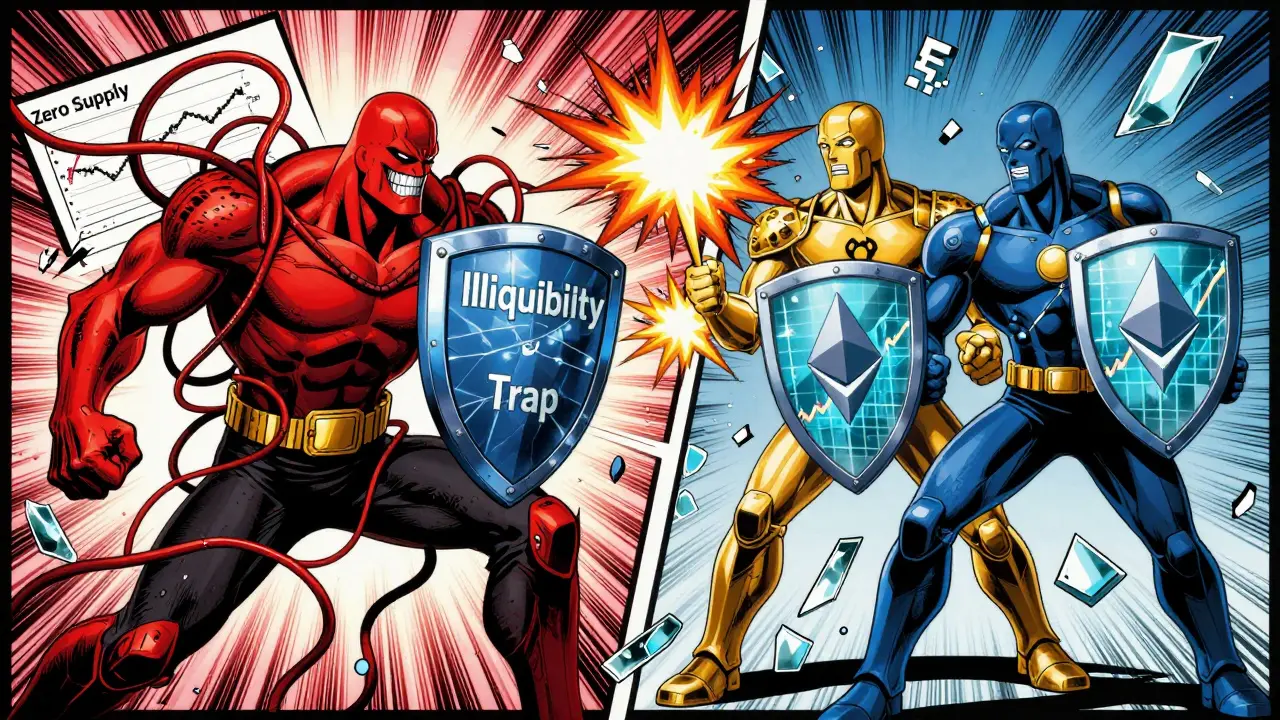
- Illiquidity Trap: Even if you manage to buy tokens, you won’t be able to sell them. With no buyers and no liquidity pool, your investment becomes worthless instantly.
- Smart Contract Vulnerabilities: Without audited code, the token could contain hidden functions that allow developers to drain wallets or freeze assets.
- Honeypot Scams: Some tokens are coded to allow buying but prevent selling. Given the lack of transparency, Marmaj could theoretically operate this way if it were ever launched.
Compare this to established assets. When you buy Solana or Polkadot, you are buying into ecosystems with thousands of developers, millions of users, and robust security audits. With Marmaj, you are buying into a void.

Is Marmaj a Testnet Token?
One plausible explanation for Marmaj’s existence is that it is a testnet token. Developers often create dummy coins to test blockchain functionality before launching a mainnet version. These tokens have no real-world value and are meant to be discarded. If Marmaj is indeed a testnet artifact, it will never gain value. It serves no purpose other than cluttering data feeds.
Another possibility is that it was a failed launch. Perhaps a team tried to create a meme coin or a utility token, failed to gain traction, and disappeared. In this scenario, the token remains on the blockchain as a digital ghost, occasionally pinged by data scrapers but ignored by humans.
How to Verify Cryptocurrencies Before Investing
The case of Marmaj teaches us a valuable lesson: always do your due diligence. Here is a quick checklist to avoid falling for similar anomalies:
- Check Circulating Supply: Ensure the token has a non-zero circulating supply on multiple trusted platforms like CoinMarketCap or CoinGecko.
- Verify the Contract: Look for the official smart contract address on block explorers like Etherscan or BscScan. Check if it has been verified by reputable audit firms.
- Search for Community: Look for active Discord, Telegram, or Twitter accounts. Real projects have real people talking about them.
- Review Liquidity: Use tools like DexScreener to see if there is actual trading volume. If the chart is flat or empty, stay away.
- Read the Whitepaper: Understand the technology. If there is no documentation, there is no product.
Marmaj fails every single one of these checks. It is not a hidden gem; it is a data error waiting to happen.
Conclusion: Move On
There is no secret opportunity hiding in Marmaj (MARMAJ). The data clearly points to a token with zero utility, zero community, and zero liquidity. Its presence on tracking sites is likely due to automated scraping of blockchain records rather than any genuine market activity. As an investor or enthusiast, your time is better spent researching projects with transparent teams, active development, and verifiable economic models. Don’t let curiosity lead you into dead ends. Stick to assets that exist in the real world, not just in database glitches.
Can I buy Marmaj (MARMAJ) on Binance or Coinbase?
No, you cannot practically buy Marmaj on these platforms. While data may appear in their systems, Binance lists the price as $0, indicating no active trading pair. Coinbase shows supply metrics but no ability to trade. The token has zero circulating supply, meaning there are no coins available for purchase.
Why does Marmaj have a price if the supply is zero?
This is likely a data error or a remnant of old listing information. Some aggregators cache historical prices or default to placeholder values when live data feeds fail. Since no actual transactions are occurring, the displayed price ($0.20 on some sites) is artificial and holds no market validity.
Is Marmaj a scam?
It is difficult to label it a traditional scam since there is no evidence of active fraudsters taking money. However, it exhibits characteristics of a "dead" project or a listing glitch. Investing in it carries extreme risk because you would likely lose all funds due to illiquidity and lack of support.
Where can I find the Marmaj whitepaper?
There is no publicly available whitepaper for Marmaj. The absence of documentation is a major warning sign. Legitimate cryptocurrency projects provide detailed technical and economic plans. The lack thereof suggests the project is either abandoned or never fully developed.
What is the total supply of MARMAJ?
According to data from January 2026, the total supply is approximately 21,019 coins. However, since the circulating supply is 0, these coins are not in the market. They may be held in locked wallets, unminted, or simply part of a defunct system.
 Cryptocurrency Guides