
You’ve probably seen it pop up in your feed or heard whispers in a Discord server. It’s got a catchy name, a funny logo, and uses the ticker BTC. But before you click “buy,” you need to know exactly what you are dealing with. Batcat (BTC) is not Bitcoin. It is not a tech powerhouse. It is a community-driven memecoin living on the Solana blockchain, launched in 2024 with a mission to protect investors from “villains” in the ecosystem. That sounds noble, but in the world of crypto memes, narrative often matters more than utility.
If you are wondering whether this tiny token is a hidden gem or a trap, you are asking the right questions. Most people jump into meme coins without checking the basics: liquidity, supply, and who actually holds the tokens. Let’s break down Batcat so you can decide if it fits your risk profile or if it’s better left for someone else to gamble with.
What Exactly Is Batcat (BTC)?
Batcat (BTC) is a speculative cryptocurrency token operating on the Solana network, categorized primarily as a memecoin due to its reliance on community sentiment rather than technical utility. Launched in 2024, it aims to build a viral brand around the idea of fending off bad actors in crypto. Unlike projects that solve real-world problems-like faster payments or decentralized storage-Batcat’s value proposition is purely social. Its price moves because people talk about it, not because it does anything useful.
The choice of the Solana blockchain is significant here. Solana is known for blazing-fast transactions and fees that cost fractions of a cent. This makes it the playground of choice for retail traders buying and selling small amounts of high-volatility tokens. Because Batcat runs on Solana, it doesn’t have its own security layer. It relies entirely on Solana’s consensus mechanism. If Solana goes down, Batcat freezes. If Solana gets hacked, Batcat is exposed. There is no independent tech stack backing this project.
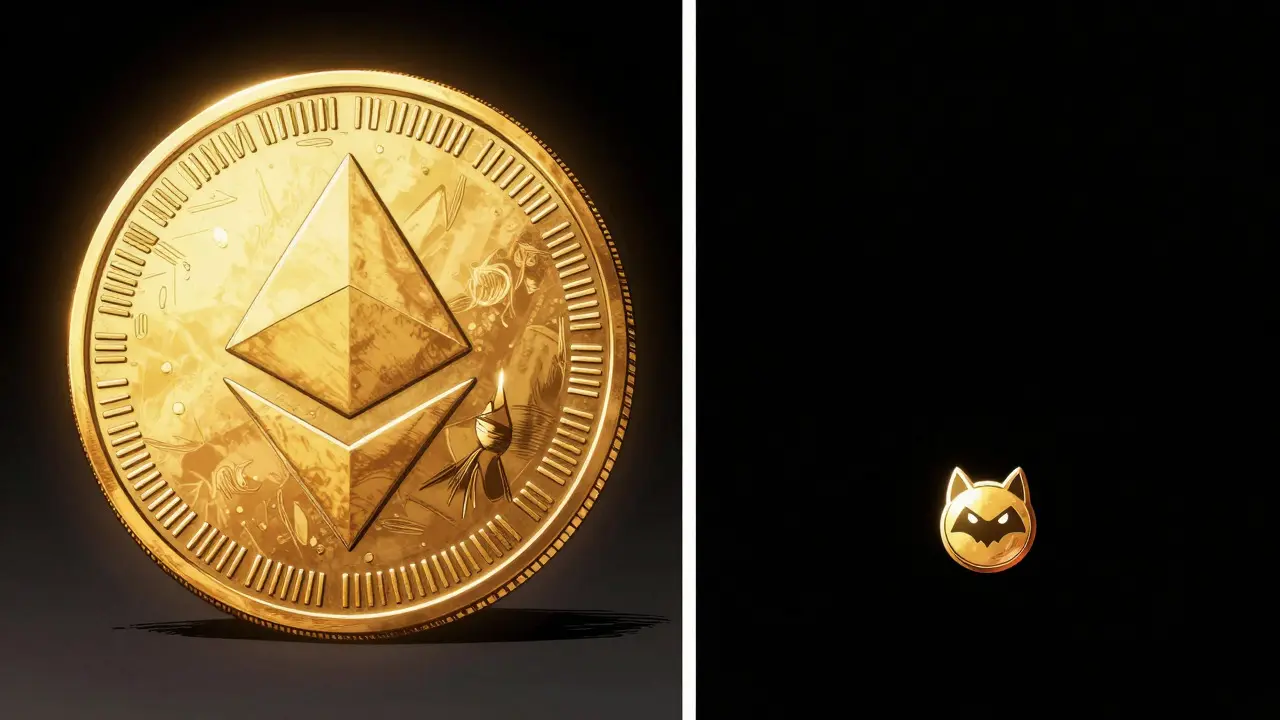
One confusing detail? The ticker symbol. Batcat uses **BTC**. In the crypto world, BTC universally stands for Bitcoin, the original and largest cryptocurrency. Using the same ticker for a micro-cap memecoin is either a bold marketing move or a dangerous source of confusion for beginners. Always double-check the contract address before swapping. You don’t want to think you’re buying Bitcoin when you’re actually buying a cartoon bat cat.
The Numbers Behind the Meme
Let’s look at the hard data. As of mid-2026, Batcat is trading at roughly $0.00001354 USD. To put that in perspective, you would need millions of these tokens to equal even a single dollar. The all-time high was $0.002992 back in April 2024. Since then, the price has dropped by approximately 98%. That is not a dip; that is a collapse typical of meme coins that fail to sustain momentum after their initial launch hype.
| Metric | Value / Status |
|---|---|
| Current Price | ~$0.00001354 USD |
| All-Time High (ATH) | $0.002992 (April 2024) |
| Total Supply | ~1 Billion Tokens |
| Market Cap | $12K - $60K (varies by source) |
| 24-Hour Volume | $10 - $1,000 (extremely low) |
| Holders | ~3,500 |
| Blockchain | Solana |
The market capitalization tells a story of obscurity. Depending on which aggregator you trust-CoinGecko says ~$60K, CoinMarketCap says ~$12K-the total value of all Batcat tokens in existence is less than the price of a used car. For context, major cryptocurrencies like Ethereum or even established altcoins have market caps in the billions or trillions. A market cap under $100K means there is very little money flowing in or out. This creates a problem called illiquidity. If you buy a large amount, you might find it impossible to sell without crashing the price further.
The circulating supply is another point of contention. Some sources report nearly zero circulating supply, while others say almost the entire 1 billion tokens are out there. This discrepancy suggests poor data reporting or complex vesting schedules that haven’t been clearly communicated to the public. When you can’t figure out how many tokens are actually tradable, you are flying blind.
Why Do People Buy Memecoins Like Batcat?
If the fundamentals are weak and the price has crashed 98%, why does anyone care? Human psychology. Memecoins tap into the fear of missing out (FOMO) and the desire for quick riches. In 2024 and 2025, stories of people turning $100 into $100,000 on Solana memes went viral. Batcat rode that wave initially. Investors weren’t buying technology; they were buying a lottery ticket.
The “protecting investors from villains” narrative is an attempt to create emotional loyalty. It frames holders as heroes fighting against rug pulls and scams. While flattering, it doesn’t change the math. If the community loses interest, the narrative dies with it. With only 3,500 holders, the base is incredibly thin. Compare that to Dogecoin or Shiba Inu, which have millions of holders and global brand recognition. Batcat is still trying to prove it can survive past its first year.
Community engagement is the lifeblood of any meme coin. Without active Twitter/X accounts, vibrant Discord servers, or regular updates from developers, the token becomes a ghost town. Available information suggests limited developer activity and no clear roadmap. There are no announced partnerships, no new features, and no utility upgrades. Just vibes. And in crypto, vibes fade fast.
The Risks You Need to Know
Investing in Batcat carries extreme risk. Here is what could go wrong:
- Liquidity Traps: With daily trading volumes sometimes reported as low as $10, selling your tokens might be difficult. You could hold them forever if no one wants to buy.
- Volatility: Prices swing wildly. A 25% drop in a week is normal for this asset class. One bad tweet can wipe out half your investment overnight.
- No Utility: Batcat doesn’t earn revenue, govern a protocol, or secure a network. Its value is 100% based on what someone else is willing to pay tomorrow.
- Ticker Confusion: The BTC symbol increases the chance of accidental purchases or phishing scams targeting confused users.
- Data Inconsistency: Discrepancies between exchanges regarding supply and volume make it hard to track true performance.
Regulatory uncertainty adds another layer of danger. Governments worldwide are cracking down on unregistered securities and misleading financial products. A memecoin with no whitepaper and vague origins could easily fall under scrutiny. If regulators label it a security, it could be delisted from exchanges, trapping your funds.
How to Check If Batcat Is Still Alive
If you are curious about entering the space, do your homework. Don’t just take my word for it. Follow these steps:
- Check Live Data: Go to CoinGecko or CoinMarketCap. Look at the 24-hour volume. If it’s near zero, the coin is effectively dead.
- Verify the Contract: Find the official Solana contract address from the project’s verified social media links. Never copy-paste from random comments.
- Monitor Socials: Join their Telegram or Discord. Are people chatting? Are devs responding? Or is it just bots posting emojis?
- Compare Liquidity: Use a tool like DexScreener to see the liquidity pool depth. Low liquidity means high slippage-you lose money just by clicking buy.
Remember, most meme coins fail. The ones that succeed usually do so within weeks of launch, not years later. Batcat has survived since 2024, which is impressive in itself, but survival isn’t success. Growth is.
Batcat vs. Other Solana Memecoins
To understand where Batcat stands, compare it to its peers. Projects like Bonk or WIF (Dogwifhat) started similarly but achieved massive adoption through aggressive marketing and exchange listings. They now have market caps in the hundreds of millions. Batcat remains stuck in the micro-cap range. The gap between them is widening, not closing.
This comparison highlights a harsh reality: in the meme coin race, early movers win. Latecomers struggle to gain traction unless they offer something genuinely new. Batcat’s theme hasn’t resonated enough to spark a second wave of growth. Until it does, it will remain a niche curiosity rather than a serious investment.
Is Batcat (BTC) the same as Bitcoin?
No. Batcat uses the ticker "BTC," which is confusing, but it is completely unrelated to Bitcoin. Bitcoin is the original cryptocurrency with a massive market cap. Batcat is a low-value memecoin on the Solana blockchain.
What is the current price of Batcat?
As of mid-2026, Batcat trades around $0.00001354 USD. However, prices vary slightly between exchanges like CoinGecko and CoinMarketCap due to low liquidity and inconsistent data reporting.
Is Batcat a good investment?
It is extremely high-risk. With a 98% drop from its all-time high and minimal trading volume, Batcat is speculative. Only invest money you can afford to lose entirely. It lacks utility and strong community growth compared to top-tier memecoins.
Which blockchain does Batcat run on?
Batcat operates on the Solana blockchain. This allows for fast, cheap transactions, making it popular among retail traders looking to swap small amounts of volatile tokens quickly.
How many Batcat tokens are in circulation?
The total supply is approximately 1 billion tokens. Circulating supply reports are inconsistent, ranging from near zero to nearly the full supply, depending on the data source. This ambiguity makes tracking true availability difficult.
 Cryptocurrency Guides