
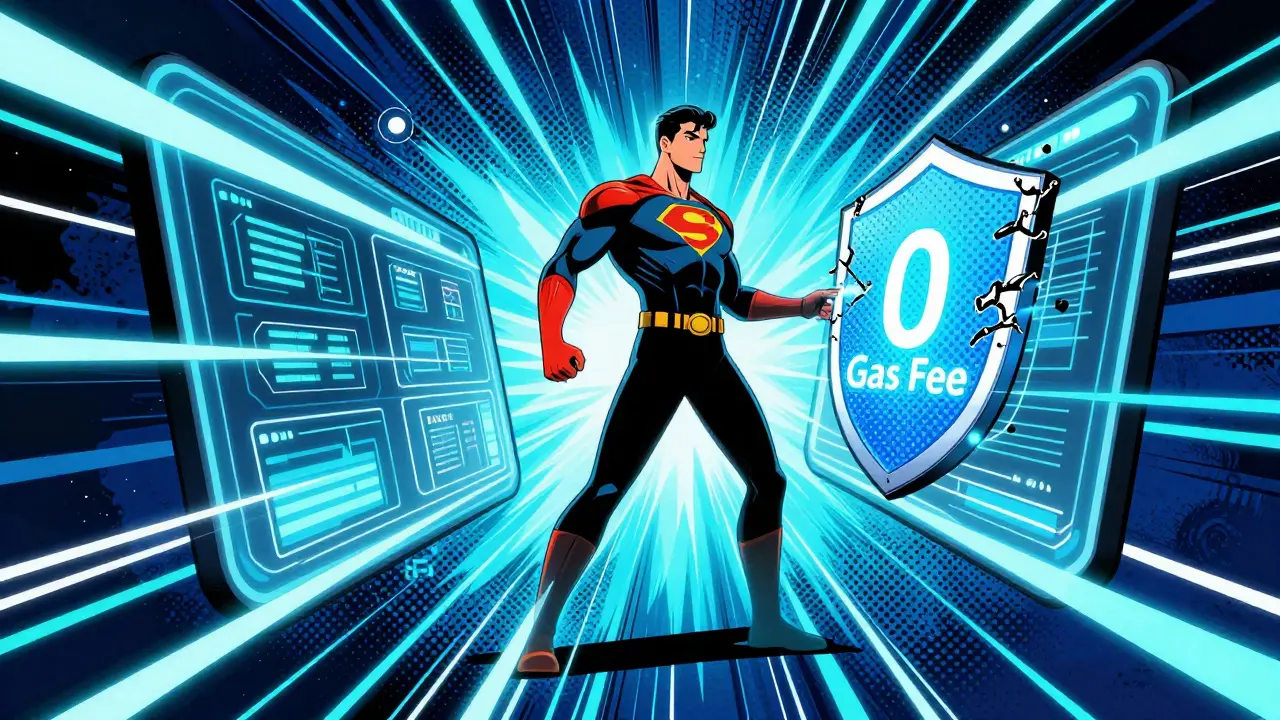
Imagine placing a trade that confirms in less than a second. Now imagine doing it without paying any gas fees to the network. That is the promise of ViteX, a decentralized cryptocurrency exchange built on the Vite blockchain using DAG technology for high-speed, fee-free trading. It sounds too good to be true, especially when you compare it to the sluggish, expensive experiences many users face on Ethereum-based platforms. But as with most things in crypto, there is always a catch.
I have spent time looking into how ViteX operates, who it serves, and whether it deserves a spot in your trading portfolio. The short answer? It is a fascinating technical experiment that offers incredible speed and cost savings but suffers from severe limitations in liquidity and asset variety. If you are a casual trader looking for Bitcoin or Ethereum exposure with zero friction, ViteX might intrigue you. If you are a pro seeking leverage, deep order books, or hundreds of altcoins, you will likely find it lacking.
How ViteX Actually Works
To understand ViteX, you first need to understand what it is not. It is not a centralized exchange like Binance or Coinbase where a company holds your funds. Instead, it is a fully decentralized application (dApp). This means you keep control of your private keys at all times. Your assets never leave your wallet unless you explicitly authorize a trade.
The magic happens under the hood thanks to the underlying infrastructure. ViteX runs on the Vite Blockchain, a public ledger utilizing Directed Acyclic Graph (DAG) technology and asynchronous architecture to achieve sub-second transaction confirmations. Most blockchains process transactions in blocks, one after another, which creates bottlenecks. DAG technology allows multiple transactions to happen simultaneously across different nodes. This is why you get those lightning-fast confirmations.
Furthermore, ViteX uses an on-chain order book. In many other DEXs, matching orders happens off-chain or through complex smart contracts that require heavy computation. ViteX matches orders directly on the chain efficiently. The result is a user experience that feels surprisingly close to a centralized exchange, despite being completely decentralized.
The Cost Advantage: Zero Gas Fees
Let’s talk about money, because that is usually why people care. Trading fees on ViteX are flat at 0.20% for both makers and takers. On its own, this is competitive. Many centralized exchanges charge similar rates for retail traders.
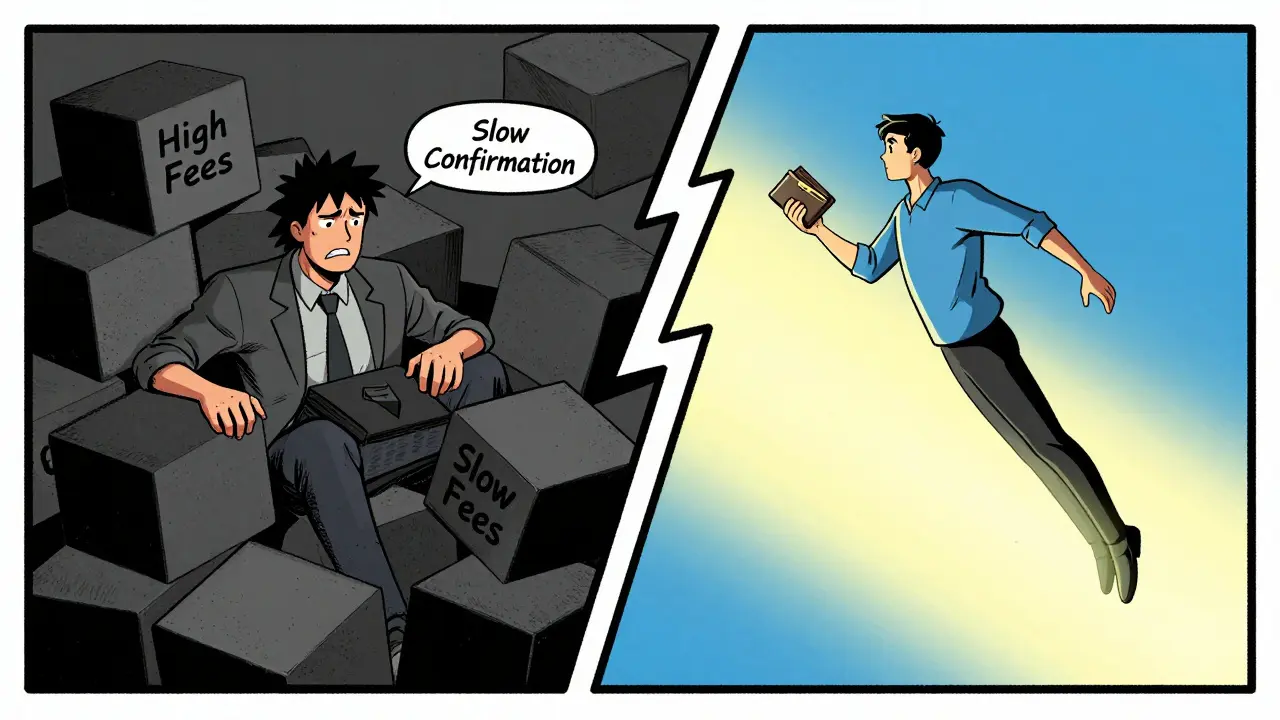
However, the real killer feature here is the elimination of gas fees. If you have ever traded on Uniswap or SushiSwap during a busy period, you know the pain. You might pay $5, $10, or even more just to execute a single swap due to network congestion. ViteX absorbs these costs within its own ecosystem structure. For small trades, this is a massive advantage. A $100 trade on Ethereum could cost you $5 in gas alone. On ViteX, that same trade costs you exactly $0.20 in exchange fees.
| Feature | ViteX | Typical Ethereum DEX |
|---|---|---|
| Trading Fee | 0.20% | 0.30% - 0.50% |
| Gas Fees | $0 | $5 - $50+ (variable) |
| Confirmation Time | < 1 second | 15 seconds - 10 minutes |
| Custody | Non-custodial (You hold keys) | Non-custodial (You hold keys) |
What Can You Actually Trade?
Here is where the excitement starts to cool down. While the technology is impressive, the selection of assets is painfully limited. Currently, ViteX supports only four primary trading pairs:
- VITE / USDT
- BTC / USDT
- ETH / USDT
- VITE / BTC
That is it. No Solana, no Cardano, no meme coins, no new DeFi tokens. If you want to diversify beyond the big three (Bitcoin, Ethereum, and Vite itself), you cannot do it here. This severely limits the platform's utility for active traders who thrive on volatility and variety.
Additionally, the order types are basic. Right now, you can only place limit orders. There are no market orders, which means you cannot instantly buy at the current price. You must specify the exact price you are willing to pay. Stop-loss orders are also missing, though they are reportedly planned for future updates. For experienced traders, the lack of market orders makes entering and exiting positions frustratingly slow.
The VX Token: Mining and Dividends
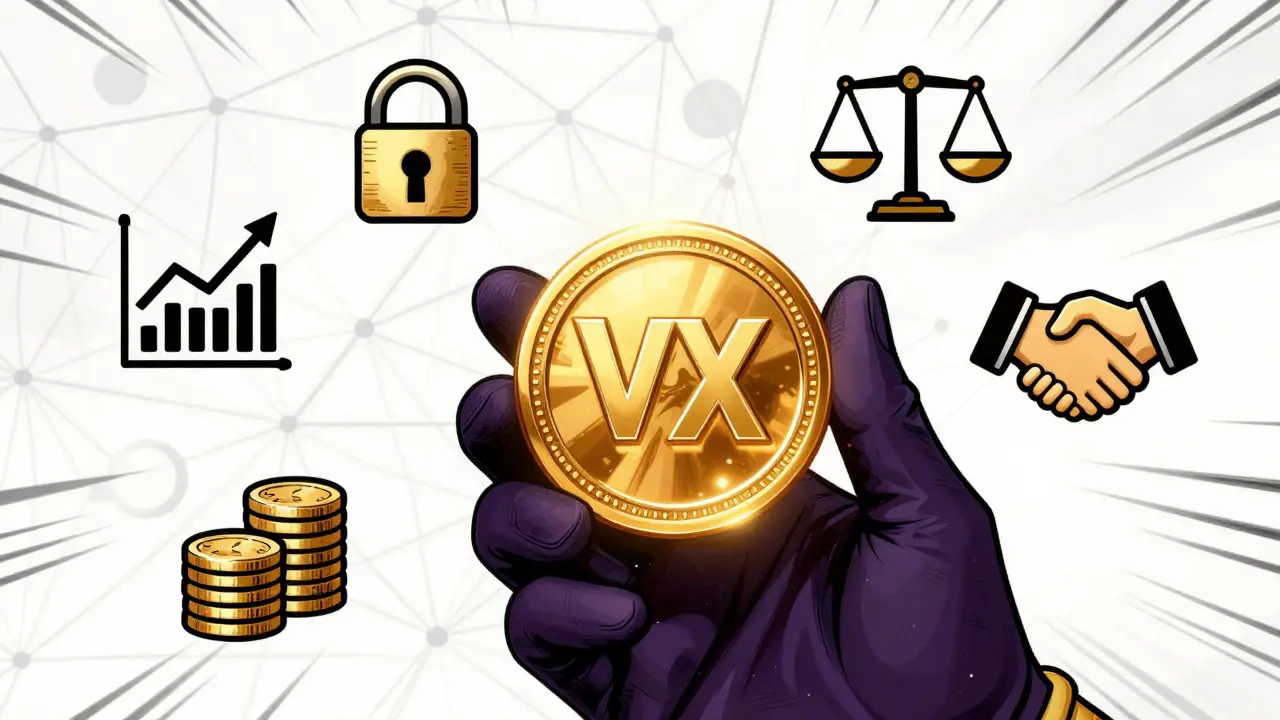
Every decentralized ecosystem needs a native token, and ViteX uses VX Token, the native utility token of the ViteX exchange used for staking, dividend distribution, and governance incentives.. Unlike many tokens that are pre-mined or sold in initial offerings, VX is designed to be mined by the community. This aligns with the ethos of decentralization.
You can earn VX through five distinct methods:
- Trading as Mining: Earn tokens based on your trading volume.
- Staking as Mining: Lock up your assets to support the network.
- Market-making as Mining: Provide liquidity to the order book.
- Referring as Mining: Invite new users to the platform.
- Listing as Mining: Contribute to listing new coins (though currently limited).
But earning them is only half the story. Holding VX gives you access to dividends. If you stake a minimum of 10 VX tokens in your exchange account, you become eligible for automatic dividend distributions via smart contracts. These dividends come from a portion of the trading fees generated on the platform. It is an interesting model that rewards long-term holders rather than just speculators. However, remember that dividend payouts depend entirely on the total trading volume of the exchange. Low volume means low dividends.
Security and Regulatory Realities
Because ViteX is non-custodial, your security largely depends on your own habits. You store your private keys locally. This is great because if the exchange gets hacked, your funds remain safe. It is bad because if you lose your seed phrase, there is no customer support team to reset your password. Your money is gone forever.
Regulatory status is another gray area. ViteX is officially based in China, with business operations in Silicon Valley. This hybrid structure provides flexibility but also ambiguity. There is no specific regulatory oversight protecting users. This means two things:
- Pros: You can trade freely without KYC (Know Your Customer) hurdles, preserving your privacy.
- Cons: If something goes wrong-technical bugs, disputes, or exploits-you have no legal recourse. There is no insurance fund like the SAFU fund on Binance.
Also, note that US investors are restricted from using the platform. If you live in the United States, ViteX is not an option for you due to compliance restrictions.
User Experience and Support
Visually, ViteX is clean. The interface is straightforward, avoiding the clutter often found on professional trading terminals. Beginners will appreciate the simplicity. However, simplicity comes at a cost. Advanced charting tools are minimal, and the lack of dedicated customer support channels is a frequent complaint.
If you run into issues, you are mostly on your own. There is no phone support, and email responses can be slow. The platform relies heavily on community forums and documentation. For a tech-savvy user, this is manageable. For someone who just wants to buy Bitcoin quickly and easily, this lack of hand-holding can be a barrier.
Who Should Use ViteX?
ViteX is not for everyone. It is a niche product solving specific problems for specific users. Here is how to decide if it fits your needs:
Use ViteX if:
- You prioritize speed and hate waiting for block confirmations.
- You want to avoid unpredictable gas fees entirely.
- You are interested in the VITE ecosystem and want to earn VX dividends.
- You value privacy and self-custody over convenience.
Avoid ViteX if:
- You need to trade a wide variety of cryptocurrencies.
- You rely on market orders for quick entry/exit.
- You are a US resident.
- You prefer having customer support available for emergencies.
- You seek advanced features like margin trading or futures.
Final Thoughts
ViteX represents a bold attempt to fix the biggest pain points of decentralized finance: speed and cost. Technically, it succeeds. The DAG-based architecture delivers a smooth, fast, and cheap trading experience that rivals centralized giants. The dividend model for VX holders adds a layer of passive income potential that is rare in the DEX space.
However, adoption lags behind innovation. With only four trading pairs and limited order types, ViteX struggles to attract the liquidity needed to compete with established players. Until it expands its asset list and improves its order execution options, it will remain a specialized tool rather than a mainstream exchange. Keep an eye on their roadmap for market orders and stop-loss features, as those additions could significantly change the landscape.
Is ViteX safe to use?
ViteX is considered safe from a custody perspective because it is non-custodial, meaning you retain control of your private keys. However, safety also depends on the smart contract code. While audits are standard practice, no system is immune to bugs. Additionally, the lack of regulatory oversight means you have no external protection if a dispute arises. Always use strong passwords and secure your seed phrase offline.
Can I use ViteX in the United States?
No, ViteX restricts access for users located in the United States due to regulatory compliance requirements. If you are a US resident, you will not be able to create an account or trade on the platform.
How do I earn VX tokens?
You can earn VX tokens through five methods: trading volume, staking assets, providing liquidity (market-making), referring new users, and contributing to coin listings. Each method has specific criteria and reward structures defined in the ViteX whitepaper.
Why are there no gas fees on ViteX?
ViteX eliminates traditional gas fees by utilizing the Vite blockchain's DAG architecture. This design allows for parallel transaction processing and efficient resource allocation, removing the need for miners to compete for block space in the way seen on Proof-of-Work chains like Ethereum. The exchange covers operational costs through its 0.20% trading fee.
Does ViteX offer market orders?
Currently, ViteX only supports limit orders. Market orders and stop-loss orders are not yet available but are listed in the platform's development roadmap for future implementation.
What cryptocurrencies can I trade on ViteX?
As of now, ViteX supports a very limited selection of four trading pairs: VITE/USDT, BTC/USDT, ETH/USDT, and VITE/BTC. This limitation is a significant constraint compared to major centralized exchanges.
 Cryptocurrency Guides
Mekz Wheoki
June 12, 2026 AT 18:35Oh look, another DAG-based solution that nobody uses because liquidity is basically non-existent. The tech might be shiny but if you can't trade anything other than BTC and ETH against USDT it's just a fancy calculator.
Rob Aronson
June 13, 2026 AT 06:50The zero gas fee model is actually quite elegant when you consider the asymptotic scaling limits of PoW chains. Most retail users don't realize that the 0.20% flat fee effectively subsidizes the computational overhead, which is a brilliant economic design choice for high-frequency micro-transactions 📉🚀
Kwon Bill
June 15, 2026 AT 05:03In many Asian markets we see similar hybrid models emerging where regulatory arbitrage allows for faster innovation cycles. The lack of KYC is a double-edged sword though, as it invites bad actors while empowering privacy advocates. It reflects a broader cultural shift towards decentralized autonomy rather than institutional trust.
Danna Charris
June 16, 2026 AT 02:22Fascinating. Truly. While the masses chase meme coins on congested networks, discerning traders appreciate the purity of a limit-order only book. It forces discipline. If you cannot wait for your price, you do not deserve to trade.
Fede Faith
June 17, 2026 AT 17:59I've been testing this out for small altcoin swaps and honestly the speed is insane. Just remember to keep your seed phrase offline because there is literally no customer support to call if you get phished. It’s a wild west experience but I like the control.
Josh Dodson
June 18, 2026 AT 22:48honestly i think ppl are overreacting to the limited pairs. its better to have a few good ones with low fees than hundreds with hidden costs. plus the vx dividends are cool if u hold enough. just dont expect it to replace binance overnight lol
Suman Patil
June 19, 2026 AT 16:20Let's break this down simply folks! The DAG structure means transactions happen in parallel not sequentially. This is why you get sub-second confirmations. It is a game changer for those tired of waiting 10 minutes for an eth tx to clear. Give it a try!
Kumaran sowkarpet
June 21, 2026 AT 03:42Very interesting review thanks for sharing :) I tried it last week and the interface is very clean. No clutter at all. Just wish they had more coins listed but maybe they will add more soon. Keep up the good work 👍
Mauricio Contreras Loredo
June 22, 2026 AT 03:41Sure, great for people who trade $10 at a time. For anyone serious about position sizing or hedging, the lack of market orders is a dealbreaker. It’s cute though.
sreeja boora
June 22, 2026 AT 15:11The regulatory ambiguity is concerning. Operating from China with US restrictions creates a legal gray zone that could jeopardize user funds if geopolitical tensions rise. We must prioritize platforms with clear jurisdictional compliance to ensure long-term stability and safety for investors.
Grace Newman
June 22, 2026 AT 23:06One must question the true nature of this 'decentralization.' Is it merely a facade? The centralized servers hosting the frontend suggest otherwise. Who controls the keys to the kingdom? The silence of the developers regarding their identity is deafening and deeply suspicious.
Annemarie Fitzgerald
June 24, 2026 AT 01:09It reminds me of the early days of internet forums before corporate takeover. Pure chaos but also pure freedom. I love the idea of mining tokens by just trading. It feels so retro yet futuristic at the same time. Why does everything need to be regulated anyway?
Abby Sivertsen
June 24, 2026 AT 06:07I mean, if you’re not in the US and you hate paying gas, this is pretty much the only option right now. Don’t come crying to me when you lose your seed phrase though. Self custody means self responsibility. Period.
Benjamin Eisen
June 25, 2026 AT 01:51I was wondering how the slippage works on such a thin order book. Since there are only four pairs, is the spread wide? I would love to know more about the actual execution quality compared to uniswap v3.
Kenneth Riley
June 26, 2026 AT 03:30you guys are missing the point entirely. this isn't about convenience it's about ideological purity. the fact that it's slow to use is a feature not a bug. it filters out the degens who want instant gratification. real holders stay. rest fomo
ravi mahla
June 27, 2026 AT 23:06Haha nice try Vite team trying to compete with Binance. Good luck with that. But hey if you like playing with fire go ahead. Just don't blame us when the rug pulls.
Mark Brunschwiler
June 28, 2026 AT 09:10I feel like everyone here is too focused on the numbers. What about the soul of the trade? Does ViteX make you feel alive when you click buy? Or does it just feel cold and mechanical? I need my trades to have emotion. This platform lacks heart.
Sonya O'Brien
June 30, 2026 AT 04:50I have been following the development of DAG-based blockchains for quite some time now, and while the theoretical throughput is impressive, the practical application often suffers from the oracle problem and finality issues that are not adequately addressed in this review. Furthermore, the reliance on a single native token for governance creates a centralization vector that contradicts the stated goals of decentralization, leading to potential vulnerabilities in the consensus mechanism that could be exploited by whale holders who accumulate significant voting power over time, thereby undermining the democratic ideals of the protocol.
Filbert Reeves
June 30, 2026 AT 10:46Actually the whole concept of 'gas' is a scam invented by ethereum miners to bleed retail dry. By avoiding it you are falling into a different trap where the exchange takes a cut of every trade silently. You think you are saving money but you are losing agency. Also the chinese connection is a red flag for surveillance capitalism disguised as crypto utopia. Wake up sheeple.
Nick Rice
June 30, 2026 AT 19:48Listen up. If you are going to use this you need to understand the risks. No customer support means you are on your own. No market orders means you need patience. Do not bring your CEX habits here. Adapt or die.
Manish Prajapat
July 2, 2026 AT 00:45I agree with the assessment of the limitations. However, the philosophical underpinning of returning control to the user is valuable. Perhaps the community should collaborate to propose new asset listings through the governance process to expand utility gradually.
John Doe
July 2, 2026 AT 15:30It breaks my heart to see so much potential wasted on such a limited scope. Imagine if they had integrated stablecoins properly from day one. The frustration of users being locked out of quick exits is palpable. We need empathy in tech design, not just raw speed.
Skm Shubham
July 4, 2026 AT 02:51This is garbage. Anyone who thinks a DEX with 4 pairs is viable is delusional. The liquidity depth is nonexistent. You will slip so hard on any decent sized trade. Save yourself the headache and stick to Uniswap despite the gas. At least there you have options.