
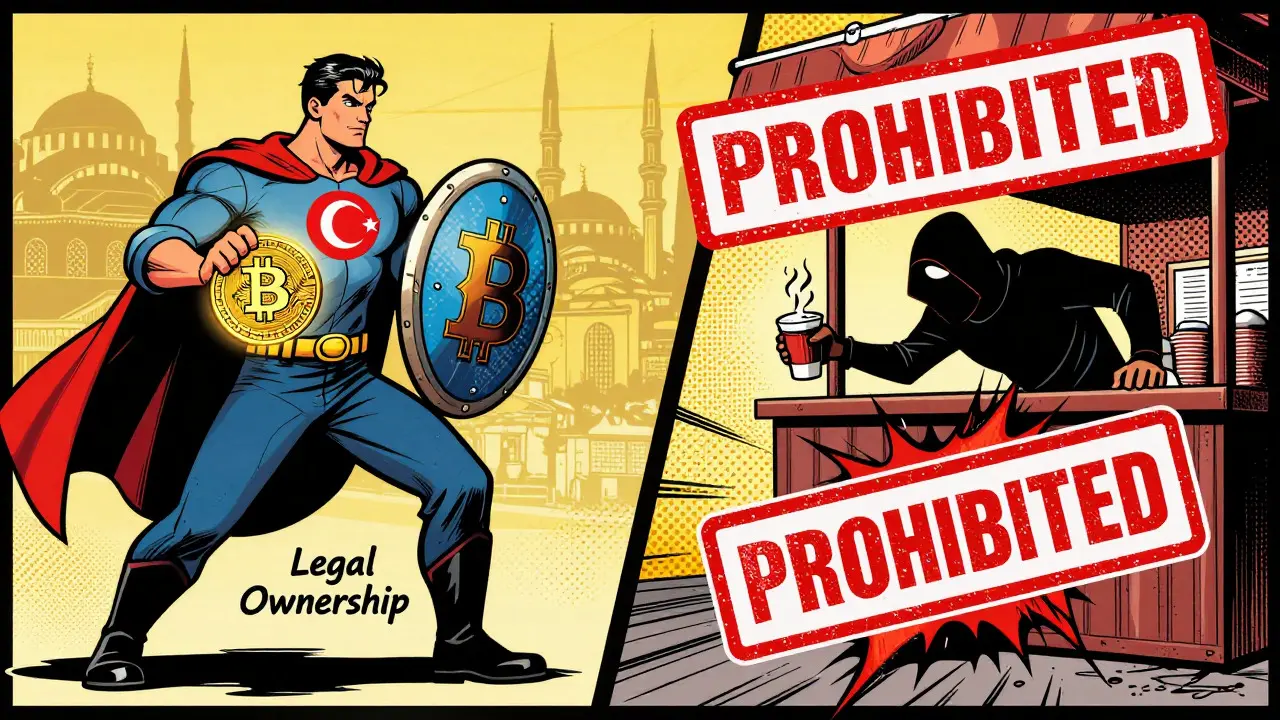
Imagine holding a digital asset that you can trade freely but cannot use to buy your morning coffee. This is the reality for millions of people in Turkey, where the regulatory landscape for cryptocurrency has shifted dramatically. For years, the country operated in a gray area, but with new rules taking effect in February 2025, the game has changed completely. If you are trading or planning to enter this market, understanding the fine line between legal ownership and illegal payment usage is critical.
The core issue isn't whether you can own Bitcoin or Ethereum-it’s how you interact with it within the borders of one of the world's most active crypto markets. The Central Bank of Turkey (TCMB) maintains a strict stance: the Turkish lira remains the only legal tender. Yet, simultaneously, Turkey ranks eleventh globally for crypto adoption. How does a nation balance these two opposing forces? The answer lies in a complex web of licenses, capital requirements, and upcoming powers granted to financial watchdogs.
The Dual Reality: Legal Ownership vs. Payment Ban
To navigate this space, you first need to grasp the fundamental split in Turkish law. Since April 2021, owning and trading cryptocurrencies has been perfectly legal. You can buy, sell, and hold digital assets without fear of criminal prosecution for simple possession. However, using those same assets to pay for goods or services is strictly prohibited. This distinction creates a unique friction point for users who often turn to peer-to-peer (P2P) methods to bridge the gap between their crypto holdings and everyday spending needs.
This prohibition stems from the TCMB's desire to protect the monetary sovereignty of the Turkish lira. In a country where currency volatility has been a persistent concern, regulators view widespread crypto payments as a threat to financial stability. Consequently, while you might see high trading volumes on local exchanges like BTCTurk and Paribu, you won't find many merchants accepting Bitcoin directly at checkout. Instead, a thriving gray market exists where users convert crypto back into lira quickly, often navigating around formal banking channels to avoid scrutiny.
For traders, this means your strategy must focus on investment rather than utility. If you are looking to use crypto as a medium of exchange in Turkey, you are currently stepping outside the bounds of the law. But if you are treating it as an asset class-similar to stocks or gold-you are operating within a clearly defined, albeit heavily regulated, framework.
New Rules for Exchanges: The CASP License Era
If you run a business or plan to partner with one, the July 2024 'Law on Amendments to the Capital Markets Law' is your new bible. This legislation introduced the concept of Crypto Asset Service Providers (CASPs). No longer can any entity set up a basic website and start facilitating trades. To operate legally, platforms must obtain a license from the Turkish Capital Markets Board (CMB).
The barriers to entry are intentionally high. Here is what the new landscape looks like for service providers:
- Minimum Capital for Exchanges: Companies must hold at least 150 million Turkish lira (approximately $4.1 million) in minimum capital.
- Minimum Capital for Custodians: Firms offering custody services face an even steeper hurdle, requiring 500 million Turkish lira (about $13.7 million).
- Technological Audits: The Scientific and Technological Research Council of Türkiye (TÜBİTAK) conducts mandatory audits of all technological systems to ensure security and reliability.
- Ongoing Reporting: CASPs must provide regular operational updates to the CMB and maintain detailed records of all transactions, including canceled or unexecuted ones.
These requirements effectively consolidate the market. Smaller startups and informal P2P platforms struggle to meet these thresholds, favoring larger, established firms. For international companies looking to expand into Turkey, this means significant upfront investment in compliance infrastructure, risk management teams, and legal counsel. The learning curve for full regulatory compliance typically takes 6 to 12 months, a timeline that demands patience and resources.
AML Protocols and the Role of MASAK
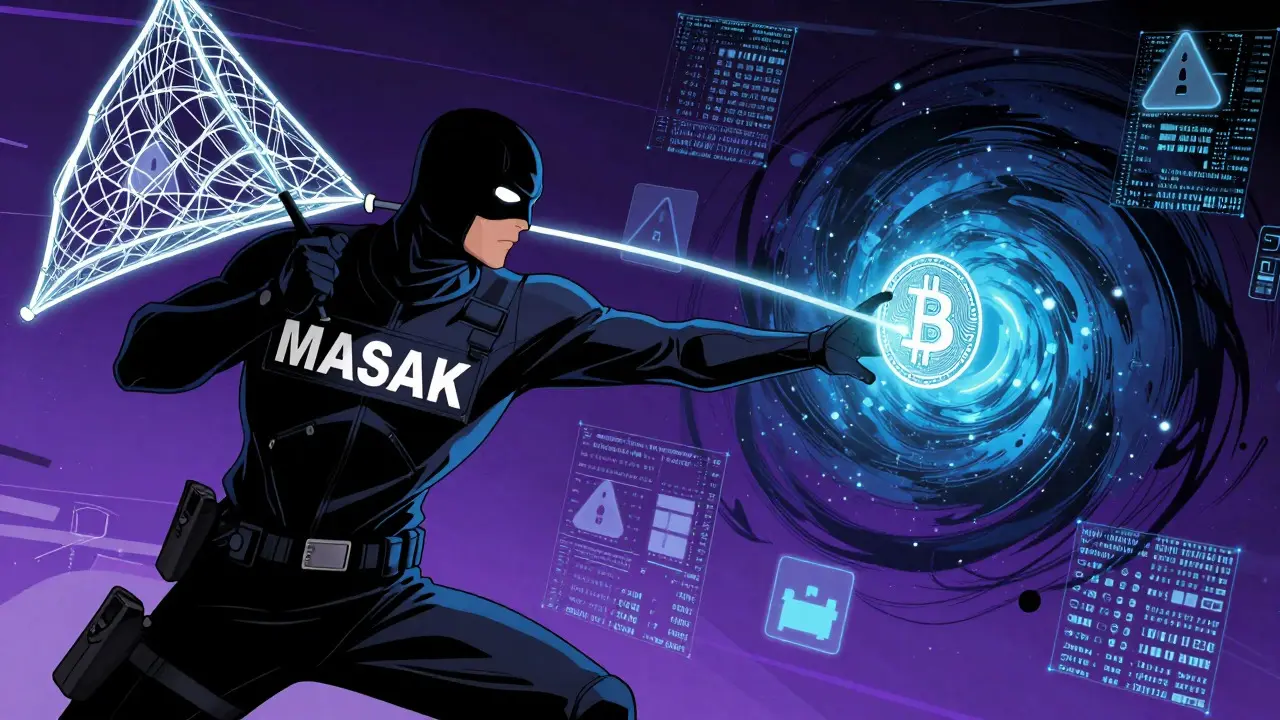
Behind the scenes, the Financial Crimes Investigation Board (MASAK) is tightening its grip on anti-money laundering (AML) efforts. Under current rules, identity verification is mandatory for transactions exceeding 15,000 Turkish lira (roughly £425). Unregistered wallets face strict checks, making anonymity increasingly difficult for large-scale traders.
But the real shake-up is coming. Draft legislation currently being prepared for the Grand National Assembly aims to grant MASAK unprecedented authority. According to recent reports, this bill would allow MASAK to freeze cryptocurrency accounts linked to suspicious activity. This power extends across payment systems, electronic money institutions, banks, and crypto exchanges alike.
Why the sudden urgency? Regulators are targeting 'rented accounts'-a common tactic where criminals pay individuals to use their bank or crypto accounts for illegal gambling and financial fraud. By aligning with Financial Action Task Force (FATF) global standards, Turkey seeks to plug these loopholes. For legitimate users, this means enhanced security against fraud but also increased privacy concerns. Your wallet address could potentially be blacklisted if linked to illicit activity, halting your ability to move funds until the issue is resolved.
Comparing Turkey’s Approach to Global Standards
How does Turkey stack up against other major economies? The comparison reveals a distinct philosophy. While the European Union’s Markets in Crypto-Assets (MiCA) framework allows for regulated crypto payments, Turkey draws a hard line. The U.S. operates on a state-by-state basis, creating a patchwork of rules. Turkey, by contrast, offers national clarity but with stricter limitations on utility.
| Feature | Turkey | European Union (MiCA) | United States |
|---|---|---|---|
| Crypto Payments | Prohibited | Allowed (Regulated) | Varies by State |
| Exchange Capital Requirement | 150 Million TRY (~$4.1M) | Varies by Member State | No Federal Minimum |
| Primary Regulator | CMB & MASAK | ESMA & Local Authorities | SEC, CFTC, FinCEN |
| Account Freezing Power | Proposed (Draft Bill) | Existing Mechanisms | Existing Mechanisms |
| Legal Status of Assets | Legal (Non-Tender) | Legal (Financial Instrument) | Legal (Property/Commodity) |
One key takeaway is that Turkey’s framework places more stringent capital requirements on exchanges compared to many European countries. This suggests a government intent to filter out risky players and ensure that only financially robust entities operate within its borders. For investors, this could mean greater safety but less choice in terms of available platforms.
Impact on Traders and Everyday Users
So, what does this mean for you? If you are a retail trader in Istanbul or Ankara, the day-to-day experience is evolving. The ban on crypto payments has pushed many users toward P2P trading platforms. While convenient, these methods carry inherent risks, including counterparty default and regulatory crackdowns. With the new identity verification rules, the days of anonymous large-scale trading are numbered.
Community feedback from Turkish crypto forums highlights frustration with limited payment options. Many users express concern that the upcoming identity requirements will compromise their privacy. Yet, there is also praise for the legal clarity surrounding ownership. Knowing exactly where the line is drawn helps reduce anxiety about arbitrary enforcement.
Additionally, the blocking of unauthorized platforms like PancakeSwap by the CMB in July 2024 serves as a stark reminder. Decentralized Finance (DeFi) protocols that lack local licensing may find themselves inaccessible to Turkish IP addresses. This forces users to rely on centralized, licensed exchanges, which are subject to the rigorous oversight mentioned earlier.
Taxation and Future Outlook
A frequently asked question is about taxes. As of October 2025, profits from cryptocurrency trading remain untaxed in Turkey. This provides a short-term incentive for traders to realize gains. However, experts warn that this status is unlikely to last forever. As regulations mature and the government seeks additional revenue sources, a tax framework for digital assets is almost inevitable.
Looking ahead, the Finance Ministry is preparing further rules requiring exchanges to collect detailed information on the source and purpose of transactions. Limits on stablecoin transfers are also on the table, aimed at curbing capital flight. These measures complement the broader regulatory framework, signaling a government intent to integrate crypto into the formal economy while maintaining tight control over monetary flows.
For businesses and individual traders, the message is clear: adapt or exit. The era of wild west crypto trading in Turkey is over. The future belongs to compliant, well-capitalized players who can navigate the complexities of CMB licensing and MASAK oversight. Whether this leads to long-term market growth or stifles innovation remains to be seen, but one thing is certain-the rules of the game have changed.
Is cryptocurrency legal in Turkey?
Yes, owning and trading cryptocurrency is legal in Turkey. However, using crypto as a means of payment for goods and services is prohibited by the Central Bank of Turkey (TCMB). The Turkish lira remains the sole legal tender.
What is a CASP license in Turkey?
A CASP (Crypto Asset Service Provider) license is a mandatory operating permit issued by the Turkish Capital Markets Board (CMB). It is required for any company providing crypto exchange or custody services. Obtaining it involves meeting high capital thresholds and passing technological audits.
When do the new crypto regulations take effect?
The comprehensive new regulations for crypto asset service providers are set to take effect in February 2025. These rules include stricter capital requirements, mandatory reporting, and enhanced AML protocols.
Can MASAK freeze my crypto account?
Currently, MASAK enforces AML rules, but draft legislation proposes granting them the power to freeze cryptocurrency accounts linked to suspicious activity. This aims to combat money laundering and terrorist financing by aligning with FATF standards.
Are crypto profits taxed in Turkey?
As of October 2025, cryptocurrency profits are not taxed in Turkey. However, this status may change in the future as the regulatory framework matures and the government explores new revenue streams.
What happens to decentralized exchanges like PancakeSwap?
Unauthorized platforms, including some decentralized exchanges like PancakeSwap, have been blocked by the CMB. Users in Turkey may face access issues unless they use licensed, compliant exchanges that adhere to local regulations.
 Cryptocurrency Guides