
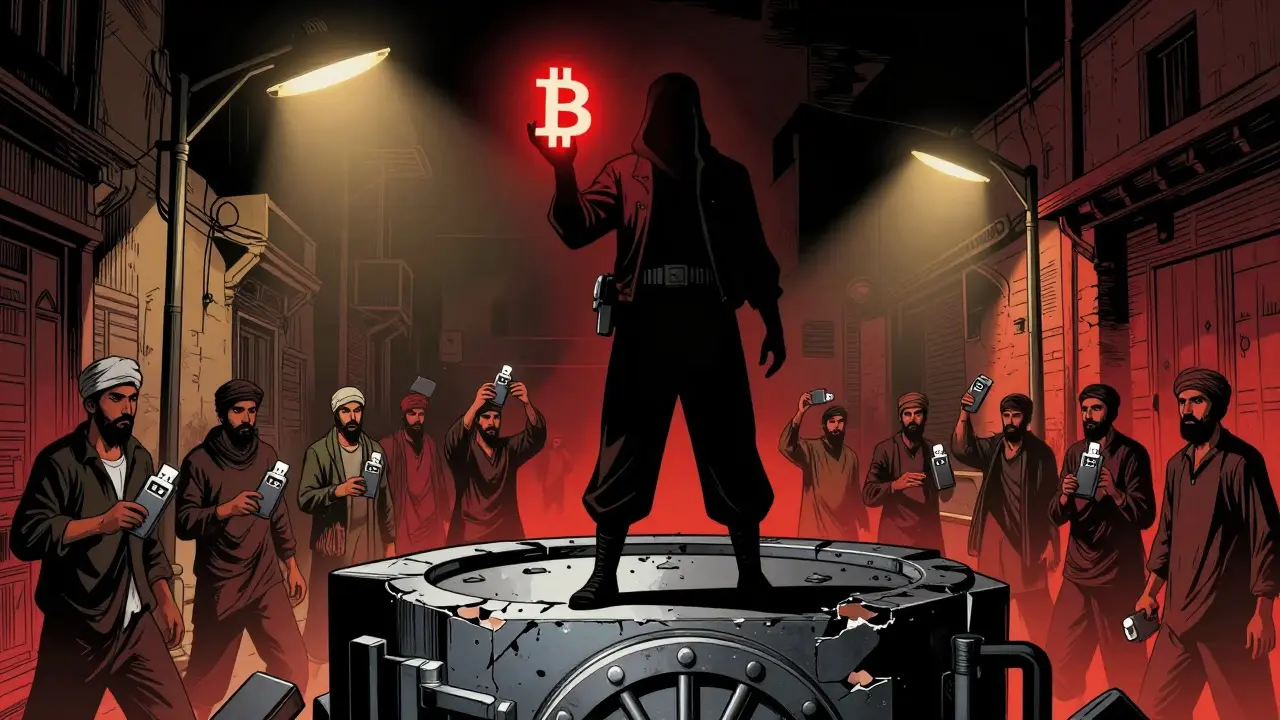
When the Taliban took control of Afghanistan in August 2021, they didn’t just change the government-they rewrote the rules of money. By August 15, 2022, they made it clear: Bitcoin and all other cryptocurrencies are illegal. Not just regulated. Not just monitored. Forbidden. Under their interpretation of Sharia law, digital assets like Bitcoin, Ethereum, and USDT are haram-sinful, unlawful, and a threat to Islamic financial order.
Why? The Taliban’s reasoning is simple, and it’s rooted in religious doctrine. They argue that Bitcoin has no real value. Unlike gold or wheat, it doesn’t exist in the physical world. It can’t be held. It can’t be used to buy food or shelter directly. To them, that makes it gambling-maysir-which is strictly banned in Islam. They also claim crypto undermines national currency and enables money laundering, something their Financial Transactions and Reports Analysis Center (FinTRACA) says it’s duty-bound to stop.
How the Ban Works in Practice
The ban isn’t just a statement. It’s enforced with raids, arrests, and seizures. In Herat alone, 16 crypto exchanges were shut down in 2022. Dealers were arrested. Wallets were confiscated. People lost savings worth tens of thousands of dollars. One Reddit user, "KabulTrader88," reported losing 1.2 Bitcoin-about $52,800 at the time-when police raided their home. There are no courts to appeal to. No legal channels. Just silence or violence.
Da Afghanistan Bank (DAB), the country’s central bank, backed the ban by declaring crypto "contrary to Islamic principles." Even though the bank itself has been crippled by international sanctions-$9.5 billion in foreign reserves frozen-it still insists on controlling money. The Taliban’s message is clear: Only Afghan currency, under their authority, is allowed.
The Paradox: Why People Still Use Bitcoin
Here’s the twist: despite the ban, more Afghans than ever are using crypto.
Before the Taliban returned, Afghanistan was already a top-20 country in global crypto adoption, according to Chainalysis. In 2021, around $740 million flowed through digital wallets-mostly from overseas workers sending money home. When banks froze accounts and foreign aid dried up, crypto became a lifeline. By 2024, 38% of Afghans used cryptocurrency for remittances, up from just 2% before the ban.
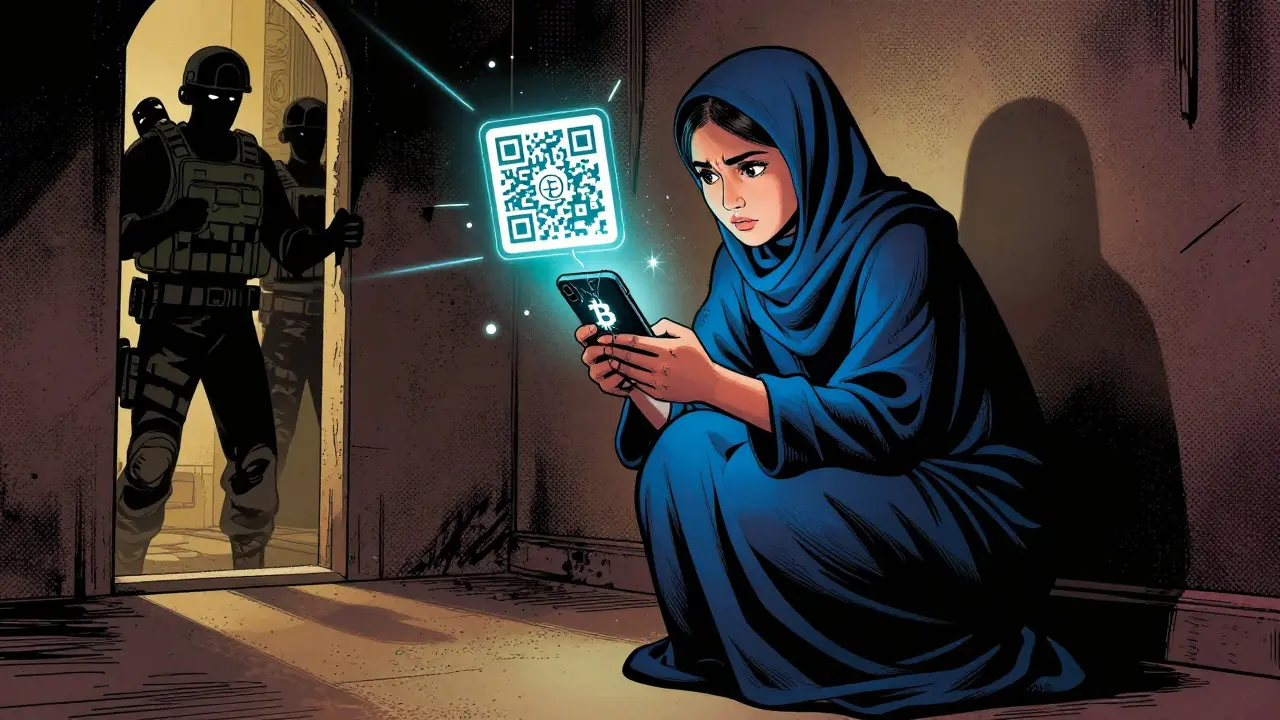
Women are especially reliant. With many barred from working or accessing banks, Bitcoin offers a way to receive money from family abroad without needing a male guardian’s permission. The Digital Citizen Fund found that 687 Afghan women received Bitcoin training through underground networks. Nearly 9 out of 10 said it gave them more control over their finances. But 42% were harassed or threatened by Taliban officials when caught using it.
Telegram groups like "AfghanCryptoHelp" have over 15,000 members. They share tips on how to use non-custodial wallets like Trust Wallet, how to avoid detection, and how to trade USDT in person. Some use SMS-based blockchain tools after internet blackouts-like the 48-hour nationwide outage in October 2024 that cut off 13 million people. These aren’t tech-savvy users. They’re mothers, teachers, and shopkeepers who learned blockchain basics in secret.
Sharia Law: Is Crypto Really Haram?
The Taliban’s view isn’t the only one in the Islamic world. In fact, many Islamic scholars disagree.
The OIC’s Fiqh Academy, which represents over 50 Muslim countries, said in 2022 that crypto "may be permissible if it serves legitimate economic purposes." Dubai’s Islamic Economy Centre suggested the same. Even Iran, another theocratic state, allows mining under license-though it bans trading. But Afghanistan? No exceptions. No licenses. No gray area.
Dr. Mohsin Choudhry, a scholar at the Journal of Islamic Accounting and Business Research, wrote in 2022 that Bitcoin can meet Sharia requirements if used as a medium of exchange-not a gambling tool. He argues that if people use it to pay for goods or send money to family, it fulfills the Islamic principle of facilitating trade and removing hardship.
The Taliban rejects this. For them, the absence of a physical backing is enough. No intrinsic value = no legitimacy. It doesn’t matter that Bitcoin has been used for 10 years to move money across borders, protect savings from inflation, or bypass corrupt banks. To them, it’s still gambling.
What’s the Real Goal?
Beyond religion, the ban is about control. Afghanistan’s economy collapsed after the U.S. withdrawal. The banking system is broken. Foreign aid stopped. The Taliban can’t print money fast enough. So they ban anything they can’t track.
They’ve also banned foreign currencies in 70% of transactions. They want Afghans to rely only on the Afghan afghani. But the afghani has lost 40% of its value since 2021. People turn to Bitcoin because it’s stable, global, and untraceable-at least until they get caught.
And yet, there are reports that Taliban officials themselves accept Bitcoin at border checkpoints. A December 2023 UN report mentioned payments made in crypto to secure passage. If the leaders are using it, why is it haram for everyone else?
The Future: Can the Ban Last?
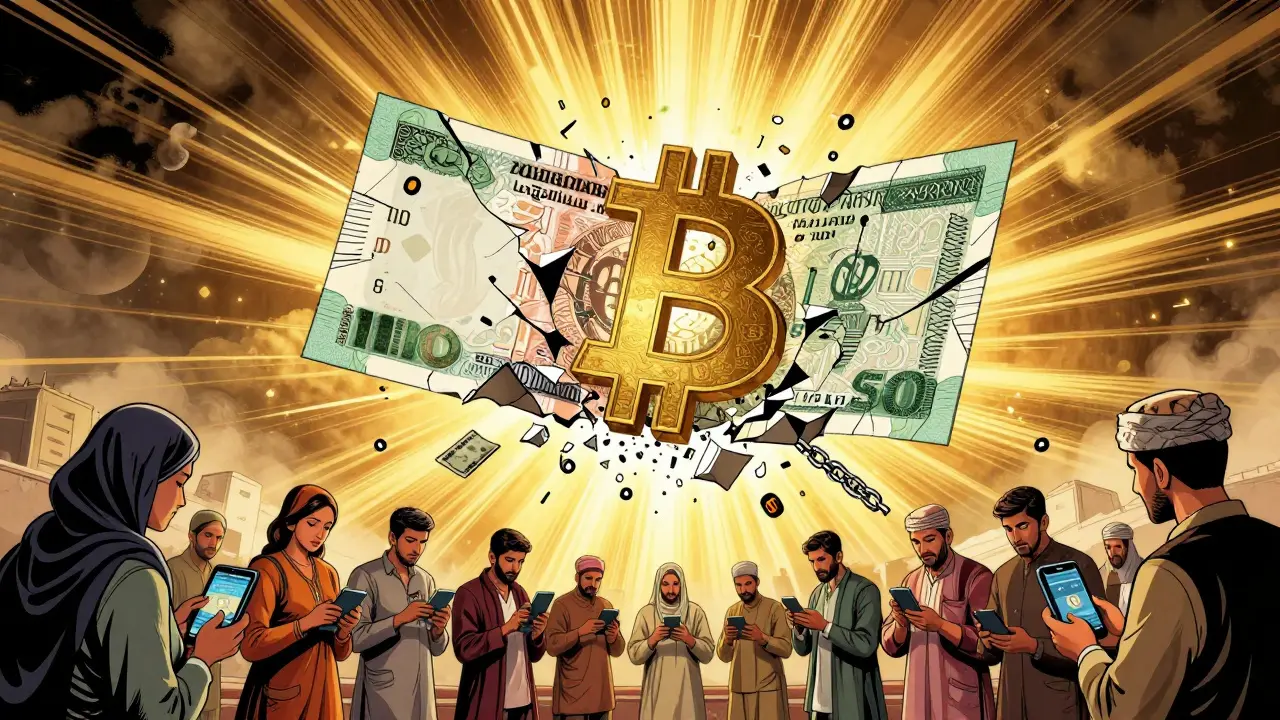
As of 2025, the ban is still in force. In Q1 alone, 47 crackdowns happened across 15 provinces. 112 people were arrested. But P2P trading volumes hit $4.2 million monthly-up 22% from last year. USDT makes up nearly 70% of those trades because it’s tied to the U.S. dollar and easier to use.
Goldman Sachs predicts the ban has only a 30% chance of lasting beyond 2028. Why? Because the economy keeps getting worse. GDP shrank over 20% between 2021 and 2023. People are starving. Families need money. And Bitcoin works.
Iran’s experience shows what might happen next. Even after banning trading in 2022, Iran quietly allowed limited crypto use as inflation soared. Afghanistan may follow the same path-not because the Taliban changed their mind, but because they have no choice.
For now, the ban remains absolute. But underground networks grow stronger. More people learn how to use crypto. More women find independence. More families survive.
The Taliban can shut down exchanges. They can arrest traders. They can even cut the internet. But they can’t stop people from needing to send money home. They can’t ban hope.
What This Means for the Rest of the World
Afghanistan’s story isn’t just about religion or politics. It’s about what happens when governments try to control money that was designed to be free.
Bitcoin doesn’t need banks. It doesn’t need permission. It doesn’t care about borders or laws. And when people are desperate, they find a way.
The Taliban thought banning crypto would protect Islamic values. Instead, it revealed how fragile control really is when survival is on the line.
 Cryptocurrency Guides