
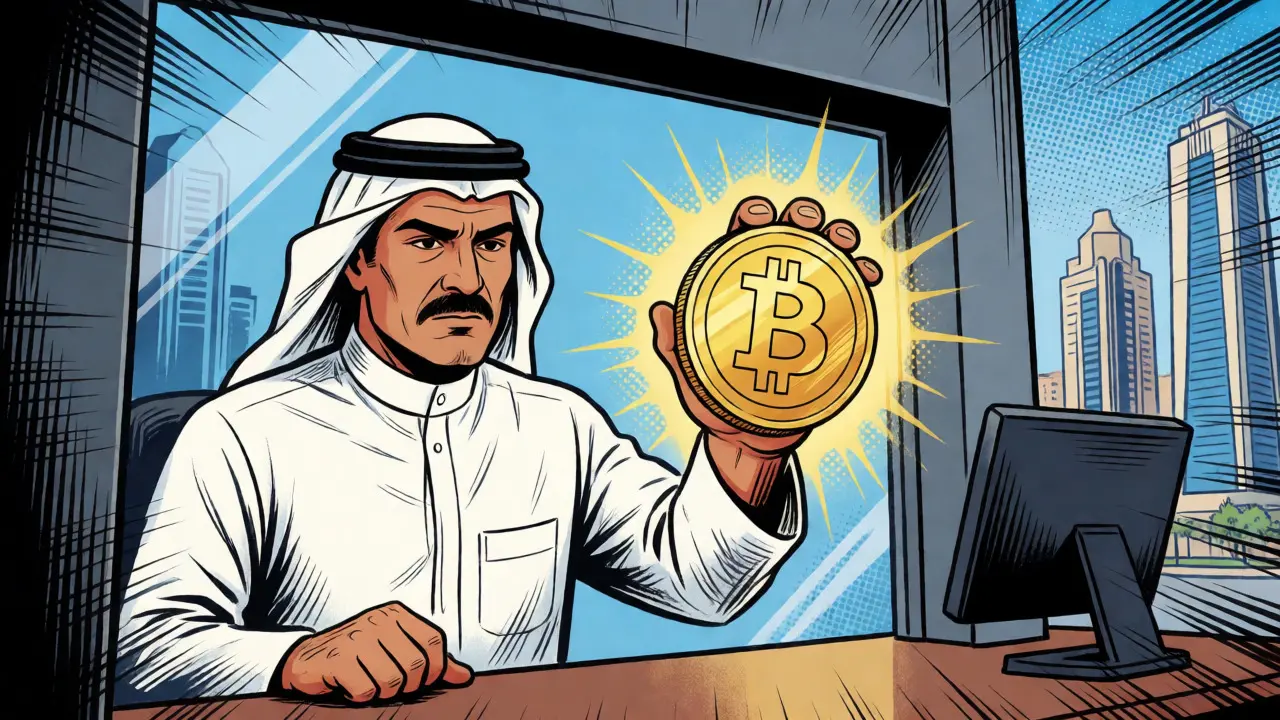
Imagine trying to buy a coffee in Doha with Bitcoin. You can’t. Not because the merchant doesn’t want your money, but because the bank processing the transaction is legally forbidden from touching it. This isn’t a hypothetical scenario; it’s the daily reality for financial institutions in Qatar. Since 2018, the country has maintained one of the strictest prohibitions on cryptocurrency trading and investment activities in the Gulf region. But here’s the twist that confuses many outsiders: while you can’t trade Bitcoin, you can own a piece of a skyscraper via blockchain technology. How does a country ban the most popular digital asset class while simultaneously opening its doors to digital securities? The answer lies in a nuanced regulatory framework that distinguishes between speculative tokens and utility-focused real-world assets.
The Core Prohibition: What Exactly Is Banned?
To understand the landscape, you have to look at the source of the restriction. In February 2018, the Qatar Central Bank (QCB) issued Circular No. (6) of 2018. This document explicitly prohibited all financial institutions in Qatar from engaging with cryptocurrencies. It wasn’t just a suggestion; it was a hard stop. Banks couldn’t open accounts for crypto exchanges, they couldn’t process transfers involving digital currencies, and they certainly couldn’t offer investment products tied to them.
This stance was reinforced in December 2019 by the Qatar Financial Centre Regulatory Authority (QFCRA). They issued a comprehensive alert banning virtual asset services within the Qatar Financial Centre (QFC). This included exchanging virtual assets for fiat currencies, safekeeping them, and offering services related to their issuance. If you’re a resident or an expat working in Qatar, this means your local bank will likely block transactions to major exchanges like Binance or Coinbase if they detect a crypto-related pattern. You aren’t technically banned from holding crypto personally, but accessing it through regulated financial channels is nearly impossible without significant friction.
The Strategic Pivot: Tokenization Over Speculation
If Qatar hates crypto, why are they talking about blockchain? Because they don’t hate the technology; they hate the volatility. On September 1, 2024, the QFC Authority and QFCRA jointly announced the enactment of the QFC Digital Assets Regulations 2024. This framework represents a calculated shift. It maintains the ban on cryptocurrencies but permits the tokenization of real-world assets (RWAs).
What does this mean in practice? Under these new rules, 'Excluded Tokens'-which include cryptocurrencies, stablecoins, and central bank digital currencies-are still banned. However, tokens that represent rights in property, such as commercial real estate, bonds, or Islamic finance products (sukuk), are now recognized and regulated. This allows investors to buy fractional ownership in a Dubai tower or a Qatari bond using blockchain infrastructure, without ever touching a volatile Bitcoin.
Feature Qatar UAE Bahrain Kuwait Crypto Trading Prohibited for banks/institutions Regulated (VARA) Licensed Exchanges Total Ban Stablecoins Excluded/Banned Regulated Permitted Banned RWA Tokenization Actively Encouraged (QFC) Permitted Permitted Unclear/Limited Regulatory Body QFCRA / QCB VARA / CBUAE CBB Central Bank of Kuwait
Why Ban Stablecoins Too?
You might think, "Bitcoin is risky, but USDT or USDC are stable." Qatar disagrees. The QFC Digital Assets Regulations 2024 explicitly categorize stablecoins as 'Excluded Tokens.' Why? Because they act as substitutes for currency. In a country where the monetary policy is tightly controlled by the QCB, allowing private entities to issue quasi-currencies creates systemic risk. By excluding stablecoins, Qatar avoids the fragmentation of its payment systems. It forces all settlement to go through traditional banking rails, ensuring that the central bank retains full visibility and control over liquidity flows.
The Business Case: Who Benefits From This Framework?
So, who is actually using this system? Early adopters are mostly institutional players looking for efficiency. Barwa Real Estate Company, a major player in Qatar, successfully tokenized a QAR 150 million commercial property in early 2025. The result? Settlement times dropped from 30 days to just 48 hours. That’s a massive win for capital efficiency. For large asset managers, this reduces counterparty risk and frees up cash faster.
Furthermore, the framework aligns perfectly with Islamic Finance. Sharia-compliant structures often require clear, traceable ownership records. Blockchain provides an immutable ledger that satisfies these requirements. As of March 2025, Islamic finance products represented 58% of tokenization initiatives under the new framework. This positions Qatar not as a crypto casino, but as a hub for ethical, tech-enabled finance.
The Cost of Compliance: A High Barrier to Entry
Don’t let the innovation fool you; entering this market is expensive and slow. Businesses seeking to operate within the QFC tokenization framework face a steep learning curve. According to data from the QFCRA, full compliance implementation typically takes 6-8 months. The average setup cost? Around QAR 850,000 ($233,500 USD).
You need comprehensive asset verification, legal opinions on the underlying assets, and detailed technical specifications for the blockchain infrastructure. It’s not enough to just say "we use Ethereum." You must prove interoperability with traditional payment systems. A survey by OneEquity found that 78% of financial services firms reported increased compliance costs compared to regional competitors. If you’re a small startup, this barrier might be insurmountable without significant backing.
Consumer Frustration: The Offshore Workaround
While institutions celebrate stability, retail users feel left out. There is no locally regulated exchange where a Qatari citizen can easily buy Bitcoin with their local bank account. Instead, they turn to offshore platforms. User feedback from forums like r/CryptoQatar highlights the pain points: higher fees, stricter KYC hurdles, and slower withdrawals.
One user noted that using offshore exchanges costs approximately 2.5% more per transaction due to conversion fees and transfer delays. With only 0.8% of the population actively adopting crypto (compared to 14% in the UAE), the market remains niche. Yet, demand is growing. A February 2025 survey showed that 68% of citizens aged 18-35 support limited legalization. The government knows this tension exists, which is why discussions about "advanced legislative frameworks" continue at the Qatar Economic Forum.
Looking Ahead: Will the Ban Ever Lift?
Short answer: Unlikely before 2030. Industry analysts project that Qatar will maintain its prohibition on cryptocurrencies while expanding its tokenization framework. The focus is shifting toward new asset classes like carbon credits, intellectual property rights, and art collections. These fit the "real-world asset" narrative better than meme coins do.
The Qatar Central Bank Governor, Sheikh Bandar bin Mohammed Al Thani, stated in January 2025 that their priority is "investor protection and financial system stability over short-term market participation." This philosophy drives every decision. Until global crypto markets stabilize-or until Qatar decides that the benefits of integration outweigh the risks-the ban will likely remain. For now, if you want to trade crypto, you’ll need an offshore account. If you want to invest in the future of finance in Qatar, look at tokenized real estate.
Can I buy Bitcoin in Qatar using my local bank card?
Directly, usually no. Most Qatari banks block transactions to known cryptocurrency exchanges due to the Qatar Central Bank's circular prohibiting financial institutions from engaging with cryptocurrencies. Residents typically fund offshore exchange accounts via international wire transfers or credit cards that may allow the transaction despite local restrictions, though fees and rejection rates are high.
Is it illegal to hold cryptocurrency in Qatar?
Holding cryptocurrency personally is not explicitly criminalized for individuals in the same way it might be in some other jurisdictions. However, financial institutions are prohibited from facilitating these transactions. This makes buying, selling, and converting crypto into Qatari Riyals difficult and restricts access to regulated services.
What is the difference between a cryptocurrency and a tokenized asset in Qatar?
Under the QFC Digital Assets Regulations 2024, cryptocurrencies (like Bitcoin) and stablecoins are classified as 'Excluded Tokens' and are banned for financial institutions. Tokenized assets represent ownership rights in real-world property (such as real estate, bonds, or sukuk) and are permitted and regulated within the Qatar Financial Centre.
How much does it cost to launch a tokenization project in Qatar?
The average setup cost for businesses operating within the QFC tokenization framework is approximately QAR 850,000 (around $233,500 USD). This includes legal opinions, technical infrastructure specifications, and compliance documentation. Implementation typically takes 6 to 8 months.
Are stablecoins allowed in Qatar's financial sector?
No. The QFC Digital Assets Regulations 2024 explicitly classify stablecoins as 'Excluded Tokens,' similar to cryptocurrencies. They are considered substitutes for currency, and their use by financial institutions is prohibited to maintain control over monetary policy and payment systems.
 Cryptocurrency Guides