

Imagine you are guarding a treasure chest. In one scenario, thousands of strangers watch over it, each holding a piece of the key. In another, only three trusted managers hold the keys and decide who can look inside. Which system feels safer to you? The answer depends on what you value more: total transparency or strict control. This is the core difference between public blockchains and private blockchains, which represent two fundamentally different approaches to securing digital data through distributed ledger technology.
When you choose a blockchain for your project, you aren't just picking software; you are choosing a security philosophy. Public chains rely on open competition and cryptography to prevent fraud. Private chains rely on identity verification and restricted access. Understanding these differences is critical because they dictate how vulnerable your system is to specific types of attacks.
The Foundation of Trust: Decentralization vs Permission
The biggest security difference lies in who gets to participate. A public blockchain is permissionless. Anyone with an internet connection can join the network, validate transactions, and help secure the ledger. This massive distribution of power makes it incredibly hard for any single actor to take over. Bitcoin, launched by Satoshi Nakamoto in 2009, set this standard. It operates without a central owner, relying instead on a global network of miners and nodes.
In contrast, a private blockchain is permissioned. You need an invitation to join. A central entity or a consortium controls who becomes a validator. For example, JPMorgan’s Quorum network allows only approved participants to process transactions. This sounds efficient, but it introduces a major security risk: the central controller becomes a single point of failure. If that controller is compromised, the entire network falls.
Public blockchains remove the need to trust people. You only need to trust the math. Private blockchains require you to trust the organization running the network. This shift changes everything about how security incidents happen and how they are resolved.
Consensus Mechanisms: How Agreements Are Reached
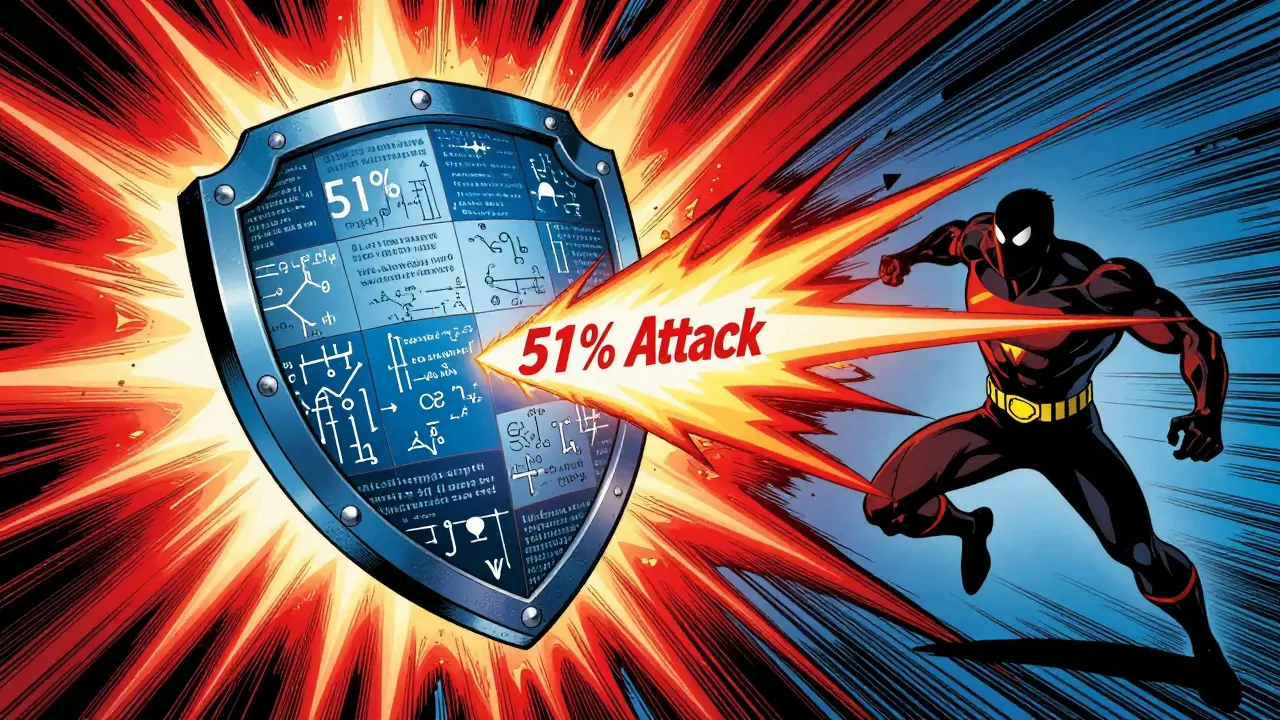
Security in blockchain comes from how nodes agree on the state of the ledger. This process is called consensus. Public blockchains use robust mechanisms like Proof of Work (PoW) or Proof of Stake (PoS). Bitcoin uses PoW, where miners solve complex mathematical puzzles. To attack the network, a hacker would need to control 51% of the computing power. As of late 2023, Bitcoin’s hash rate was so high that such an attack would cost millions of dollars per hour, making it economically unfeasible.
Ethereum moved to Proof of Stake (PoS) in 2022. Here, validators lock up cryptocurrency as collateral. If they act maliciously, they lose their stake. This secures a network worth hundreds of billions of dollars without the massive energy consumption of PoW. These mechanisms are designed to be secure even when participants don’t know each other.
Private blockchains often use lighter consensus models like Practical Byzantine Fault Tolerance (PBFT). Since the participants are known and vetted, they don’t need expensive cryptographic puzzles. This allows for faster transaction speeds-Hyperledger Fabric can handle thousands of transactions per second. However, this speed comes at a cost. With fewer validators, there is less scrutiny. If a majority of the few validators collude, they can rewrite history. The security relies entirely on the integrity of those few insiders.
| Feature | Public Blockchain | Private Blockchain |
|---|---|---|
| Access Control | Permissionless (Open) | Permissioned (Restricted) |
| Consensus Type | PoW, PoS (Resource intensive) | PBFT, Raft (Lightweight) |
| Primary Threat | 51% Attack, Smart Contract Bugs | Insider Threat, Centralized Failure |
| Privacy | Transparent (Pseudonymous) | Confidential (Role-based) |
| Censorship Resistance | High | Low |
Vulnerability Profiles: Where Attacks Happen
Every system has weaknesses, but public and private blockchains fail in different ways. Public blockchains are transparent. Every transaction is visible. This openness is a strength because anyone can audit the code. But it also means personal financial data is exposed unless you use privacy tools like Zcash’s zk-SNARKs. The most common threat here isn’t breaking the chain itself-it’s user error. According to Ledger’s 2023 report, 95% of security incidents on public chains stem from users losing their private keys or falling for phishing scams.
Smart contracts are another vulnerability. Even if the blockchain is secure, the code running on top might not be. OpenZeppelin found that 78% of audited smart contracts contained critical vulnerabilities in 2023. Hackers exploit these bugs to drain funds, as seen in the Poly Network hack. However, the public nature of these chains often leads to community-driven recovery efforts.
Private blockchains face internal threats. Since access is limited, the danger comes from within. A study noted that 63% of breaches in private enterprise chains resulted from poor internal security protocols rather than external hacks. If an administrator account is hijacked, the attacker gains full control. There is no global network to push back against them. The Maersk TradeLens project, for instance, had to add extra cryptographic layers to prevent internal collusion among partners. The lack of external scrutiny means bad practices can hide longer.
Performance and Scalability Trade-offs
Security and speed often pull in opposite directions. Public blockchains prioritize security over speed. Bitcoin processes about 7 transactions per second. Ethereum handles around 30-45. Solana pushes this to 65,000, but still faces occasional outages. The slow processing is a feature, not a bug. It ensures every node can verify every transaction, maintaining decentralization.
Private blockchains sacrifice some security for performance. By limiting the number of nodes, they reach consensus quickly. Hyperledger Fabric achieves finality in under two seconds. This is ideal for supply chains or banking settlements where speed matters. But remember, this efficiency relies on trusting the few nodes involved. If those nodes go offline or are compromised, the network stops. There is no redundant global safety net.
Regulatory Compliance and Data Privacy
For enterprises, compliance is a huge part of security. Private blockchains shine here. They allow companies to implement Role-Based Access Control (RBAC). Only authorized personnel see sensitive data. This fits well with regulations like HIPAA for healthcare or GDPR for privacy. You can design the network to erase or mask data as required by law.
Public blockchains struggle with GDPR because data is immutable. Once it’s written, it can’t be deleted. This creates legal headaches for European companies. Additionally, the Financial Action Task Force (FATF) treats public and private chains differently. Public chains face heavy transaction monitoring requirements to prevent money laundering. Private chains must prove they have robust identity verification for all participants. The regulatory burden shifts from monitoring transactions to managing identities.

Real-World Resilience: Case Studies
Looking at real-world events helps clarify these theoretical differences. In 2022, a European bank’s private blockchain was compromised when an admin account was hijacked. Because the network was centralized, the attacker could manipulate records easily. There was no independent verification to stop them. This highlights the danger of relying on a single authority.
Conversely, public blockchains show resilience through transparency. When the Poly Network hack occurred, the community coordinated publicly to return the funds. The openness allowed everyone to track the theft and pressure the hacker. While not perfect, this social layer of security is unique to public systems. IBM’s Food Trust network, a private blockchain, has achieved 99.995% uptime since 2018 by strictly vetting its nodes. It proves that private chains can be highly reliable if managed perfectly, but that management is a constant, costly effort.
Choosing the Right Security Model
So, which one should you pick? It depends on your goal. If you are building a currency, a public voting system, or a platform where trust is scarce, a public blockchain is better. Its resistance to censorship and manipulation is unmatched. You pay for this security with slower speeds and higher complexity.
If you are optimizing a supply chain, managing corporate records, or handling sensitive customer data, a private blockchain makes more sense. You gain speed, privacy, and compliance. But you must invest heavily in internal security measures, identity management, and redundancy to avoid the pitfalls of centralization. Hybrid models are emerging, trying to combine the best of both worlds, but they add significant technical complexity.
Ultimately, there is no free lunch in security. Public blockchains distribute risk across the globe. Private blockchains concentrate risk in the hands of the operator. Choose the model that aligns with your threat landscape.
Is a private blockchain more secure than a public one?
Not necessarily. Private blockchains are more secure against external censorship and offer better privacy, but they are more vulnerable to insider threats and single points of failure. Public blockchains are more secure against takeover attempts due to their massive decentralization, but they expose transaction data to everyone.
What is the biggest security risk for public blockchains?
The biggest risks are usually user error, such as losing private keys, and smart contract vulnerabilities. While 51% attacks are theoretically possible, they are economically impractical for large networks like Bitcoin or Ethereum.
Why do enterprises prefer private blockchains?
Enterprises prefer private blockchains for their speed, scalability, and ability to maintain confidentiality. They allow companies to comply with data privacy laws like GDPR and keep sensitive business logic hidden from competitors.
Can a private blockchain be hacked?
Yes. Because private blockchains rely on a limited number of validators, compromising a majority of these nodes or gaining administrative access can allow attackers to alter the ledger. Internal security protocols are critical.
What is the role of consensus in blockchain security?
Consensus mechanisms ensure all nodes agree on the valid state of the ledger. In public chains, mechanisms like Proof of Work make it expensive to cheat. In private chains, lightweight consensus allows for speed but requires trust in the participating entities.
 Cryptocurrency Guides