
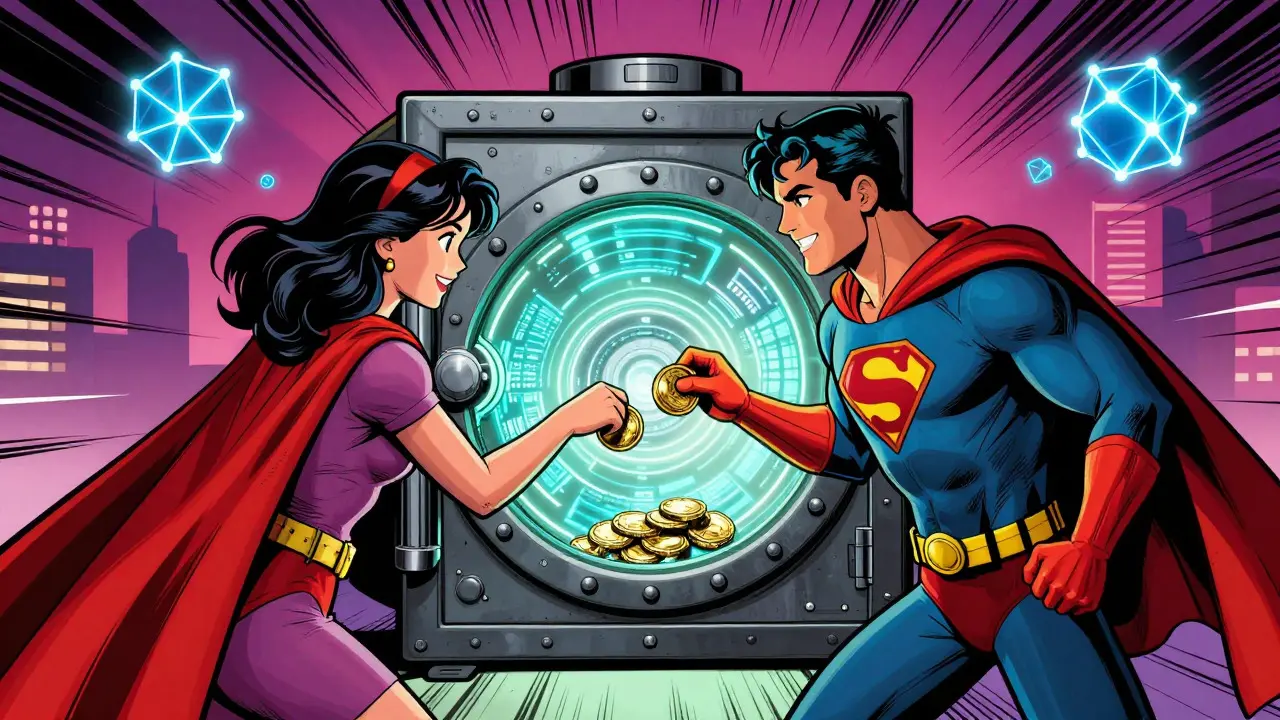
Imagine paying for your morning coffee with a fraction of a cent, or streaming video content where you pay per second rather than subscribing monthly. For years, these ideas sounded like science fiction because traditional blockchains were too slow and expensive for such tiny transactions. This is where State Channels come in. They are a Layer 2 scaling solution that allows users to conduct thousands of transactions off-chain while keeping the security guarantees of the main blockchain. By moving the heavy lifting off the public ledger, state channels solve the "micropayment problem" that has long plagued networks like Bitcoin and Ethereum.
The core concept is simple but powerful: two parties open a channel by locking funds on-chain, exchange as many updates as they want off-chain, and then close the channel by broadcasting only the final result back to the blockchain. It’s like writing checks between friends instead of going to the bank every time you buy a sandwich. But how exactly does this mechanism work? Let’s break down the technical process of opening and closing these channels, the risks involved, and why they matter for the future of decentralized finance.
How to Open a State Channel
Opening a state channel is the foundational step in enabling off-chain interactions. It requires a mutual agreement between two or more participants to establish a shared state. Think of it as setting up a joint bank account where both parties must agree to move money, but with cryptographic rules enforced by smart contracts.
The process begins with an on-chain transaction. Participants deposit assets into a multi-signature smart contract. For example, in the context of Bitcoin's Lightning Network, this typically involves a 2-of-2 multi-signature transaction. This means both Alice and Bob must sign any transaction that moves funds from this contract. The amount deposited determines the channel's capacity. If Alice deposits 0.5 BTC and Bob deposits 0.5 BTC, the channel now has a total capacity of 1 BTC. No more than 1 BTC can be moved within this channel unless additional funds are added later through specific mechanisms like splicing.
Once the funding transaction is broadcast, it must receive confirmations on the underlying blockchain. On Bitcoin, this usually takes 3 to 6 blocks, which translates to roughly 30 to 60 minutes. During this window, the channel is not yet active. This delay is a necessary trade-off for security; it ensures that the initial lock-up of funds is irreversible before off-chain activity begins. According to data from CoinDesk, the average fee for this opening transaction on Bitcoin was around $1.27 in mid-2023, though this fluctuates with network congestion.
After confirmation, the channel is live. At this point, neither party needs to interact with the blockchain again until they decide to close the channel. All subsequent balance updates happen off-chain through signed messages. Each update represents a new "state" of the channel, detailing who holds what balance. These states are cryptographically signed by all participants, ensuring that no one can claim a false balance later.
The Mechanics of Off-Chain Transactions
While the channel is open, the magic happens. Participants can send payments back and forth instantly and with negligible fees. Since these transactions don't hit the main blockchain, they bypass the need for miners or validators to approve each individual transfer. Instead, they rely on digital signatures.
When Alice sends 0.1 BTC to Bob, they both sign a new state document reflecting the updated balances (e.g., Alice: 0.4 BTC, Bob: 0.6 BTC). They discard the previous state. Crucially, they keep a record of these states locally. The blockchain remains unaware of these intermediate steps. This efficiency allows for high throughput. Research indicates that state channels can process between 1,000 and 10,000 transactions per second (TPS) off-chain, compared to Bitcoin's ~7 TPS or Ethereum's ~15-30 TPS on-chain.
This speed makes state channels ideal for specific use cases:
- Gaming Microtransactions: Paying fractions of a cent for in-game items or actions.
- Streaming Services: Paying per second of content consumed.
- Utility Billing: Electricity providers charging per kilowatt-hour in real-time.
- High-Frequency Trading: Executing trades between known counterparties without latency.
However, there is a catch. Both parties must remain online to monitor the channel. If one party goes offline, the other cannot force a closure or update the state safely without risking fraud. This "liveness requirement" is a significant operational constraint that we will explore further when discussing closing procedures.

Closing a State Channel: Cooperative vs. Unilateral
Eventually, every channel must close. How it closes determines the cost, speed, and risk involved. There are two primary ways to close a state channel: cooperatively or unilaterally.
Cooperative Closure is the ideal scenario. Both parties agree on the final state of the channel. They jointly sign a closing transaction and broadcast it to the blockchain. The smart contract sees this valid signature pair and immediately distributes the funds according to the latest agreed-upon balance. This process is fast, cheap, and secure. However, cooperative closures require both parties to be online and willing to cooperate. In practice, developer communities report failure rates of around 12.7% in cooperative closures due to technical issues like signature mismatches or software bugs.
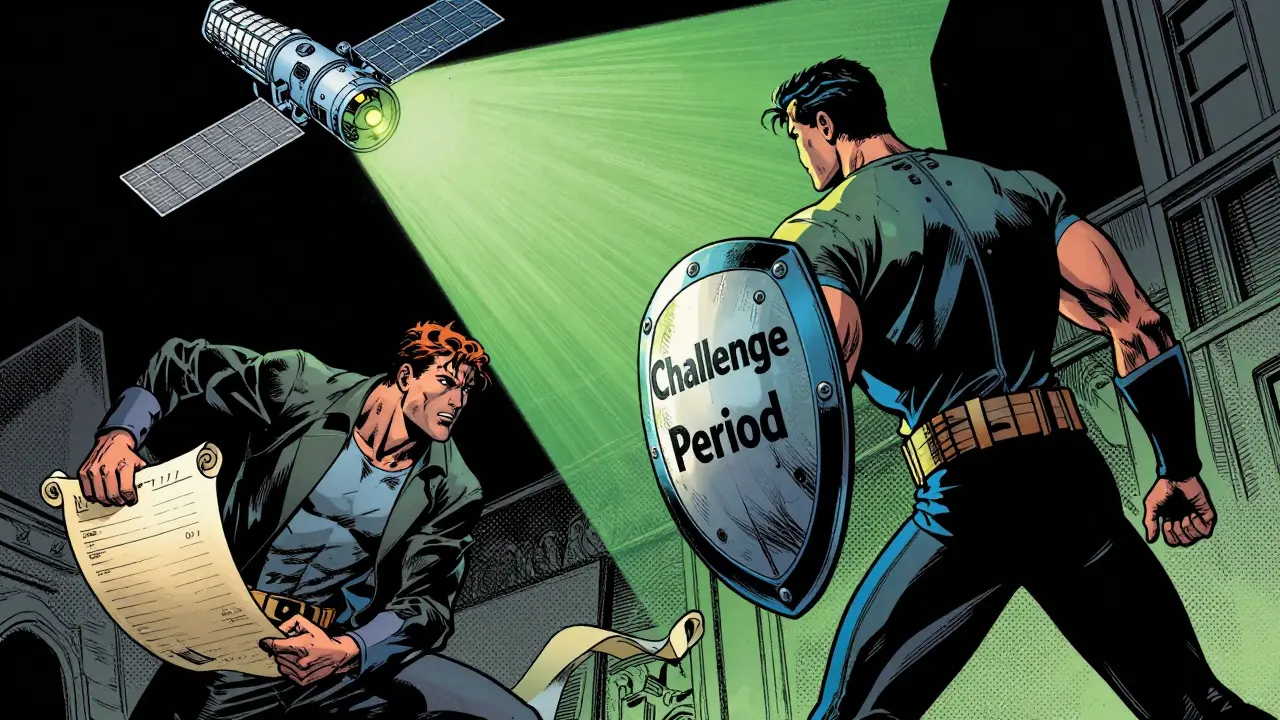
Unilateral Closure occurs when one party wants to close the channel, but the other is either offline, unresponsive, or acting maliciously. In this case, the initiating party broadcasts their most recent signed state to the blockchain. Here’s where it gets tricky. Because the off-chain history isn't visible to the blockchain, the counterparty could potentially cheat by broadcasting an older state where they held more funds.
To prevent this fraud, state channels implement a challenge period. On Bitcoin's Lightning Network, this period lasts 144 blocks, or approximately 24 hours. During this window, the honest party can watch the blockchain and submit a penalty transaction if they detect an outdated state being claimed. This penalty transaction seizes the cheater's funds as a reward for the honest party. While effective, this mechanism introduces complexity. Users must monitor the chain constantly during this period, or else risk losing their funds if they miss the challenge window.
Key Challenges and Risks
Despite their benefits, state channels are not a silver bullet. Several challenges limit their widespread adoption.
Capital Inefficiency is a major hurdle. Funds locked in a channel are illiquid. You can't spend that Bitcoin elsewhere while it's sitting in a channel. Data from Glassnode shows that the Lightning Network required approximately $35 million in locked capital to support just $10 million in daily volume. For merchants, this means tying up significant resources to facilitate small payments. Strike CEO Jack Mallers noted that maintaining 1,000 active channels could require locking around $500,000 in idle capital.
The Exit Problem poses a systemic risk. If a crisis hits and thousands of users try to close their channels simultaneously, the base layer blockchain could become congested. Dr. Andrew Miller from the University of Illinois highlighted this in his research, noting that mass closures could simulate a 10x traffic spike on Bitcoin's network, defeating the purpose of scaling.
Liveness Requirements mean users can't simply turn off their devices. If you go offline for days, your counterparty could theoretically cheat you if they broadcast an old state. To mitigate this, users often employ Watchtowers, third-party services that monitor the blockchain on your behalf. Watchtowers charge a small fee (typically $0.50-$2.00 per month per channel) but reduce fraud risk by nearly 99.7%, according to studies by Muun Wallet. Without them, managing multiple channels becomes operationally burdensome.
Comparison with Other Scaling Solutions
State channels are just one piece of the blockchain scaling puzzle. How do they stack up against alternatives like sidechains and rollups?
| Feature | State Channels | Sidechains (e.g., Liquid) | Rollups (Optimistic/ZK) |
|---|---|---|---|
| Transaction Finality | Near-instant (off-chain) | ~2 minutes (on-sidechain) | 1-15 minutes (settlement) |
| Cost | Extremely low ($0.0003 avg) | Low | Low to Medium |
| User Experience | Requires online monitoring | Standard wallet experience | Standard wallet experience |
| Best Use Case | Micropayments, recurring bills | Asset issuance, privacy | General DeFi, NFTs |
| Capital Efficiency | Low (funds locked) | Medium | High |
State channels excel in speed and cost for frequent, small-value transactions between known parties. Rollups, on the other hand, are better suited for general-purpose applications like decentralized exchanges or NFT marketplaces where users may interact infrequently or anonymously. Sidechains offer flexibility in asset types but sacrifice the direct security of the main chain. Understanding these trade-offs is crucial for developers choosing the right architecture for their projects.
Future Developments and Trends
The technology behind state channels is evolving rapidly. Recent upgrades have addressed some of the earlier limitations. For instance, Bitcoin's Taproot upgrade, activated in November 2021, reduced channel opening fees by 25% and improved privacy by making multi-signature transactions look like standard single-signature ones.
Another promising development is splicing, expected to mature in late 2023 and beyond. Splicing allows users to add or remove funds from an active channel without closing it. This feature could dramatically improve capital efficiency, reducing the need to lock large amounts of idle capital. Lightning Labs estimates that splicing could cut on-chain activity by another 40-60%.
Furthermore, the rise of "watchtower-as-a-service" providers like Voltage and Blink aims to solve the liveness problem. Early data suggests these services offer 99.98% uptime for monitored channels, compared to 87.3% for self-monitored ones. As these tools become more accessible, state channels may become viable for everyday consumers, not just technical experts.
Industry analysts predict that state channels will handle 15-20% of blockchain payment volume by 2026, primarily for recurring micropayments. While rollups dominate the narrative for general scaling, state channels remain the undisputed king for high-frequency, low-value interactions. For businesses looking to integrate seamless micro-payments, understanding how to open and close these channels effectively is no longer optional-it's essential.
What is the minimum amount needed to open a state channel?
There is no strict global minimum, but practical limits exist. On the Lightning Network, you must cover the on-chain transaction fee for the opening transaction, plus a channel reserve (usually 1% of the channel capacity). As of 2023, this often means a minimum deposit of around 0.0001 BTC to 0.001 BTC, depending on network fees. Opening a channel with too little capital can make it difficult to route payments or rebalance later.
Can I close a state channel if the other party is offline?
Yes, you can initiate a unilateral closure if the other party is offline. However, this triggers a challenge period (e.g., 24 hours on Bitcoin). During this time, you must monitor the blockchain to ensure the offline party doesn't broadcast an outdated state. If they do, you can submit a penalty transaction to reclaim your funds. Using a watchtower service is highly recommended to automate this monitoring.
Are state channels secure?
State channels inherit the security of the underlying blockchain. Funds are locked in smart contracts, so they cannot be stolen unless the private keys are compromised. The main risk is user error, such as failing to monitor the chain during a unilateral closure or signing a fraudulent state. Proper implementation and the use of watchtowers mitigate these risks significantly.
What happens if I lose my device while a channel is open?
If you lose your device and backup, you lose access to the private keys and the local state history. While the funds are still locked on-chain, recovering them can be complex. If the other party acts honestly, they might return the funds, but there is no guarantee. In a unilateral closure scenario, without your signatures, the other party could potentially claim the entire channel balance after the challenge period expires. Always maintain secure backups of your wallet data.
How do state channels compare to credit cards for small purchases?
State channels offer lower fees (fractions of a cent vs. 2-3% for credit cards) and instant settlement. However, credit cards are more convenient because they don't require you to manage keys, stay online, or worry about challenge periods. State channels are currently best suited for tech-savvy users or B2B scenarios where high-volume, low-cost transactions justify the setup complexity.
 Cryptocurrency Guides