
Before cryptocurrency, creators had to rely on platforms like YouTube, Patreon, or Instagram to earn money. But those platforms took a cut - sometimes more than half - and blocked payments to people in countries like Nigeria, Pakistan, or Venezuela. If you lived outside the U.S. or Europe, getting paid was a nightmare. Wire transfers took days. Fees ate up 10% or more. And if your bank didn’t like crypto, they’d freeze your account without warning. Today, that’s changing. Cryptocurrency is giving creators real control over their work, their income, and their audience.
Creators Own Their Income Now
On traditional platforms, you’re a tenant. YouTube owns your channel. Instagram owns your followers. Patreon owns your payment flow. If they change the algorithm, ban you, or cut your revenue share, you lose everything. With cryptocurrency, you own your audience. You don’t need a platform to connect with fans. You use your wallet - a simple digital key - to receive money directly from anyone, anywhere.
Take a musician in Lagos. Before crypto, they’d use PayPal to sell songs. But PayPal doesn’t work in Nigeria for payouts. So they’d wait weeks. Or use a middleman who took 20%. Now, they put their music on Zora, a blockchain platform. Fans buy a track with USDC - a stablecoin pegged to the dollar. The payment arrives in 10 seconds. No bank delays. No hidden fees. The artist keeps 95% of the sale. That’s not a small change. That’s a revolution.
Global Payments, Zero Borders
Imagine you’re a freelance illustrator in Jakarta. A client in Germany wants to pay you $800 for a cover. Traditional methods? Bank transfer: 5 days, $40 in fees, and another 3% for currency conversion. Crypto? Send it via Solana. Transaction fee: $0.02. Time: 2.5 seconds. You get $799.80. No paperwork. No bank approval. No risk of account freeze.
This isn’t theoretical. In 2025, BairesDev found that 60% of creators in Nigeria use cryptocurrency for payments. In Kenya, 87% of creators say crypto payments are more reliable than PayPal or bank transfers. Why? Because blockchain doesn’t care where you live. It doesn’t care if your country has capital controls. It doesn’t care if your bank refuses to touch crypto. All it needs is an internet connection.
NFTs Aren’t Just for JPEGs
Most people think NFTs are just digital art you buy to show off. But for creators, they’re a new way to sell ownership. A writer can tokenize their ebook. A photographer can sell limited-edition prints as NFTs. A YouTuber can issue a token that gives fans early access to videos, voting rights on content, or a share of future ad revenue.
Zora has processed over 1.5 million creator tokens. That means 1.5 million people have used blockchain to sell something directly - not through a middleman. And here’s the kicker: Zora gives back 50% of all trading fees to creators. Compare that to Patreon, which takes 5-12% plus payment processing fees. Or YouTube, which keeps 45% of ad revenue. Crypto platforms don’t just cut fees - they flip the business model. Creators aren’t just sellers anymore. They’re business owners.
Stablecoins Make It Practical
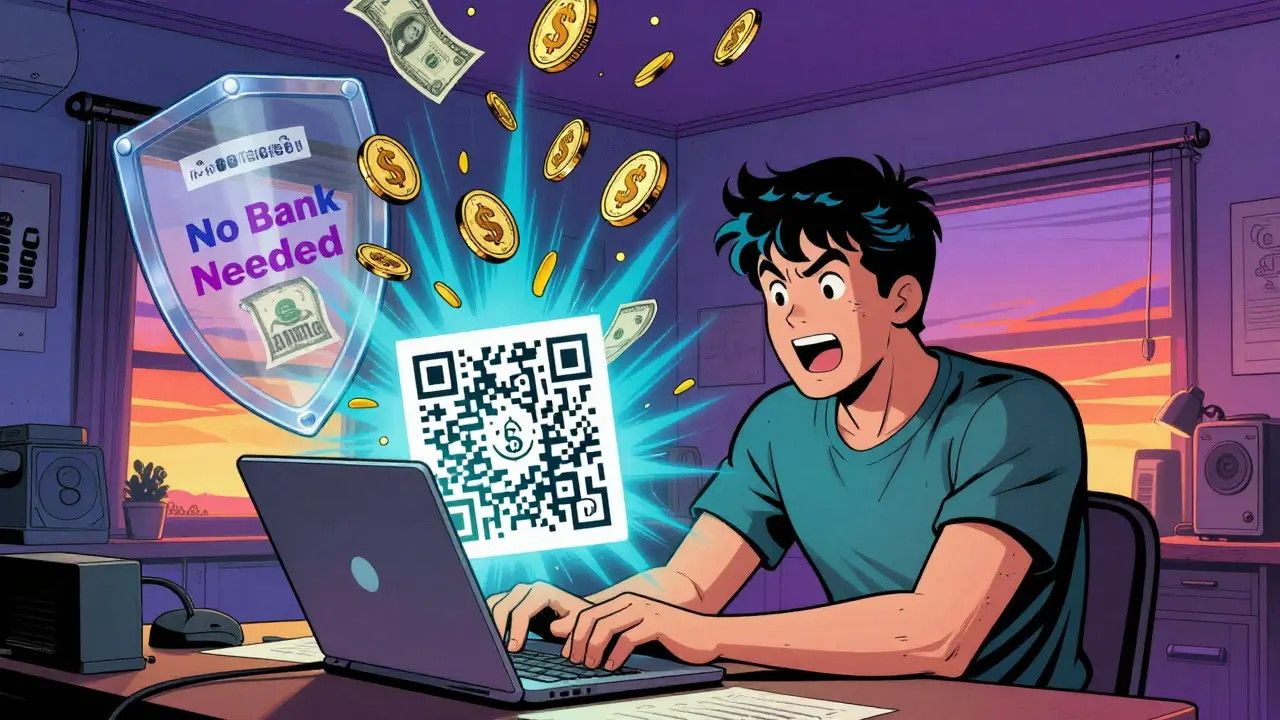
Bitcoin and Ethereum are volatile. That’s scary if you’re trying to pay rent. But stablecoins fix that. USDC and USDT make up 85% of all crypto payments to creators in 2025. These coins are tied to the U.S. dollar. So when a fan sends you $100 in USDC, you get $100. Not $98. Not $105. Exactly $100.
Platforms like Coinbase Commerce and Zora now auto-convert incoming crypto into stablecoins. So you don’t have to worry about price swings. You just get paid like you always did - except faster, cheaper, and without a bank in the middle.
A creator in Jakarta named @DigitalDewi switched from PayPal to USDC. Her revenue jumped 37%. Why? PayPal charged 4.5% per transaction plus $0.30. Indonesia also slapped an 11% VAT on foreign payments. With crypto? No VAT. No fees. Just clean money in her wallet.
It’s Not Perfect - But It’s Getting Better
Yes, there are still problems. Some creators lose access to their funds because they forgot their password or sent money to the wrong address. There’s no customer service to call. No “recover my account” button. Wallets are like cash. If you lose it, it’s gone.
And not everyone understands it. A 2025 Pew Research study found only 32% of internet users know how a crypto wallet works. That’s why creators say explaining crypto to fans is their biggest hurdle.
Regulation is messy too. In Brazil, the central bank cleared the way for crypto payments in March 2025. In India, it’s still a gray zone. Some European creators had their bank accounts frozen after receiving ETH payments. One Reddit user, u/ArtBySophie, said she gave up after her bank demanded 17 pages of paperwork.
But the fixes are coming. Ethereum’s Dencun upgrade in late 2025 will slash transaction fees by 90% for creator platforms. Coinbase is launching a Creator Wallet API in January 2026 - one click, and you can accept crypto on any website. Patreon announced it will offer stablecoin payouts by Q1 2026. Shopify now lets creators accept crypto payments in their online stores. These aren’t future dreams. They’re happening now.
Who’s Winning Right Now?
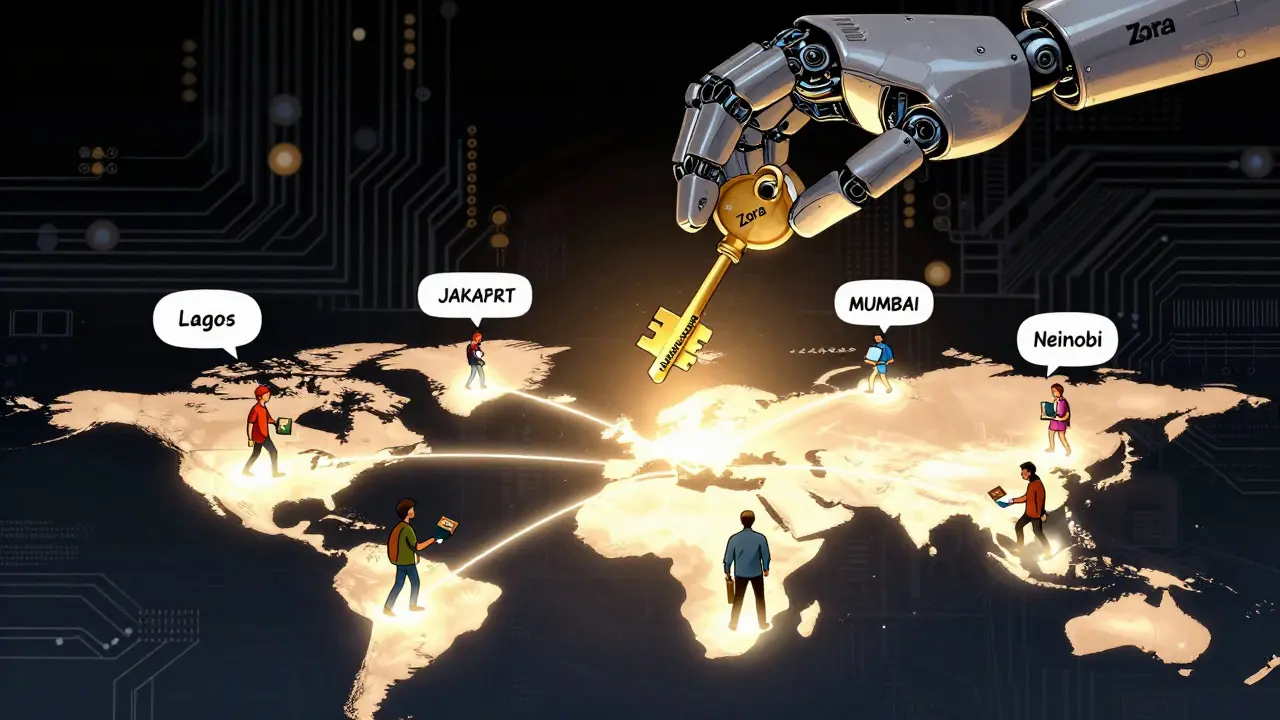
The biggest growth isn’t in Silicon Valley. It’s in Lagos, Jakarta, São Paulo, and Mumbai. Built In reports that 78% of creators using crypto are under 35. Most don’t have a college degree. Many never had a bank account before. Now, they’re earning globally.
A 2025 survey of 1,200 creators found that 62% of those making $500-$5,000 a month use crypto. Why? Because it’s the only way they can get paid fairly. In countries with weak financial systems, crypto isn’t a trend. It’s a lifeline.
Even big companies are noticing. 47% of Fortune 500 companies now run creator marketing campaigns that include crypto payments. Why? Because creators who use crypto get paid faster, work more reliably, and build stronger fan relationships.
How to Get Started (Without Coding)
You don’t need to be a tech expert. Here’s how to start today:
- Download a wallet: MetaMask (used by 63% of creators) or Coinbase Wallet.
- Buy a little USDC (you can do it with a credit card inside the app).
- Go to Zora or Coinbase Commerce and connect your wallet.
- Add a “Pay with Crypto” button to your website, Instagram bio, or YouTube description.
That’s it. No coding. No contracts. No bank approval. You can even use tools like Zora’s auto-conversion to turn all incoming crypto into USDC so you don’t have to think about price swings.
There’s a free course from Coinbase called “Crypto for Creators.” Over 247,000 creators have taken it. It takes 2 hours. You’ll learn how to set up payments, avoid scams, and handle taxes.
The Future Is Hybrid
Crypto won’t kill PayPal or Venmo. But it will become the default for global creators. Gartner predicts 65% of professional creators will accept cryptocurrency by 2027. Why? Because it’s the only system that works equally well for someone in Auckland and someone in Accra.
Think of it like email. No one uses snail mail anymore - not because it was bad, but because email was better. Crypto is the email of creator payments. Faster. Cheaper. Global. Owned by you.
The old system was built for banks, not creators. The new system is built for you - the person making the art, the music, the videos, the stories. You don’t need permission anymore. You just need a wallet.
Can I really get paid in crypto if I live in a country with strict financial rules?
Yes. Countries like Nigeria, Kenya, and Argentina have millions of creators using crypto because traditional banks block them. Crypto doesn’t need a bank account. You just need a smartphone and internet. Platforms like Zora and Coinbase Commerce let you receive payments without approval from local regulators. In fact, creators in these regions are 3.2x more likely to say crypto is critical to their income than those in North America or Europe.
Do I need to pay taxes on crypto payments as a creator?
Yes. Crypto payments are taxable income in most countries - just like cash or bank transfers. The key difference is that you’re responsible for tracking them. Use tools like Koinly or CoinTracker to log every payment. Many creators convert crypto to stablecoins immediately and then to fiat currency to simplify tax reporting. About 42% of creators say tax confusion is their biggest challenge, but resources are growing fast. Coinbase and Zora now offer tax summaries directly in their dashboards.
What happens if I lose my wallet password?
If you lose your password and don’t have your recovery phrase, your money is gone forever. There’s no customer service to call. That’s why most creators write down their 12-word recovery phrase on paper and store it in a safe place - like a locked drawer or a safety deposit box. Never save it on your phone or in the cloud. Losing your wallet is like losing cash from your pocket. There’s no way to recover it.
Is crypto better than Patreon or YouTube for making money?
It depends. If you have a massive audience on YouTube, you’ll likely make more from ads. But if you’re building a small, loyal fanbase - especially if you’re outside the U.S. or Europe - crypto is often better. Patreon takes 5-12% plus fees. YouTube keeps 45%. Crypto platforms like Zora charge 5% or less and give you 95%. Plus, you own your audience. You’re not stuck on one platform. If Instagram bans you tomorrow, your crypto wallet still works.
How do I explain crypto payments to my fans?
Keep it simple. Say: “You can support me by sending USDC - a digital dollar - directly to my wallet. No fees, no waiting. Just click the link and pay.” Use tools like Coinbase Commerce or Zora that generate QR codes. Fans scan it with their phone, enter the amount, and send. No sign-up. No login. Most people understand “send money” better than “blockchain.”
 Cryptocurrency Guides
Carl Gaard
March 4, 2026 AT 06:01bella gonzales
March 5, 2026 AT 11:46Paul Reinhart
March 6, 2026 AT 07:46Samantha Stultz
March 7, 2026 AT 22:53Robert Conmy
March 8, 2026 AT 03:30Lilly Markou
March 8, 2026 AT 05:17McKenna Becker
March 9, 2026 AT 08:58precious Ncube
March 10, 2026 AT 22:23Amita Pandey
March 12, 2026 AT 14:45Jan Czuchaj
March 12, 2026 AT 18:00Tracy Peterson
March 13, 2026 AT 19:47George Suggs
March 15, 2026 AT 08:01Dianna Bethea
March 15, 2026 AT 15:44KingDesigners &Co
March 16, 2026 AT 05:53Felicia Eriksson
March 17, 2026 AT 01:10aaron marp
March 17, 2026 AT 05:54Patrick Streeb
March 18, 2026 AT 09:41Phillip Marson
March 19, 2026 AT 05:39Tracy Whetsel
March 20, 2026 AT 01:05Alyssa Herndon
March 21, 2026 AT 12:51