

Stablecoin Comparison for Sanctioned Countries
USDT (Tether)
- Issued by Tether Ltd. (a single company)
- Backed by U.S. dollars held in reserve
- Requires KYC verification on exchanges
- Can be frozen by regulators (OFAC, Tether)
- 42 Iranian addresses frozen in July 2025
- High risk of transaction blocks
DAI
- Governed by MakerDAO smart contracts
- Backed by crypto collateral (ETH, etc.)
- No single point of control
- Cannot be frozen by regulators
- Switched to by Iran after USDT freezes (2025)
- Works on Polygon/Ethereum networks
Why This Matters for Sanctioned Users
Real-world example: After Tether froze 42 Iranian addresses in July 2025, users switched to DAI on Polygon with no downtime. No bank. No permission. No waiting.
Key insight: In Iran, where inflation hit 50% in 2024, DAI provided stability when USDT failed. Users now prefer DAI for 100% of transactions due to its decentralization.
Bottom line: USDT is convenient but vulnerable to sanctions. DAI offers security through decentralization, making it the practical choice for sanctioned countries.
When governments cut off access to banks, payment systems, and international finance, people don’t stop looking for ways to protect their money. In countries under sanctions-like Iran, Russia, North Korea, and Syria-cryptocurrency has become one of the most reliable lifelines. Not because it’s perfect, but because it’s hard to fully shut down.
Why Crypto Is the Go-To Option
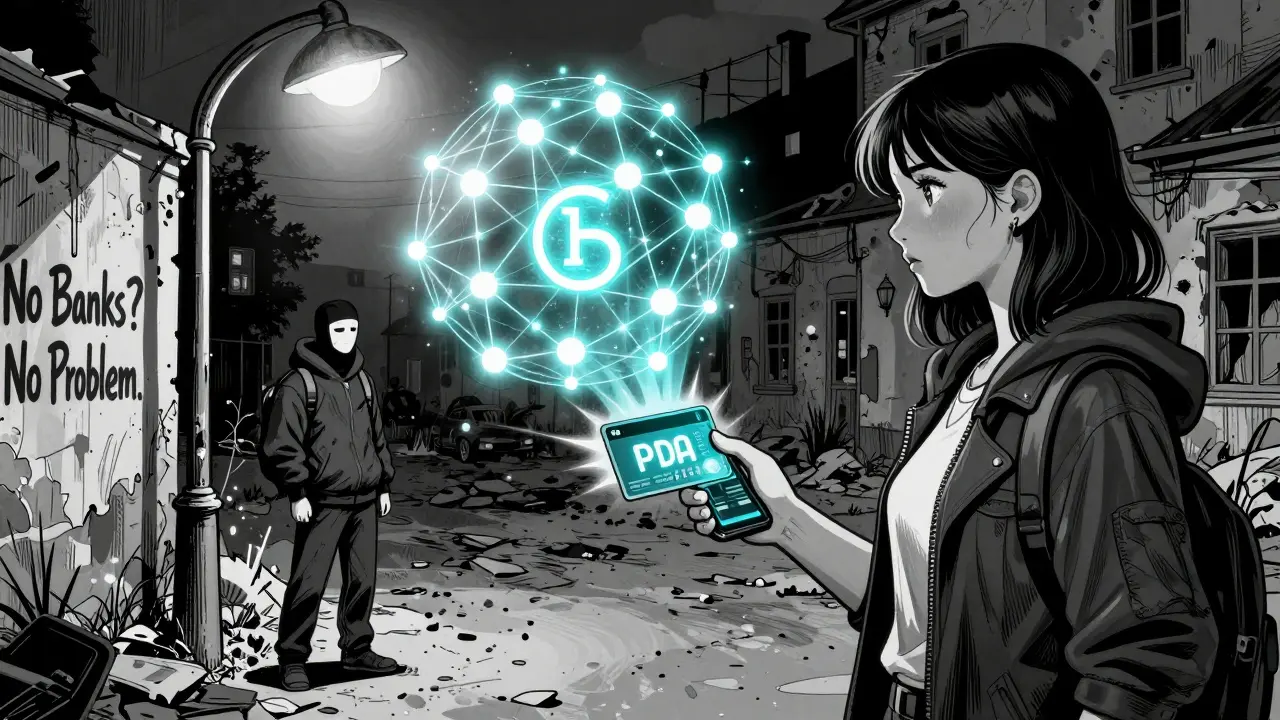
Traditional banking systems are easy to block. SWIFT payments? Cut off. Visa and Mastercard? Frozen. Western Union? Closed. But cryptocurrency runs on open networks. No central authority. No country can turn it off entirely. Even if one exchange gets shut down, the blockchain keeps running. That’s why, in 2025, citizens in sanctioned countries are turning to crypto more than ever.Bitcoin (BTC) is still the most used, making up about 65% of all crypto transactions linked to sanctioned entities. Ethereum (ETH) comes second at 18%, but the real game-changer is stablecoins-especially DAI and USDT. These are digital coins pegged to the U.S. dollar, so they hold value even when local currencies collapse. In Iran, where inflation hit 50% in 2024, people traded their rials for USDT to save their savings. When Tether froze 42 Iranian-linked addresses in July 2025, users didn’t panic. They just swapped their USDT for DAI on the Polygon network-no bank needed, no permission required.
How They Bypass Blocks
Most people assume that if a country is sanctioned, its citizens can’t use Binance or Coinbase. That’s not true. They use workarounds that are simple but effective.- VPNs and proxy tools let users hide their location. Many exchanges don’t verify your IP address strictly, especially smaller ones.
- Peer-to-peer (P2P) platforms like LocalBitcoins and Paxful let users trade directly with others. No account needed. Just meet a seller, pay via mobile money or gift cards, and get crypto sent to your wallet.
- Decentralized exchanges (DEXs) like Uniswap or SushiSwap don’t require KYC. You connect your wallet, swap tokens, and done. No one asks where you’re from.
- Telegram-based exchanges like MKAN Coin in Dubai operate like private clubs. You join a group, send fiat via hawala or crypto, and get your tokens delivered. No forms. No ID.
It’s not always legal, but it’s practical. In Russia, after Garantex was shut down in March 2025, its users didn’t vanish. They moved to Grinex, a new platform built on the same code, same team, same wallet addresses. The only difference? A new domain and a new name. That’s how fast they adapt.
The Role of Stablecoins and DeFi
Stablecoins are the backbone of this underground economy. USDT was the favorite-until Tether started freezing wallets tied to sanctioned countries. That changed everything.After the July 2025 freeze, Iranian users rushed to switch to DAI, a decentralized stablecoin backed by crypto collateral, not a company. Unlike USDT, DAI can’t be frozen by a single entity. It runs on MakerDAO, a smart contract system on Ethereum. No CEO. No headquarters. No one to pressure.
DeFi protocols are now the new frontier. In January 2025, OFAC sanctioned its first DeFi protocol-a lending platform that allowed users from Iran to borrow U.S. dollar-pegged assets. That sent shockwaves through the crypto world. But instead of stopping, users just moved to other protocols. The same way you’d switch banks if one closes, they switch smart contracts.
Mixers like Tornado Cash (even though banned) still inspire new tools. New privacy-focused bridges and swap aggregators pop up every month. They’re not perfect, but they’re good enough to get the job done.
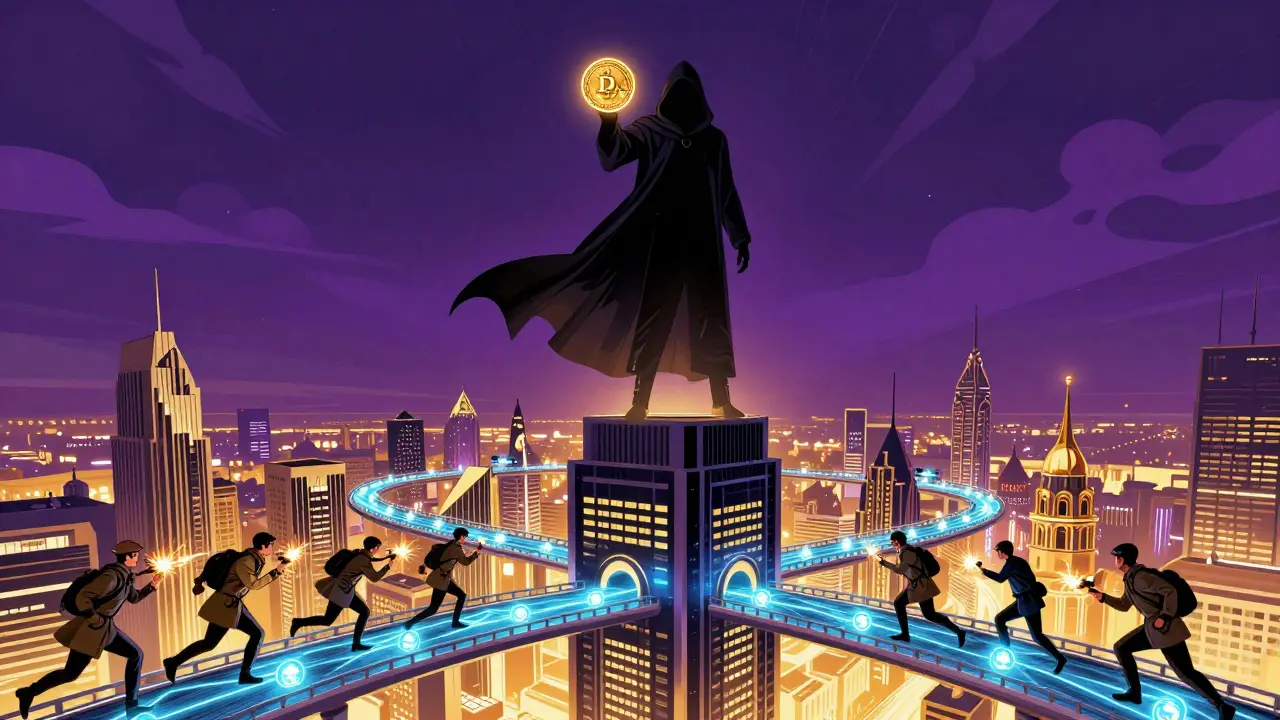
How Governments Are Fighting Back
The U.S. Treasury’s Office of Foreign Assets Control (OFAC) has been ramping up enforcement. In 2024, 23% of all new sanctions were crypto-related-up from 17% the year before. They’ve added over 1,200 crypto wallet addresses to their blacklist. They’ve fined exchanges like ShapeShift $750,000 for letting users from Cuba and Syria trade without checking their location.OFAC works with INTERPOL and Europol to track cross-border flows. They’ve seized $26 million from Garantex’s servers in Germany and Finland. They’ve offered $5 million for information leading to the arrest of Garantex’s top executives.
But here’s the problem: enforcement is slow. Crypto moves fast. By the time a wallet is flagged, the funds are already moved through multiple chains, converted into privacy coins, or swapped into NFTs. And when exchanges get shut down, their users just migrate to new ones-often hosted in places like Dubai, Singapore, or even Malta, where regulations are looser.
Where the Workarounds Are Easiest
Some countries have become unofficial hubs for sanctioned crypto users-not because they support sanctions evasion, but because they don’t care enough to stop it.- Dubai (UAE) has no capital gains tax on crypto. Over 1,000 crypto firms operate there under VARA’s loose oversight. Many sanctioned exchanges have moved their support teams and wallets here.
- Singapore has strong anti-money laundering rules but no tax on crypto profits. Young adults there own crypto at a 43% rate. It’s a quiet gateway for funds moving from Iran and Russia.
- El Salvador made Bitcoin legal tender. No taxes on foreign crypto income. It’s not a hub for sanctions evasion, but its open system makes it easy for outsiders to cash out.
- Malta, Estonia, Slovenia offer favorable crypto tax regimes and digital residency programs. They don’t ask where you’re from-only if you’re paying your taxes.
These places aren’t breaking the law. But they’re not helping enforce it either. And that’s enough for people who have no other options.
What’s Changing in 2025
Governments are catching on. Iran introduced a new law in August 2025 taxing crypto profits-just like gold or real estate. It’s not meant to stop crypto. It’s meant to control it. The government wants a cut.TRM Labs data shows crypto inflows to Iran dropped 11% in the first half of 2025. That sounds like progress. But it’s misleading. The total volume is still massive. People just got smarter. They use smaller wallets. They split transfers. They wait longer between swaps.
The real shift? From centralized exchanges to decentralized systems. No more relying on one platform. Now, users chain together multiple DEXs, bridges, and wallets. One swap on Uniswap. One bridge to Polygon. One swap on SushiSwap. No single point of failure.
And the tools keep getting better. New wallets auto-detect blocked IPs. New bots auto-convert USDT to DAI when a freeze is detected. The arms race isn’t slowing down. It’s accelerating.
Is It Safe?
No. There are risks. Scams are everywhere. Fake exchanges steal funds. Wallets get hacked. Governments track addresses. You can get locked out. You can lose everything.But for many, the risk of staying poor is worse than the risk of using crypto. In Venezuela, where the peso lost 99% of its value since 2018, crypto isn’t an investment-it’s survival. In Iran, it’s how families pay for medicine. In Russia, it’s how small businesses pay suppliers after banks refused to touch them.
Crypto doesn’t fix sanctions. It doesn’t end wars or lift embargoes. But it gives people a way to keep moving money when the world tries to lock them out. And as long as that’s true, people will find a way to use it.
Can you use Binance or Coinbase in sanctioned countries?
Officially, no. Binance and Coinbase block users from sanctioned countries based on IP and KYC checks. But many people bypass this using VPNs, P2P trades, or by creating accounts under someone else’s name. Enforcement isn’t perfect, so access still happens-but it’s riskier than before.
Why do people prefer DAI over USDT in sanctioned countries?
USDT is issued by Tether, a company that can freeze wallets if ordered by regulators like OFAC. DAI is governed by a decentralized smart contract system (MakerDAO) with no single owner. No one can freeze DAI without shutting down the entire Ethereum network-which isn’t possible. That’s why users in Iran and Russia switched to DAI after Tether froze Iranian addresses in 2025.
Are crypto exchanges in Dubai legal for sanctioned users?
Dubai doesn’t ban crypto, and it doesn’t enforce U.S. sanctions. Exchanges like MKAN Coin operate there legally under local rules. But they’re not officially sanctioned by the UAE government to serve sanctioned countries. It’s a gray area: technically legal under UAE law, but potentially violating U.S. sanctions. Most operators assume they’re safe as long as they don’t openly advertise their services to sanctioned users.
Can the government track your crypto transactions?
Yes, but only if you use the same wallet or exchange repeatedly. Every transaction on Bitcoin or Ethereum is public. Law enforcement uses blockchain analysis tools (like Chainalysis or TRM Labs) to trace funds. If you move money through mixers, multiple wallets, or DeFi protocols, tracking becomes much harder. Still, mistakes-like linking your real identity to a wallet-can get you caught.
What happens if you get caught using crypto in a sanctioned country?
It depends. In Iran or Russia, using crypto isn’t illegal-it’s just regulated. The government may tax it or restrict certain exchanges, but they don’t jail people for holding Bitcoin. In countries like North Korea, the state controls all crypto activity, so private use is dangerous. In the U.S., if you’re a citizen helping sanctioned entities, you could face fines or prison. For ordinary users, the biggest risk is losing funds to scams or frozen wallets-not jail.
 Cryptocurrency Guides
Stanley Machuki
December 13, 2025 AT 01:04Steven Ellis
December 14, 2025 AT 18:17What’s fascinating isn’t just the tech-it’s the human ingenuity behind it. People aren’t just bypassing sanctions; they’re rewriting the rules of financial sovereignty one DEX swap at a time. The fact that DAI outlasted USDT in Iran isn’t coincidence-it’s design. Decentralization isn’t a buzzword here, it’s survival. And the shift toward multi-chain obfuscation? That’s not evasion, it’s evolution. When the system tries to choke you, you don’t beg for air-you build your own lungs.
It’s poetic, really. The same blockchain that was supposed to disrupt Wall Street is now propping up families in Tehran buying insulin. No central bank, no CEO, no mercy-just code and courage.
Ian Norton
December 15, 2025 AT 13:58Let’s be brutally honest-this isn’t financial freedom, it’s regulatory arbitrage on a global scale. The fact that people are using Telegram bots and hawala networks to move value means the entire system is built on loopholes, not innovation. And don’t pretend these aren’t being exploited by sanctioned regimes. The ‘people vs banks’ narrative is convenient propaganda. The real story? A shadow economy thriving because governments failed to modernize their own financial infrastructure.
OFAC’s crackdowns are slow, yes-but they’re also necessary. You can’t have a world where anyone with a VPN can launder money through DeFi while calling it ‘resistance.’ This isn’t Robin Hood. It’s chaos dressed up as activism.
Sue Gallaher
December 16, 2025 AT 03:37Rakesh Bhamu
December 17, 2025 AT 03:46It’s easy to judge from afar, but if your currency lost 99% of its value and your bank refused to let you pay for your child’s medicine, would you really care about sanctions? Crypto isn’t about breaking laws-it’s about preserving dignity. The real failure isn’t on the user side-it’s in a global system that leaves people no choice but to become digital guerrillas just to survive.
I’ve seen this in India too-small traders using USDT to pay for imports when banks froze their accounts. No one’s rich here. No one’s smuggling weapons. Just people trying to feed their families while the world looks away.
Hari Sarasan
December 17, 2025 AT 11:57THE SYSTEM IS COLLAPSING AND YOU’RE STILL TALKING ABOUT DAI VS USDT? LET ME BREAK IT DOWN FOR YOU: TETHER IS A PRIVATE COMPANY WITH ZERO TRANSPARENCY, WHILE MAKERDAO IS A SMART CONTRACT THAT CANNOT BE SHUT DOWN BY ANY SINGLE ENTITY. THIS ISN’T A TECHNICAL DEBATE-IT’S A CIVILIZATIONAL SHIFT. THE FUTURE BELONGS TO DECENTRALIZED STABLECOINS BECAUSE POWER IS BEING TRANSFERRED FROM BUREAUCRATS TO ALGORITHMS. THIS IS THE END OF STATE MONETARY CONTROL. AND YOU? YOU’RE STILL ASKING IF IT’S LEGAL.
THE WEST HAS CREATED A MONSTER BY TRYING TO MONOPOLIZE FINANCE. NOW THE WORLD IS BUILDING A NEW ONE-WITHOUT PERMISSION.
Lloyd Cooke
December 17, 2025 AT 22:37There is, perhaps, a metaphysical irony embedded within this phenomenon: that the very architecture designed to liberate finance from centralized control has become the last refuge of those crushed beneath the weight of centralized power. The blockchain, once heralded as the tool of libertarians and cypherpunks, now serves as the quiet cathedral of the dispossessed.
One cannot help but wonder-when the last bank in Tehran closes its doors, will it be the algorithm that whispers, ‘Your money is still here’? And if so, does that make the blockchain a sanctuary… or a ghost?
Perhaps the true revolution is not in the coins, but in the quiet refusal to be erased.
Kurt Chambers
December 19, 2025 AT 01:38Kelly Burn
December 19, 2025 AT 07:49DAI = 💪🏽✨
USDT = 🚫🛑
And the fact that people are building their own financial systems using just wallets and Telegram? That’s not illegal… that’s INNOVATION. 🌍💸
Also… anyone else think it’s wild that the most ‘decentralized’ thing on earth is helping moms buy insulin? 🤯❤️
John Sebastian
December 19, 2025 AT 14:51There is a moral hazard in glorifying circumvention of internationally agreed-upon sanctions. The tools being used here are not neutral. They are weapons in an asymmetric war against the rules-based order. And while the human cost of sanctions is real, so too is the cost of enabling illicit actors who exploit these systems.
One cannot romanticize evasion without acknowledging the broader destabilization it enables. This isn’t civil disobedience. It’s systemic erosion.
Jessica Eacker
December 20, 2025 AT 13:38You’re not breaking the system-you’re rebuilding it with your bare hands. And that’s brave. Not everyone gets to choose how they survive. But you? You chose to keep moving. Keep going. You’re not a criminal. You’re a creator.
And if someone tries to shut you down? Build another bridge. Swap again. Move the money. The world didn’t give you a seat at the table. So you made your own table. And it’s working.
Andy Walton
December 20, 2025 AT 22:19bro i just used a mixer to send 500 usdt to my cousin in tehran and he got it in daï in 12 mins… no one asked nothin… and he bought his kid’s asthma inhaler with it 😭
so yeah the system is rigged but crypto? it’s the only thing that still works. 🤝🔥
Candace Murangi
December 22, 2025 AT 21:08I lived in Lagos for a year and saw how people used crypto to pay for school fees when banks froze accounts. No drama. No protests. Just people with phones and wallets doing what they had to do.
It’s not about politics. It’s about dignity. And honestly? If I were stuck in a country where my money vanished overnight, I’d be doing the same thing.
Maybe the real question isn’t ‘how are they doing it?’ but ‘why did we leave them no other choice?’
Albert Chau
December 22, 2025 AT 23:09Let me be clear: this isn’t freedom. It’s anarchy with a blockchain. People who use crypto to bypass sanctions aren’t heroes-they’re enablers of rogue regimes. And you calling it ‘survival’ just makes you naive.
Every USDT sent to Iran is a dollar that could’ve been used for humanitarian aid. Instead, it’s funding missile programs. Don’t confuse desperation with righteousness.
Steven Ellis
December 23, 2025 AT 03:04That’s the dangerous myth-that sanctions are clean tools. They don’t just hit dictators. They hit children. They hit hospitals. They hit the elderly who can’t afford insulin because their currency collapsed.
And yes, the same tools that let someone buy medicine also let a regime move funds. But the solution isn’t to cut off the entire population-it’s to target the actors, not the algorithm. Block the wallets tied to the IRGC. Not the ones buying bread.
Sanctions are supposed to pressure regimes, not punish civilians. If we’re doing the opposite, we’re not enforcing policy-we’re committing cruelty with a spreadsheet.