
By 2026, decentralized applications - or DApps - aren’t just a niche experiment anymore. They’re quietly reshaping how we store data, trade assets, manage identities, and even control our smart homes. Forget the hype cycles of 2021. Today, DApps are solving real problems: slow transactions, high fees, broken privacy, and centralized control. And the changes happening right now will define the next decade of the internet.
Smart Contracts Are Getting Smarter
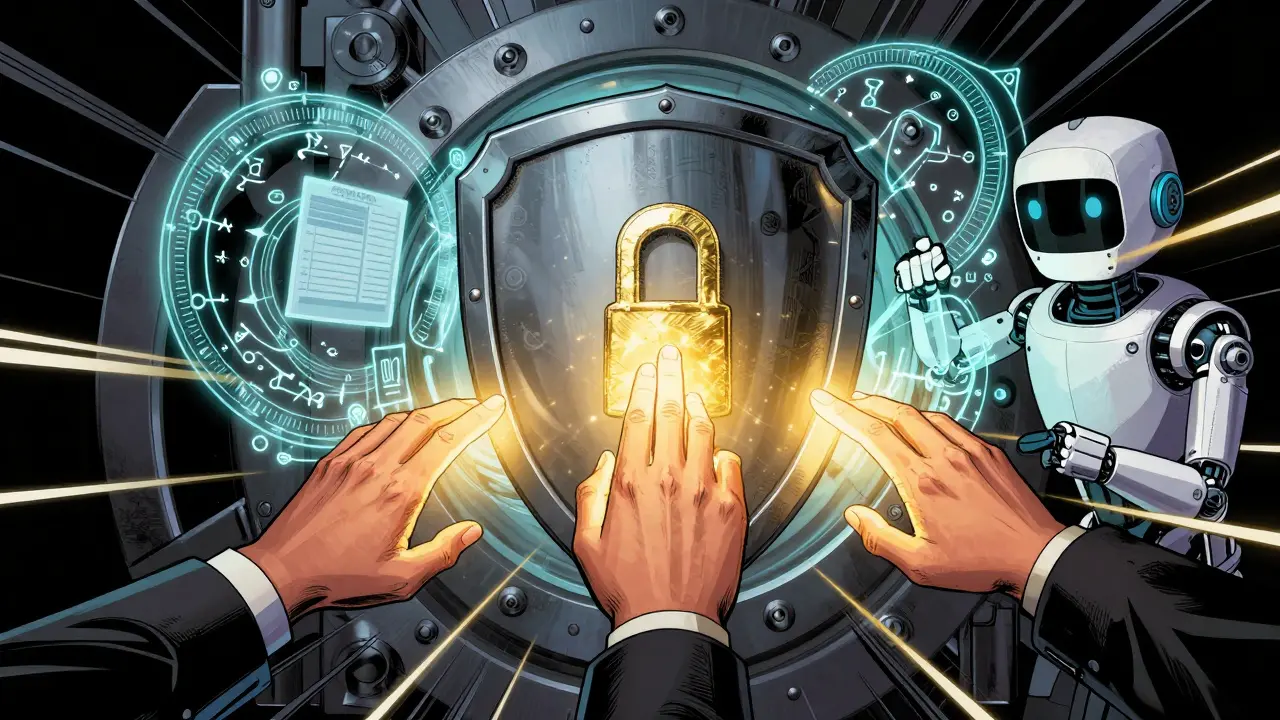
Smart contracts used to be simple if-then statements on blockchain. Now they’re becoming dynamic, multi-layered systems that can verify identities, protect private data, and even self-correct when errors are found. Zero-knowledge proofs (ZKPs) are the big leap here. Instead of showing your bank statement to prove you earn $80,000 a year, a ZKP lets you prove it without revealing any numbers at all. That’s huge for healthcare DApps where patient records need to stay private but still be verifiable by insurers or doctors.Multi-signature wallets are also becoming standard. No more single keys that can be hacked. Now, a transaction might need approval from three different people - say, a user, a trusted friend, and an automated audit bot. This isn’t just security theater. It’s how real institutions like hospitals and local governments are starting to adopt DApps safely.
Modular Blockchains Are Replacing Monoliths
Remember when everyone thought you needed one giant blockchain to run everything? That’s dead. The future is modular. Think of it like building a car: you don’t make the engine, tires, and radio yourself. You buy the best parts and plug them in.Celestia, launched in late 2023, handles only one thing - data availability. It makes sure transaction data isn’t lost or hidden. Other chains, like Polygon 2.0, handle execution and consensus separately. This lets developers build custom blockchains optimized for speed, privacy, or compliance - without starting from scratch. EigenLayer takes this further by letting Ethereum stakers reuse their locked-up ETH to secure new chains. That means a startup can launch a DeFi app with enterprise-grade security in weeks, not years.
This shift is why DApp development is no longer limited to crypto elites. In 2025, over 1,800 developers joined new learning platforms focused on modular stacks. That’s up from 1,200 in 2022. The barrier to entry is dropping fast.
Cross-Chain Is No Longer Optional
You can’t just build on Ethereum anymore and call it a day. Users want to move assets between chains seamlessly. PancakeSwap runs on Binance Smart Chain because fees are low. Uniswap runs on Ethereum because it’s the most secure. But what if you want to swap tokens from one to the other without using a centralized exchange? That’s where cross-chain bridges and protocols like LayerZero and Chainlink CCIP come in.These aren’t just tools - they’re the plumbing of the new internet. DApps now interact with multiple chains at once. A gaming DApp might store your NFT avatar on Solana, use Ethereum for payments, and pull real-world weather data from a Chainlink oracle. This isn’t sci-fi. It’s happening in real time. The result? More liquidity, better prices, and fewer bottlenecks.
IoT Meets Decentralization
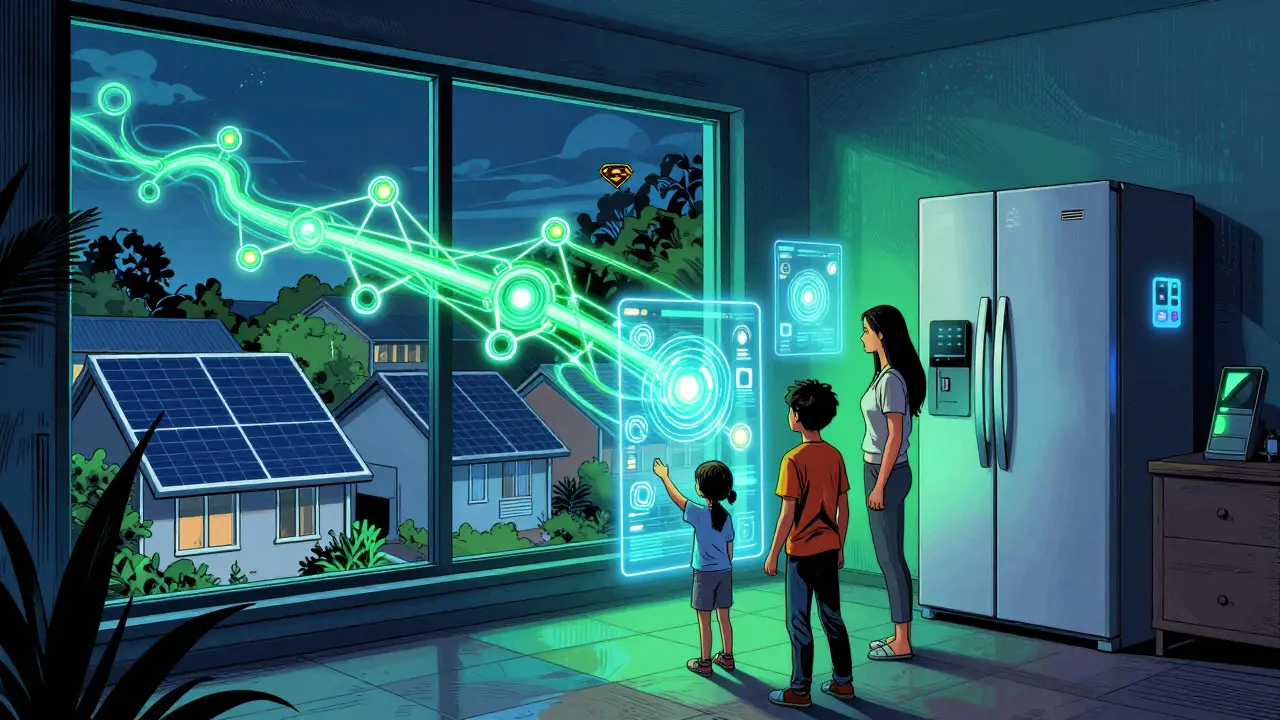
Most people think of DApps as apps on their phone. But the real growth is offline. Smart homes are using DApps to manage energy use. Your fridge, thermostat, and solar panels can now trade excess power directly with neighbors - no utility company needed. In Auckland, pilot programs are already testing this on 200 households.Logistics companies are embedding IoT sensors into shipping containers that log temperature, humidity, and location on a blockchain. If the meat in your shipment warms above 4°C, the DApp automatically triggers a refund or reroute. No paperwork. No middlemen. Just code enforcing rules.
This isn’t about replacing humans. It’s about removing trust in broken systems. When a warehouse manager can’t alter the temperature log, and a farmer can prove their coffee was grown sustainably - that’s real value.
DeFi Is Expanding Beyond Finance
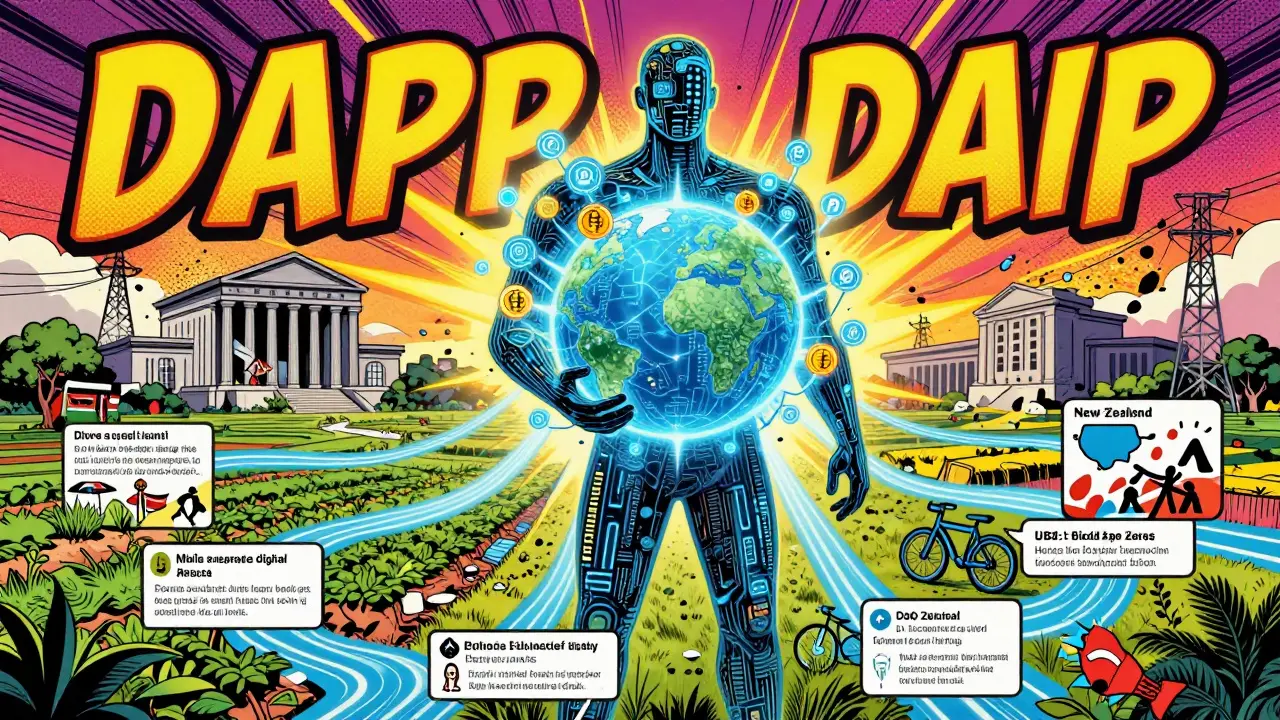
Decentralized finance (DeFi) used to mean lending and trading. Now it’s morphing into MetaFi - where finance meets the Metaverse. Musicians sell song rights as NFTs. Gamers earn tokens for winning tournaments. Artists get royalties every time their digital art is resold - automatically, forever.DAOs (decentralized autonomous organizations) are running these systems. No CEO. No board. Just rules written in code and voted on by token holders. In 2025, over 12,000 DAOs were managing funds, content, and even community infrastructure. One DAO in New Zealand even funded a local bike-share program using tokenized donations.
Grand View Research predicts DeFi will hit $231 billion by 2030. But that’s not just about money. It’s about ownership. For the first time, young people can build digital assets that have real, transferable value - outside the control of Apple, Google, or Meta.
Regulation Is Finally Catching Up
For years, regulators ignored DApps. Now they’re writing rules. The EU’s MiCA law, effective in 2024, sets clear standards for crypto assets. The U.S. is following with clearer guidance from the SEC. Kraken’s 2025 survey found 20% of Americans now say they’d use crypto if rules were clearer. That’s not a small number - it’s millions of potential users.Central bank digital currencies (CBDCs) are also changing the game. Fifteen central banks, including the Reserve Bank of New Zealand, are testing digital versions of their money. These won’t replace DApps - they’ll coexist. Imagine a Kiwi dollar CBDC that can pay interest in a DeFi protocol. Or a government-issued token that unlocks healthcare benefits only if your DApp proves you’ve taken your medication.
Regulation isn’t killing innovation. It’s giving institutions the confidence to join. Banks, insurers, and hospitals are quietly building DApp pilots - not because they’re trendy, but because they’re more efficient.
Security Is the New Default
Hacks aren’t rare anymore. They’re expected. That’s why DApp builders are baking security in from day one. Bug bounty programs pay ethical hackers to find flaws before criminals do. Some platforms offer up to $5 million for critical vulnerabilities.Zero-knowledge proofs aren’t just for privacy - they’re for compliance. A healthcare DApp can prove it follows HIPAA rules without revealing patient names. A supply chain DApp can show it meets carbon reporting standards without exposing supplier lists.
Multi-signature systems, hardware wallet integrations, and on-chain audits are now standard. The days of “move fast and break things” are over. The new mantra: “build slow, secure, and scale smart.”
What’s Next? The Real World Is the New Playground
The future of DApps isn’t about more tokens or flashier UIs. It’s about replacing broken systems with ones that work for everyone. Energy grids that let you sell surplus power. Voting systems that can’t be tampered with. Music platforms that pay artists fairly. Supply chains you can trace from farm to fork.By 2030, the global blockchain market will hit $1 trillion. But that number doesn’t tell the real story. The real story is that a teenager in Manila can now earn income from a digital art sale - and keep 95% of it. A farmer in Kenya can prove his crop was grown without child labor. A family in Auckland can manage their home’s energy use without a utility company spying on them.
DApps aren’t the future. They’re already here. And they’re not replacing the internet. They’re fixing it.
What makes a DApp different from a regular app?
A regular app runs on servers owned by a company like Google or Apple. If they shut it down, you lose access. A DApp runs on a blockchain - a network of thousands of computers. No single company controls it. That means it can’t be censored, shut down, or altered without consensus from the network. Your data stays yours.
Are DApps safe to use?
Some are, some aren’t. The blockchain itself is secure, but the apps built on top can have bugs. Always check if a DApp has been audited by a trusted firm like CertiK or OpenZeppelin. Look for multi-signature wallets and zero-knowledge proof features. Avoid apps that ask for your private key - no legitimate DApp ever will.
Do I need crypto to use a DApp?
Most do, but not always. You’ll need a wallet like MetaMask and some cryptocurrency to pay for transactions (called gas fees). But some newer DApps are starting to let you pay with fiat currency through integrated gateways. Still, owning crypto gives you full control over your assets and access to the full range of features.
Can DApps replace banks?
They’re already replacing parts of them. DeFi DApps let you lend, borrow, and earn interest without a bank. They’re faster, cheaper, and open to anyone with an internet connection. But they don’t yet offer FDIC insurance or customer service hotlines. For now, they work best alongside traditional finance - not as a full replacement.
What’s the biggest challenge for DApps today?
User experience. Most DApps still feel clunky. Setting up a wallet, managing keys, and paying gas fees can be confusing for non-tech users. The next big wave of adoption won’t come from better tech - it’ll come from apps that hide the complexity. Think of it like the iPhone: no one cared about the underlying OS. They just wanted it to work.
 Cryptocurrency Guides
Gavin Francis
January 29, 2026 AT 10:22Gary Gately
January 29, 2026 AT 17:05Gareth Fitzjohn
January 31, 2026 AT 13:24Katie Teresi
January 31, 2026 AT 15:56Moray Wallace
February 1, 2026 AT 04:46William Hanson
February 2, 2026 AT 03:58Lori Quarles
February 2, 2026 AT 05:12Steven Dilla
February 3, 2026 AT 12:54josh gander
February 4, 2026 AT 02:38Ramona Langthaler
February 5, 2026 AT 03:56Sunil Srivastva
February 5, 2026 AT 12:49Devyn Ranere-Carleton
February 7, 2026 AT 05:31Kevin Thomas
February 8, 2026 AT 20:12Pamela Mainama
February 10, 2026 AT 07:51mary irons
February 10, 2026 AT 10:12Wayne mutunga
February 12, 2026 AT 10:12Jeremy Dayde
February 13, 2026 AT 23:44Tom Sheppard
February 14, 2026 AT 04:05Will Pimblett
February 14, 2026 AT 20:47Freddy Wiryadi
February 15, 2026 AT 13:30Brianne Hurley
February 15, 2026 AT 14:14