
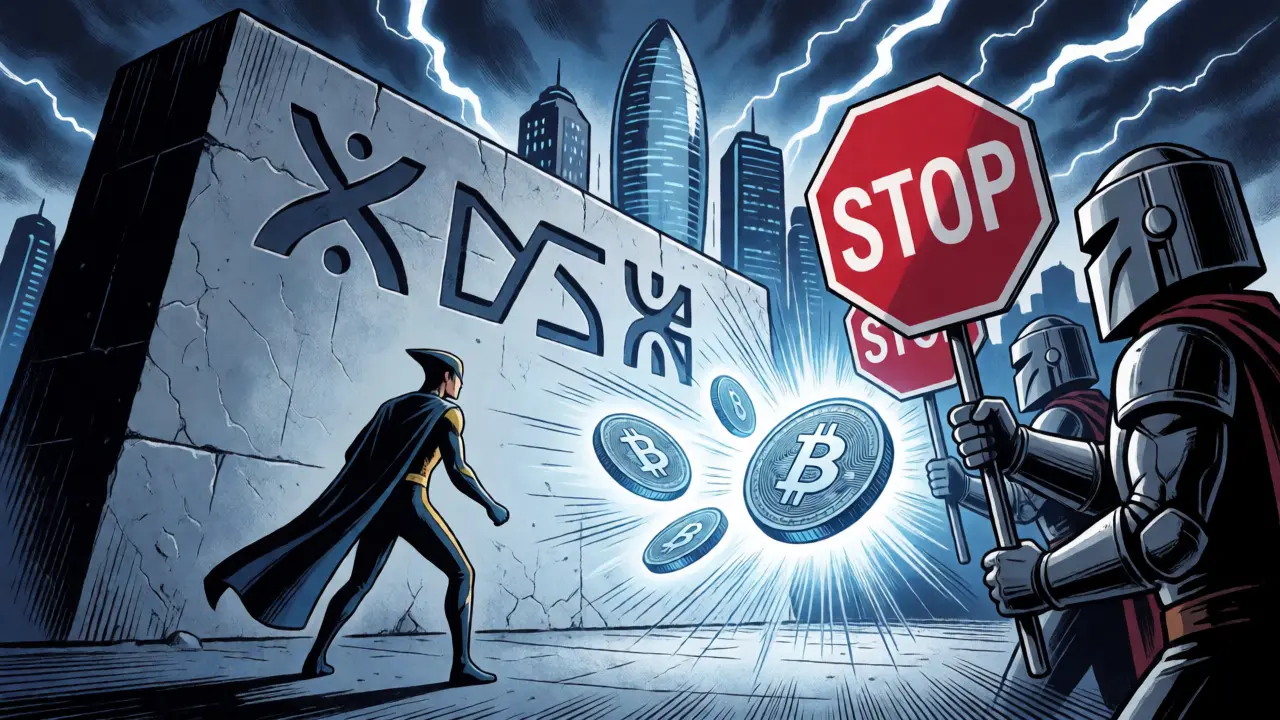
You might assume that living in a wealthy Gulf state like Qatar means you have the same financial freedoms as someone in Dubai or Singapore. But if you are a resident in Doha trying to buy Bitcoin, you are hitting a regulatory wall that is thicker than most people realize. As of September 2026, Qatar maintains one of the strictest stances on cryptocurrency in the entire region. It’s not just a gray area; it’s largely a hard "no" for traditional crypto trading, with only very specific exceptions carved out for asset-backed tokens.
This article breaks down exactly what you can and cannot do with your money in Qatar under the current laws. We will look at the 2024 Digital Assets Regulations, why the Central Bank banned banks from touching crypto, and what this actually means for your personal wallet. If you are planning to invest, trade, or just hold digital assets while living here, understanding these boundaries is critical to avoiding legal headaches.
The Core Ban: What Is Actually Illegal?
Let’s cut through the noise. In Qatar, cryptocurrencies like Bitcoin, Ethereum, and stablecoins (like USDT or USDC) are classified as "Excluded Tokens." This isn’t just a suggestion; it is a formal classification by the Qatar Financial Centre Regulatory Authority (QFCRA). These tokens are viewed as currency substitutes, and because they lack central bank backing, they are prohibited from being used as legal tender or traded through regulated financial institutions.
The Central Bank of Qatar issued a blanket ban back in February 2018, prohibiting all banks operating in the country from dealing in virtual currencies. This wasn’t lifted in recent years. Instead, it was reinforced. When the new Digital Assets Regulations 2024 came into effect on September 1, 2024, they explicitly confirmed that the previous bans still stand. If you walk into a local bank in Doha today asking to exchange your Riyals for Bitcoin, they will likely refuse the transaction entirely.
Why such a hard line? The regulators cite risks related to money laundering, illicit financing, and extreme volatility. They prefer stability over speculation. For a resident, this means you cannot use local credit cards or bank transfers to easily fund accounts on global exchanges like Binance or Coinbase without facing potential scrutiny or blocked transactions.
The Loophole: Permitted Tokenized Assets
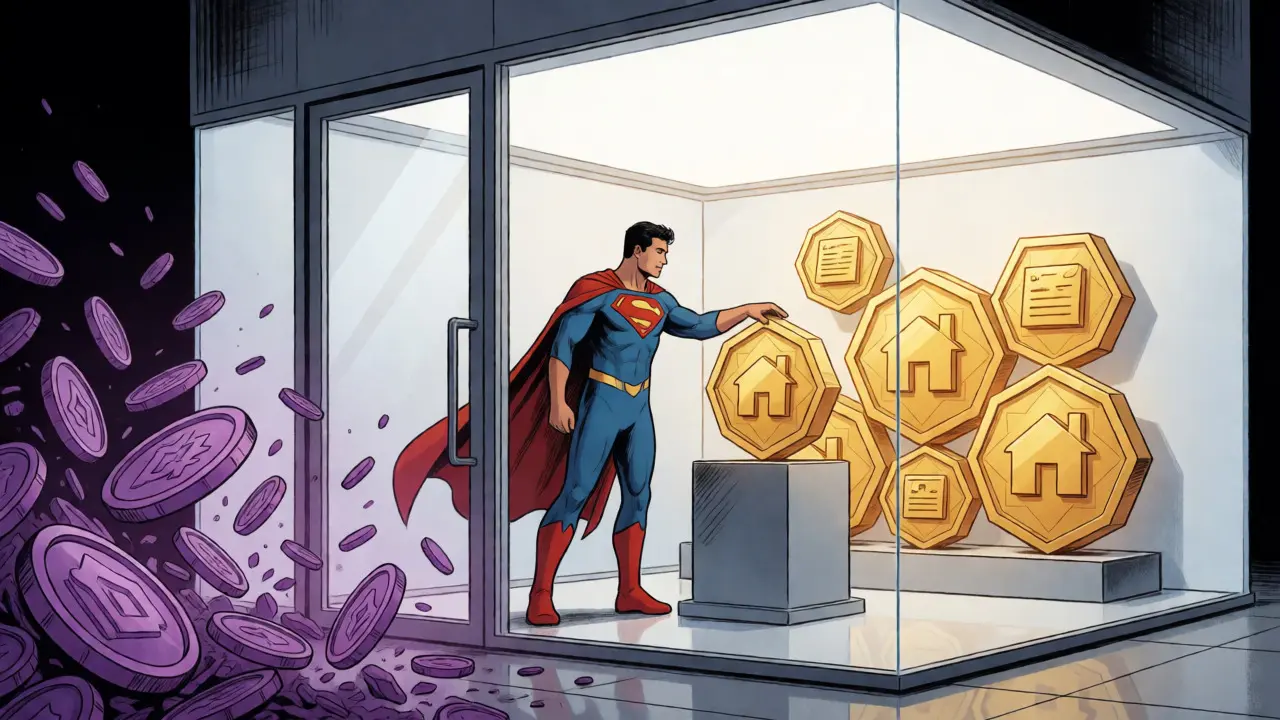
So, is blockchain technology completely dead in Qatar? No. The government has created a dual-track system. While speculative coins are out, "Permitted Tokens" are in. These are digital representations of real-world assets. Think of them as digital receipts for things you already own or can buy.
Under the Investment Token Rules 2024, you can legally engage with tokenized versions of:
- Real estate shares
- Government bonds and sukuk
- Commodities like gold or oil
- Corporate equity
The key difference is backing. A Bitcoin is backed by code and community consensus. A permitted token in Qatar must be backed by a verified legal right or a tangible asset. The process to create these tokens is rigorous. It involves three steps: validation by an authorized issuer, a formal request from the asset owner, and generation by a licensed provider. You cannot just mint your own token and start selling it.
This framework allows residents to participate in the benefits of blockchain-like faster settlement and fractional ownership-without the chaos of meme coins. However, accessing these requires working through licensed providers within the Qatar Financial Centre (QFC), not random apps downloaded from the App Store.
Personal Ownership vs. Institutional Trading
A common question from expats is: "Is it illegal for me to hold Bitcoin in my personal wallet?" The regulations primarily target service providers and financial institutions. Banks and exchanges are banned from offering crypto services. But the law regarding individual private ownership is less explicit about criminal penalties for mere holding.
However, "less explicit" does not mean "safe." If you try to cash out significant amounts of crypto into Qatari Riyals via a local bank transfer, you may face questions. Anti-Money Laundering (AML) laws define "funds" broadly to include assets obtained through electronic systems. This means that while you might not get arrested for owning a Ledger Nano X with some ETH on it, moving that value into the formal banking system can trigger compliance checks.
| Activity | Status | Risk Level | Notes |
|---|---|---|---|
| Buying/Selling BTC via Local Bank | Prohibited | High | Banks will reject transactions labeled as crypto-related. |
| Holding Crypto in Private Wallet | Gray Area | Medium | No direct ban on holding, but no legal protection or easy off-ramps. |
| Trading Tokenized Real Estate | Allowed | Low | Must use QFC-licensed providers under the 2024 Framework. |
| Using Stablecoins for Payments | Prohibited | High | Stablecoins are Excluded Tokens; not legal tender. |
The Role of the Qatar Financial Centre (QFC)
If you want to stay compliant, your best friend is the QFC. This special economic zone has its own regulatory authority, separate from the mainland’s general civil law, though both align on crypto restrictions. The QFC introduced the Digital Assets Framework 2024 specifically to attract fintech innovation without opening the floodgates to speculation.
Companies operating here need licenses to offer digital asset services. These licenses are strictly for handling permitted tokens. If a startup wants to offer a platform for trading tokenized Sukuk, they can apply. If they want to offer a spot exchange for Dogecoin, they are out of luck. This creates a niche market where institutional-grade blockchain applications thrive, but retail crypto gambling remains suppressed.
For residents, this means your investment options are curated. You aren’t choosing from 10,000 coins. You are choosing from a list of approved, asset-backed instruments. This reduces risk but also limits upside potential compared to more open markets like Abu Dhabi or Bahrain.
Practical Implications for Your Daily Life
What does this mean for your day-to-day finances? First, expect friction. If you work remotely for a company paying in USDC, you cannot simply deposit that into a Qatari bank account expecting it to be treated like USD. You often need to convert it abroad before bringing it home, or use specialized international accounts.
Second, beware of peer-to-peer (P2P) scams. Because official channels are closed, many residents turn to informal P2P networks to buy or sell crypto. While convenient, these trades carry high counterparty risk. There is no consumer protection agency stepping in if the person on the other side of the WhatsApp chat disappears with your money.
Third, taxes are straightforward but strict. Qatar currently has no capital gains tax for individuals, which is a plus. However, if you are running a business that deals in permitted tokens, you must adhere to corporate tax rules and ensure your activities fall within the QFC licensing scope. Failure to comply can result in fines or license revocation for businesses, and potential account freezes for individuals involved in suspicious large-volume transfers.
Future Outlook: Will Qatar Ever Relax?
Looking ahead, don’t expect a sudden shift toward full crypto adoption. Qatar’s strategy is deliberate. They are watching regional neighbors closely. The UAE has embraced crypto hubs, while Saudi Arabia remains cautious. Qatar seems to be betting on "controlled utility" rather than "mass speculation."
We may see expansions in the types of permitted tokens. Perhaps tokenized carbon credits or green bonds become popular as Qatar pushes for sustainability goals. But the core exclusion of Bitcoin and stablecoins as currency substitutes seems entrenched. The government values monetary sovereignty too much to let decentralized currencies compete with the Qatari Riyal.
For now, if you live in Qatar, treat crypto as a foreign asset class that requires careful management. Keep records of all transactions, especially if you move funds across borders. And remember, the rules are enforced strictly against institutions, so always verify that any service provider you use is actually licensed by the QFCRA.
Is Bitcoin illegal to own in Qatar?
Owning Bitcoin in a private wallet is not explicitly criminalized for individuals, but it is heavily restricted. You cannot buy, sell, or trade it through Qatari banks or licensed exchanges. Using it for payments is prohibited, and moving large sums into the local banking system can trigger anti-money laundering checks.
Can I use PayPal or Wise to send crypto to Qatar?
Generally, no. Most fintech platforms block crypto purchases for users with Qatari billing addresses due to local regulations. You typically need to purchase crypto outside of Qatar or use a non-Qatari bank account linked to an international exchange.
What are "Permitted Tokens" in Qatar?
Permitted Tokens are digital assets backed by real-world rights, such as tokenized shares, bonds, sukuk, commodities, or real estate. They are legal to trade through licensed providers in the Qatar Financial Centre, unlike cryptocurrencies like Bitcoin, which are "Excluded Tokens."
Are there taxes on crypto profits in Qatar?
Currently, Qatar does not levy personal income tax or capital gains tax on individuals. However, businesses dealing in digital assets may be subject to corporate tax and must comply with QFC licensing requirements. Always consult a local tax advisor for business-specific situations.
Can I pay for groceries with Bitcoin in Doha?
No. Cryptocurrencies are not legal tender in Qatar. Merchants are not required to accept them, and using them for daily payments falls outside the regulated framework, potentially complicating your financial record-keeping.
 Cryptocurrency Guides
Harish Ramaiah
September 4, 2026 AT 10:39Wow!!! 😱😱😱 This is soooo frustrating for us expats!! 🤯🤯 Why can't we just buy Bitcoin?? It's so unfair, really... I feel like my money is trapped here in Doha. 😭😭 The banks are so strict, it makes me want to cry sometimes. 💔💔