
Where to Mine Crypto in 2025: The Real Rankings
If you're thinking about setting up a crypto mining operation in 2025, location isn't just about geography-it's about legality, electricity bills, and whether the government will shut you down tomorrow. The days of mining in your garage with a few old GPUs are mostly over. Today, the winners are countries that offer cheap power, clear rules, and no surprise raids.
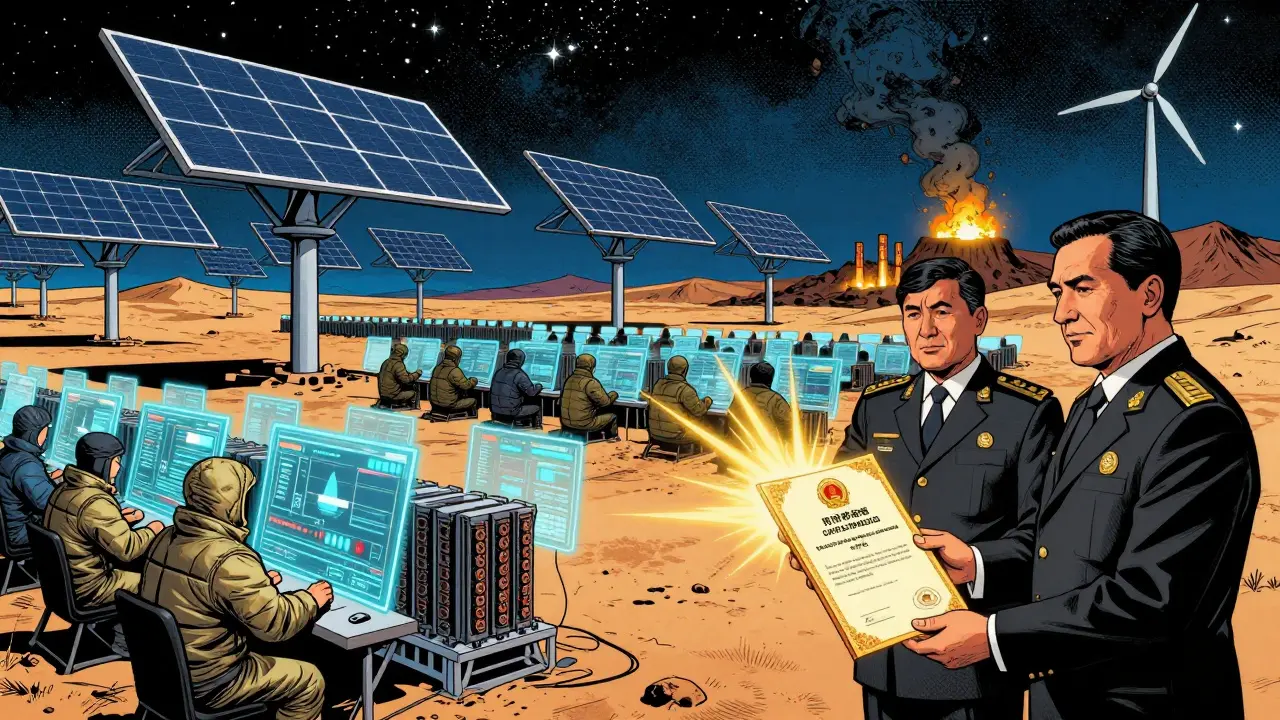
China used to control over 70% of Bitcoin mining. Now? It's banned. But underground rigs still run in Sichuan during rainy season when hydropower floods the grid. That’s not a business-it’s a gamble. In 2025, the smart operators aren’t hiding. They’re in places where the government says, "Come on in, we need your hash rate."
United States: The Institutional Powerhouse
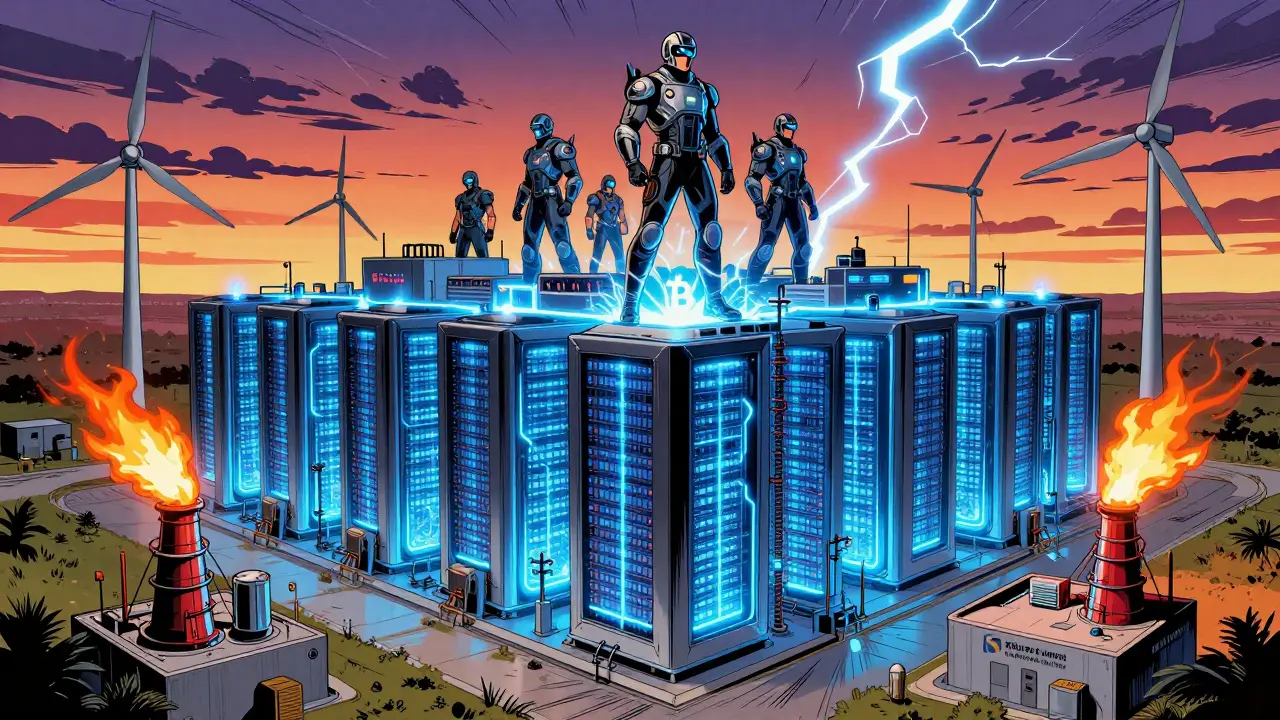
The U.S. leads the world in Bitcoin mining by hash rate, and it’s not even close. Why? Institutional money. Big firms like Riot Platforms, Marathon Digital, and CleanSpark have built massive data centers in Texas, Georgia, and Pennsylvania. These aren’t backyard rigs-they’re multi-megawatt facilities hooked into the grid.
Texas is the star. The state has deregulated energy markets, meaning miners can buy power directly from generators during low-demand hours. Some operators even use stranded natural gas-flared waste from oil fields-to power rigs. That’s not just cheap; it’s sustainable.
But it’s not perfect. Regulatory uncertainty hangs over some states. New York tried to ban mining over environmental concerns. Vermont has strict permitting rules. So if you’re mining in the U.S., pick your state wisely. The federal government doesn’t ban it. But local rules? They vary wildly.
Kazakhstan: The Hidden Giant
Kazakhstan is the dark horse. It’s not flashy like El Salvador or Switzerland, but it accounts for over 6% of the global Bitcoin hash rate. Why? Cheap power and tax breaks.
The government doesn’t just tolerate mining-it encourages it. Companies registered in the Astana International Financial Centre get zero corporate tax until 2066. Personal crypto gains? No capital gains tax. Electricity? Around 2-4 cents per kWh, thanks to coal and hydro plants.
They’re even pushing renewable energy. New mining farms are being built near wind farms in the north. The government sees mining as a way to diversify away from oil. And it’s working. In 2025, Kazakhstan is the most reliable place outside the U.S. for large-scale operations.
Canada: The Quiet Contender
Canada has more than six Bitcoin ETFs trading on its exchanges. That’s a sign of institutional trust. Provinces like Quebec and British Columbia have massive surplus hydropower-often more than they can use. Miners come in, sign long-term contracts, and lock in rates as low as 1.5 cents per kWh.
But here’s the catch: it’s not federal. Ontario has tried to limit mining during winter peaks. Alberta is more open. Saskatchewan is building crypto-friendly zones. So you need to know your province. The federal government doesn’t interfere, but local utilities do.
Canada also leads in stablecoin reserves and has a clear path for regulated crypto exchanges. If you want to mine and trade legally under a Western legal system, Canada is one of the safest bets.
El Salvador: The Bold Experiment
El Salvador made headlines in 2021 when it made Bitcoin legal tender. Four years later, it’s still the only country in the world to do so. And the mining policy? Zero capital gains tax. No income tax on mining profits. The government even built a geothermal mining park near the Conchagua volcano.
But it’s not all smooth sailing. The country’s power grid is fragile. Blackouts happen. And while the government promotes mining, foreign investors still face bureaucracy. The real advantage? The legal certainty. If you mine here, you’re not breaking any law. That’s rare.
For small to mid-sized operators who want zero tax and don’t mind occasional outages, El Salvador is still a top pick.
Switzerland: The Regulatory Gold Standard
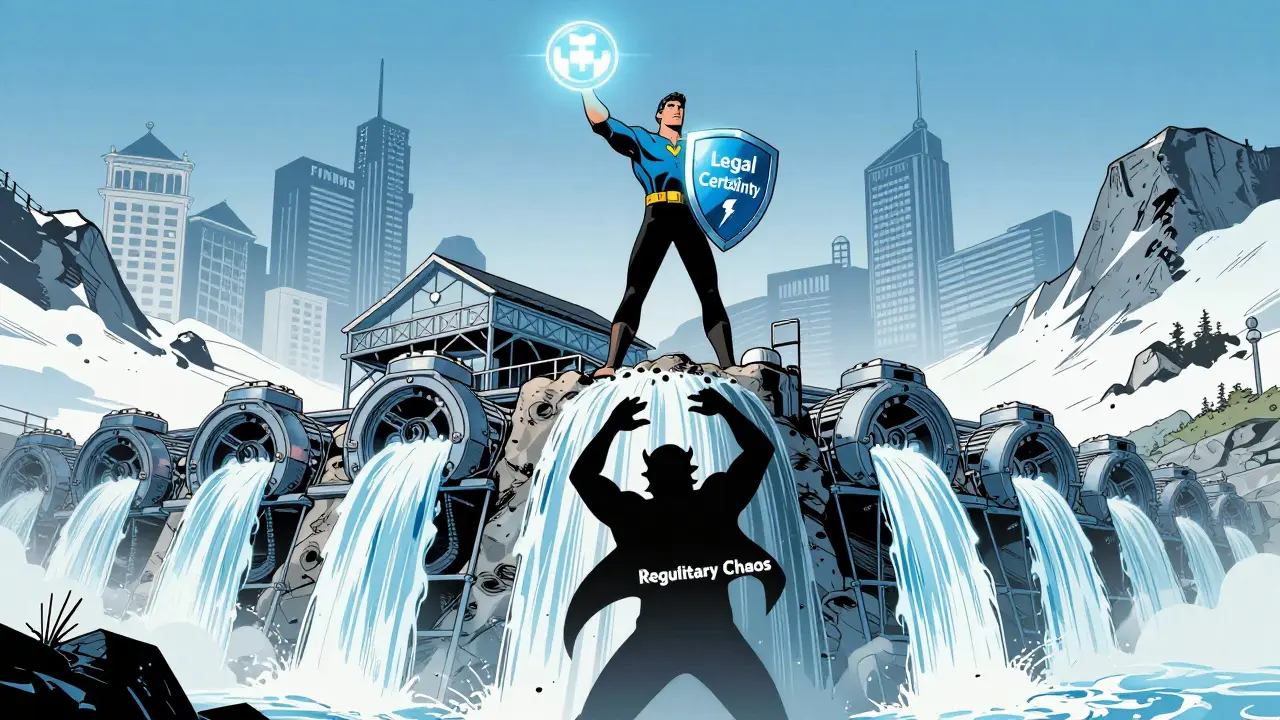
Switzerland doesn’t just allow crypto mining-it defines it. FINMA, the country’s financial regulator, has clear guidelines for crypto businesses. Miners are treated like any other industrial operator. No special rules. No bans. Just standard business regulations.
And the energy? Clean. Lots of hydroelectric power from the Alps. Zurich and Zug (nicknamed "Crypto Valley") have attracted hedge funds, blockchain startups, and mining firms that want to operate under a transparent, stable legal system.
Switzerland isn’t the cheapest for power, but it’s the safest for long-term investment. If you’re an institutional miner or a fund looking to hold assets legally for decades, this is the place.
Georgia: The Tax-Free Zone
Georgia has no capital gains tax on crypto. No corporate tax for mining businesses. No VAT on mining equipment. Electricity? Around 4-5 cents per kWh, thanks to cheap hydro and solar.
The government doesn’t just welcome miners-it offers residency permits to crypto entrepreneurs. You can live here, mine here, and pay zero tax on your profits. It’s the most aggressive tax regime in the world for crypto.
And it’s growing fast. New mining farms are popping up near Tbilisi and Batumi. The country’s internet infrastructure is solid. And unlike some places, there’s no political risk. Georgia has no interest in banning crypto. It wants the business.
Hong Kong: The Institutional Gateway
Hong Kong didn’t just open up to crypto-it rebuilt its entire financial system around it. In 2024, the Securities and Futures Commission launched mandatory licensing for all virtual asset service providers. That sounds strict, but it’s actually a win: now you know who’s legit.
Major banks like HSBC and Standard Chartered now offer accounts to crypto firms. Bitcoin and Ethereum ETFs trade openly. Miners can set up holding companies here and access global capital markets without moving assets out of the jurisdiction.
Power costs? Higher than Kazakhstan or Georgia. But if you’re a fund, a trader, or a company that needs banking access and legal clarity, Hong Kong is unmatched in Asia.
Why Some Countries Are Falling Behind
China still has mining rigs running, but they’re illegal. The risk isn’t worth it anymore. Russia? The government talks about mining, but banks won’t touch crypto businesses. Germany? High taxes, strict environmental rules. France? Energy rationing during winter.
Even Iceland, once the poster child for green mining, is slowing down. The government is now limiting new mining permits to protect its renewable grid from overuse. The same thing could happen in Canada or Norway if demand spikes.
It’s not enough to have cheap power. You need legal stability. You need banking access. You need to know tomorrow won’t bring a ban.
The Real Criteria for Choosing a Country
Not all mining-friendly countries are equal. Here’s what actually matters in 2025:
- Electricity cost: Under 4 cents/kWh is ideal. Above 8 cents? You’re competing against solar farms, not profit.
- Tax policy: No capital gains tax on mining profits. No VAT on equipment. Zero corporate tax if you’re a company.
- Legal clarity: Is mining explicitly allowed? Or is it in a gray zone?
- Banking access: Can you open a business bank account? Can you pay your bills in USD or EUR?
- Energy source: Renewable? Stable? Or dependent on coal or gas that could get taxed?
- Government support: Are they building infrastructure for miners? Or just tolerating them?
Most people focus on electricity. But if your bank freezes your account because you’re a "crypto miner," you’re done. That’s why Switzerland and Hong Kong rank so high-they solve the banking problem.
What’s Next? The Trends Shaping 2025
Three big shifts are happening:
- Renewable energy is mandatory: Countries like Kazakhstan and Canada are now requiring miners to use solar, wind, or hydro. Coal-powered mining is being phased out.
- Regulatory sandboxes are growing: Places like Singapore and Dubai are creating zones where miners can test operations under controlled rules before going full-scale.
- AI-powered mining optimization: Operators are using AI to predict electricity price swings and auto-switch rigs on/off. That’s making location even more critical-timing matters as much as power cost.
If you’re starting in 2025, don’t just pick the cheapest electricity. Pick the country that lets you operate without fear.
Final Thoughts: The Winners in 2025
Here’s the real ranking for 2025, based on safety, cost, and sustainability:
- United States - Best for scale, institutional support, and grid access.
- Kazakhstan - Best for low-cost, tax-free, large-scale mining.
- Switzerland - Best for legal certainty and long-term stability.
- Georgia - Best for zero taxes and easy setup.
- Canada - Best for Western legal systems and hydropower.
- Hong Kong - Best for banking and institutional access.
- El Salvador - Best for bold policy and zero capital gains.
China? Russia? Germany? They’re not on the list for a reason. The future of mining isn’t in hiding. It’s in places where the government says: "We’re glad you’re here."
Is crypto mining legal in the United States?
Yes, crypto mining is legal in the United States at the federal level. However, individual states have different rules. Texas and Georgia actively encourage mining with low power rates and tax incentives. New York and Vermont have imposed restrictions or moratoriums due to energy use concerns. Always check your state and local utility regulations before setting up a mining operation.
Can I mine crypto in China in 2025?
No, crypto mining is officially banned in China. While underground operations still exist-especially in Sichuan during rainy season when hydropower is abundant-these are illegal and carry high risk. The government has cracked down on mining since 2021, shutting down data centers and cutting power access. Operating in China now is not a business decision-it’s a gamble with serious legal consequences.
Which country has the cheapest electricity for crypto mining?
Kazakhstan and Georgia offer some of the lowest electricity rates for miners, typically between 2-5 cents per kWh. Kazakhstan benefits from coal and hydro, while Georgia uses hydro and solar. In comparison, the U.S. averages 5-8 cents/kWh depending on the state, and Western Europe often exceeds 10 cents/kWh. Always confirm rates with local providers-some deals are tied to long-term contracts or renewable energy credits.
Do I have to pay taxes on crypto mining profits?
It depends on the country. In Georgia, Switzerland, El Salvador, and Kazakhstan, there is no capital gains tax on mined cryptocurrency. In the U.S., Canada, and the EU, mined coins are treated as income and taxed at your ordinary income rate when you receive them. If you later sell them, you may owe capital gains tax. Always consult a tax professional familiar with crypto regulations in your jurisdiction.
Can I open a bank account for my crypto mining business?
Yes-but only in certain countries. Hong Kong, Switzerland, and the U.S. (in crypto-friendly states) have banks that routinely serve mining companies. In many European countries and Canada, banks still refuse to open accounts for miners due to perceived risk. Georgia allows foreign-owned mining businesses to open local bank accounts easily. Always confirm banking access before relocating your operation.
Is solar-powered mining worth it?
Yes, if you’re in a sunny region with low land costs. Solar-powered mining is becoming the standard in places like Texas, Georgia, and parts of Kazakhstan. While upfront installation costs are high, long-term electricity is nearly free after 2-3 years. Many governments now offer incentives for renewable-powered mining. It’s also the only way to avoid future carbon taxes or energy restrictions.
 Cryptocurrency Guides
Nishakar Rath
January 16, 2026 AT 19:38Lauren Bontje
January 17, 2026 AT 12:32Hannah Campbell
January 19, 2026 AT 07:14Bryan Muñoz
January 19, 2026 AT 10:49Tony Loneman
January 20, 2026 AT 05:02Deb Svanefelt
January 20, 2026 AT 12:31Dustin Secrest
January 22, 2026 AT 01:42Chris Evans
January 23, 2026 AT 13:34Alexis Dummar
January 24, 2026 AT 00:47Alexandra Heller
January 25, 2026 AT 03:14myrna stovel
January 26, 2026 AT 11:53Ashlea Zirk
January 26, 2026 AT 17:11kristina tina
January 28, 2026 AT 16:14Shaun Beckford
January 29, 2026 AT 06:48Jill McCollum
January 29, 2026 AT 14:09Hailey Bug
January 30, 2026 AT 03:01Michael Jones
January 30, 2026 AT 05:44Kelly Post
January 30, 2026 AT 15:57Sarah Baker
February 1, 2026 AT 14:29Stephen Gaskell
February 2, 2026 AT 02:44Stephanie BASILIEN
February 2, 2026 AT 10:16