

Germany’s approach to crypto custody is not just about holding keys; it is a high-stakes legal and operational challenge that separates serious institutions from fly-by-night operators. If you are looking to store digital assets in Europe, the German framework offers some of the strongest investor protections available, but it comes with a price tag in the form of complexity and cost. As of August 2026, the landscape has fully matured under the European Union’s Markets in Crypto-Assets Regulation (MiCAR) and Germany’s national Banking Act (KWG), creating a dual-track system that demands precision.
This guide breaks down what you actually need to know about operating or using crypto custody services in Germany today. We will look at who regulates the space, what the licensing hurdles look like, and how the recent shift to full MiCAR compliance has changed the game for both providers and investors.
The Regulatory Landscape: BaFin, MiCAR, and the KWG
To understand the rules, you first need to know who is making them. The primary regulator here is the BaFin (Bundesanstalt für Finanzdienstleistungsaufsicht, or Federal Financial Supervisory Authority). BaFin oversees all financial services in Germany, including crypto custody. However, they don’t work in a vacuum. They operate within two main legal frameworks:
- MiCAR (Markets in Crypto-Assets Regulation, EU 2023/1114): This is the EU-wide rulebook that became fully applicable in December 2024. It sets the baseline standards for crypto-asset service providers (CASPs) across the continent.
- KWG (Kreditwesengesetz, or German Banking Act): This national law was amended in 2020 to specifically address crypto custody before MiCAR arrived. It still plays a crucial role, especially for assets that might be classified as securities.
The interplay between these two laws creates what experts call a "dual-track" system. Pure cryptocurrencies like Bitcoin and Ether fall squarely under MiCAR. But if you are dealing with security tokens-digital assets that represent traditional financial rights-you are likely also touching on MiFID II regulations and the KWG. This distinction matters because it changes which license you need and how strictly you are supervised.
Licensing Requirements: What It Takes to Get Approved
You cannot offer crypto custody services in Germany without a license. BaFin requires explicit authorization, and the process is rigorous. Here is what the current requirements look like for new entrants as of mid-2026:
- Minimum Capital: You need at least €125,000 in own funds if you are only doing pure custody. If you offer multiple services (like trading plus custody), this jumps to up to €730,000 under MiCAR Article 6.
- Management Team: You must have at least two senior managers who pass BaFin’s "fitness and propriety" tests. Finding qualified people is hard; a KPMG report noted a shortage of certified compliance officers in the region.
- Documentation: The application packet includes 47 distinct components. Think detailed business plans, IT security architecture diagrams, and proof of your three lines of defense (compliance structure).
- Timeline: Expect the process to take 6 to 9 months. Some institutions report average processing times around 7.2 months, which can stall launch plans.
There is a nuance for banks. If you are already licensed under MiFID II (which most major German banks are), you can use an accelerated notification procedure. This cuts the timeline down to roughly 3 months. Deutsche Bank successfully used this path in early 2025 to transition its custody offerings, giving it a head start over smaller competitors.
Technical and Operational Standards
Getting the license is just step one. Keeping it means meeting strict technical standards. BaFin’s guidance notes, updated significantly in January 2025, lay out exactly how your infrastructure should look.
| Requirement | Specific Standard | Purpose |
|---|---|---|
| Asset Segregation | Physical or logical separation of client vs. custodian assets | Protects client funds in case of insolvency |
| Cold Storage | Minimum 95% of assets in cold storage | Reduces exposure to online hacks |
| Multi-Signature | At least 3-of-5 signature scheme | Prevents single-point-of-failure key loss/theft |
| Security Certification | Hardware wallets must meet Common Criteria EAL 4+ | Ensures hardware meets military-grade security benchmarks |
| Business Continuity | Plan must withstand 72-hour disruption | Guarantees service availability during crises |
Cybersecurity isn't just a suggestion; it's tied to the Digital Operational Resilience Act (DORA). Providers must undergo regular penetration testing by independent third parties. The results? Submitted to BaFin quarterly. If you miss a deadline or fail a test, you risk sanctions or even license revocation.
Investor Protection and Asset Safety
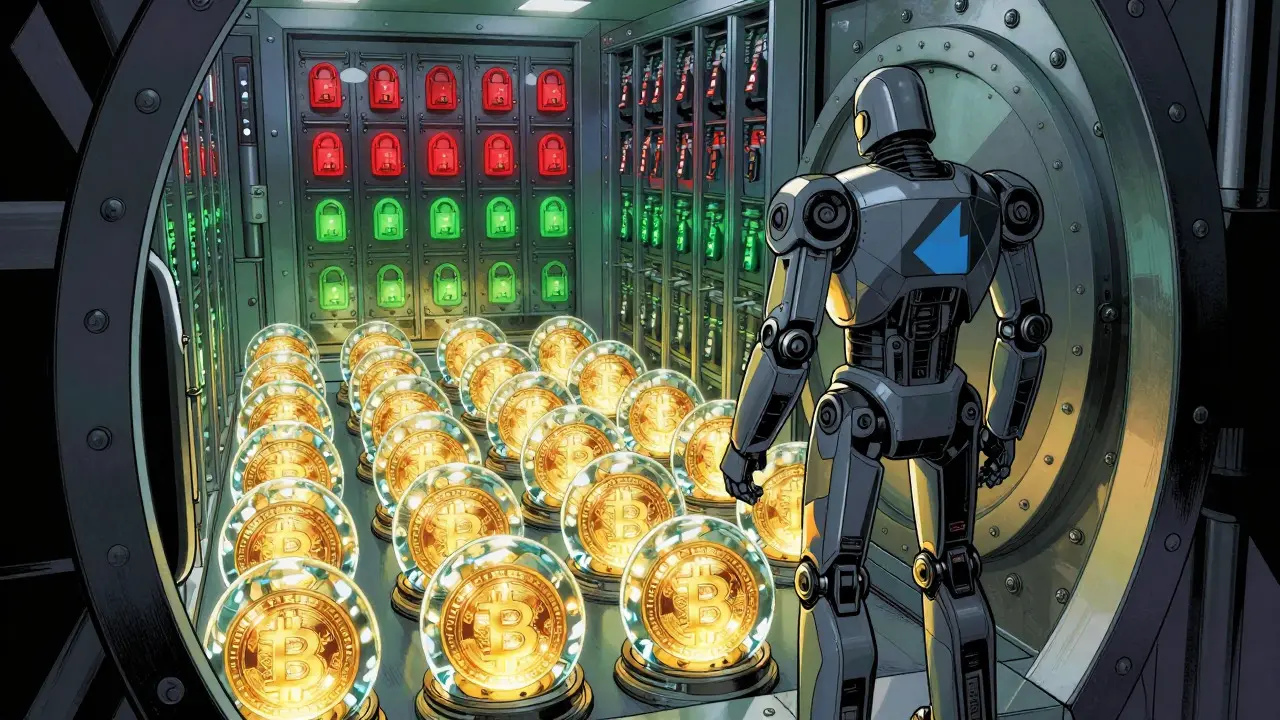
Why go through all this trouble? Because the regulatory focus is heavily skewed toward protecting the end-user. Under MiCAR Article 54, effective since January 2025, client assets must remain protected even if the custodian goes bankrupt. This is a huge shift from earlier years when bankruptcy could mean frozen or lost assets.
In practice, this means strict segregation. Your coins aren't mixed with the custodian’s treasury. They are held in separate accounts or wallets. For institutional clients, this provides peace of mind. A survey by the Blockchain Bundesverband showed that while compliance costs are high, 68% of startup founders felt the clear rules were worth it for market credibility. Trustpilot reviews of licensed providers consistently highlight "exceptional asset security" as the top benefit, with users noting that the strict segregation rules give them confidence their assets are truly safe.
Market Impact and Current Trends
The regulatory clarity has had a measurable effect on the German market. As of June 2025, total assets under custody in Germany reached €48.7 billion, a 28.3% year-over-year increase. Institutional adoption is leading the charge. 63% of DAX 30 companies now use licensed German custody providers, according to data from Q2 2025.
The market is dominated by traditional banks. Deutsche Bank, Commerzbank, and DZ Bank collectively hold 58% of the market share by assets. Crypto-native firms like Coinbase Custody and Finoa hold about 27%. This suggests that trust in established financial brands is still a major driver for large-scale custody needs.
However, the cost of compliance is rising. With the upcoming DAC 8 reporting requirements taking effect in January 2026, firms expect compliance costs to jump by another 15-20%. This will likely force smaller players to consolidate or specialize further. The era of low-cost, unregulated custody is officially over in Germany.

Common Pitfalls and How to Avoid Them
Navigating this landscape is tricky. Here are the most common mistakes we see:
- Ignoring the AML Link: 22% of initial license applications are rejected due to insufficient Anti-Money Laundering (AML) procedures. Make sure your transaction monitoring aligns perfectly with both MiCAR and German AML laws.
- Underestimating Staffing Needs: You need certified compliance officers. Don't assume general finance staff can handle crypto-specific regulations. The "fitness and propriety" tests are specific.
- Confusing Asset Types: Misclassifying a security token as a utility token can lead to heavy fines. Get legal advice on whether your asset qualifies as a civil law security. This determines if you need a banking license instead of a financial services license.
- Delaying Technology Upgrades: If you are relying on older wallet tech that doesn't meet EAL 4+ standards, you are non-compliant. Budget for upgrades early.
For small startups, the barrier to entry is high. A June 2025 survey found that 54% of German crypto firms spent over €250,000 on regulatory compliance in the previous year. If you are a smaller player, consider partnering with an existing licensed provider rather than applying for your own license immediately.
Frequently Asked Questions
Do I need a license to hold my own crypto in Germany?
No. The licensing requirement applies to businesses providing custody services to others. If you are an individual holding your own assets in a personal wallet, you do not need a BaFin license. However, you must still comply with tax reporting obligations.
What is the difference between MiCAR and KWG for custody?
MiCAR is the EU-wide regulation covering standard crypto-assets like Bitcoin. KWG is the German Banking Act, which adds national layers, particularly for assets that might be considered securities. Most providers must comply with both, but the specific capital and reporting requirements vary based on which rules apply to the assets being held.
How long does the BaFin licensing process take?
For new applicants, the process typically takes 6 to 9 months. Existing MiFID II licensed banks can use an accelerated route that takes about 3 months. Delays often occur if documentation is incomplete or if AML procedures need strengthening.
Are foreign custody providers allowed to operate in Germany?
Yes, but they usually need to establish a local subsidiary or branch to get a German license, unless they are relying on passporting rights from another EU member state that has implemented MiCAR. Many international firms have opened German subsidiaries in 2025 to access the market directly.
What happens if a custodian goes bankrupt?
Under current MiCAR rules, client assets are segregated from the custodian’s own assets. This means they should not be part of the bankruptcy estate. Clients should be able to retrieve their assets, although the process may involve legal steps to confirm ownership and transfer.
 Cryptocurrency Guides